


10X Better High-Stress Performance
Modern engines can generate substantial cylinder pressure even without huge displacement.
Turbocharging and other technologies place considerable stress on bearings, piston assemblies and other lubricated components.
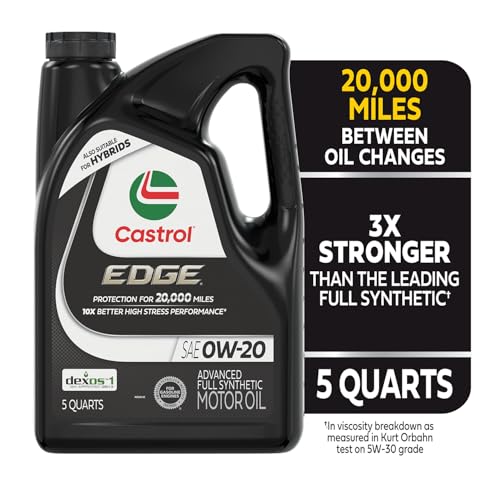
Castrol states that EDGE provides 10X better high-stress performance based on Sequence IX testing under high-load and high-torque conditions compared with API SQ test limits.**
That’s an important distinction.
The claim isn’t simply that the oil survives ordinary commuting. It’s based on testing designed to evaluate lubricant performance under demanding engine loads.
For drivers who regularly encounter highway acceleration, mountain driving, hot-weather operation or other high-load conditions, maintaining protection under stress matters.
**Based on Sequence IX testing under high-load/high-torque conditions versus API SQ test limits.
Up to 20,000 Miles Between Oil Changes
Castrol advertises protection for up to 20,000 miles or 365 days, whichever comes first.*
That makes EDGE 0W-20 particularly attractive to drivers seeking extended full-synthetic protection.
However, the maximum advertised protection interval should not automatically replace the maintenance schedule established for your vehicle.
Actual oil-change intervals can depend on:
- Vehicle manufacturer requirements
- Oil-life monitoring systems
- Severe-service schedules
- Engine design
- Driving conditions
- Oil-filter capability
- Fuel dilution
- Towing or heavy-load operation
- Warranty requirements
Follow the appropriate maintenance schedule for your vehicle.
Twenty thousand miles is impressive protection. It isn’t a challenge to see how long you can ignore the maintenance reminder.
Advanced Full Synthetic Protection
Castrol EDGE 0W-20 is an advanced full synthetic motor oil designed to maintain performance across demanding temperature and load conditions.
Its formulation provides a combination of:
wear protection + viscosity control + thermal stability + cleanliness
These characteristics become particularly important in modern engines where lubricant performance can affect more than bearings and cylinder walls.
Engine oil may also be involved in the operation of variable valve timing systems, timing components and other hydraulically controlled hardware.
Using the correct oil isn’t optional engineering trivia.
It’s part of how the engine was designed to function.
High-Temperature Performance
Modern engines can create significant localized heat around pistons, bearings and turbocharger components.
Oil exposed to elevated temperatures must resist oxidation and maintain its protective characteristics.
Castrol EDGE is formulated to deliver strong high-temperature performance and thermal stability, helping protect critical components when engine temperatures increase.
That makes thermal stability valuable during demanding conditions such as:
- Summer driving
- Stop-and-go traffic
- Extended highway operation
- Mountain driving
- Turbocharged operation
- Heavy engine loads
Helps Control Sludge
Even premium engines can develop sludge when contaminants, heat, moisture and deteriorating oil combine.
Castrol EDGE 0W-20 includes sludge control among its essential areas of protection, helping maintain cleaner internal components and unrestricted oil circulation.
Clean oil passages are particularly important in modern engines with sophisticated variable valve timing and small lubrication passages.
For more on how deposits form and what happens when they get out of control, read our My Pro Street guide to Engine Oil Sludge Causes and How to Fix It.
The best sludge repair remains not creating the sludge in the first place.
API SQ Performance
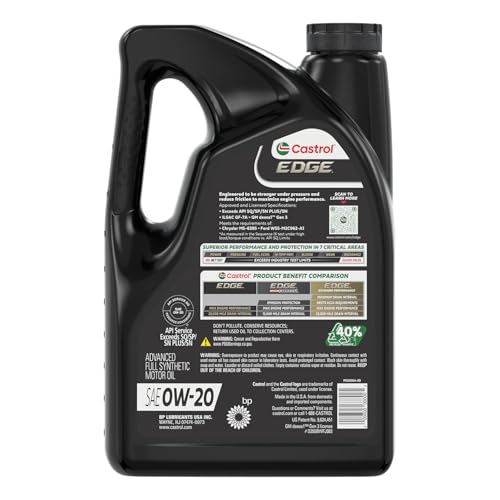
Castrol EDGE 0W-20 exceeds the supplied requirements for:
- API SQ
- API SP
- API SN PLUS
- API SN
API SQ represents modern gasoline-engine lubricant performance and addresses the needs of increasingly sophisticated engine designs.
That includes protection against wear, deposits, oxidation and other stresses found in contemporary engines.
For newer vehicles, matching the required performance category can be just as important as choosing the correct viscosity.
ILSAC GF-7 Performance
Castrol EDGE 0W-20 also meets ILSAC GF-7 performance requirements.
GF-7 oils are designed around modern gasoline-engine demands, including areas such as:
- Fuel economy
- Engine wear
- Oxidation control
- Deposit protection
- Timing-chain wear
- Low-speed pre-ignition protection
This makes Castrol EDGE 0W-20 particularly relevant to compatible late-model engines engineered around modern low-viscosity lubricants.
GM dexos1 Gen 3
Castrol EDGE 0W-20 carries GM dexos1 Gen 3 approval according to the supplied product specifications.
dexos1 Gen 3 addresses lubricant performance requirements for compatible General Motors gasoline engines, including modern turbocharged and direct-injected applications.
For GM owners, this is an important specification to verify when the vehicle calls for dexos1-approved oil.
Don’t shop by “0W-20” alone.
The approval list matters.
Ford WSS-M2C947-B1 and WSS-M2C962-A1
Castrol EDGE 0W-20 meets:
Ford WSS-M2C947-B1
and
Ford WSS-M2C962-A1
according to the supplied product information.
These specifications make EDGE 0W-20 relevant to compatible Ford-family engines requiring the applicable specification and viscosity.
Always check the exact oil requirement for your vehicle’s year and engine before ordering.
Chrysler MS-6395 Engine Test Requirements
Castrol also states that EDGE 0W-20 meets the engine-test requirements of Chrysler MS-6395.
That can make this formulation relevant to compatible Chrysler, Dodge, Jeep and Ram gasoline applications requiring the appropriate 0W-20 lubricant.
Again, verify the exact requirements for your engine rather than choosing solely by brand or viscosity.
Why 0W-20?
SAE 0W-20 is engineered to combine excellent low-temperature circulation with an SAE 20 operating-temperature viscosity.
The 0W represents the oil’s winter or low-temperature viscosity classification.
The 20 represents its operating-temperature SAE viscosity grade.
For engines engineered around 0W-20, the lower viscosity can help reduce internal friction while allowing oil to circulate rapidly during startup.
Don’t assume switching to thicker oil automatically provides better protection.
A modern engine designed around 0W-20 may depend on the specified viscosity for proper lubrication and hydraulic operation.
Give the engineers at least a little credit. They probably didn’t choose the number by throwing darts at an SAE chart.
Castrol EDGE 0W-20 Specifications
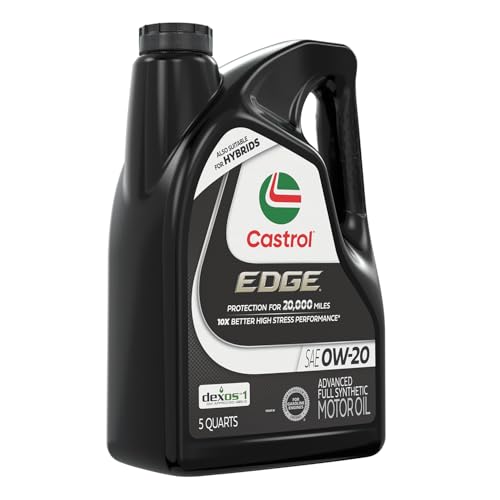
Brand: Castrol
Product Line: EDGE
Product Type: Advanced Full Synthetic Motor Oil
SAE Viscosity: 0W-20
Container Size: 5 Quarts
API: SQ / SP / SN PLUS / SN
ILSAC: GF-7
GM Approval: dexos1 Gen 3
Chrysler: Meets engine-test requirements of MS-6395
Ford: Meets WSS-M2C947-B1
Ford: Meets WSS-M2C962-A1
Extended Protection: Up to 20,000 miles or 365 days***
High-Stress Performance: 10X better versus API SQ test limits in referenced Sequence IX testing**
Viscosity Strength Claim: 3X stronger than leading full synthetic in referenced testing*
Primary Focus: Wear protection, viscosity control, thermal stability and modern-engine performance
Castrol EDGE 0W-20 vs Castrol EDGE Extended Performance 0W-20
Both products occupy the premium full-synthetic market, so choosing the correct product can become confusing.
This Castrol EDGE 0W-20 Advanced Full Synthetic page focuses on the standard EDGE formulation and its combination of:
- 3X viscosity-strength claim*
- 10X high-stress performance claim**
- 20,000-mile / 365-day protection***
- API SQ
- ILSAC GF-7
- dexos1 Gen 3
- Ford and Chrysler compatibility requirements
Castrol EDGE Extended Performance is a separate product line and should be selected according to its own labeling, specifications and application requirements.
Always confirm the exact product you’re purchasing rather than assuming every black Castrol bottle contains the same formulation.
Castrol EDGE 0W-20 vs Conventional Motor Oil
For a modern engine specifically requiring a premium 0W-20 lubricant, Castrol EDGE’s full-synthetic formulation offers performance characteristics designed around demanding temperature, wear and cleanliness requirements.
Compared with basic conventional formulations, advanced full synthetic oil can offer advantages in:
- Low-temperature flow
- Oxidation resistance
- Thermal stability
- Deposit control
- Viscosity stability
- High-load protection
- Extended lubricant performance
The engine still needs the correct viscosity and specifications.
Synthetic oil isn’t an excuse to ignore the owner’s manual.
Who Should Buy Castrol EDGE 0W-20?
Castrol EDGE 0W-20 makes sense for drivers whose engines require or permit an appropriate SAE 0W-20 lubricant and compatible specifications.
Potential applications include:
- Modern gasoline passenger cars
- SUVs and crossovers
- Light trucks
- Compatible turbocharged engines
- Direct-injection engines
- Vehicles requiring API SQ
- Vehicles requiring ILSAC GF-7
- Compatible GM vehicles requiring dexos1 Gen 3
- Compatible Ford applications requiring WSS-M2C947-B1
- Compatible Ford applications requiring WSS-M2C962-A1
- Compatible Chrysler applications
- Drivers seeking extended synthetic protection
- Owners prioritizing high-temperature stability
- Engines regularly exposed to demanding operating conditions
Always verify compatibility using the exact requirements for your year, make, model and engine.
Advanced Protection for Modern 0W-20 Engines
Today’s engines are smaller, hotter, more sophisticated and frequently more powerful per liter than their predecessors.
Their motor oil has had to evolve right along with them.
Castrol EDGE 0W-20 Advanced Full Synthetic Motor Oil combines modern low-viscosity performance with serious protection against wear, heat, sludge and viscosity breakdown.
With API SQ, ILSAC GF-7, GM dexos1 Gen 3, 10X better high-stress performance in Castrol’s referenced testing and protection for up to 20,000 miles or 365 days, EDGE 0W-20 is engineered for compatible drivers who expect more from their lubricant.
If your engine requires the appropriate SAE 0W-20 specifications, grab a 5-quart jug of Castrol EDGE and give it full-synthetic protection engineered for modern performance.
*3X stronger claim based on viscosity breakdown measured in the Kurt Orbahn test on the 5W-30 grade.
**10X better high-stress performance claim based on Sequence IX testing under high-load/high-torque conditions versus API SQ test limits.
***Castrol advertises up to 20,000 miles or 365 days between oil changes, whichever comes first. Always follow applicable vehicle-manufacturer maintenance requirements, oil-life monitoring systems, severe-service schedules and warranty requirements.








There are no reviews yet.