
Seal Conditioners Help Reduce Oil Leaks
One of the defining characteristics of MaxLife is its seal-conditioning technology.
Years of engine heat can cause certain seals to harden or shrink.
When those seals lose flexibility, oil can begin seeping past them.
Valvoline MaxLife includes seal conditioners designed to help restore flexibility to aging seals, potentially helping:
- Reduce minor oil leakage
- Reduce age-related seepage
- Minimize oil consumption
- Maintain proper lubrication
- Maintain oil levels between services
This does not mean motor oil can repair a mechanically damaged seal.
A torn seal, failed gasket or cracked component still requires an actual repair.
MaxLife is intended to address ordinary age-related seal deterioration—not perform mechanical witchcraft.
Helps Reduce Oil Consumption
Some engines begin consuming more oil as mileage accumulates.
Normal wear and aging seals can contribute to lubricant entering areas where it is eventually burned.
MaxLife’s high-mileage formulation is designed to help reduce oil consumption associated with aging seals while maintaining proper engine lubrication.
Owners of older vehicles should still check their oil level regularly.
If your engine consumes oil, don’t wait for the warning light to become your dipstick.
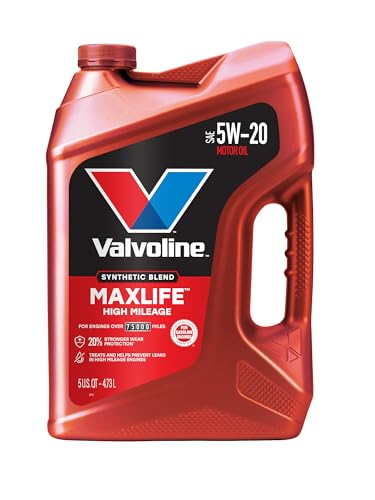
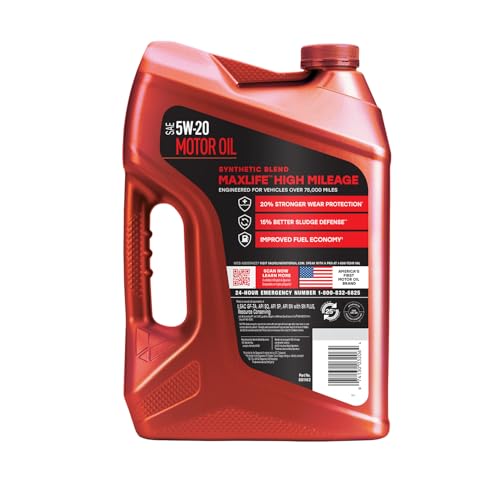
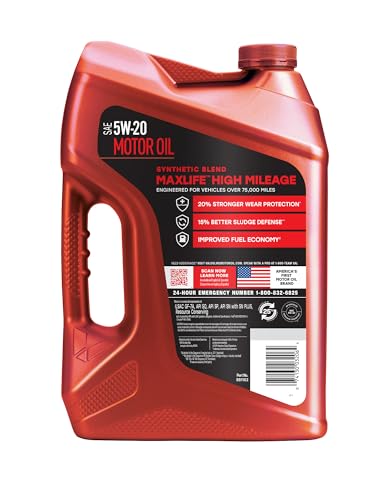
20% Better Wear Protection
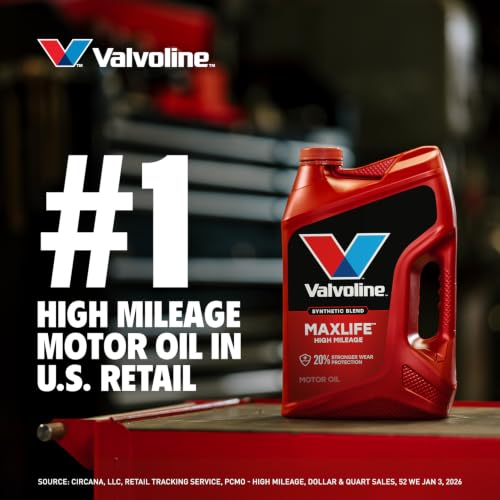
Valvoline states that MaxLife provides 20% better wear protection than industry standards.
That extra protection is especially valuable in a higher-mileage engine where components have already accumulated years of operation.
Engine oil must protect components such as:
- Bearings
- Camshafts
- Piston assemblies
- Valvetrain hardware
- Timing components
- Oil-pump surfaces
Reducing friction and wear can help preserve these components and extend useful engine life.
15% Better Sludge Defense
Valvoline also states that MaxLife delivers 15% better sludge defense than industry standards.
Sludge can develop when heat, oxidation, moisture and combustion contaminants combine with deteriorating motor oil.
If buildup becomes severe, sludge can restrict oil passages and interfere with proper lubrication.
MaxLife uses additional detergents to help control contaminants and maintain cleaner internal engine components.
For more information about how sludge develops and what happens when it gets out of control, read our My Pro Street guide to Engine Oil Sludge Causes and How to Fix It.
Keeping sludge out is considerably easier than cleaning it out.
Extra Detergents for High-Mileage Engines
After tens of thousands of miles, engine cleanliness becomes increasingly important.
MaxLife contains extra detergents designed to fight deposits and contaminants while helping protect against:
- Sludge
- Deposits
- Friction
- Corrosion
- Internal contamination
Maintaining cleaner engine surfaces helps the lubrication system perform its job effectively.
That becomes increasingly valuable when you’re planning to keep a vehicle well beyond 100,000 miles.
Friction-Fighting Additives
Valvoline MaxLife incorporates advanced friction-fighting additives designed to help maximize engine performance and support fuel efficiency.
Internal friction wastes energy and contributes to wear.
Reducing unnecessary friction can help support:
- Engine efficiency
- Fuel economy
- Component protection
- Smooth operation
- Long-term durability
This is particularly relevant for SAE 5W-20 applications, many of which were engineered around relatively low-viscosity lubricants to balance protection and efficiency.
Fuel-Efficiency Support for High-Mileage Engines
An aging engine doesn’t automatically have to become inefficient.
MaxLife 5W-20 combines its friction-fighting additives with the appropriate low-viscosity characteristics to help support fuel economy in compatible engines.
Actual fuel economy depends on far more than engine oil.
Tire pressure, vehicle condition, driving style, weather, traffic and mechanical health all matter.
But minimizing unnecessary internal engine friction is one part of keeping a higher-mileage vehicle operating efficiently.
Synthetic Blend Protection
Valvoline MaxLife 5W-20 is a synthetic-blend motor oil.
Its formulation combines base-oil technology with an additive package specifically tailored to higher-mileage engines.
The emphasis is on:
SEAL CONDITIONING
WEAR PROTECTION
SLUDGE DEFENSE
DEPOSIT CONTROL
FRICTION REDUCTION
For owners of compatible 5W-20 vehicles, that provides targeted high-mileage protection without requiring a move to a different viscosity simply because the odometer crossed 75,000 miles.
ILSAC GF-7A Performance
Valvoline MaxLife High Mileage 5W-20 meets or exceeds ILSAC GF-7A requirements according to the supplied product specifications.
GF-7A addresses important areas of modern gasoline-engine performance, including:
- Engine wear
- Fuel economy
- Deposit control
- Oxidation resistance
- Timing-chain wear
- Low-speed pre-ignition protection
- Engine cleanliness
This is particularly important because plenty of relatively modern vehicles have already accumulated 75,000, 100,000 or even 150,000 miles.
High mileage doesn’t necessarily mean old technology.
API SQ Performance
MaxLife 5W-20 also meets or exceeds:
- API SQ
- API SP
- API SN with SN PLUS
- Applicable preceding API gasoline categories
- Resource Conserving requirements
That allows MaxLife to combine high-mileage-specific features with modern lubricant performance.
For drivers of newer high-mileage vehicles, that’s an important combination.
Ford WSS-M2C970-A1
According to the supplied specifications, Valvoline MaxLife High Mileage 5W-20 meets Ford WSS-M2C970-A1.
That makes this particular 5W-20 formulation especially relevant to compatible Ford-family applications requiring the specification.
This is also one of the key distinctions between this product and the MaxLife 5W-30 formulation.
Always verify the required Ford specification for the exact year and engine before use.
Chrysler MS-13340
Valvoline also lists Chrysler MS-13340 among the additional specifications for this MaxLife formulation.
Owners of compatible Chrysler, Dodge, Jeep and Ram vehicles should compare the oil’s specifications with the exact requirements for their engine.
The correct viscosity is important.
So is the correct performance specification.
Valvoline MaxLife High Mileage 5W-20 Specifications
Brand: Valvoline
Product Line: MaxLife High Mileage
Product Type: Synthetic Blend Motor Oil
SAE Viscosity: 5W-20
Container Size: 5 Quarts
Recommended Mileage: 75,000+ miles
API: SQ / SP / SN with SN PLUS and applicable preceding gasoline categories
ILSAC: GF-7A
Resource Conserving: Yes
Ford Specification: WSS-M2C970-A1
Chrysler Specification: MS-13340
Seal Conditioners: Yes
Oil-Leak Protection: Yes
Oil-Consumption Protection: Yes
Wear Protection: 20% better than industry standards, per Valvoline
Sludge Defense: 15% better than industry standards, per Valvoline
Extra Detergents: Yes
Friction-Fighting Additives: Yes
Fuel-Efficiency Focus: Yes
Primary Application: Compatible engines with 75,000 miles or more
Why Keep Using 5W-20 After 75,000 Miles?
There’s an old habit among enthusiasts of automatically moving an aging engine to thicker oil.
That isn’t always appropriate.
If the manufacturer continues to specify SAE 5W-20 for your engine, high mileage alone doesn’t necessarily mean you should switch to a heavier viscosity.
MaxLife provides another option:
Keep the appropriate 5W-20 viscosity while adding high-mileage-focused protection.
That gives you seal conditioners, additional sludge defense and enhanced wear protection without arbitrarily changing the viscosity the engine was designed around.
5W-20 vs 5W-30 MaxLife
Valvoline MaxLife is available in multiple viscosity grades because different engines have different lubrication requirements.
MaxLife 5W-20 and MaxLife 5W-30 share similar high-mileage technology, but they are not interchangeable simply because the labels look similar.
The key distinction is operating-temperature viscosity:
5W-20 → SAE 20 operating-temperature grade
5W-30 → SAE 30 operating-temperature grade
This 5W-20 version also lists Ford WSS-M2C970-A1 among its specifications.
Choose the viscosity and specifications appropriate for the engine rather than assuming thicker is automatically safer.
Valvoline MaxLife vs Restore & Protect
Valvoline MaxLife and Valvoline Restore & Protect serve different primary purposes.
MaxLife High Mileage 5W-20 focuses on:
- Aging engine seals
- Minor oil leaks
- Oil consumption
- High-mileage wear
- Sludge defense
- Friction reduction
Restore & Protect, by comparison, is built primarily around actively removing existing piston deposits over consecutive oil changes and preventing future deposit formation.
If aging seals and high-mileage protection are your biggest concerns, MaxLife is the more targeted product.
If piston-deposit removal is the priority, Restore & Protect serves a different purpose.
Can MaxLife Fix an Oil Leak?
It depends on why the engine is leaking.
MaxLife’s seal conditioners may help reduce minor leaks associated with hardened or shrunken seals.
It cannot repair:
- Torn seals
- Broken gaskets
- Cracked components
- Damaged oil pans
- Loose drain plugs
- Failed oil-filter housings
- Severe mechanical wear
If you’re seeing a little high-mileage seepage, seal-conditioning oil may help.
If the car is marking its parking spot like an incontinent Labrador, diagnose the actual leak.
Who Should Buy Valvoline MaxLife High Mileage 5W-20?
MaxLife 5W-20 is particularly well suited to compatible engines with 75,000 miles or more.
Potential applications include:
- High-mileage passenger cars
- Older daily drivers
- High-mileage SUVs and crossovers
- Compatible light trucks
- Engines with minor seal seepage
- Vehicles consuming some oil between changes
- Engines requiring SAE 5W-20
- Vehicles requiring API SQ
- Vehicles requiring ILSAC GF-7A
- Compatible Ford applications requiring WSS-M2C970-A1
- Compatible Chrysler-family applications
- Owners prioritizing sludge control
- Drivers planning to keep their vehicle beyond 100,000 miles
Valvoline also states that MaxLife provides performance benefits for new and rebuilt engines, but its core mission remains protection for higher-mileage applications.
Always verify viscosity and specifications for your exact engine.
High-Mileage Protection Without Abandoning 5W-20
Your engine doesn’t need to be treated like it’s terminal just because the odometer crossed 75,000 miles.
It needs maintenance appropriate for its age.
Valvoline MaxLife High Mileage 5W-20 Synthetic Blend Motor Oil combines seal conditioners, extra detergents and friction-fighting additives to address the problems that become increasingly common as engines accumulate mileage.
With 20% better wear protection, 15% better sludge defense, API SQ, ILSAC GF-7A and dedicated high-mileage protection, MaxLife gives compatible 5W-20 engines a formulation designed to keep them running well into six-figure mileage.
If your higher-mileage engine calls for an appropriate SAE 5W-20 lubricant, grab a 5-quart jug of MaxLife and keep adding numbers to the odometer.







There are no reviews yet.