
Fitment can vary by trim, suspension package and sway-bar diameter.
That last part matters.
If your car has an 18mm, 19mm, 21mm or aftermarket bar, ordering a 20mm bushing because the model name matches is an excellent way to acquire two very nice pieces of polyurethane that don’t fit anything.
Verify Your Rear Sway Bar Diameter
Before purchasing the W0406-20, confirm that your rear stabilizer bar measures 20mm at the bushing mounting location.
Don’t measure near a bend or tapered section.
Measure the straight portion of the bar where the chassis bushing actually sits.
A digital or vernier caliper is the best tool.
Clean away:
- Dirt
- Rust scale
- Grease
- Heavy paint buildup
Then measure the bar itself.
Even a small difference matters because the bushing needs to fit closely around the sway bar while still allowing controlled rotational movement.
What Does a Rear Sway Bar Bushing Do?
The rear sway bar connects the left and right sides of the suspension.
When the vehicle corners and one side of the suspension compresses relative to the other, the stabilizer bar twists.
That torsional resistance helps control body roll.
The bar is attached to the chassis through mounting brackets and bushings.
Those bushings perform several jobs:
- Support the sway bar
- Allow controlled rotation
- Isolate noise and vibration
- Prevent excessive lateral and vertical movement
- Maintain consistent stabilizer-bar operation
When the bushings deteriorate, the sway bar can move before it begins effectively resisting suspension movement.
That’s unwanted compliance.
Symptoms of Worn Rear Sway Bar Bushings
Worn stabilizer-bar bushings can produce several symptoms.
Common signs include:
- Clunking over bumps
- Knocking from the rear suspension
- Sway-bar movement
- Loose rear-end feel
- Delayed chassis response
- Excessive bushing movement
- Visible cracking or deterioration
- Noise during low-speed suspension movement
Not every rear suspension clunk is caused by sway-bar bushings.
End links, shocks, mounts, control-arm bushings and other suspension components can produce similar symptoms.
Inspect before replacing parts.
The parts cannon is entertaining, but diagnosis is cheaper.
Why Upgrade From Factory Rubber Bushings?
Factory rubber bushings are designed around a compromise between:
Comfort
Noise isolation
Durability
and
suspension control.
Rubber also deteriorates with age.
Heat, oil, water, ozone and repeated suspension movement gradually affect the material.
A performance-oriented synthetic elastomer bushing reduces some of the compliance found in soft or deteriorated factory rubber.
That can make sway-bar response more immediate.
Whiteline Synthetic Elastomer Construction
Whiteline uses a synthetic elastomer formulation designed for suspension applications.
The material provides resistance to environmental contaminants including:
- Grease
- Oil
- Ozone
- Weather exposure
- Road contamination
That’s useful because sway-bar bushings spend their entire lives underneath the vehicle.
Nobody installs them in a climate-controlled display case.
They get water, grime, temperature cycles and whatever mysterious substance is leaking from the 1998 Altima parked ahead of you.
Internal Grease Reservoirs
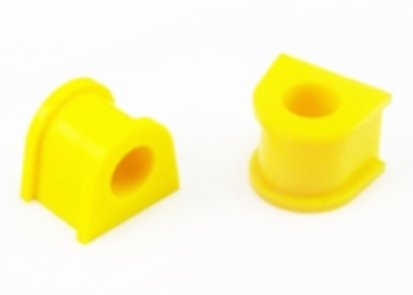
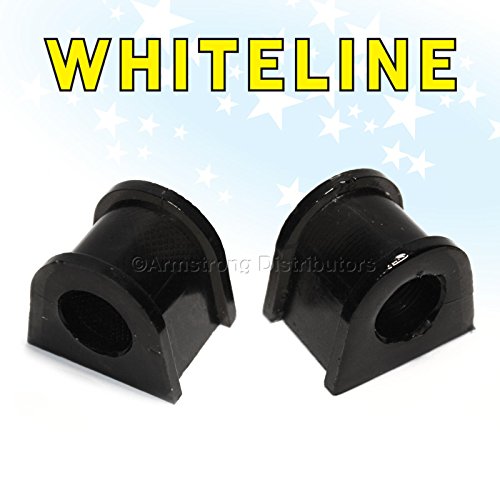
One particularly useful feature of the W0406-20 is its internal grease reservoir design.
Unlike some suspension bushings that are intended to remain fixed, sway-bar chassis bushings must allow the stabilizer bar to rotate as the suspension moves.
Lubrication therefore matters.
Whiteline incorporates internal grease reservoirs designed to retain lubricant between the bushing and stabilizer bar.
This helps:
- Manage friction
- Maintain smooth bar movement
- Reduce binding
- Reduce noise
- Maintain consistent operation
Use the lubricant recommended by Whiteline during installation.
Can Sway Bar Bushings Improve Handling?
Replacing worn bushings can absolutely improve how the suspension feels.
But it’s important to understand what you’re actually changing.
Installing W0406-20 bushings doesn’t transform a 20mm sway bar into a larger performance bar.
Instead, you’re reducing compliance at the bar’s chassis mounting points.
If the factory bushings are heavily worn, the difference can be surprisingly noticeable.
The rear suspension may feel:
Tighter
More immediate
More predictable
More connected
The sway bar can begin resisting roll sooner because less movement is being absorbed by soft bushings.
Will These Bushings Reduce Body Roll?
Potentially, but don’t expect the same change you’d get from installing a substantially larger sway bar.
A larger stabilizer bar increases actual roll stiffness.
Performance bushings primarily improve how effectively the existing bar operates.
Think of the difference this way:
Larger sway bar: changes the spring effect of the stabilizer system.
Performance bushings: reduce unwanted movement between that bar and the chassis.
They complement each other, but they aren’t the same modification.
Subaru Impreza Rear Sway Bar Bushings
The Subaru Impreza is an especially logical candidate for a sway-bar bushing refresh because many surviving examples are now well beyond the age where original rubber suspension components deserve automatic trust.
Performance-oriented Impreza models also tend to live enthusiastic lives.
Inspect the complete rear stabilizer system, including:
- Bushings
- Mounting brackets
- End links
- Sway-bar condition
- Chassis mounting points
If one component is worn, others may not be far behind.
Subaru Legacy and Outback Applications
The same principle applies to older Legacy and Outback models.
These vehicles frequently accumulate substantial mileage while dealing with:
- Weather
- Dirt
- Road salt
- Gravel
- Snow
- Repeated suspension movement
Fresh sway-bar bushings can be a relatively inexpensive part of a broader suspension restoration.
If you’re already replacing shocks, springs or other chassis components, inspecting stabilizer-bar bushings makes sense.
Subaru Baja Applications
The Subaru Baja shares much of its underlying architecture with contemporary Subaru platforms, which makes suspension maintenance particularly important as these increasingly uncommon vehicles age.
For a compatible Baja equipped with a 20mm rear bar, W0406-20 bushings can help restore more controlled sway-bar mounting without requiring major suspension changes.
Saab 9-2X Applications
Yes, the Saab 9-2X is here too.
And no, Whiteline hasn’t suddenly become confused about what country Subaru comes from.
The 2005–2006 Saab 9-2X shares substantial chassis and mechanical architecture with the Subaru Impreza.
That Subaru relationship means many suspension concepts—and certain compatible components—cross over between the two platforms.
The lovingly nicknamed Saabaru strikes again.
Performance Bushings vs. OEM Rubber
Which is better depends on what you want.
OEM-Style Rubber
Best suited for drivers prioritizing:
- Maximum isolation
- Factory ride characteristics
- Minimum potential NVH
- Original suspension behavior
Whiteline Synthetic Elastomer
Better suited for drivers prioritizing:
- Reduced compliance
- More direct sway-bar response
- Improved durability
- Performance-oriented suspension behavior
For a daily driver, Whiteline bushings can provide a useful middle ground between old factory rubber and much more aggressive chassis modifications.
Will Whiteline Bushings Increase NVH?
Potentially, although sway-bar mounting bushings generally have a relatively modest effect on noise, vibration and harshness compared with replacing major suspension pivots or engine mounts.
A lower-compliance bushing can transmit more suspension information into the chassis.
Proper lubrication is particularly important because inadequately lubricated performance sway-bar bushings may squeak.
That isn’t a feature.
That’s your Subaru requesting grease.
Installation
Installing rear sway-bar chassis bushings is relatively straightforward on many vehicles.
Typical installation involves:
- Safely raise and support the vehicle.
- Locate the rear sway bar.
- Identify the chassis mounting brackets.
- Support the bar as necessary.
- Remove the sway-bar mounting brackets.
- Remove the old bushings.
- Clean the sway bar at the mounting locations.
- Lubricate the new bushings according to Whiteline’s instructions.
- Install the W0406-20 bushings.
- Reinstall the brackets.
- Torque mounting hardware correctly.
- Verify free and correct sway-bar movement.
Whiteline includes installation guidance with the kit.
Inspect the Mounting Brackets
While the bushings are removed, inspect the factory brackets.
Look for:
- Corrosion
- Cracks
- Deformation
- Damaged bolt holes
- Loose mounting hardware
Performance bushings can’t compensate for a bent or heavily corroded mounting bracket.
Inspect Your Rear End Links Too
The sway-bar end links transfer load between the stabilizer bar and suspension.
Worn links can create:
- Clunking
- Play
- Delayed sway-bar response
- Noise over uneven pavement
If you’re replacing chassis bushings because the rear suspension feels loose, inspect the links before putting everything back together.
Do You Need an Alignment After Installation?
Normally, no.
Replacing sway-bar chassis bushings doesn’t change static alignment geometry.
You’re not changing:
- Camber
- Caster
- Toe
- Ride height
Therefore, installing W0406-20 bushings alone generally doesn’t require a wheel alignment.
If you’re simultaneously installing lowering springs, coilovers or adjustable suspension arms, that’s different.
Pro Street’s Complete Guide to Lowering Springs covers the relationship between lowering and suspension geometry.
Building a Better Subaru Suspension
Bushings are only one part of suspension performance.
A balanced street Subaru should consider:
- Tires
- Dampers
- Springs
- Sway bars
- Bushings
- End links
- Alignment
- Overall suspension condition
Pro Street’s Daily Driver Suspension Setup That Actually Works explains why combining complementary components usually works better than simply making everything as stiff as possible.
Who Should Buy Whiteline W0406-20?
The W0406-20 makes the most sense for owners who:
Have worn factory rear sway-bar bushings
Want more precise stabilizer-bar response
Are refreshing an older Subaru suspension
Need bushings for a compatible 20mm rear sway bar
Want a performance-oriented alternative to soft factory rubber
They’re also useful when installing or servicing an existing 20mm stabilizer bar and the old bushings are already removed.
There’s little reason to reinstall 20-year-old rubber just because it technically hasn’t disintegrated yet.
Is the Whiteline W0406-20 Worth It?
For a compatible Subaru or Saab equipped with a 20mm rear sway bar, the Whiteline W0406-20 is a simple suspension upgrade with a clear purpose.
The kit provides:
20mm bar fitment
Synthetic elastomer construction
Reduced bushing compliance
Internal grease reservoirs
Environmental resistance
Improved sway-bar mounting control
It won’t transform your Legacy into an STI.
It will help make sure the rear sway bar is actually attached to the chassis like it still has some enthusiasm for the job.
For aging performance cars in particular, replacing deteriorated suspension bushings is often one of the smartest places to start before spending substantially more money elsewhere.
Shop Subaru, Saab and performance suspension components through Pro Street Online.



There are no reviews yet.