

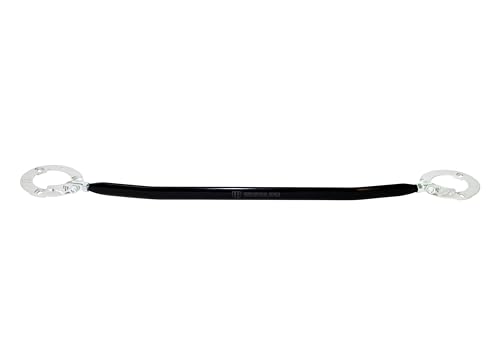
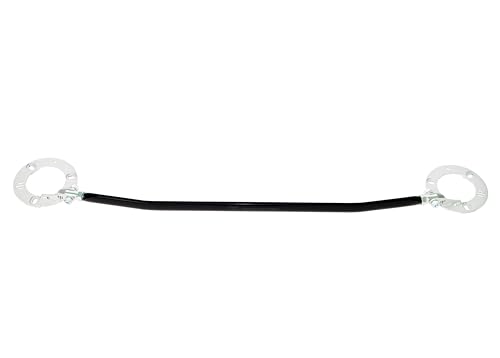
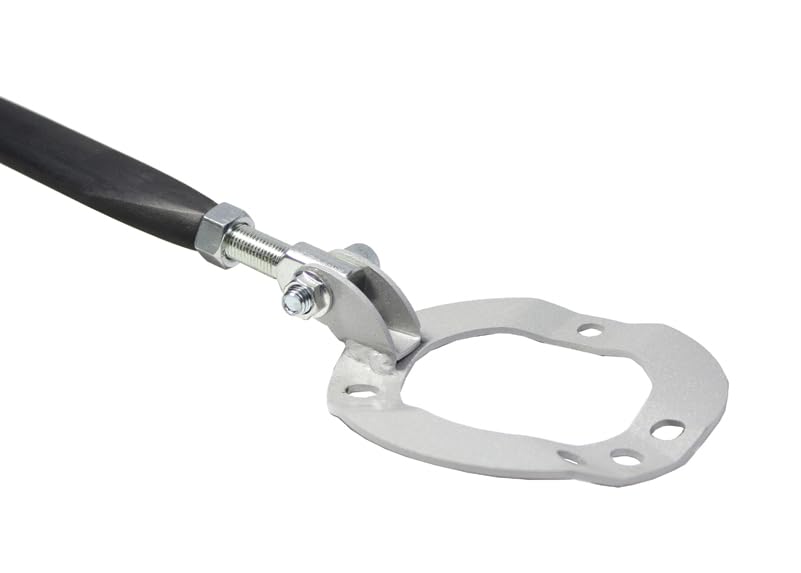
What Vehicles Fit the Whiteline KSB536?
Published application data associates KSB536 primarily with BMW E36 six-cylinder models.
Common listed applications include:
| Years | Make | Model |
|---|---|---|
| 1991–1995 | BMW | 325i |
| 1991–1995 | BMW | 325is |
| 1991 | BMW | 325iX |
| 1998–2000 | BMW | 323i |
| 1998–1999 | BMW | 323is |
| 1996–2000 | BMW | 328i |
| 1996–1999 | BMW | 328is |
| 1995–1999 | BMW | M3 |
| 1995 | BMW | M3 Lightweight |
Important: Verify chassis, engine, traction-control equipment and physical clearance before ordering.
Some aftermarket catalogs also associate KSB536 with additional 3-Series configurations. Because BMW transitioned from the E36 to E46 platform during this period, Pro Street recommends verifying the exact vehicle rather than assuming every 3-Series sharing a model designation uses the same brace.
Why Does a BMW E36 Need a Strut Tower Brace?
A vehicle chassis isn’t perfectly rigid.
When cornering, braking or driving over uneven pavement, forces generated by the tires travel through the suspension mounting points and into the body structure.
Those forces can cause small amounts of chassis deflection.
On a MacPherson-strut front suspension, the upper strut towers are particularly important because they’re structural suspension mounting points.
Connecting those towers with a rigid brace helps resist relative movement between them.
Think of it as adding another structural connection across the front of the chassis.
The goal isn’t to make the car completely rigid.
The goal is to reduce unwanted movement so the suspension geometry remains more consistent.
How Chassis Flex Affects Suspension Geometry
Your alignment isn’t just a collection of numbers printed by an alignment machine.
Camber, caster and toe determine how the tires interact with the pavement.
During aggressive driving, chassis movement can allow the relationship between suspension mounting points to change slightly.
That means the alignment under load isn’t necessarily identical to the alignment measured while the car is sitting motionless on a rack.
Reducing chassis flex can help maintain more consistent suspension geometry when the car is being pushed.
That’s particularly useful on an E36 used for:
- Canyon driving
- Autocross
- Track days
- Performance street driving
- High-grip tire setups
The more grip the tires generate, the more force gets transferred into the chassis.
Can the KSB536 Improve Turn-In?
That’s one of the primary reasons to install a front strut brace.
When you turn the steering wheel, you want the suspension and tires to respond as directly as possible.
Chassis compliance introduces another variable between steering input and tire response.
Reducing movement between the front strut towers can contribute to a more immediate feeling during initial steering input.
Drivers may notice:
Sharper turn-in
More immediate steering response
Better steering feedback
Greater front-end consistency
Don’t expect the steering wheel to suddenly transmit telepathic messages from the front tires.
But on a well-maintained chassis with good tires and suspension components, additional rigidity can make the front end feel more connected.
Does a Strut Brace Increase Grip?
Not directly.
The brace doesn’t create additional tire grip the way installing better tires can.
Instead, it helps the suspension use the available grip more consistently by reducing unwanted chassis movement.
That’s an important distinction.
A strut brace should be considered a chassis optimization component, not a substitute for tires, dampers, bushings or proper alignment.
Why the E36 Responds Well to Chassis Upgrades
BMW engineered the E36 with excellent fundamental suspension geometry.
That’s part of the reason these cars remain popular decades after production ended.
But age matters.
Many E36s are now more than 25 years old.
Bushings deteriorate.
Mounts fatigue.
Rubber softens.
Body structures experience thousands of miles of loading cycles.
Before installing chassis braces, inspect the surrounding suspension and body mounting points.
A brace shouldn’t be used to hide an existing structural or suspension problem.
Inspect the E36 Front Strut Towers
E36 owners should inspect the front strut tower area periodically, particularly on vehicles driven aggressively or equipped with stiff suspension.
Look for:
- Cracks
- Distortion
- Mushrooming around the upper mount
- Loose hardware
- Corrosion
- Damaged strut mounts
- Evidence of previous repairs
A strut brace transfers load through these mounting areas.
You want those areas structurally sound before adding additional chassis reinforcement.
Strut Brace vs. Sway Bar
These components are frequently confused because both can influence how a car feels during cornering.
But they perform very different jobs.
Front Strut Tower Brace
A strut brace connects structural suspension mounting points.
Its primary purpose is reducing chassis flex.
Sway Bar
A sway bar connects the left and right suspension and resists differences in suspension movement.
Its primary purpose is controlling roll stiffness and influencing handling balance.
Installing a larger sway bar can substantially change understeer or oversteer characteristics.
Installing a strut brace primarily increases structural rigidity.
Both can improve handling, but they’re doing different jobs.
Strut Brace vs. Lowering Springs
Lowering springs also serve a completely different purpose.
Springs influence:
- Ride height
- Spring rate
- Suspension travel
- Body movement
- Center-of-gravity height
A strut brace doesn’t change any of those things.
That’s why chassis braces work well alongside properly engineered suspension modifications.
Read Pro Street’s Complete Guide to Lowering Springs for more information about how ride height and spring rate affect handling.
https://my.prostreetonline.com/lowering-springs/
Will the KSB536 Make the Ride Harsher?
One major advantage of chassis bracing is that it can improve structural rigidity without substantially increasing suspension spring rate.
The KSB536 doesn’t replace the springs or dampers.
Therefore, it shouldn’t transform the E36’s ride in the same way extremely stiff springs or aggressive coilovers can.
You may perceive more road information through the steering and chassis because structural movement has been reduced, but the suspension still controls the majority of vertical wheel movement.
For a street-performance build, that’s attractive.
You can increase precision without automatically making every freeway expansion joint feel like an FIA curb.
Does a Strut Brace Help a Daily Driver?
It can, particularly if the driver values steering feel.
The benefits are likely to be most noticeable during:
- Fast directional changes
- Highway ramps
- Canyon roads
- Autocross
- Track driving
- Uneven cornering surfaces
During normal straight-line commuting, the difference may be subtle.
And that’s fine.
Not every performance modification needs to announce itself while you’re sitting in traffic.
Installation
The KSB536 is designed as a vehicle-specific brace.
Installation generally involves mounting the brace across the upper front strut towers using existing mounting locations.
Basic installation typically involves:
- Park the vehicle on a level surface.
- Open the hood.
- Locate the front strut tower mounting hardware.
- Remove the required upper mounting nuts.
- Position the KSB536 across the engine bay.
- Confirm correct orientation and clearance.
- Reinstall the mounting hardware.
- Torque all fasteners to the proper specification.
- Verify clearance around the engine, hood and surrounding components.
Follow Whiteline’s installation instructions and BMW torque specifications.
Do not simply tighten the mounting hardware until your impact gun sounds emotionally satisfied.
Check Hood and Engine Clearance
Any engine-bay brace needs adequate clearance.
Before driving the vehicle, verify clearance around:
- Intake components
- Engine covers
- Wiring
- Brake components
- Hood insulation
- Hood structure
- Engine movement areas
The engine moves slightly on its mounts during acceleration and deceleration, so static clearance shouldn’t be razor-thin.
Do You Need an Alignment After Installing KSB536?
Normally, installing a strut tower brace alone doesn’t require an alignment because you’re not intentionally changing suspension mounting geometry.
However, an alignment is worth considering if the vehicle simultaneously receives:
- Lowering springs
- Coilovers
- Control arms
- Adjustable camber plates
- Tie rods
- New suspension bushings
A properly aligned chassis is the foundation for every handling modification that follows.
Best Modifications to Pair With KSB536
A strut brace becomes more valuable as part of a properly maintained and balanced suspension package.
Consider pairing it with:
- Quality performance tires
- Fresh control-arm bushings
- Fresh ball joints
- Quality dampers
- Lowering springs
- Coilovers
- Performance sway bars
- Rear chassis reinforcement
- Proper alignment
For a street car, resist the temptation to replace every rubber component with something possessing roughly the compliance of granite.
A suspension still needs to move.
Pro Street’s guide to building a Daily Driver Suspension Setup That Actually Works explains why balance matters more than simply maximizing stiffness.
https://my.prostreetonline.com/2026/07/24/daily-driver-suspension-setup/
KSB536 for an E36 Track Car
Track driving is where additional chassis rigidity becomes particularly attractive.
High-performance tires generate substantially greater cornering loads than ordinary street tires.
Those loads transfer through the:
Tire → wheel → hub → suspension → chassis
Reducing movement at the chassis end helps the suspension behave more consistently.
For a track-oriented E36, chassis reinforcement should be considered alongside:
- Suspension bushings
- Dampers
- Springs
- Alignment
- Tires
- Brakes
- Cooling
- Structural inspection
A strut brace alone won’t transform the car.
But as part of a complete chassis package, it can contribute to a more predictable front end.
Is the Whiteline KSB536 Worth It?
For the correct BMW application, the Whiteline KSB536 Front Strut Tower Brace is a straightforward chassis upgrade with very few compromises.
It doesn’t lower the vehicle.
It doesn’t dramatically increase spring rate.
It doesn’t require adjusting seventeen knobs every time the temperature changes.
Instead, it reinforces the front suspension mounting structure so the rest of the suspension can operate from a more rigid foundation.
For an E36 enthusiast who values steering response and chassis feel, that’s exactly the point.
The modification is particularly attractive for:
Performance street cars
Autocross builds
Track-day E36s
Restomod projects
Cars receiving a comprehensive suspension refresh
Before ordering, verify that your BMW matches the KSB536 six-cylinder application requirements and confirm traction-control and chassis compatibility.
Shop suspension, chassis and BMW performance components at Pro Street Online:
https://www.prostreetonline.com/








There are no reviews yet.