
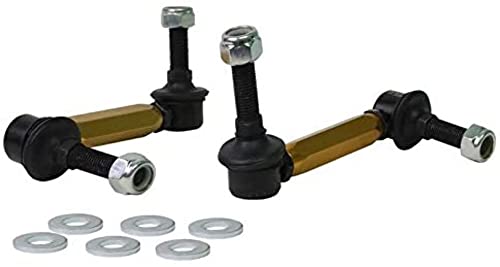
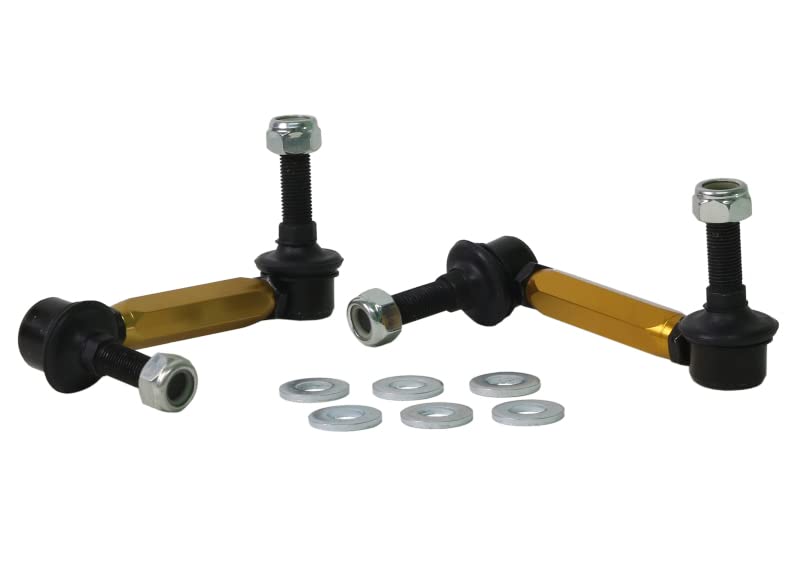
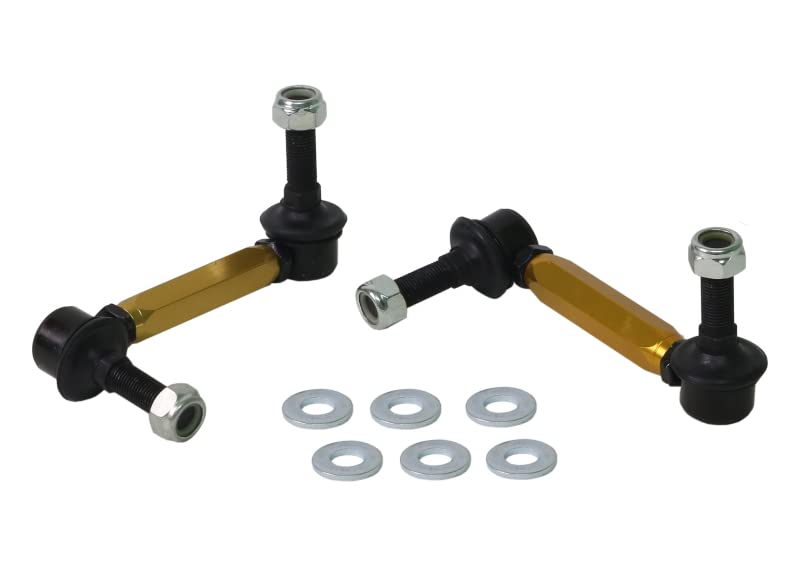


What Vehicles Fit Whiteline KLC220?
Whiteline KLC220 is advertised for select 2003–2025 Toyota truck and SUV applications, primarily Tacoma, 4Runner and FJ Cruiser.
Typical applications include:
| Years | Make | Model |
|---|---|---|
| 2005–2023 | Toyota | Tacoma |
| 2003–2024 | Toyota | 4Runner |
| 2007–2014 | Toyota | FJ Cruiser |
Important Fitment Note
The marketplace description’s broad “03–25 Tacoma, 4Runner, FJ Cruiser” range shouldn’t be interpreted as every model fitting from 2003 through 2025.
For U.S.-market vehicles, the primary applications are the corresponding generations of:
Toyota Tacoma
Toyota 4Runner
Toyota FJ Cruiser
Suspension configuration can vary with model year, drivetrain, trim and aftermarket modifications. Verify the exact application before ordering, particularly on newer-generation Tacoma and 4Runner models.
What Does a Sway Bar End Link Do?
The sway bar can’t do much if it isn’t properly connected to the suspension.
End links create that connection.
As one side of the suspension moves relative to the other, the end link transfers that movement into the sway bar.
The bar twists and resists the difference in suspension movement.
That helps control body roll.
The load path looks roughly like this:
Suspension → End Link → Sway Bar → Opposite Suspension
Any flex, play or incorrect geometry in the link reduces how effectively the sway bar responds.
Why Upgrade Toyota Sway Bar End Links?
Factory end links are engineered around:
- Factory ride height
- Factory sway bar
- Factory suspension geometry
- Factory wheel travel
- Factory handling targets
Change those parameters and the original links may no longer be ideal.
This becomes especially relevant after installing:
- Lift kits
- Lowering components
- Adjustable coilovers
- Performance sway bars
- Different control arms
- Other suspension geometry modifications
An adjustable link allows you to correct the sway bar’s relationship to the suspension instead of simply forcing the factory-length link into whatever position the modified suspension created.
What Is Sway Bar Preload?
Sway-bar preload occurs when the stabilizer bar is already being twisted or loaded while the vehicle is sitting at normal ride height.
Ideally, on level ground, the sway bar should remain relatively neutral.
If one end link effectively pushes or pulls against the bar at static ride height, preload can be introduced.
That can cause different suspension behavior between left and right turns.
Potential symptoms include:
- Inconsistent cornering balance
- Uneven suspension response
- Strange handling behavior
- Difficulty setting up modified suspension
- Uneven initial sway-bar loading
Adjustable end links provide a way to remove that unwanted preload.
How Adjustable End Links Remove Preload
The KLC220 allows the installer to change link length while setting up the suspension.
The vehicle should be positioned at its normal operating ride height when final adjustments are made.
The objective is to connect the sway bar without having to force either end of the bar into position.
Once the link fits naturally:
No forced alignment = minimal unwanted preload.
That’s particularly useful on vehicles with modified ride heights.
Why Ride Height Matters
Changing ride height changes the relationship between suspension components.
This includes:
- Control arms
- Steering geometry
- Sway-bar angle
- End-link angle
- CV axle angles
- Suspension travel
On lifted Tacoma and 4Runner builds, factory end-link geometry may become less favorable.
Adjustable links can help restore a more appropriate stabilizer-bar position.
They’re not magic geometry erasers, but they provide an important adjustment point.
Heavy-Duty Ball Joints
Whiteline equips the KLC220 with heavy-duty steel ball joints.
That’s important because sway-bar end links operate through changing angles as the suspension moves.
The joint must allow articulation while transmitting substantial suspension loads.
Whiteline’s design is intended to provide:
- High strength
- Durability
- Consistent articulation
- Reduced unwanted movement
- Predictable suspension response
A worn ball joint can introduce play before the sway bar begins working.
Reducing that play improves response.
High-Strength Alloy Construction
The links themselves use lightweight high-strength alloy construction.
The goal is combining rigidity with manageable weight.
A more rigid link transfers suspension load into the sway bar more directly.
Instead of some of the initial movement being absorbed by link flex or deteriorated joints, the stabilizer bar can begin doing its job sooner.
Symptoms of Worn Sway Bar End Links
You don’t necessarily need adjustable links simply because they’re shiny and available.
First determine whether the existing links are worn or inappropriate for the current suspension setup.
Common symptoms of failing end links include:
- Clunking over bumps
- Knocking during low-speed suspension movement
- Loose or vague handling
- Excessive link movement
- Torn joint boots
- Play in the ball joints
- Rattling from the suspension
- Reduced sway-bar effectiveness
A clunk doesn’t automatically mean the end links are bad.
Control-arm bushings, ball joints, shock mounts and sway-bar bushings can create similar symptoms.
Diagnose first.
Parts cannon later.
KLC220 With an Aftermarket Sway Bar
Adjustable links become particularly useful when installing a performance stabilizer bar.
A larger or adjustable sway bar can transmit substantially more load through the end links than the factory component.
Using rigid links with strong joints helps make sure the upgraded bar’s response isn’t being compromised by worn or flexible connections.
If you’ve spent money increasing sway-bar performance, letting worn end links absorb part of that response is somewhat counterproductive.
KLC220 With Lifted Tacoma and 4Runner Builds
Many Tacoma, 4Runner and FJ Cruiser owners modify ride height for additional clearance.
Lifted suspension can alter sway-bar geometry.
Depending on the suspension package, adjustable links can help reposition the stabilizer bar closer to its intended operating orientation.
That may improve:
- Bar articulation
- Link alignment
- Clearance
- Suspension consistency
- Stabilizer-bar effectiveness
However, extremely modified suspension systems may require application-specific extended links or other geometry corrections.
Always verify the required adjustment range.
Street Handling Benefits
Toyota trucks and SUVs aren’t sports cars, but sway bars still play an important role in controlling body movement.
A properly functioning front stabilizer system can improve:
- Lane-change response
- Highway stability
- Cornering predictability
- Steering response
- Body control
Whiteline specifically notes increased rigidity and responsiveness during maneuvers such as lane changes.
For a daily-driven SUV or pickup, predictable response can matter more than ultimate cornering grip.
Off-Road Considerations
There’s an interesting tradeoff with sway bars on off-road vehicles.
On pavement, a sway bar helps control body roll.
Off road, significant stabilizer-bar stiffness can restrict independent wheel articulation.
The KLC220 doesn’t change the fundamental stiffness of the sway bar.
It improves the connection between the bar and suspension.
That means owners should still choose the sway-bar configuration appropriate for their intended use.
A rock-crawling build has different priorities than a Tacoma that spends 95 percent of its life commuting.
Adjustable Angular Position
Whiteline designed the KLC220 to allow the links to rotate into different angular positions during installation.
This helps accommodate the actual relationship between the sway bar and suspension mounting points.
Proper alignment reduces binding.
That’s particularly useful when other suspension components have changed from factory specifications.
Installation
Installation is relatively straightforward, but final adjustment matters.
General procedure:
- Safely raise and support the vehicle.
- Remove the factory front sway-bar end links.
- Inspect the sway-bar mounting points.
- Compare the required link length with the Whiteline adjustment range.
- Install the KLC220 links.
- Position the suspension at normal operating ride height.
- Adjust link length to remove unwanted sway-bar preload.
- Confirm adequate joint articulation.
- Tighten adjustment hardware.
- Torque all mounting fasteners correctly.
- Verify clearance through suspension travel.
Whiteline includes installation instructions with the kit.
Adjust at Normal Ride Height
This part is important.
Don’t finalize sway-bar preload with the suspension hanging at full droop.
The suspension should be loaded at normal ride height when final link length is established.
That can be accomplished using:
- Drive-on ramps
- An alignment rack
- A four-post lift
- Appropriate suspension-loading techniques
The goal is reproducing the vehicle’s normal static position.
Do Adjustable End Links Require an Alignment?
Installing sway-bar end links alone generally doesn’t change:
- Camber
- Caster
- Toe
Therefore, an alignment isn’t normally required solely because KLC220 links were installed.
However, many owners install adjustable links while simultaneously changing:
- Ride height
- Coilovers
- Control arms
- Alignment components
If you’ve changed those parts, get an alignment.
Inspect the Sway Bar Bushings
While you’re underneath the vehicle, inspect the chassis-mounted sway-bar bushings.
Look for:
- Cracking
- Deformation
- Excessive clearance
- Contamination
- Squeaking
- Bar movement inside the mounts
A complete stabilizer system depends on both:
End links
and
Chassis bushings.
Upgrading one while ignoring a completely destroyed version of the other limits the benefit.
Sway Bar End Links vs. Sway Bar Upgrade
These modifications serve different purposes.
Performance Sway Bar
Changes roll stiffness.
Performance End Links
Improve the connection between the sway bar and suspension.
A larger sway bar can significantly alter handling balance.
Rigid adjustable links help that bar respond more accurately.
That’s why the components work well together.
Build a Balanced Toyota Suspension
Whether you’re building a Tacoma, 4Runner or FJ Cruiser, suspension modifications should work together.
Consider:
- Springs
- Dampers
- Coilovers
- Sway bars
- End links
- Bushings
- Control arms
- Tires
- Alignment
For street-focused builds, Pro Street’s Daily Driver Suspension Setup That Actually Works explains why suspension compliance and geometry matter just as much as stiffness.
If you’re changing springs or ride height, Pro Street’s Complete Guide to Lowering Springs also covers the broader relationship between ride height and suspension behavior.
Who Should Buy Whiteline KLC220?
The KLC220 is particularly useful for:
Modified-height vehicles needing sway-bar geometry adjustment.
Performance street builds where more direct stabilizer response is desired.
Vehicles with aftermarket sway bars that place greater demands on the links.
Suspension refreshes where the factory links are already worn.
Handling-focused Tacoma, 4Runner and FJ Cruiser builds where consistent body control matters.
Is the Whiteline KLC220 Worth It?
For the correct Toyota application, the Whiteline KLC220 Adjustable Front Sway Bar Link Kit addresses two problems that frequently get overlooked:
Compliance
and
preload.
The combination of adjustable length, heavy-duty steel ball joints and high-strength alloy construction allows the stabilizer bar to operate through a more rigid and properly adjusted connection.
That can provide:
More direct sway-bar response
Reduced unwanted flex
Sway-bar preload adjustment
Improved handling consistency
Better compatibility with modified suspension
If your Tacoma, 4Runner or FJ Cruiser still has completely stock suspension in perfect condition, adjustable end links probably aren’t the first modification you need.
But once you’ve changed ride height, upgraded the sway bar or discovered the factory links have been clunking since the second Obama administration, the KLC220 starts making considerably more sense.
Shop Toyota suspension, chassis and performance components through Pro Street Online.




There are no reviews yet.