
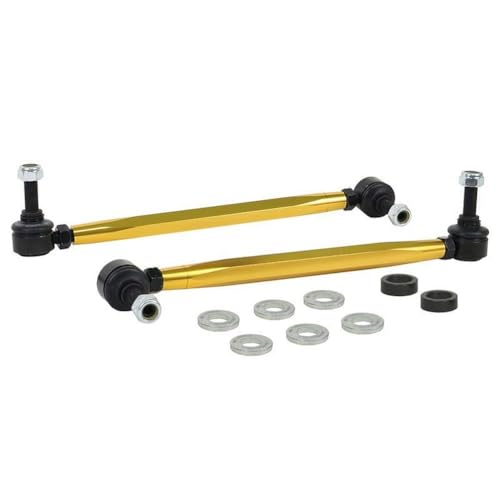
What Vehicles Fit Whiteline KLC167A?
Whiteline primarily designed KLC167A around Volkswagen Group PQ35 and MQB front suspension applications, including Audi and Volkswagen vehicles. The manufacturer’s catalogs also show Seat and Skoda applications outside the U.S. market.
For U.S.-market Pro Street cataloging, the most important applications include:
| Years* | Make | Model |
|---|---|---|
| 2006–2013 | Audi | A3 |
| 2006–2013 | Audi | S3 / applicable 8P variants |
| 2015–2020 | Audi | A3 |
| 2015–2020 | Audi | S3 |
| 2015–2020 | Audi | RS3 / applicable MQB variants |
| 2006–2014 | Volkswagen | Golf / Rabbit |
| 2006–2014 | Volkswagen | GTI |
| 2008–2013 | Volkswagen | R32 / Golf R applications |
| 2006–2018 | Volkswagen | Jetta / GLI, applicable configurations |
| 2006–2019 | Volkswagen | Beetle, applicable configurations |
*Exact fitment varies by chassis, drivetrain and suspension configuration. Whiteline’s underlying catalog spans PQ35 and MQB applications, so Pro Street should verify each vehicle record rather than assuming every trim within these broad ranges fits. Whiteline specifically lists A3 8P, A3/S3 8V and related VW Golf-platform applications.
For the product database, I’d emphasize:
Audi A3/S3/RS3 + Volkswagen Golf/GTI/Golf R applications using compatible PQ35/MQB front suspension.
Why Upgrade Front Sway Bar End Links?
A sway bar can’t directly interact with the suspension without end links.
The load path is essentially:
Suspension → End Link → Sway Bar → Opposite Suspension
When the link flexes, binds or develops play, some suspension movement occurs before the sway bar can effectively respond.
Whiteline’s KLC167A uses a higher-strength construction intended to reduce that compliance.
Potential benefits include:
- More direct sway-bar response
- Improved transitional handling
- Reduced link flex
- More consistent cornering behavior
- Adjustable sway-bar positioning
- Ability to eliminate unwanted preload
Why Adjustable End Links Matter on a Lowered GTI or Golf R
Lowering changes the static operating position of the suspension.
Install lowering springs or coilovers and you potentially change the relationship between the:
- Strut
- Control arm
- Sway bar
- End link
- Steering knuckle
The factory fixed-length link was designed around the original ride height.
KLC167A gives you 25mm of adjustment to compensate for modified suspension positioning.
For more information about what lowering actually changes, see Pro Street’s Complete Guide to Lowering Springs.
What Is Sway Bar Preload?
Sway-bar preload occurs when the stabilizer bar is already being twisted while the car is sitting stationary at normal ride height.
This can happen when:
- Ride height changes
- Left/right ride heights differ
- Coilovers are installed
- Fixed links are the wrong effective length
- The vehicle has been corner-balanced
If you have to physically force the sway bar into position to connect an end link, you’re potentially introducing preload.
Adjustable links allow you to change their effective length until the bar can be connected in a neutral position.
Why Preload Matters
An unwanted preloaded sway bar can influence handling before the car even enters a corner.
Potential consequences include:
- Different left/right handling characteristics
- Uneven suspension response
- Unwanted weight transfer
- Inconsistent cornering behavior
That’s particularly undesirable on an autocross or track car where suspension setup is being carefully controlled.
320–345mm Adjustment Range
The KLC167A can be adjusted from approximately 320mm to 345mm, center-to-center.
That’s a useful 25mm window for correcting link length after ride-height changes.
The adjustment should not be used simply because it’s there.
The objective is achieving the appropriate link geometry and neutral sway-bar position—not making one link randomly shorter because adjustable parts apparently demand fiddling.
Heavy-Duty Ball Joints
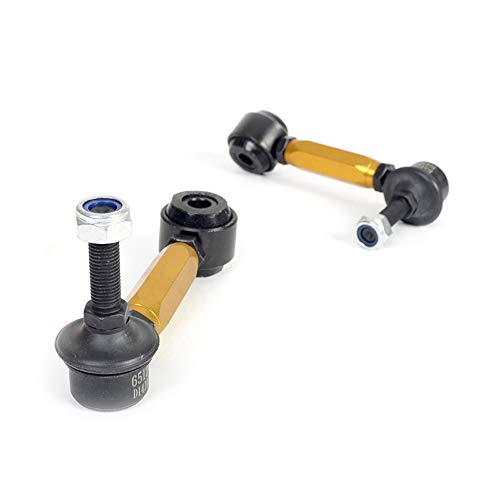
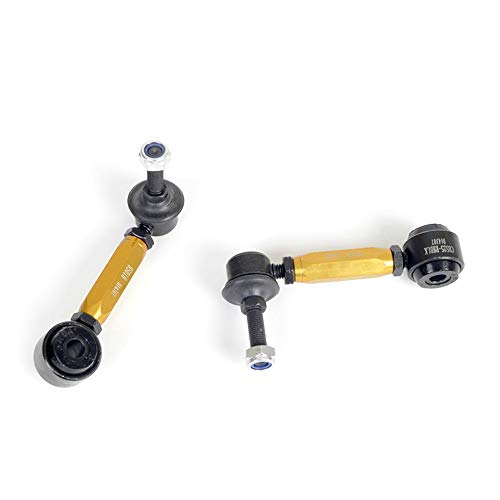
Whiteline uses heavy-duty steel ball-joint ends with 12mm ball studs.
The joints can articulate through different angles, allowing them to accommodate suspension movement while maintaining a rigid connection to the sway bar.
That’s particularly useful on modified vehicles where component angles may differ from stock.
High-Strength Alloy Construction
Whiteline manufactures the link bodies using lightweight alloy materials.
The combination provides:
High rigidity
without unnecessarily increasing:
Unsprung suspension weight.
The alloy components are also anodized to provide additional corrosion and wear protection.
KLC167A With an Aftermarket Sway Bar
These links make particular sense when combined with a performance sway bar.
A larger or stiffer sway bar transfers greater loads through the end links.
That means the strength and rigidity of those connections become increasingly important.
Think of the components separately:
Performance Sway Bar
Changes roll stiffness.
KLC167A End Links
Improve the connection and allow preload adjustment.
They complement each other rather than performing the same job.
KLC167A With Coilovers
This is arguably where adjustable links become most useful.
Height-adjustable coilovers can substantially alter ride height.
A serious suspension setup might involve:
Install coilovers
→ Set ride height
→ Corner balance
→ Adjust KLC167A links
→ Perform alignment
→ Road/track test
The goal is having the sway bar neutral once the vehicle’s final operating ride height has been established.
How to Adjust Sway Bar End Links
Final adjustment should ideally occur with the suspension at normal operating ride height.
That can be accomplished using:
- Alignment rack
- Four-post lift
- Drive-on ramps
- Appropriate suspension-loading equipment
With the car level and suspension loaded, adjust the link length so the sway bar connects without requiring force.
Then lock the adjustment hardware according to Whiteline’s instructions.
Symptoms of Worn Factory End Links
You might consider replacing the factory links if you’re experiencing:
- Clunking over bumps
- Knocking noises
- Ball-joint play
- Torn boots
- Loose sway-bar response
- Rattling
- Corrosion or physical damage
However, inspect the entire stabilizer system before blaming the links.
Sway-bar bushings and mounting hardware can produce similar symptoms.
Does KLC167A Make the Sway Bar Stiffer?
No.
It doesn’t change the actual torsional stiffness of the sway bar.
Instead, it provides a more rigid and adjustable connection.
If you want more roll stiffness, change the sway bar.
If you want the sway bar you already purchased to work through a properly adjusted connection, that’s where KLC167A becomes useful.
Street Performance
For a lowered GTI, Golf R or A3, adjustable links can be a sensible supporting modification.
They can complement:
- Performance springs
- Coilovers
- Upgraded sway bars
- Performance tires
- Alignment modifications
The objective should remain balanced suspension behavior.
Pro Street’s Daily Driver Suspension Setup That Actually Works explains why suspension travel, geometry and compliance still matter on street-driven performance cars.
Autocross and Track Use
KLC167A becomes especially relevant when suspension setup becomes more sophisticated.
On an autocross or track build, adjustable links allow sway-bar position to be corrected after changes to:
- Ride height
- Corner balance
- Spring rates
- Coilover setup
This helps eliminate an unintended variable from the suspension setup.
Installation
General installation involves:
- Safely raise and support the vehicle.
- Remove the original front end links.
- Inspect the sway-bar and strut mounting points.
- Set the KLC167A links near the appropriate initial length.
- Install the links.
- Load the suspension to operating ride height.
- Adjust link length to minimize sway-bar preload.
- Verify ball-joint articulation.
- Check surrounding component clearance.
- Tighten the adjustment locks.
- Torque mounting hardware correctly.
- Road-test and reinspect.
Whiteline rates typical installation at approximately one hour.
Is Whiteline KLC167A Worth It?
For a compatible Audi or Volkswagen—particularly one running lowering springs, coilovers or upgraded sway bars—the Whiteline KLC167A Adjustable Front Sway Bar End Links provide a useful combination of strength and suspension adjustability.
You get:
320–345mm adjustable length
25mm adjustment range
12mm heavy-duty ball studs
High-strength alloy construction
Heavy-duty steel ball joints
On-car adjustment
Reduced sway-bar preload
Those aren’t glamorous modifications.
Nobody at Cars & Coffee is going to crawl underneath your GTI and gasp at your properly neutralized sway-bar preload.
But the suspension might actually work better—and occasionally that’s the point.
Shop suspension and performance components through Pro Street Online.
For technical specifications, see the clean Whiteline KLC167A product page.




There are no reviews yet.