


Recommended Pro Street product title
Whiteline KCA395 Front Roll Center & Bump Steer Correction Kit – Mitsubishi Lancer Evolution VIII IX X
For a U.S.-focused store, I would prioritize 2003–2006 and 2008–2015 Mitsubishi Lancer Evolution in the vehicle data rather than advertising Evo VII fitment prominently.
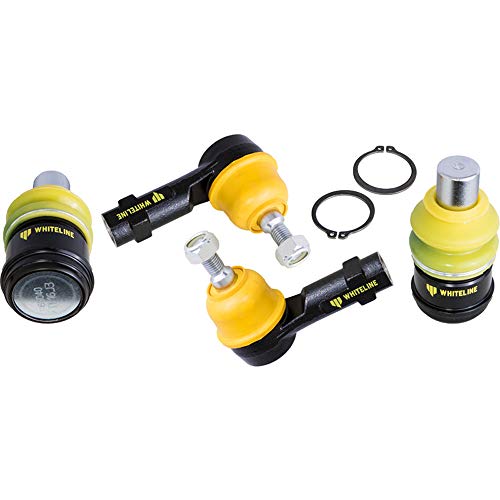
What Comes With Whiteline KCA395?
The KCA395 includes:
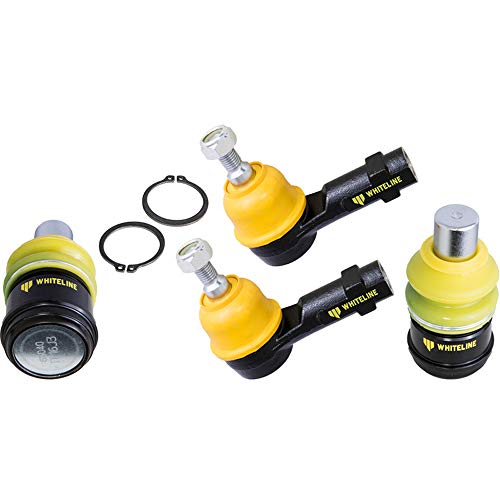
- 2 engineered front ball joints
- 2 steering tie-rod ends
- Installation hardware
- One complete vehicle kit
Whiteline estimates approximately four hours for installation and specifies that a front wheel alignment is required afterward.
This isn’t just replacing worn components.
The geometry of the replacement components is intentionally different from stock.
Why Does a Lowered Evo Need Roll Center Correction?
Lowering a car changes more than the distance between the rocker panel and pavement.
It changes the operating angles of suspension components.
On the Evo’s front suspension, excessive lowering can move the roll center into a less desirable position relative to the vehicle’s center of gravity.
That can increase the leverage acting on the suspension during cornering.
So although you’ve lowered the center of gravity, you’ve potentially created another geometry problem at the same time.
Whiteline specifically developed KCA395 to raise the front roll center after lowering.
What Is Roll Center?
Roll center is a geometric point determined by the suspension layout.
The relationship between the vehicle’s:
Center of Gravity
and
Roll Center
affects how strongly cornering forces try to roll the chassis.
Lowering changes control-arm angles, which can move that roll center.
Whiteline’s KCA395 uses revised ball-joint geometry to raise it again.
Why Raising the Roll Center Helps
Whiteline’s testing found that raising the Evo’s front roll center can increase front roll resistance and reduce compression of the outside front suspension during cornering.
Potential benefits include:
- Reduced front body roll
- Better weight distribution
- Improved tire contact
- Reduced understeer
- Improved steering feel
- Greater steering precision
- Better vehicle stability
That’s particularly valuable on a lowered Evo running substantially more grip than Mitsubishi originally engineered around.
What About Bump Steer?
Correcting the ball-joint position creates another issue.
If you change the suspension geometry without addressing the steering linkage, the relationship between the control arm and tie rod can become incorrect.
That can introduce bump steer.
Bump steer occurs when suspension movement causes the wheel’s toe angle to change even though the driver hasn’t moved the steering wheel.
Whiteline therefore combines the revised ball joints with specifically engineered tie-rod ends. The goal is to raise the roll center while maintaining appropriate steering geometry.
Why Bump Steer Matters on an Evo
Imagine entering a fast corner.
The outside front suspension compresses.
If that suspension movement also causes the front wheel to toe inward or outward unexpectedly, the car can effectively steer itself slightly as the suspension moves.
That’s not particularly desirable at 90 mph.
Correct steering geometry helps keep toe behavior more predictable throughout suspension travel.
KCA395 on the Evo VIII
The 2003–2005 Mitsubishi Lancer Evolution VIII is one of the primary U.S. applications.
These cars are now commonly modified with:
- Coilovers
- Lowering springs
- Larger sway bars
- Wider wheels
- Performance tires
- Adjustable alignment components
Once ride height is substantially changed, geometry correction becomes increasingly important.
A suspension shouldn’t simply be lower.
It should still operate correctly at that lower ride height.
KCA395 on the Evo IX
The 2006 Mitsubishi Lancer Evolution IX is also supported, including Evolution, MR, RS and SE configurations in U.S. fitment data.
The Evo IX remains one of the most desirable tuner platforms of the era, and many surviving examples have significantly modified suspensions.
For a lowered Evo IX, KCA395 can be part of a more comprehensive geometry-correction strategy rather than simply increasing spring and sway-bar stiffness.
KCA395 on the Evo X
The KCA395 also supports the 2008–2015 Mitsubishi Lancer Evolution X.
Confirmed U.S. applications include various:
GSR
MR
MR Touring
SE
and
Final Edition
configurations depending on model year.
Whiteline originally demonstrated the geometry benefits of KCA395 specifically on the Evo X, noting that lowering the platform without correcting its front geometry can encourage additional roll.
Does a Stock-Height Evo Need KCA395?
Not necessarily.
KCA395 is most useful on lowered vehicles, where suspension geometry has moved away from its factory operating position.
Whiteline’s technical material indicates that it can also be used on standard-height vehicles, but describes it primarily as an important correction for lowered Evos.
For Pro Street’s product page, I’d target this primarily toward:
Lowered Evo VIII
Lowered Evo IX
Lowered Evo X
That’s where the search intent and technical need intersect nicely.
KCA395 With Coilovers
Coilovers make geometry correction especially relevant because they allow substantial ride-height changes.
A proper Evo suspension setup might follow this sequence:
Install coilovers
→ Set final ride height
→ Install roll-center correction
→ Set sway-bar geometry
→ Corner balance
→ Perform performance alignment
→ Test and fine-tune
Simply lowering the car until the tires disappear underneath the fenders isn’t technically suspension tuning.
It’s just lowering the car until the tires disappear underneath the fenders.
For additional suspension setup information, visit My Pro Street.
KCA395 With Lowering Springs
Lowering springs generally produce a more moderate ride-height reduction than aggressively adjusted coilovers, but they still alter suspension geometry.
Whether KCA395 is necessary depends on:
- Actual ride-height reduction
- Suspension configuration
- Tire grip
- Intended vehicle use
- Alignment
- Other suspension modifications
The more aggressively the Evo is lowered and driven, the more valuable proper geometry becomes.
Better Front Tire Contact
One of the goals of roll-center correction is keeping the outside front tire working more effectively during hard cornering.
As the Evo corners, the outside front tire carries a substantial portion of the lateral load.
Reducing excessive suspension compression and improving geometry can help maintain a more favorable tire contact patch.
Whiteline describes improved tire contact and front-end grip as key benefits of the KCA395 design.
Reduced Understeer
The Mitsubishi Evo’s AWD system provides enormous traction, but front tire grip remains finite.
Improving front suspension geometry can help reduce the tendency toward understeer during aggressive cornering.
Whiteline specifically identifies reduced understeer as one result of raising the front roll center on the Evolution platform.
That’s particularly valuable when exiting corners under power, where the front tires may already be balancing steering and drivetrain loads.
Street Performance
KCA395 isn’t exclusively a race-car modification.
A properly set-up street Evo can benefit from improved steering precision and suspension geometry.
However, the upgrade makes the most sense when the car is already lowered.
For a stock-height commuter Evo, replacing worn OE ball joints and tie rods may be more appropriate than installing geometry-correction components simply because they’re shiny and available.
Autocross
Autocross places enormous emphasis on:
- Turn-in
- Rapid transitions
- Front grip
- Steering precision
- Controlling understeer
That makes roll-center and bump-steer correction particularly relevant.
Unlike simply installing a stiffer sway bar, KCA395 changes the geometry underlying how the suspension operates.
Track Use
Track driving magnifies suspension problems.
High-speed compression, sustained lateral loading and repeated transitions make poor geometry much easier to detect.
A properly configured lowered Evo can benefit from KCA395 through more predictable steering behavior and improved front suspension control.
Combined with good tires, dampers and alignment, geometry correction can make the entire suspension package work more effectively.
Installation
KCA395 installation involves replacing the front ball joints and steering tie-rod ends.
Whiteline estimates approximately four hours and describes the installation as relatively involved.
General installation includes:
- Raise and safely support the vehicle.
- Remove the front wheels.
- Disconnect the existing steering tie-rod ends.
- Remove the factory lower ball joints.
- Install the KCA395 geometry-corrected ball joints.
- Install the matching tie-rod ends.
- Verify component orientation.
- Check suspension and wheel clearance.
- Torque all fasteners correctly.
- Perform a complete front alignment.
This isn’t a modification where “eyeballing the toe” counts as an alignment.
Alignment Is Required
Whiteline explicitly specifies a front wheel alignment after installation.
At minimum, check:
- Front toe
- Camber
- Caster
- Steering-wheel centering
- Left/right consistency
Performance cars may benefit from alignment settings tailored to tire choice and intended use.
Inspect These Components During Installation
Because the front suspension is already apart, inspect:
- Lower control-arm bushings
- Wheel bearings
- CV boots
- Tie-rod boots
- Steering rack boots
- Sway-bar links
- Sway-bar bushings
- Coilovers or struts
- Brake hoses
- Ball-joint mounting surfaces
Finding a torn CV boot now is considerably cheaper than discovering it after grease has decorated the entire wheel well.
Is Whiteline KCA395 Worth It?
For a lowered Mitsubishi Lancer Evolution VIII, IX or X, the Whiteline KCA395 is one of those modifications that addresses the consequences of another modification.
Lowering changes geometry.
KCA395 is designed to correct part of that geometry by raising the front roll center and using matching tie-rod ends to maintain steering behavior.
The kit includes two ball joints and two tie rods, and Whiteline specifically developed it to improve front grip, steering precision, stability and suspension behavior on the Evolution platform.
That’s a considerably more sophisticated approach than simply making the springs harder and hoping physics eventually gives up.
Browse performance suspension and chassis components at Pro Street Online.
For manufacturer specifications, see the Whiteline KCA395 product page.



There are no reviews yet.