


Why Lowering Changes Roll Center
A vehicle’s roll center is a theoretical point determined by suspension geometry.
Its relationship with the vehicle’s center of gravity influences how strongly the chassis wants to roll during cornering.
When the vehicle is lowered, the control arms operate at different angles.
That can move the roll center downward—sometimes considerably farther than the actual reduction in center-of-gravity height.
The result can actually increase the leverage acting on the suspension during cornering.
Yes, you lowered the car to reduce body roll and accidentally changed geometry in a way that can encourage more of it.
Suspension tuning has jokes.
Raising the Front Roll Center
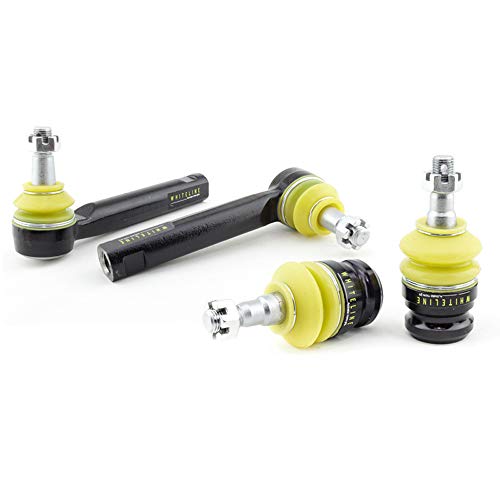
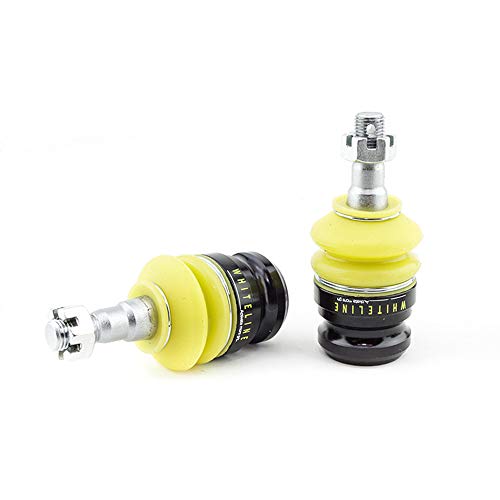
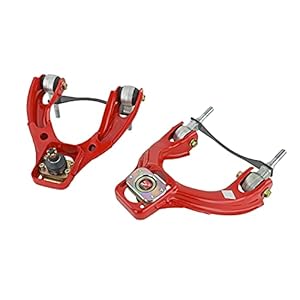
KCA313 uses revised ball-joint geometry to raise the effective front roll center.
Whiteline’s objective is to:
- Increase front roll resistance
- Reduce excessive outside suspension compression
- Improve tire contact
- Improve front-end grip
- Increase cornering stability
- Create more predictable suspension behavior
The goal isn’t simply making the suspension stiffer.
It’s improving the geometry through which the suspension operates.
What Is Bump Steer?
Bump steer occurs when suspension movement causes the wheel’s toe angle to change without steering input from the driver.
Imagine entering a corner.
The outside suspension compresses.
If the relationship between the steering tie rod and control arm is incorrect, that suspension movement can effectively steer the wheel slightly.
The driver hasn’t moved the steering wheel.
The suspension has.
That’s bump steer.
Why Lowered Cars Can Develop More Bump Steer
The steering linkage is designed to operate through a particular geometric relationship with the suspension.
Lowering changes those angles.
As a result, the steering tie rod and control arm may no longer travel through compatible arcs.
A properly engineered correction kit addresses both suspension and steering geometry rather than simply modifying one component.
Better Front Tire Contact
Front tire grip depends heavily on maintaining an effective contact patch.
During hard cornering, the outside front suspension compresses while lateral loads increase dramatically.
Poor suspension geometry can cause the tire to operate at less favorable angles.
Correcting roll-center geometry can help maintain more consistent tire loading.
That can improve:
- Turn-in
- Mid-corner grip
- Steering precision
- Transitional response
- Cornering confidence
Reduced Outside Suspension Compression
Whiteline specifically designed its roll-center correction systems to reduce excessive compression of the outside front suspension during cornering.
That helps distribute suspension loads more effectively.
Instead of the outside front corner doing an impression of a collapsing lawn chair, the suspension remains better controlled.
KCA313 With Lowering Springs
Lowering springs typically reduce ride height by a predetermined amount.
Even moderate lowering changes suspension geometry.
Whether KCA313 is necessary depends on:
- Actual ride-height reduction
- Vehicle application
- Tire grip
- Alignment
- Intended use
For mildly lowered street cars, geometry correction may provide a useful supporting upgrade.
For aggressively lowered cars, it becomes considerably more important.
KCA313 With Coilovers
Coilovers allow much greater changes in ride height.
That also means much greater potential geometry changes.
A sensible suspension setup should generally follow:
Install coilovers
→ Set final ride height
→ Correct suspension geometry
→ Set sway-bar geometry
→ Corner balance if appropriate
→ Perform complete alignment
→ Road or track test
The important phrase is final ride height.
Don’t correct geometry and then lower the car another inch because Instagram happened.
Steering Response
Proper front suspension geometry helps maintain a more predictable relationship between steering-wheel movement and tire direction.
Correcting excessive bump steer can make steering feel more consistent as the suspension travels through:
- Compression
- Rebound
- Cornering
- Braking
- Uneven pavement
That’s valuable on the street and even more noticeable during performance driving.
Street Performance
A properly configured lowered street car can benefit from roll-center correction without becoming unpleasant to drive.
Unlike dramatically increasing spring rates, geometry correction doesn’t rely on simply making suspension movement harder.
Instead, it attempts to make the suspension work correctly at the modified ride height.
Autocross
Autocross puts enormous emphasis on:
- Turn-in
- Front grip
- Rapid transitions
- Steering response
- Body control
Correct front geometry can help the car respond more consistently through slaloms and tight corners.
That’s particularly useful on cars running high-grip performance tires.
Track Use
Track driving exposes suspension geometry problems quickly.
High cornering speeds create much greater lateral loads than ordinary street driving.
Roll-center and bump-steer correction can therefore complement:
- Coilovers
- Performance sway bars
- Adjustable end links
- Performance alignment
- Wider wheels
- High-grip tires
A track suspension is only as good as the geometry connecting it to the road.
Does KCA313 Replace an Alignment?
Absolutely not.
KCA313 changes suspension and steering geometry.
A professional alignment should be considered mandatory after installation.
Have the technician check:
- Front toe
- Front camber
- Caster
- Steering-wheel centering
- Rear alignment
- Thrust angle
Track-oriented vehicles may require settings tailored specifically to their tire and suspension configuration.
Installation
Installation generally involves replacing critical front suspension and steering components.
A typical procedure includes:
- Safely raise and support the vehicle.
- Remove the front wheels.
- Inspect the existing suspension.
- Disconnect the appropriate steering components.
- Remove the original ball joints.
- Install the KCA313 geometry-corrected components.
- Install the steering correction components where supplied.
- Verify component orientation.
- Check wheel and suspension clearance.
- Torque all fasteners correctly.
- Set the vehicle at operating ride height.
- Perform a complete four-wheel alignment.
- Road-test.
- Reinspect all hardware.
Follow Whiteline’s application-specific installation instructions and factory torque specifications.
Inspect Other Components During Installation
Because the front suspension is already being disassembled, inspect:
- Lower control arm bushings
- Tie-rod ends
- Wheel bearings
- CV boots
- Sway-bar links
- Sway-bar bushings
- Struts or coilovers
- Steering rack boots
- Brake hoses
Geometry correction won’t compensate for worn suspension components.
Who Should Install KCA313?
KCA313 makes the most sense for vehicles that:
- Have been lowered
- Run coilovers
- Use lowering springs
- Have experienced altered steering behavior
- Are used for autocross
- Are used for track driving
- Run high-grip tires
- Need front roll-center correction
A completely stock-height daily driver generally has less reason to install a geometry-correction kit.
Is Whiteline KCA313 Worth It?
For a properly lowered performance car, the Whiteline KCA313 Front Roll Center and Bump Steer Correction Kit addresses an issue that’s frequently ignored when modifying suspension: geometry.
Lowering changes the operating angles of the control arms and steering linkage.
KCA313 is designed to compensate for those changes by raising the front roll center and correcting steering geometry.
That can produce better front tire contact, improved cornering response and more predictable steering.
Lowering a car is easy.
Making the suspension understand what you’ve just done to it requires a little more effort.





There are no reviews yet.