

What Vehicles Fit Whiteline BMR93Z?
The BMR93Z is advertised for compatible 2013–2018 Ford Focus applications.
| Years | Make | Model |
|---|---|---|
| 2013 | Ford | Focus |
| 2014 | Ford | Focus |
| 2015 | Ford | Focus |
| 2016 | Ford | Focus |
| 2017 | Ford | Focus |
| 2018 | Ford | Focus |
Important Focus ST and RS Fitment Note
Don’t automatically assume every Focus ST or Focus RS uses the same sway-bar application simply because the product listing says “Focus.”
Those performance models use different suspension configurations and factory hardware depending on application.
For the Pro Street product database, I recommend listing:
2013–2018 Ford Focus — verify trim and rear suspension configuration before ordering.
Confirm Focus ST and Focus RS separately before assigning this SKU to those vehicles.
Why Upgrade the Ford Focus Rear Sway Bar?
A sway bar connects the left and right sides of the suspension.
When you’re driving straight and both rear wheels move together, the bar contributes relatively little additional spring resistance.
During cornering, one side compresses while the other unloads. The stabilizer bar twists and resists that difference in movement.
Increasing rear sway-bar stiffness can provide:
- Reduced body roll
- Faster chassis response
- Improved transitional behavior
- More responsive turn-in
- Better front-to-rear handling balance
- Reduced understeer
- Greater suspension tuning flexibility
This is particularly useful on front-wheel-drive cars such as the Focus.
Why Rear Roll Stiffness Matters on a Front-Wheel-Drive Focus
The front tires of a FWD vehicle already have a lengthy job description.
They’re responsible for steering, acceleration, cornering and most of the braking.
During aggressive cornering, those front tires can reach their available grip before the rear tires.
That’s understeer.
Increasing rear roll stiffness can change the distribution of lateral load transfer and make the chassis more willing to rotate.
Instead of simply plowing toward the outside of the corner, a properly balanced Focus can feel more responsive to steering and throttle inputs.
24mm Rear Sway Bar
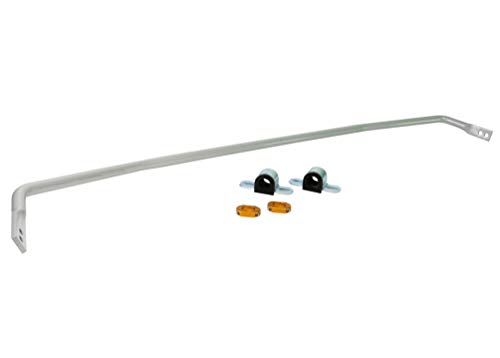
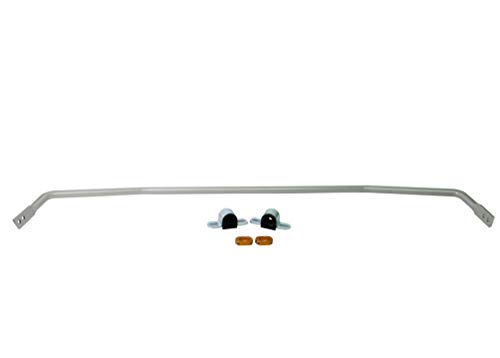
The BMR93Z uses a 24mm rear stabilizer bar.
Diameter is an important factor because sway-bar torsional stiffness increases substantially with diameter.
But don’t compare performance bars solely by their diameter.
Actual stiffness also depends on:
- Material
- Bar construction
- Bar geometry
- Effective arm length
- Mounting position
- Adjustment position
The BMR93Z is engineered as a complete system for its intended Focus application.
Two-Position Adjustability
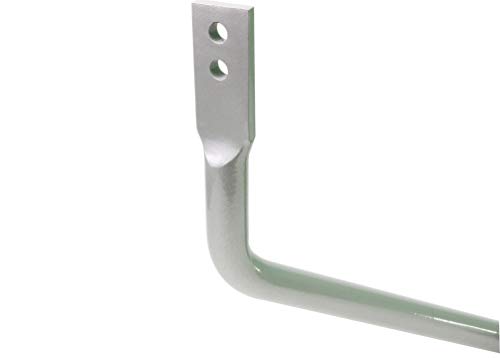
One of the BMR93Z’s biggest advantages is its two-position adjustment.
Changing the end-link mounting point changes the effective lever arm of the sway bar.
Generally:
Longer effective arm = softer setting
Shorter effective arm = stiffer setting
That allows you to tune the Focus around your tires, springs, dampers, alignment and driving environment.
Softer Position
This is the logical starting point for most street-driven cars.
It should provide a more conservative balance while still increasing rear roll control.
It’s particularly useful for:
- Daily driving
- Uneven pavement
- Wet conditions
- Drivers new to suspension tuning
Stiffer Position
The firmer setting increases effective rear roll stiffness.
That can provide:
- Faster rotation
- Sharper transitions
- Reduced understeer
- More aggressive chassis response
This can be useful for autocross and track driving.
But maximum stiffness isn’t automatically maximum grip.
Suspension tuning has once again refused to operate like a Gran Turismo upgrade menu.
Can the BMR93Z Reduce Understeer?
Potentially, yes.
That’s one of the biggest reasons enthusiasts install larger rear sway bars on front-wheel-drive cars.
Increasing rear roll stiffness changes how lateral load is distributed between the front and rear axles.
The result can be a car that rotates more readily and places less demand on the outside front tire.
For a performance-oriented Focus build, that can make the chassis feel substantially more responsive.
Watch for Lift-Off Oversteer
There’s another side to increasing rear roll stiffness.
A car that’s more willing to rotate can also become more responsive when the driver abruptly lifts the throttle during aggressive cornering.
Throttle lift transfers weight forward and unloads the rear tires.
Combine that with additional rear roll stiffness and the vehicle may rotate more quickly.
That’s not necessarily undesirable.
Experienced drivers can use that behavior.
But learn the new chassis balance gradually.
Start with the softer setting before deciding the stiffest hole is clearly the correct one because it looks more serious.
Forged Sway-Bar Ends
Whiteline uses forged ends at the end-link mounting points.
These areas experience significant loading because suspension forces are transferred between the end links and sway bar.
Forged construction helps provide strength and durability at these critical mounting locations.
That’s particularly valuable on a performance sway bar where forces can be substantially higher than with a softer factory setup.
Synthetic Elastomer Bushings
The BMR93Z uses Whiteline’s synthetic elastomer sway-bar mounting technology.
These bushings are designed to resist:
- Oil
- Grease
- Ozone
- Weather exposure
- Road contamination
Reduced bushing compliance can also improve how quickly stabilizer-bar forces are transferred into the chassis.
A stiff sway bar mounted in completely destroyed rubber bushings is basically an expensive metal suggestion.
PTFE-Lined Bushings
Whiteline also incorporates a PTFE lining designed to provide an extremely low coefficient of friction.
This helps the sway bar rotate within its chassis mounts without requiring the same lubrication strategy as conventional performance bushings.
Reducing friction helps avoid:
- Binding
- Stick-slip behavior
- Unwanted bushing resistance
- Excessive noise
The goal is allowing the sway bar to respond consistently as the suspension moves.
Protective Coating
Suspension components spend their lives in a terrible neighborhood.
Water, road debris, temperature cycles, salt and contamination all attack exposed metal.
Whiteline uses protective finishes intended to provide a durable barrier against corrosion and wear.
That’s particularly useful for daily-driven cars exposed to year-round weather.
Rear Sway Bar vs. Lowering Springs
These two upgrades affect different aspects of suspension behavior.
Lowering Springs
Primarily change:
- Ride height
- Spring rate
- Center of gravity
- Suspension travel
- Vertical body control
Rear Sway Bar
Primarily changes:
- Roll stiffness
- Front-to-rear handling balance
- Transitional response
- Understeer/oversteer characteristics
That’s why the two can complement each other.
Read Pro Street’s Complete Guide to Lowering Springs to understand how ride height, spring rate and suspension geometry interact.
Does a Larger Rear Sway Bar Ruin Ride Quality?
Usually not in the same way dramatically stiffer springs can.
When both rear wheels move together, the sway bar contributes relatively little additional resistance.
When the wheels move differently, the bar twists and adds resistance.
This allows a performance sway bar to reduce body roll without necessarily making every highway expansion joint feel like an infrastructure emergency.
Single-wheel bumps can become more noticeable, however, especially on the firmer adjustment.
BMR93Z With Lowering Springs
A rear sway bar can work particularly well with moderate lowering springs.
Lowering springs can improve:
- Center-of-gravity height
- Body control
- Appearance
while the adjustable rear sway bar gives you another tool for tuning handling balance.
Whiteline also offers Focus lowering components, making it possible to build a more comprehensive suspension package rather than relying on one oversized component to solve everything.
BMR93Z With Coilovers
If your Focus already has coilovers, the adjustable BMR93Z becomes even more useful.
You can tune:
Spring rate
Damping
Ride height
Alignment
and
rear roll stiffness
independently.
That allows substantially more precise chassis tuning.
Just remember that changing ride height also changes suspension geometry.
Do You Need an Alignment?
Installing only the BMR93Z generally doesn’t change static:
- Camber
- Caster
- Toe
Therefore, an alignment isn’t normally required solely because you’ve replaced the rear sway bar.
If you’re installing lowering springs, coilovers or adjustable suspension arms at the same time, get the car professionally aligned afterward.
Inspect Your End Links
Before installing the BMR93Z, inspect the rear sway-bar end links.
Look for:
- Loose joints
- Torn boots
- Bent hardware
- Corrosion
- Excessive play
A stiffer sway bar can place additional load through the links.
If the original links are already worn, replacing them while the suspension is apart makes sense.
Installation
General installation typically involves:
- Safely raise and support the vehicle.
- Locate the factory rear sway bar.
- Disconnect the sway-bar end links.
- Remove the factory bushing brackets.
- Remove the original rear sway bar.
- Install the Whiteline bushings and brackets.
- Position the BMR93Z.
- Reconnect the end links.
- Select the initial adjustment position.
- Torque all hardware correctly.
- Verify suspension and exhaust clearance.
- Road-test the vehicle carefully.
Always follow Whiteline’s supplied instructions and Ford’s appropriate torque specifications.
Best Setting for a Daily Driver
For a daily-driven Focus, start with the softer position.
Then drive the car.
Pay attention to:
- Corner entry
- Mid-corner balance
- Highway lane changes
- Throttle-off behavior
- Uneven pavement
- Wet-weather response
Once you’ve established a baseline, try the firmer position if you want additional rotation.
The adjustable bar exists so you can tune the vehicle.
Use it.
Autocross Benefits
A larger adjustable rear sway bar is especially useful for autocross because autocross places a premium on:
- Rapid transitions
- Fast rotation
- Quick steering response
- Reduced understeer
Front-wheel-drive cars often respond particularly well to rear roll-stiffness tuning.
The BMR93Z’s two-position design allows you to adjust the chassis around tire grip and surface conditions.
Track-Day Benefits
On track, the BMR93Z can help fine-tune chassis balance.
But the sway bar should be considered part of the complete suspension package:
Tires + pressures + alignment + springs + dampers + sway bars + bushings + driver.
If the car pushes badly because the front tires are overheating or the alignment is wrong, simply adding more rear bar isn’t necessarily the correct solution.
Diagnose handling problems just like mechanical ones.
Building a Balanced Ford Focus Suspension
A strong street-performance Focus setup might combine:
- Quality performance tires
- Moderate lowering
- Matched dampers
- Rear sway-bar upgrade
- Fresh suspension bushings
- Proper alignment
Pro Street’s Daily Driver Suspension Setup That Actually Works explains why usable suspension travel and compliance remain important even when improving handling.
Who Should Buy the Whiteline BMR93Z?
The BMR93Z makes the most sense for Focus owners who want:
Less body roll
Sharper handling
More rear rotation
Adjustable chassis balance
Better autocross or track response
A suspension upgrade without dramatically increasing spring stiffness
It’s particularly appealing if the car already has performance tires, lowering springs or coilovers.
Is the Whiteline BMR93Z Worth It?
For a compatible 2013–2018 Ford Focus, the Whiteline BMR93Z 24mm Two-Position Adjustable Rear Sway Bar offers a straightforward way to change chassis balance.
Its combination of:
24mm diameter
Two-position adjustment
Forged ends
Synthetic elastomer mounting bushings
PTFE low-friction technology
Protective corrosion-resistant finish
makes it substantially more than a basic factory replacement.
For front-wheel-drive Focus owners looking for more responsive handling, a larger adjustable rear bar can deliver a noticeable improvement without requiring a complete suspension rebuild.
And unlike adding another 50 horsepower, it may actually help the car make it around the corner you were accelerating toward.
Shop Ford Focus suspension and performance components through Pro Street Online.



There are no reviews yet.