
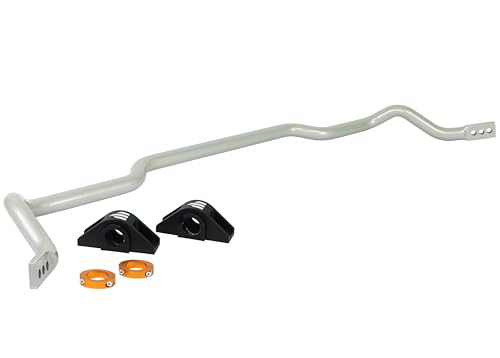
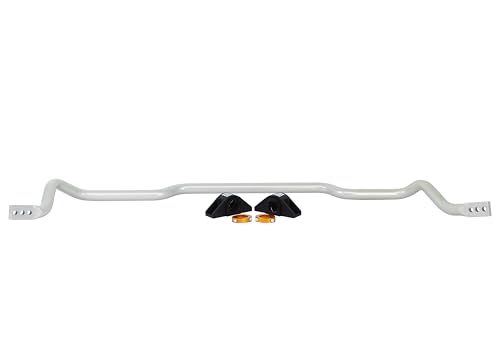
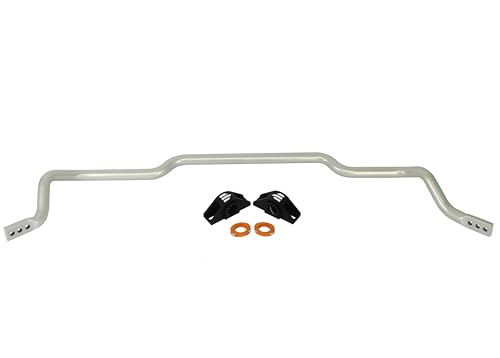
What Vehicles Fit Whiteline BHR67XZ?
The supplied product listing describes the BHR67XZ as compatible with 2001–2006 RSX and Civic applications.
For your Pro Street fitment system, I would currently categorize it as:
| Years | Make | Model |
|---|---|---|
| 2002–2006 | Acura | RSX |
| 2001–2005 | Honda | Civic |
| Select applications | Honda | Civic Si |
Important: The RSX wasn’t sold in the U.S. as a 2001 model, and Civic suspension configuration varies by body style and trim. Verify the exact chassis before ordering.
That’s especially important with Honda suspension parts because “Civic” covers enough different suspension configurations to qualify as its own extended family.
Why Upgrade the Rear Sway Bar?
During cornering, lateral acceleration transfers load toward the outside tires.
The chassis rolls as the suspension compresses on one side and extends on the other.
A sway bar connects the left and right suspension and twists when the two sides move differently.
Increasing sway-bar stiffness provides additional resistance to this motion.
The result can be:
- Reduced body roll
- Faster chassis response
- Improved transitional behavior
- More predictable cornering
- Changed front-to-rear handling balance
On a front-wheel-drive car, increasing rear roll stiffness can be particularly useful because it can reduce the vehicle’s natural tendency toward understeer.
Why a 26mm Rear Sway Bar Makes a Big Difference
At 26mm, the BHR67XZ is a substantial rear stabilizer bar.
Sway-bar stiffness increases dramatically as bar diameter increases, although diameter alone doesn’t determine actual wheel rate.
Other factors include:
- Bar material
- Bar shape
- Effective arm length
- Mounting location
- End-link position
That’s why you shouldn’t compare sway bars solely by looking at diameter.
Still, a 26mm performance rear bar represents a significant chassis-tuning component compared with the relatively conservative stabilizer setups commonly used on production front-wheel-drive cars.
Two-Position Adjustability
One of the BHR67XZ’s biggest advantages is its two-position adjustment.
Changing the end-link mounting position alters the sway bar’s effective lever arm.
In general:
Longer effective arm = softer
Shorter effective arm = stiffer
This allows the driver to tune rear roll stiffness around:
- Tire choice
- Spring rates
- Damper setup
- Alignment
- Driving conditions
- Driver preference
Softer Setting
Start here for most street-driven vehicles.
A softer setting generally provides:
- More conservative chassis balance
- Less aggressive rear rotation
- Better tolerance for uneven pavement
- More predictable wet-weather behavior
Stiffer Setting
The firmer position can provide:
- Faster rotation
- Greater rear roll resistance
- Sharper transitional response
- Reduced understeer
But don’t automatically assume maximum stiffness is maximum performance.
Suspension tuning isn’t a video-game upgrade menu.
Can BHR67XZ Reduce Understeer?
That’s one of the primary reasons enthusiasts install a larger rear sway bar on a front-wheel-drive Honda.
Production cars are generally tuned toward understeer because it’s predictable and relatively easy for inexperienced drivers to manage.
Increase rear roll stiffness and you can shift some of that handling balance.
Instead of the front tires becoming overloaded as quickly, the chassis may rotate more readily.
That can make an RSX or Civic feel considerably more responsive.
Rear Sway Bar and Lift-Off Oversteer
There’s also a tradeoff.
Adding significant rear roll stiffness can make a front-wheel-drive car more willing to rotate when the driver suddenly lifts off the throttle during aggressive cornering.
That’s not automatically bad.
Experienced drivers may deliberately use throttle position to influence rotation.
But it means you should learn the car’s new handling balance gradually.
Install the bar.
Start on the softer setting.
Drive the car.
Then decide whether more rear stiffness is actually necessary.
Maximum adjustment isn’t a personality test.
Acura RSX Handling Upgrade
The 2002–2006 Acura RSX is one of the most natural applications for this type of modification.
The RSX combines:
- Relatively low weight
- Front-wheel drive
- Responsive steering
- Independent suspension
- Strong aftermarket support
A larger adjustable rear stabilizer bar can complement those characteristics by making the chassis more responsive during corner entry and transitions.
For an RSX street or autocross build, the BHR67XZ can be paired with:
- Performance tires
- Quality dampers
- Lowering springs
- Coilovers
- Alignment components
- Suspension bushings
Honda Civic Handling Upgrade
Compatible Civic applications can also benefit substantially from additional rear roll stiffness.
But fitment matters.
Honda sold multiple Civic configurations during this generation, and suspension architecture can differ between:
- Coupe
- Sedan
- Hatchback
- Civic Si
- Regional-market variants
Verify the chassis and mounting configuration before purchasing.
Does a Rear Sway Bar Make the Ride Harsher?
Usually much less than dramatically increasing spring rate.
When both rear wheels move together over a uniform road surface, the stabilizer bar has relatively little effect.
When one wheel moves differently from the other, the bar twists and contributes additional wheel rate.
That’s why sway bars can significantly reduce body roll without making ordinary straight-line ride quality dramatically stiffer.
However, a larger bar can make single-wheel bumps more noticeable.
There’s always a tradeoff.
Physics stubbornly refuses to accept promo codes.
Sway Bar vs. Lowering Springs
Both can improve handling, but they do different jobs.
Lowering Springs
Primarily affect:
- Ride height
- Spring rate
- Suspension travel
- Center of gravity
- Body movement
Rear Sway Bar
Primarily affects:
- Roll stiffness
- Front/rear handling balance
- Body roll
- Transitional response
This is why a sway bar and lowering springs can complement each other.
Pro Street’s Complete Guide to Lowering Springs explains how spring rates and ride height influence vehicle behavior.
Build a Balanced Street Suspension
The biggest mistake with suspension modifications is assuming every component needs to be as stiff as possible.
It doesn’t.
A properly engineered street suspension needs enough compliance to maintain tire contact over imperfect pavement.
A balanced RSX or Civic setup might combine:
Quality tires
Moderate lowering
Matched dampers
Rear sway-bar tuning
Proper alignment
instead of relying on one excessively aggressive component.
Pro Street’s Daily Driver Suspension Setup That Actually Works covers this approach in more detail.
Inspect the End Links
Before installing a larger rear sway bar, inspect the end links.
Look for:
- Worn ball joints
- Torn boots
- Bent hardware
- Loose mounting points
- Corrosion
- Excessive play
A performance sway bar places greater loads through its mounting hardware.
Installing a large new bar while retaining completely destroyed end links is an excellent way to upgrade everything except the actual problem.
Inspect the Sway-Bar Mounts
Mounting points deserve attention as well.
Check:
- Chassis brackets
- Bushing brackets
- Mounting bolts
- Thread condition
- Surrounding sheet metal
Older performance Hondas may have experienced decades of enthusiastic ownership.
“Never raced” apparently means something different in used Honda advertisements.
Installation
The BHR67XZ is designed as a vehicle-specific suspension component.
Typical installation involves:
- Safely raise and support the vehicle.
- Remove the factory rear sway bar.
- Inspect the end links and mounting points.
- Install the appropriate Whiteline bushings and hardware.
- Position the 26mm rear bar.
- Attach the end links.
- Select the initial adjustment position.
- Torque all hardware to specification.
- Verify clearance through suspension travel.
- Road-test the vehicle carefully.
Follow Whiteline’s supplied instructions and vehicle-specific torque specifications.
Do You Need an Alignment?
Replacing only the sway bar doesn’t normally change static:
- Camber
- Caster
- Toe
Therefore, a wheel alignment isn’t automatically required after installing a rear sway bar.
However, if you’re installing the BHR67XZ as part of a larger suspension package involving springs, coilovers, control arms or adjustable alignment components, get the car aligned afterward.
Best Setting for Street Driving
For a street-driven RSX or Civic, I’d start with the softer position.
That provides an opportunity to learn how the vehicle’s balance changed without immediately maximizing rear roll stiffness.
Once you’re comfortable with the setup, try the firmer position and compare.
Pay attention to:
- Corner entry
- Mid-corner balance
- Throttle-off behavior
- High-speed transitions
- Wet-road stability
Use whichever setting makes the whole car work better.
Not whichever hole looks more aggressive on Instagram.
Is BHR67XZ Good for Autocross?
This is arguably where an adjustable rear sway bar becomes especially useful.
Autocross rewards:
- Fast transitions
- Quick rotation
- Responsive turn-in
- Predictable weight transfer
A larger rear bar can help a front-wheel-drive car rotate through tight directional changes without relying solely on extreme alignment settings or spring rates.
Adjustability also gives drivers another tuning variable for different surfaces and tire combinations.
Is BHR67XZ Good for Track Driving?
Yes, provided it’s properly matched to the rest of the suspension.
Track handling depends on the entire chassis package:
Tires + alignment + springs + dampers + sway bars + bushings + driver inputs.
The rear sway bar should be used to fine-tune balance rather than compensate for fundamentally incorrect spring rates or alignment.
Is the Whiteline BHR67XZ Worth It?
For the correct Acura RSX or Honda Civic, the Whiteline BHR67XZ 26mm Two-Position Adjustable Rear Stabilizer Bar offers one of the more direct ways to alter front-wheel-drive handling balance.
It provides:
26mm bar diameter
Two-position adjustment
Reduced body roll
Improved chassis response
Greater tuning flexibility
Potential reduction in understeer
For an RSX or Civic street, autocross or track build, that’s a substantial amount of chassis tuning from one relatively straightforward component.
And unlike adding horsepower, the upgrade won’t immediately cause your transmission to begin updating its résumé.
Shop Honda, Acura and performance suspension components through Pro Street Online.





There are no reviews yet.