

Integrated Sway Control for Trailer Stability
Trailer sway is the unwanted side-to-side movement that can develop when towing.
Common contributing factors include crosswinds, passing trucks, excessive speed, incorrect trailer loading, and insufficient tongue weight.
The VEVOR system is advertised with a four-way dynamic stability design intended to help resist unwanted trailer movement.
Its sway-control features are designed to provide additional resistance to lateral trailer motion.
This may help improve towing stability when the system is correctly installed and adjusted.
However, no sway-control hitch can eliminate every sway condition.
Proper trailer loading, tire condition, suspension maintenance, towing speed, and driver technique remain essential.
Heavy-Duty Alloy Steel Construction
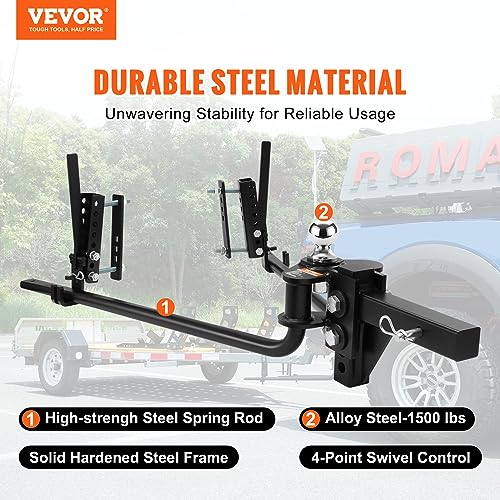
The VEVOR hitch is advertised as using high-strength alloy steel in its load-bearing components.
The steel construction is intended to resist deformation under approved towing loads.
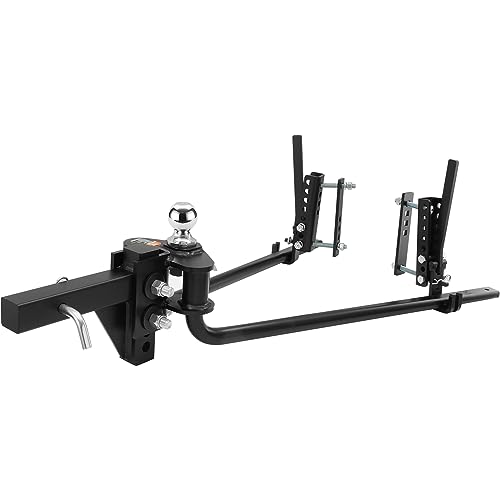
Structural strength is especially important in weight distribution systems because the hitch head, spring bars, brackets, and receiver connection must work together under significant loading.
The manufacturer’s description emphasizes:
- High-strength steel construction.
- Rigid hitch components.
- Reinforced load-bearing geometry.
- Resistance to deformation.
- Corrosion-protective surface treatments.
Actual strength depends on the ratings of the complete assembly and correct installation.
2-Inch Solid Steel Receiver Shank
The hitch kit features a solid steel shank intended for compatible 2-inch receiver hitches.
A solid shank provides a robust mounting connection between the weight distribution head and the tow vehicle’s receiver.
Before installation, verify that the vehicle’s receiver is specifically approved for weight-distribution towing.
A receiver that accepts a 2-inch shank is not automatically weight-distribution compatible.
2-5/16-Inch Alloy Steel Hitch Ball
The VEVOR kit includes a 2-5/16-inch hitch ball for use with compatible trailer couplers.
This ball size is common on many larger travel trailers and enclosed cargo trailers.
The hitch ball must match the trailer coupler exactly.
Do not use a 2-5/16-inch ball with a 2-inch coupler or any other mismatched connection.
The hitch ball’s individual load rating must also be sufficient for the trailer’s loaded weight.
Adjustable Hitch Head for Trailer Leveling
The VEVOR weight distribution system is advertised with an adjustable hitch head intended to help achieve the correct towing height and spring-bar loading.
The adjustment mechanism allows the installer to configure the system for the tow vehicle and trailer combination.
Proper adjustment is important because too little spring-bar tension may provide inadequate weight distribution, while excessive tension may overload components or produce undesirable handling.
Always follow the manufacturer’s measurements and adjustment sequence.
Corrosion-Resistant Black Finish
Towing equipment is routinely exposed to road spray, moisture, dirt, and changing weather conditions.
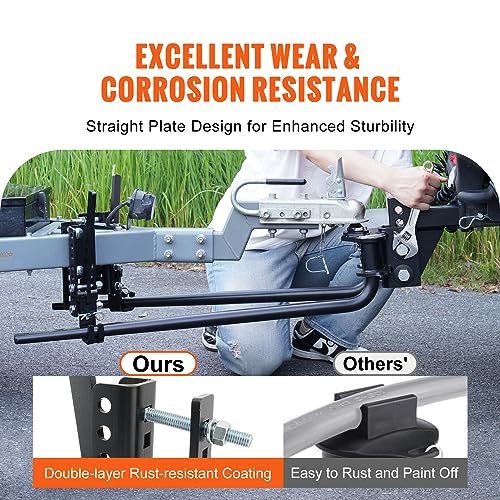
The VEVOR hitch features a black powder-coated finish and additional protective surface treatments on selected components.
These coatings are intended to help resist corrosion and wear during normal use.
Regular inspection and maintenance are still necessary, particularly at friction surfaces, adjustment points, and areas where the coating has been damaged.
VEVOR Sway Control Weight Distribution Hitch Specifications
| Specification | Details |
|---|---|
| Brand | VEVOR |
| Product type | Weight distribution hitch with sway control |
| Advertised capacity | 1,500 lbs |
| Capacity classification | Appears to be tongue weight; requires verification |
| Gross trailer weight rating | Not specified in supplied description |
| Receiver shank size | 2 inches |
| Shank construction | Solid steel |
| Hitch ball size | 2-5/16 inches |
| Hitch ball material | Alloy steel |
| Structural material | High-strength steel / alloy steel |
| Finish | Black powder coating and protective plating |
| Weight distribution | Yes |
| Sway-control design | Advertised four-way stability system |
| Adjustable hitch head | Yes |
| Spring bar specifications | Not provided |
| Trailer frame bracket dimensions | Not provided |
| Vehicle compatibility | Requires approved weight-distribution receiver |
| Installation | Vehicle- and trailer-specific adjustment required |
| Color | Black |
The exact model number, approved tongue weight range, gross trailer weight rating, spring bar specifications, and included hardware should be verified against VEVOR’s installation manual.
How a Weight Distribution Hitch Works
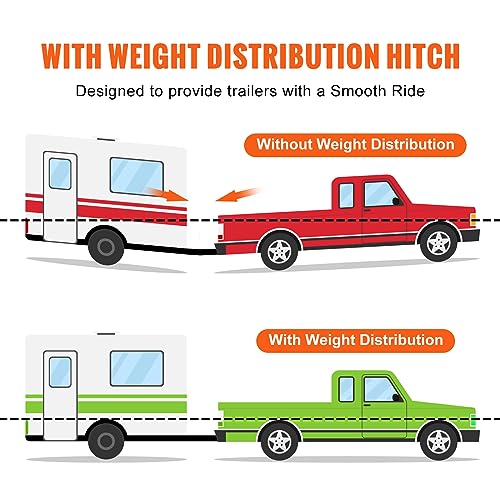
A conventional trailer ball mount transfers the trailer’s tongue weight primarily through the hitch connection behind the rear axle.
This can cause the tow vehicle’s rear suspension to compress and its front axle to carry less weight.
A weight distribution hitch adds spring bars that apply leverage between the hitch head and trailer frame.
When properly tensioned, the spring bars redistribute some of the load toward the tow vehicle’s front axle and the trailer axles.
This can help restore a more appropriate towing attitude.
The system must be adjusted according to the vehicle and hitch manufacturers’ instructions.
Not all vehicles or trailers are approved for weight-distribution equipment.
Weight Distribution Hitch vs. Standard Ball Mount
| Feature | VEVOR Weight Distribution Hitch | Standard Ball Mount |
|---|---|---|
| Trailer ball connection | Yes | Yes |
| Weight distribution | Yes | No |
| Sway-control features | Yes | Usually no |
| Spring-bar system | Weight-distribution design | No |
| Trailer leveling adjustments | Yes | Depends on ball mount |
| Setup complexity | Higher | Lower |
| Receiver requirements | Must be WD-rated | Standard compatible receiver |
| Vehicle compatibility | Manufacturer approval required | Vehicle rating still applies |
| Primary application | Compatible heavier bumper-pull trailers | General towing within ratings |
A standard ball mount may be sufficient for lighter towing applications.
A weight distribution hitch is intended for compatible trailer combinations where the manufacturer recommends or permits load redistribution.
What Trailers Can Use the VEVOR Weight Distribution Hitch?
Travel Trailers
Weight distribution systems are commonly used with travel trailers that place substantial tongue weight on the rear of a tow vehicle.
Proper setup can help improve the vehicle’s towing attitude and reduce excessive rear suspension squat.
Enclosed Cargo Trailers
Enclosed trailers can present a large side area to crosswinds.
A compatible sway-control weight distribution hitch may provide additional resistance to unwanted trailer movement.
However, cargo placement and adequate tongue weight remain essential.
Utility Trailers
Some larger bumper-pull utility trailers may benefit from weight distribution when approved by the trailer, vehicle, and hitch manufacturers.
The system should be selected based on the trailer’s actual loaded tongue weight, not simply its empty weight.
Recreational Trailers
For compatible recreational towing setups, adjustable weight distribution can help accommodate varying load conditions.
Always recheck hitch setup when trailer loading changes significantly.
How to Select the Correct Weight Distribution Hitch Capacity
Choosing the correct weight distribution hitch requires more than matching the trailer’s gross weight.
The system must be appropriate for the actual tongue load.
Before purchasing, determine:
- The trailer’s fully loaded weight.
- The trailer’s measured tongue weight.
- The tow vehicle’s maximum trailer weight rating.
- The vehicle’s maximum allowable tongue weight.
- The receiver’s weight-distribution ratings.
- The hitch manufacturer’s approved tongue weight operating range.
- Any additional cargo weight behind the tow vehicle’s rear axle that the hitch manufacturer requires you to include.
A hitch rated for 1,500 lbs of tongue weight may not be appropriate for a substantially lighter trailer.
Using spring bars that are too stiff can also create undesirable handling characteristics.
The hitch must be correctly matched to the complete towing combination.
Installation and Adjustment Overview
Installing a weight distribution hitch requires careful measurement and adjustment.
Professional installation is recommended for owners unfamiliar with spring-bar towing systems.
General Installation Process
- Park the tow vehicle and trailer on level ground.
- Verify that the vehicle and receiver are approved for weight-distribution towing.
- Measure the tow vehicle’s front and rear ride heights according to the manufacturer’s procedure.
- Measure the trailer coupler height when the trailer is level.
- Install the adjustable shank and hitch head according to VEVOR’s instructions.
- Confirm that the 2-5/16-inch hitch ball matches the trailer coupler.
- Install the trailer-frame brackets at the specified locations.
- Connect and tension the spring bars using the manufacturer’s approved procedure.
- Measure the tow vehicle’s front-axle load restoration or ride-height change as instructed.
- Verify trailer level, component clearance, fastener torque, and sway-control setup.
Never place hands or body parts in the path of a loaded spring bar.
Use the trailer tongue jack and manufacturer-approved tools to manage spring-bar tension safely.
Important Reversing and Turning Precautions
The supplied product description claims improved stability during reversing and turning.
However, the ability to reverse or make tight turns with the spring bars engaged depends on the exact hitch design.
Some weight distribution and sway-control systems have restrictions on backing, turning angle, or spring-bar engagement.
Follow VEVOR’s model-specific instructions rather than assuming unrestricted reversing capability.
Trailer Sway Prevention Tips
A weight distribution hitch is one part of a safe towing setup.
For better trailer stability:
- Load the trailer according to its manufacturer’s instructions.
- Maintain appropriate tongue weight.
- Avoid exceeding trailer or vehicle weight ratings.
- Check trailer and tow vehicle tire pressures.
- Keep suspension and steering components in good condition.
- Reduce speed when road or weather conditions require it.
- Allow extra following and stopping distance.
- Avoid sudden steering inputs.
- Follow the hitch manufacturer’s sway-control adjustment instructions.
If trailer sway develops, reduce speed smoothly and follow the tow vehicle and trailer manufacturers’ emergency handling guidance.
Frequently Asked Questions
What does the 1,500 lb capacity mean?
The listing advertises a 1,500 lb capacity, which appears to describe the tongue weight class. Verify the exact model’s rated tongue weight range before use.
Does this hitch fit a 2-inch receiver?
It includes a 2-inch solid steel shank intended for compatible 2-inch receiver openings. The receiver must also be approved for weight-distribution towing.
What size hitch ball is included?
The kit includes a 2-5/16-inch alloy steel hitch ball.
Does the VEVOR hitch help reduce trailer sway?
The system incorporates sway-control features intended to resist unwanted trailer movement. It cannot guarantee sway elimination.
Does a weight distribution hitch increase towing capacity?
No. It cannot increase the tow vehicle’s factory towing or tongue weight limits.
Can I use this hitch with any trailer?
No. The trailer, tow vehicle, receiver, coupler, and frame must all be compatible with the system.
Can I reverse with the hitch installed?
That depends on the exact model and the manufacturer’s instructions. Confirm any reversing or turning restrictions before use.
Is the hitch corrosion-resistant?
The product features a black powder-coated finish and additional protective surface treatments intended to resist corrosion.
Is professional installation recommended?
Yes. Proper setup requires measuring trailer height, adjusting spring-bar tension, and verifying vehicle load distribution.
Can I use this hitch with an adjustable B&W Tow & Stow ball mount?
No. The weight distribution system requires its own approved hitch head and shank assembly. A conventional adjustable ball mount should not be substituted.
Improve Trailer Balance with the VEVOR Sway Control Weight Distribution Hitch
The VEVOR Sway Control Weight Distribution Hitch combines a solid steel 2-inch shank, a 2-5/16-inch hitch ball, adjustable hitch geometry, and integrated sway-control features in a heavy-duty trailer towing system.
Designed to redistribute trailer tongue load and help reduce unwanted lateral movement, this hitch offers a more specialized towing solution for compatible travel trailers, enclosed trailers, and utility trailers.
Its high-strength steel construction and corrosion-resistant finish make it a practical option for properly equipped towing vehicles.
Choose the VEVOR Weight Distribution Hitch for adjustable load leveling, integrated sway-control features, and a more balanced towing setup when correctly installed and matched to your trailer.







There are no reviews yet.