

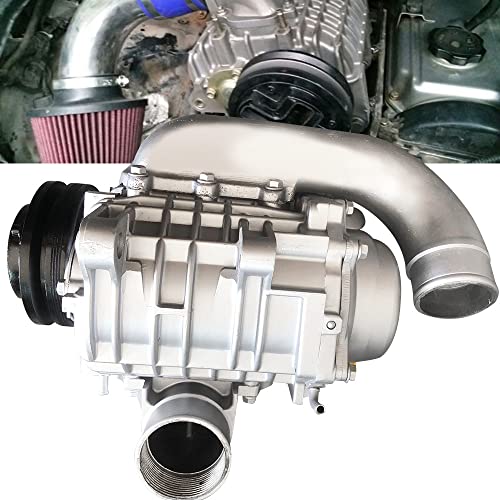
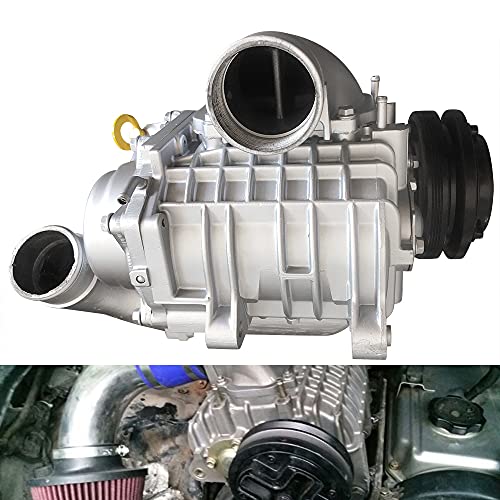

Universal SC14-Style Roots Supercharger for Custom Engine Builds
This aluminum SC14-style supercharger provides a compact starting point for custom forced-induction projects using approximately 2.0L to 3.5L engines. Its positive-displacement Roots-style design can deliver immediate airflow response, making it suitable for builders fabricating their own mounting, drive, intake and engine-management systems.
Despite the product title, this is not a complete vehicle-specific kit and is not a direct replacement for every 3.0L engine. “Universal” means it can be adapted to different applications—not that it bolts to random engines through the healing power of optimism.
Custom-Fabrication Component
This supercharger is not supplied as a direct bolt-on system for a particular year, make or model. Installation normally requires custom engineering and fabrication, including:
- Custom mounting brackets
- Application-specific crank and blower pulleys
- Correct drive belt and tensioner
- Fabricated intake piping
- Throttle-body placement
- Bypass-valve plumbing
- Fuel-system upgrades
- Engine-management calibration
- Vacuum and boost connections
- Hood and accessory clearance
- Potential intercooler installation
Professional installation and calibration are strongly recommended.
$304.99
Potential Engine Applications
The product is advertised for custom installations using approximately 2.0L to 3.5L engines. Potential projects may include selected:
- Jeep or Cherokee engines
- Toyota engines
- Toyota Previa applications
- Buick GL8 engines
- Great Wall Hover engines
- Custom inline-four, V6 and inline-six builds
These examples are not confirmed bolt-on applications. Fitment depends on available space, pulley alignment, blower speed, engine airflow, compression ratio and the installer’s ability to fabricate the required components.
Important Toyota Previa Distinction
Some Toyota Previa models were factory equipped with a supercharged 2.4L 2TZ-FZE engine. That factory system used an Aisin supercharger, an electromagnetic clutch and a unique accessory-drive layout. en.wikipedia.org
This universal blower should not be described as a direct replacement for a Previa supercharger unless its dimensions, pulley, clutch, ports, mounting points and displacement match the original component.
Positive-Displacement Response
The Roots-style mechanism moves air through the housing using intermeshing rotors. This design can provide airflow throughout a broad engine-speed range and generally offers quicker response than turbocharging systems that depend on exhaust energy.
Potential benefits of a correctly engineered installation include:
- Improved throttle response
- Stronger low-speed torque
- Increased engine airflow
- Broad boost delivery
- Compact installation dimensions
- Flexible mounting possibilities
Actual performance depends on the complete system. No specific horsepower, torque or boost increase should be guaranteed without compressor data and controlled engine testing.
Aluminum Construction
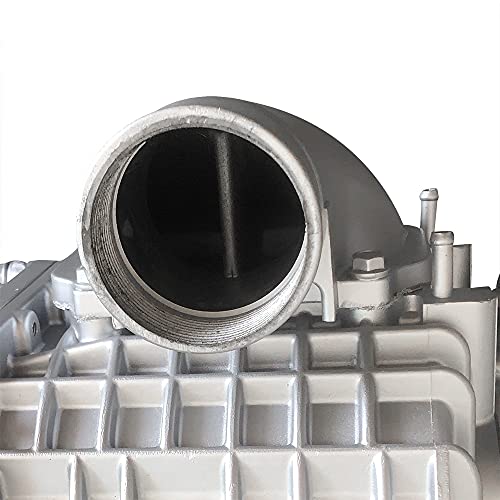
The supercharger housing is manufactured from aluminum to balance strength and manageable weight. Its sandblasted exterior provides a uniform industrial finish while helping resist surface corrosion.
Product characteristics include:
- Aluminum housing
- Sandblasted exterior finish
- Roots-style positive-displacement design
- Compact construction
- Closed housing assembly
- Suitable for custom mounting
- Intended for professional installation
Engine Size Is Not Enough to Confirm Compatibility
Displacement alone cannot determine whether a supercharger is appropriate for an engine. A 3.0L engine may operate at a completely different speed, airflow level or compression ratio than another 3.0L engine.
The installer must determine:
- Supercharger displacement per revolution
- Maximum safe blower speed
- Crank-to-supercharger pulley ratio
- Expected airflow
- Target boost pressure
- Engine compression ratio
- Fuel-octane requirements
- Intake-air temperature
- Available belt wrap
- Bypass-valve requirements
Incorrect pulley sizing can overspeed the supercharger, create excessive heat or produce unsafe boost.
Fuel Economy and Emissions Claims
A supercharger can increase engine power by supplying additional air, but it does not automatically reduce fuel consumption or pollutant emissions. Under boost, the engine generally requires additional fuel.
Fuel economy and emissions depend on:
- Engine calibration
- Driving conditions
- Air/fuel ratio
- Ignition timing
- Fuel-injector sizing
- Compression ratio
- Catalytic-converter operation
- Engine load
Any claim of reduced fuel consumption or emissions should be supported by standardized testing. Without that testing, it belongs in the same drawer as magnets that allegedly align fuel molecules.
Supporting Modifications
A proper installation may require:
- Larger fuel injectors
- Higher-capacity fuel pump
- Programmable engine management
- Custom ECU calibration
- Colder spark plugs
- Boost-referenced ignition control
- Blow-off or bypass valve
- Intercooler
- Wideband oxygen sensor
- Boost gauge
- Stronger engine internals
Engine condition should be checked before installation using compression and cylinder-leakage testing.
Intercooling and Intake Temperature
Roots-style superchargers can add significant heat to the intake charge, especially as boost and blower speed increase. An intercooler may be necessary to control intake-air temperature and reduce detonation risk.
Intercooling becomes increasingly important as boost rises above mild pressure levels. en.wikipedia.org
Available space, airflow and coolant routing should be evaluated during the initial design—not after the first detonation event introduces the piston to the oil pan.
Package Verification
The listing does not clearly identify every component included. Buyers should confirm whether the package contains only the supercharger assembly or also includes:
- Pulley
- Electromagnetic clutch
- Mounting brackets
- Intake adapters
- Belt
- Tensioner
- Bypass valve
- Gaskets
- Installation hardware
Custom fabrication should be expected even if some accessories are included.
Racing and Emissions Notice
No CARB Executive Order or application-specific emissions certification is supplied. This component should not be advertised as street legal or emissions compliant without documentation covering the completed installation.
California builders can search the official CARB aftermarket-parts database for applicable exemptions.
Additional forced-induction and engine-management information is available through My Pro Street Online and Pro Street Online.
Product Specifications
- Product type: Universal supercharger assembly
- Design: SC14-style Roots supercharger
- Housing material: Aluminum
- Finish: Sandblasted
- Suggested engine range: Approximately 2.0L–3.5L
- Vehicle-specific: No
- Direct replacement: Not confirmed
- Fabrication required: Yes
- Calibration required: Yes
- Professional installation: Strongly recommended
- CARB exemption supplied: No
Specification: Universal SC14-Style Roots Supercharger for Custom Engine Builds
|
User Reviews
Be the first to review “Universal SC14-Style Roots Supercharger for Custom Engine Builds”
You must be logged in to post a review.




There are no reviews yet.