
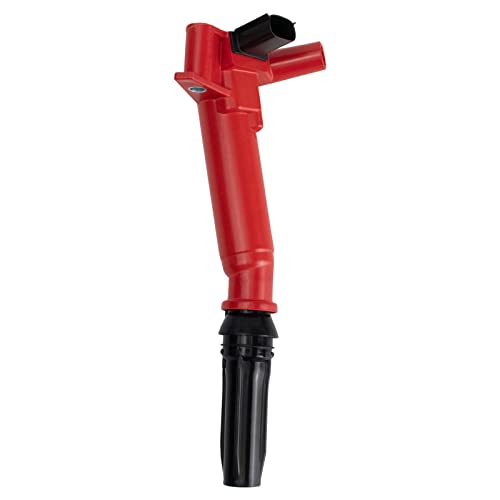
Ford 6.2L V8 Ignition Coil Fitment
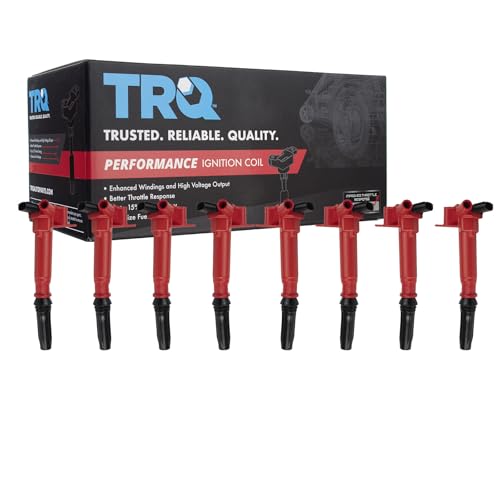
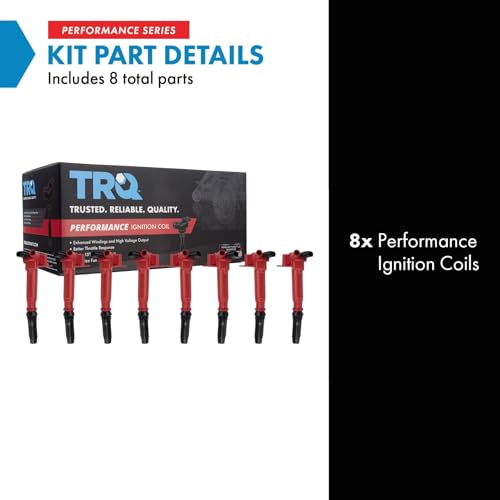
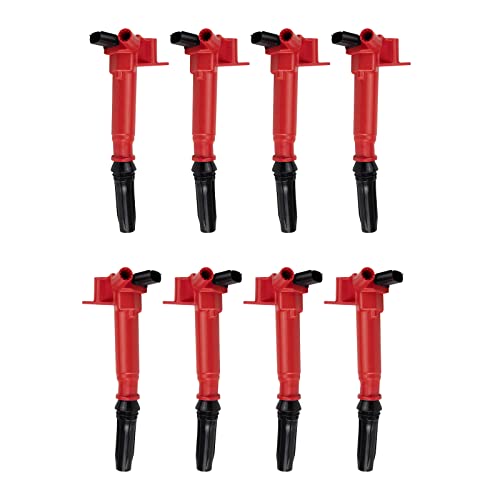
The TRQ 8-piece performance ignition coil kit fits the following listed Ford 6.2-liter V8 applications:
| Vehicle | Model Years | Engine |
|---|---|---|
| Ford F-150 | 2010–2014 | 6.2L V8 |
| Ford F-250 Super Duty | 2011–2017 | 6.2L V8 |
| Ford F-350 Super Duty | 2011–2017 | 6.2L V8 |
| Ford E-350 Super Duty | 2017 | 6.2L V8 |
| Ford E-450 Super Duty | 2017 | 6.2L V8 |
Always confirm the engine, model year, and original coil part number before ordering.
Ford used multiple engines and ignition configurations within the same vehicle families, so “it fits an F-150” isn’t specific enough.
Reference and Interchange Numbers
This TRQ ignition coil set cross-references the following numbers:
- AL3Z-12029-A
- AL3Z-12029-B
- UF-631
- UF-639
- UF631
- UF639
These numbers are especially useful when confirming compatibility against the coils currently installed in the vehicle.
Why Replace All Eight Ignition Coils?
A coil-on-plug ignition system gives each cylinder its own ignition coil.
That’s great for ignition control, but it also means a V8 has eight individual coils that have experienced roughly the same:
- Mileage
- Engine heat
- Electrical cycles
- Vibration
- Underhood conditions
When one high-mileage coil fails, the other seven haven’t suddenly become younger.
TRQ recommends replacing ignition coils as a set to help prevent electrical output imbalances between cylinders.
For a truck with significant mileage where several original coils are still installed, replacing the complete set can make sense—particularly when you’re already replacing the spark plugs.
For diagnosis and installation advice, see Pro Street’s How to Replace Ignition Coils Without Guesswork guide on My Pro Street.
Symptoms of a Bad Ignition Coil on a Ford 6.2L
Ignition-coil problems can produce several drivability symptoms.
Common signs include:
- Rough idle
- Engine misfire
- Hesitation
- Poor acceleration
- Check Engine light
- Flashing Check Engine light
- Reduced power
- Increased fuel consumption
- Hard starting
- Shaking under load
- Intermittent misfire
The important word is can.
Those symptoms don’t automatically prove an ignition coil has failed.
Bad spark plugs, injector problems, vacuum leaks, compression problems, wiring faults, and other failures can produce similar symptoms.
That’s why Pro Street recommends diagnosing the engine before loading the parts cannon.
Read our Diagnose the Car Before Replacing Parts guide for a more evidence-based approach.
What Does a Flashing Check Engine Light Mean?
A flashing Check Engine light deserves immediate attention.
Unlike a steady warning light, flashing commonly indicates an active severe misfire capable of sending unburned fuel into the exhaust.
That can overheat and damage the catalytic converter.
If your Ford 6.2L begins shaking heavily and the Check Engine light starts flashing while towing, accelerating, or climbing a hill, don’t simply continue driving it indefinitely.
Our Flashing Check Engine Light Guide explains why this warning should be treated differently from an ordinary stored trouble code.
P0300 and Ford 6.2L Misfires
One diagnostic code you may encounter is P0300 – Random/Multiple Cylinder Misfire Detected.
P0300 doesn’t tell you that eight ignition coils need replacement.
It tells you that the PCM has detected misfires affecting multiple or changing cylinders.
Potential causes include:
- Ignition coils
- Worn spark plugs
- Fuel delivery problems
- Vacuum leaks
- Injector problems
- Low compression
- Wiring faults
- Engine mechanical problems
See the Pro Street P0300 Random/Multiple Cylinder Misfire Guide for a deeper diagnostic walkthrough.
Cylinder-specific codes such as P0301 through P0308 can further identify which cylinders are experiencing misfires.
Coil-on-Plug Diagnosis: Don’t Just Buy a Coil Because a Code Named a Cylinder
Suppose your 6.2L Ford stores a P0304 code.
That means cylinder four has been identified as misfiring.
It does not mean:
Congratulations! The computer has diagnosed ignition coil number four.
A simple coil swap can provide useful evidence.
Move the suspected ignition coil to another cylinder, clear the code after recording all diagnostic information, and determine whether the misfire follows the coil.
If P0304 becomes a misfire on the cylinder receiving that coil, you’ve developed considerably stronger evidence that the coil itself is faulty.
If the misfire stays on cylinder four, keep diagnosing.
That’s how you avoid replacing several hundred dollars in ignition components because the actual problem was a spark plug.
High-Temperature Epoxy Construction
Heat is one of the major enemies of ignition-system electronics.
Ignition coils live directly on or extremely close to the engine, repeatedly experiencing high underhood temperatures followed by cooling after shutdown.
TRQ specifies high-temperature epoxy in these performance coils to improve durability and service life.
That’s particularly relevant in Ford Super Duty applications where trucks may spend extended periods:
- Towing
- Hauling
- Idling
- Operating in high ambient temperatures
- Climbing grades under substantial engine load
Ignition demand also increases under load, making a marginal coil more likely to reveal itself while the truck is working hard.
Up to 15% More Energy Transferred to the Spark Plugs
TRQ states that these performance ignition coils can provide up to 15% more energy transferred to the spark plugs.
That should be understood correctly.
An ignition coil doesn’t magically add 15% more engine power.
Its job is to provide sufficient ignition energy to reliably fire the air-fuel mixture.
The potential advantages of stronger, consistent ignition performance are more relevant to:
- Reliable combustion
- Throttle response
- Misfire resistance
- High-load operation
- Maintaining ignition performance as operating demands increase
If the existing ignition system is already operating perfectly, replacing coils should not be treated like installing a supercharger.
The goal is strong, consistent spark delivery—not discovering 75 horsepower hiding underneath the coil covers.
Faster Rise Time and Spark Duration
TRQ also specifies faster rise times and duration among the performance characteristics of these coils.
Ignition-coil rise time describes how quickly the coil can develop the necessary voltage, while spark duration concerns how long useful ignition energy remains available across the spark-plug gap.
Both characteristics influence reliable ignition.
This becomes especially relevant when cylinder pressure increases under heavy throttle.
That’s one reason an ignition problem can be relatively difficult to notice while idling but become painfully obvious when accelerating or towing.
Don’t Ignore the Spark Plugs
If you’re replacing eight ignition coils on a high-mileage Ford 6.2L, inspect the spark plugs.
Worn spark plugs can require greater ignition voltage to bridge an enlarged gap.
That additional demand places more stress on the ignition coils.
Check the plugs for:
- Excessive electrode wear
- Incorrect gap
- Oil contamination
- Carbon fouling
- Cracked insulators
- Unusual coloration
- Evidence of overheating
If replacement is due, installing fresh plugs alongside a complete coil set can restore the ignition system as a whole rather than addressing only half of it.
For additional information, see Pro Street’s Best Spark Plugs for Performance and Turbo Cars coverage and ignition-system technical guides.
Improved Throttle Response
TRQ lists improved throttle response as another benefit of its performance ignition coils.
Again, expectations matter.
A healthy ignition system helps the engine respond consistently when cylinder load increases. If worn or marginal coils are producing weak or intermittent ignition, replacing them can restore responsiveness that the truck has gradually lost.
Drivers may notice improvement in:
- Tip-in response
- Acceleration
- Idle quality
- High-load smoothness
- Overall engine consistency
But ignition coils aren’t throttle controllers or engine tuners.
The biggest improvement typically occurs when they’re replacing degraded components.
Why Ford F-250 and F-350 Owners Should Care
The Super Duty application is arguably where reliable ignition matters most.
A truck may feel completely normal driving unloaded around town and begin misfiring only when:
- Towing a trailer
- Climbing a steep grade
- Accelerating onto the highway
- Carrying a heavy payload
Cylinder pressures rise under load, increasing the voltage required for reliable ignition.
A marginal coil that survives light cruising can therefore reveal itself once the engine is asked to work.
For a 6.2L Super Duty used regularly for towing or hauling, maintaining the ignition system is cheap insurance compared with diagnosing a severe misfire on the side of the highway with a trailer attached.
Direct-Fit Installation
The TRQ Performance Ignition Coil Set is designed as a direct replacement for the compatible factory components, avoiding the fabrication or modification associated with universal ignition upgrades.
That makes the kit appropriate for DIY owners who want upgraded replacement coils without redesigning the factory ignition system.
General installation involves:
- Allowing the engine to cool.
- Disconnecting components necessary to access the coils.
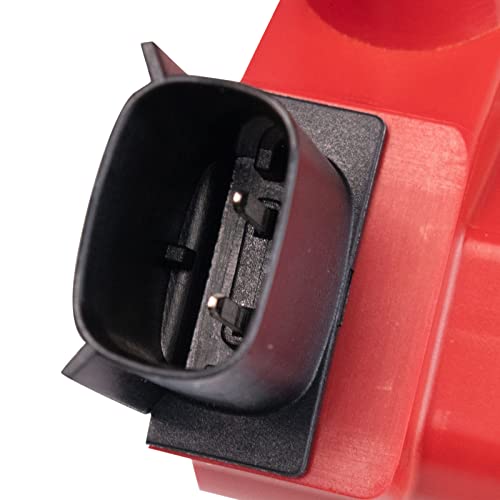
- Disconnecting the ignition-coil electrical connectors.
- Removing the coil retaining fasteners.
- Removing the old coils.
- Inspecting the coil boots and spark-plug wells.
- Inspecting or replacing the spark plugs as necessary.
- Installing the new TRQ coils.
- Reconnecting the electrical connectors.
- Reassembling removed components.
- Starting the engine and checking operation.
- Rescanning for misfire codes if the vehicle previously had a Check Engine light.
Always follow the correct service procedure and torque specifications for the exact Ford application.
Look Inside the Spark-Plug Wells
Don’t immediately install the new coils without inspecting what’s underneath them.
Look for:
- Engine oil
- Water
- Coolant
- Dirt
- Corrosion
- Damaged electrical connectors
- Carbon tracking
Contamination around the spark plug or coil boot can create an alternative electrical path and contribute to repeat misfires.
Installing a new coil without fixing the contamination simply gives the same problem a shiny new victim.
Who Should Buy the TRQ 8-Piece Performance Coil Set?
This kit makes the most sense for owners of compatible Ford 6.2L V8 vehicles who:
- Have one or more failing ignition coils
- Are experiencing high-mileage ignition problems
- Want to replace all eight coils together
- Are performing a complete spark-plug and coil service
- Tow or haul regularly
- Want performance-grade direct-fit replacement coils
- Prefer not to mix aging factory coils with new replacements
It is particularly compelling when several original coils remain installed on a high-mileage engine.
Is the TRQ Performance Ignition Coil Set Worth It?
For compatible Ford 6.2L V8 F-150, F-250 Super Duty, F-350 Super Duty, E-350, and E-450 applications, the TRQ 8-Piece Performance Ignition Coil Set provides a convenient way to refresh the entire coil-on-plug ignition system at once.
You get eight matched performance coils with high-temperature epoxy construction, direct-fit installation, and performance characteristics aimed at maintaining strong ignition energy and response.
More importantly, replacing a genuinely worn ignition system can restore the smoothness, acceleration, and reliability that gradually disappear as coils deteriorate.
Just diagnose the problem before ordering.
Because eight beautiful red ignition coils won’t repair a clogged injector.
They will, however, make it a much better-dressed clogged injector.








There are no reviews yet.