
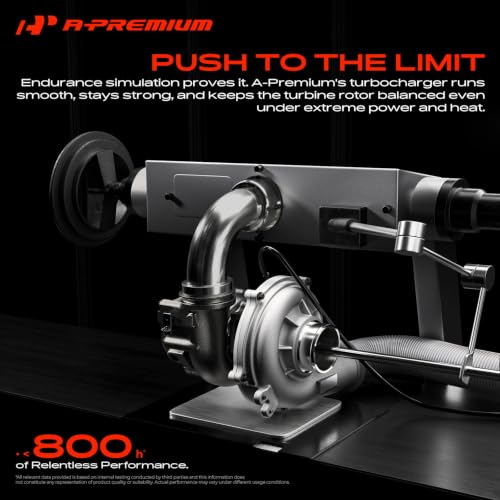
A-Premium TD04HL6 Turbocharger Kit for Hyundai and Kia 2.0L Turbo
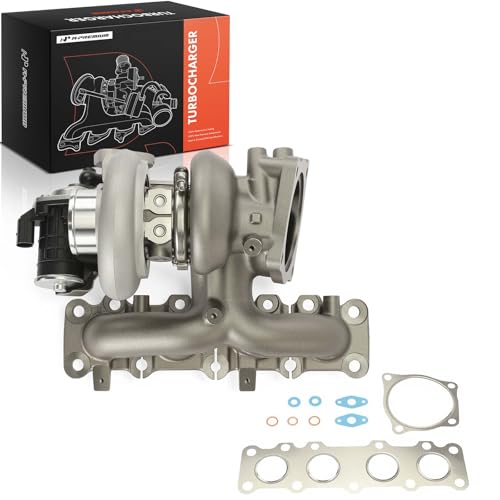
Restore factory-style boost response with this A-Premium TD04HL6 complete turbocharger assembly for select Hyundai and Kia vehicles equipped with the Theta II 2.0L turbocharged gasoline engine. The kit includes the turbocharger, wastegate actuator and installation gaskets, providing the primary hardware required to replace a worn or failed original unit.
This is a direct-replacement turbocharger, not a larger performance upgrade. Its job is to restore normal boost delivery, drivability and engine response without requiring a custom manifold or aftermarket engine calibration.
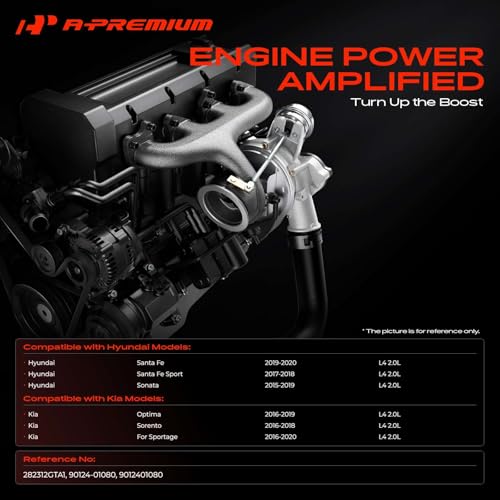
Vehicle Fitment
Hyundai
- Santa Fe 2.0T: 2019–2020
- Santa Fe Sport 2.0T: 2017–2018
- Sonata 2.0T: 2015–2019
Kia
- Optima 2.0T: 2016–2019
- Sorento 2.0T: 2016–2018
Fitment is limited to compatible Theta II 2.0L turbocharged engines using the TD04HL6-style turbo and matching OE number. These models were offered with other engines, including naturally aspirated and smaller turbocharged options. “It says 2.0 somewhere on the registration” is not sufficient confirmation.
Official Kia specifications show the 2019 Optima SX using a 2.0-liter turbocharged GDI four-cylinder, while other trims received 1.6-liter turbo or 2.4-liter naturally aspirated engines.
$544.99
Confirm Fitment Before Ordering
Verify all of the following:
- 2.0L turbocharged Theta II engine
- Matching TD04HL6 turbo configuration
- OE turbocharger number 28231-2GTA1
- Matching compressor and turbine housing orientation
- Correct oil and coolant connections
- Compatible wastegate actuator and linkage
- Matching exhaust and charge-pipe flanges
VIN verification is strongly recommended. Production changes can affect fittings, brackets, sensors and actuator configurations even when the basic engine description appears identical.
Product Specifications
| Specification | Details |
|---|---|
| Product type | Complete turbocharger assembly |
| Turbo model | TD04HL6 |
| Engine family | Theta II |
| Engine displacement | 2.0L |
| Induction | Turbocharged |
| Fuel system | Gasoline direct injection |
| Housing material | Alloy |
| Wastegate actuator | Included |
| Installation gaskets | Included |
| Replacement type | Factory-style direct replacement |
| Warranty | One year, unlimited mileage |
Hyundai identified the 2019 Santa Fe 2.0T as a Theta II turbocharged direct-injection four-cylinder application. motorshow.me
Reference Numbers
This turbocharger may replace or interchange with:
- 28231-2GTA1
- 282312GTA1
- 90124-01080
- 9012401080
- TD04HL6
Reference numbers should be used alongside the VIN, engine code and physical turbo configuration. One matching number is helpful; several matching details are considerably better.
Complete Turbocharger Assembly
The package includes:
- TD04HL6 turbocharger assembly
- Pneumatic wastegate actuator
- Wastegate linkage
- Turbocharger mounting gaskets
- Preassembled compressor and turbine housings
Additional hardware, oil lines, coolant lines, studs, nuts, clamps and filters may not be included. Inspect the package contents before disassembling the vehicle.
Integrated Wastegate Actuator
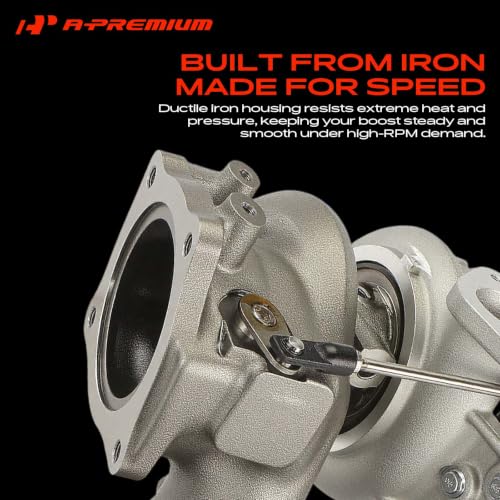
The included actuator controls the internal wastegate, which regulates turbine speed and boost pressure by directing exhaust flow around the turbine wheel when commanded.
An actuator or wastegate fault can cause:
- Low or inconsistent boost
- Slow turbo response
- Overboost conditions
- Underboost trouble codes
- Surging during acceleration
- Reduced engine power
- Limp-mode operation
Do not shorten the actuator rod or adjust preload to create additional boost unless the vehicle is being calibrated by a qualified tuner. Randomly turning the rod until the car “feels faster” is less of a tuning strategy and more of a future diagnostic mystery.
Symptoms of a Failing Turbocharger
Replacement may be necessary if diagnosis confirms:
- Excessive shaft movement
- Compressor or turbine-wheel damage
- Oil leaking into the intake or exhaust
- Persistent blue exhaust smoke
- Metallic scraping or siren-like noises
- Slow boost response
- Loss of power under load
- P0299 turbocharger underboost
- P0234 turbocharger overboost
- Damaged wastegate linkage or actuator
- Cracked or leaking turbo housing
These symptoms can also result from charge-pipe leaks, restricted oil lines, faulty control solenoids, damaged intercooler plumbing or engine problems. Diagnose the original failure before installing another turbo.
Pro Street’s guide to checking engine health before adding boost covers several checks that also matter before installing a replacement turbocharger.
Gaskets Included
The supplied gaskets help seal the turbocharger’s exhaust, oil and related mounting connections. Proper sealing prevents exhaust leaks and reduces the risk of oil contamination or pressure loss.
Installation surfaces must be:
- Flat and undamaged
- Free from old gasket material
- Clean of oil, carbon and debris
- Checked for cracks or warping
- Assembled using the proper tightening sequence
Do not bury damaged surfaces under excess sealant. Silicone squeezed into an oil passage can kill a new turbo with impressive efficiency.
Critical Installation Requirements
A replacement turbocharger must receive clean engine oil immediately. Never start the engine with a dry center housing.
Before installation:
- Determine why the original turbocharger failed.
- Inspect the intake system for compressor debris.
- Clean the intercooler and charge piping when contamination is present.
- Inspect the exhaust system for turbine debris or restrictions.
- Replace the engine oil and filter.
- Inspect or replace restricted oil-feed and drain lines.
- Verify that coolant passages and hoses are clear.
- Confirm the compressor and turbine wheels rotate freely.
- Prime the turbocharger with the correct clean engine oil.
- Crank the engine without starting it until oil pressure is established.
- Check every oil, coolant, exhaust and charge-pipe connection for leaks.
Garrett’s professional replacement guidance recommends fresh oil and filters, a clean breather system and careful inspection of the air-intake system during turbo installation. Garrett Motion
Diagnose the Original Failure First
A turbocharger rarely fails simply because it woke up feeling dramatic. Common underlying causes include:
- Restricted oil supply
- Contaminated engine oil
- Blocked oil drain
- Low oil pressure
- Foreign-object damage
- Excessive crankcase pressure
- Intake-system leaks
- Engine overheating
- Incorrect boost control
- Damaged catalytic converter
- Severe engine bearing wear
Installing a new turbo without correcting the cause can destroy the replacement quickly and may void warranty coverage.
Direct-Replacement Performance
This TD04HL6 assembly is intended to restore:
- Factory-style boost pressure
- Normal throttle response
- Proper wastegate operation
- Smooth acceleration
- Original drivability
- Reliable daily operation
It should not be marketed as a high-flow racing turbo or guaranteed horsepower upgrade. More boost requires supporting fuel, cooling, exhaust and calibration changes—not merely optimism and a socket set.
Warranty
A-Premium advertises a one-year unlimited-mileage warranty for qualifying manufacturing defects. Warranty coverage may require proof of proper installation, oil-system service and correction of the original failure.
Professional installation is strongly recommended.
Specification: A-Premium TD04HL6 Turbocharger Kit for Hyundai and Kia 2.0L Turbo
|
User Reviews
Be the first to review “A-Premium TD04HL6 Turbocharger Kit for Hyundai and Kia 2.0L Turbo”
You must be logged in to post a review.





There are no reviews yet.