

maXpeedingrods T3/T4 Turbo Kit for Honda Civic, CRX and Del Sol D-Series
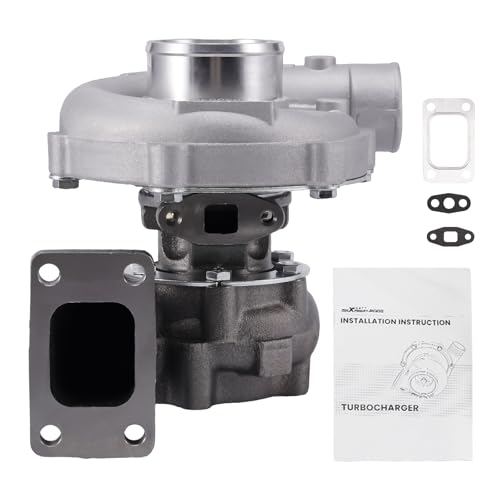
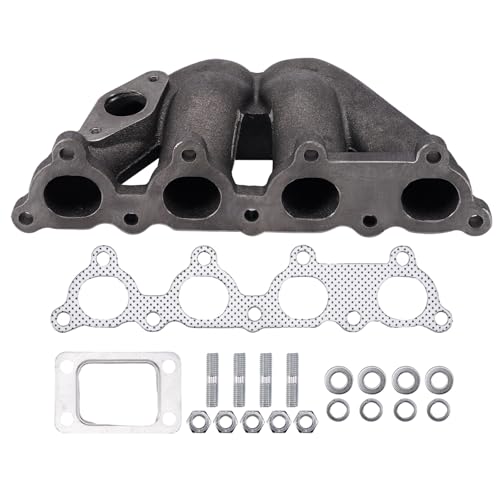
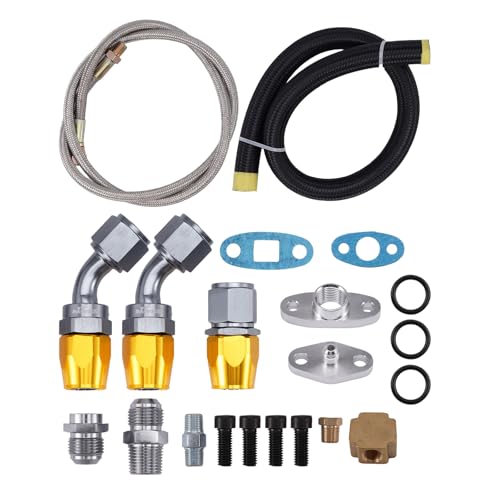
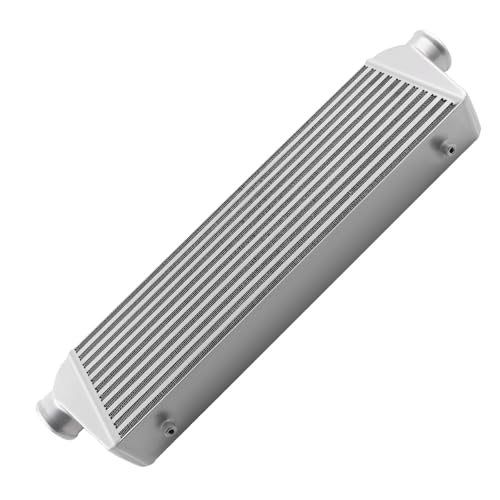
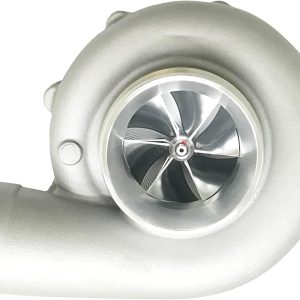
Add forced induction to a compatible Honda D-series engine with this maXpeedingrods T3/T4 turbocharger kit. Designed for select 1988–2000 Civic, CRX and Del Sol applications, the package combines a T3/T4-style turbocharger, front-mount intercooler and oil-feed and return hardware.
The turbocharger is advertised to support up to 400 horsepower, but this rating describes potential turbo airflow—not the safe limit of a stock D15 or D16 engine. Final output depends on engine condition, internal components, fuel delivery and professional ECU calibration.
Honda Civic Fitment
1992–1995 Civic
- Civic VX 1.5L: D15Z1 SOHC VTEC-E
- Civic CX 1.5L: D15B8 SOHC
- Civic DX/LX 1.5L: D15B7 SOHC
- Civic EX/Si 1.6L: D16Z6 SOHC VTEC
1996–2000 Civic
- Civic DX/LX 1.6L: D16Y7 SOHC
- Civic HX 1.6L: D16Y5 SOHC VTEC-E
- Civic EX 1.6L: D16Y8 SOHC VTEC
Fitment depends on the engine code—not merely the Civic model year. Engine swaps are common in these chassis, so check the stamped engine code before ordering.
Honda CRX Fitment
1988–1991 CRX
- CRX DX 1.5L: D15B2 SOHC
- CRX HF 1.5L: D15B6 SOHC
- CRX Si 1.6L: D16A6 SOHC
The CRX engine bay and chassis differ from the later Civic and Del Sol platforms. Expect installation differences in charge-pipe routing, downpipe clearance and intercooler mounting.
Honda Del Sol Fitment
- 1993–1995 Del Sol S 1.5L: D15B7 SOHC
- 1993–1997 Del Sol Si 1.6L: D16Z6 SOHC VTEC
- 1996–1997 Del Sol S 1.6L: D16Y7 SOHC
Verify the actual engine code, exhaust-manifold pattern and available engine-bay clearance before installation.
$629.99
Important Fitment Notice
This is an aftermarket turbo-conversion kit—not a replacement for an original Honda turbocharger. These Civic, CRX and Del Sol models were naturally aspirated from the factory.
Installation requires mechanical modifications, oil-pan work, exhaust fabrication and ECU tuning. Although the package supplies several major components, additional parts will be required for a complete and reliable conversion.
Turbocharger Specifications
| Specification | Details |
|---|---|
| Turbo style | T3/T4 |
| Advertised power capability | Up to 400 hp |
| Bearing design | Oil-lubricated floating/journal bearing |
| Compressor inlet | 72 mm / 2.8 inches |
| Compressor outlet | 53 mm / 2 inches |
| Oil inlet | 1/8-inch NPT |
| Turbine inlet | T3/T4 four-bolt flange |
| Turbine outlet | Five-bolt flange |
| Turbine inducer | 64.8 mm |
| Turbine exducer | 55.8 mm |
| Turbine trim | 74.2 |
| Turbine housing A/R | 0.63 |
| Compressor inducer | 52.7 mm |
| Compressor exducer | 76 mm |
| Compressor trim | 48.1 |
| Compressor housing A/R | 0.50 |
The supplied “wet drift bearing” description is awkwardly translated. The design is better described as an oil-lubricated floating or journal-bearing center section.
Understanding the 400-Horsepower Claim
The advertised 400-horsepower rating represents potential airflow under suitable operating conditions. It does not mean a stock D-series engine can safely produce 400 horsepower.
Actual output depends on:
- Engine condition
- Compression ratio
- Internal engine components
- Boost pressure
- Fuel type
- Injector capacity
- Fuel-pump flow
- Intercooler efficiency
- Exhaust restriction
- ECU calibration
- Ignition timing
Turbo manufacturers generally calculate maximum power capability from compressor airflow. That rating represents potential engine output, not guaranteed wheel horsepower or a safe stock-engine limit.
For a street-driven stock-internal D-series, the tuner should establish a conservative power and torque target based on engine condition. The connecting rods do not care what the turbo box promised.
T3/T4 Turbocharger Design
The T3/T4 configuration combines a relatively large compressor with a T3-style turbine inlet. The 0.50 A/R compressor housing and 0.63 A/R turbine housing are intended to balance airflow capability with street-oriented response.
Potential advantages include:
- Stronger midrange and top-end airflow
- Support for future engine upgrades
- Common T3 mounting pattern
- Readily available wastegate and downpipe components
- Suitability for custom D-series builds
Spool response will vary with displacement, compression, camshaft timing, manifold design, exhaust restriction and boost target.
Front-Mount Intercooler
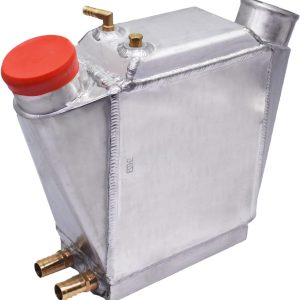
The included intercooler helps reduce the temperature of compressed air before it enters the engine.
Lower intake-air temperatures can provide:
- Increased air density
- Better knock resistance
- More consistent power
- Reduced heat soak
- Improved tuning stability
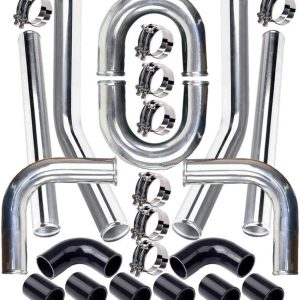
Charge pipes must be routed carefully around the radiator support, bumper reinforcement, air-conditioning hardware and body structure. Cutting or modification may be required depending on the chassis.
Oil Feed and Return System
The package includes oil-feed and return hardware, but installation still requires an appropriate oil source and a properly positioned oil-pan return fitting.
The return line must:
- Flow downhill from the turbo
- Avoid sharp bends
- Remain above the engine’s oil level
- Use heat-resistant hose
- Remain clear of the exhaust manifold and downpipe
A restricted or poorly positioned return can force oil past the turbo seals and create smoke that is often incorrectly blamed on a defective turbo.
Additional Parts Required
A complete installation may also require:
- Engine-specific turbo manifold
- External wastegate
- Wastegate dump tube
- Five-bolt downpipe flange
- Fabricated downpipe
- Blow-off valve
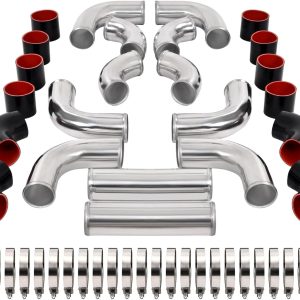
- Intercooler piping and couplers
- Air filter and intake pipe
- Larger fuel injectors
- Higher-capacity fuel pump
- Adjustable boost control
- Wideband oxygen sensor
- ECU or programmable engine management
- Properly sized MAP sensor
- Upgraded clutch
- Heat shielding
- Exhaust-system modifications
- Fresh gaskets and mounting hardware
“Kit” does not mean every fastener required by every chassis is included. Honda builders have been learning that lesson since dial-up internet.
Check Engine Health Before Adding Boost
Before installation, perform:
- Compression testing
- Cylinder leak-down testing
- Oil-pressure testing
- Cooling-system pressure testing
- Fuel-pressure testing
- Ignition-system inspection
- Timing-belt inspection
- Crankcase-ventilation inspection
Use Pro Street’s engine-health checklist for turbo builds before installing the kit.
A tired D-series may run acceptably while naturally aspirated and immediately expose ring, head-gasket or bearing problems once boost is added.
Fuel and Engine Management Requirements
Do not operate the engine under boost using the original naturally aspirated calibration.
Proper tuning must account for:
- Larger fuel injectors
- Fuel-pump capacity
- Boost pressure
- Air/fuel ratio
- Ignition timing
- Intake-air temperature
- MAP sensor range
- Rev limit
- Boost cut
- Fuel octane
A wideband oxygen sensor and datalogging are essential. An adjustable fuel-pressure regulator by itself is not a tune, regardless of how shiny it is.
Installation and First Startup
Professional installation and tuning are strongly recommended.
Before starting the engine:
- Verify the turbocharger rotates freely.
- Clean all intercooler pipes and oil lines.
- Install the oil return above the pan’s oil level.
- Prime the turbo with clean engine oil.
- Crank the engine without starting until oil pressure develops.
- Pressure-test the intercooler system.
- Verify wastegate and boost-controller plumbing.
- Confirm adequate fuel pressure.
- Begin tuning at wastegate spring pressure.
- Monitor air/fuel ratio, oil pressure and boost.
- Check for oil, exhaust and intake leaks.
- Reinspect the installation after the first heat cycle.
Materials and Temperature Ratings
The turbine housing is constructed from ductile iron and advertised to resist temperatures up to approximately 1,292°F. The alloy turbine wheel is rated for higher operating temperatures, reportedly up to approximately 1,652°F.
These are material ratings, not recommended continuous exhaust-gas temperatures. Excessive exhaust heat can still damage the turbocharger, valves, manifold and catalytic converter.
Emissions and Street-Legal Notice
This kit alters the vehicle’s factory induction, fuel and exhaust systems. No California Air Resources Board Executive Order number is provided.
Verify local emissions regulations before installation. In California and other regulated areas, the kit may be limited to competition or off-road vehicles unless specifically approved for the exact application.
Specification: maXpeedingrods T3/T4 Turbo Kit for Honda Civic, CRX and Del Sol D-Series
|
User Reviews
Be the first to review “maXpeedingrods T3/T4 Turbo Kit for Honda Civic, CRX and Del Sol D-Series”
You must be logged in to post a review.



There are no reviews yet.