


What’s Included?
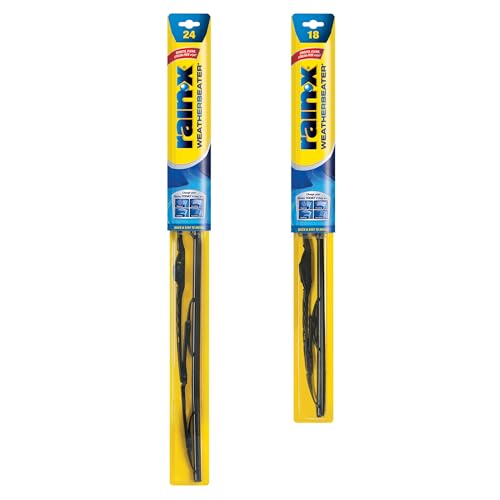
The Rain-X 820148 package contains:
- 1 × 24-inch WeatherBeater wiper blade
- 1 × 18-inch WeatherBeater wiper blade
This combination is intended for compatible vehicles requiring those respective driver- and passenger-side sizes.
Always verify your vehicle before ordering.
Traditional Conventional Wiper Design
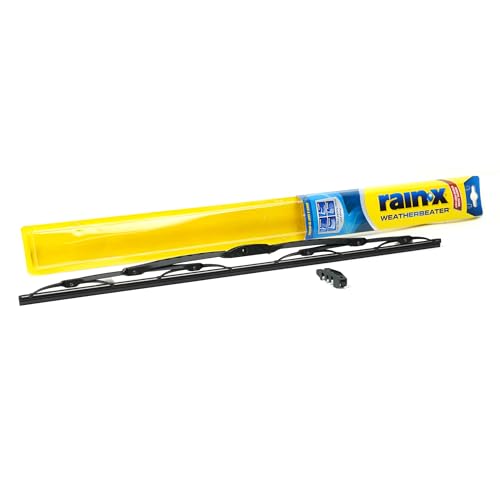
WeatherBeater uses the traditional framed wiper construction that has been used on vehicles for decades.
Instead of a single flexible beam, the blade uses a metal structure with multiple contact points to distribute pressure across the wiping edge.
Rain-X continues to classify WeatherBeater alongside its other conventional wiper blades rather than its beam or hybrid products.
That makes WeatherBeater a good option for drivers who prioritize:
- Proven construction
- Affordable replacement cost
- Straightforward installation
- Broad vehicle coverage
- Conventional OEM-style wiper design
Natural Rubber Squeegee
The WeatherBeater blade uses a:
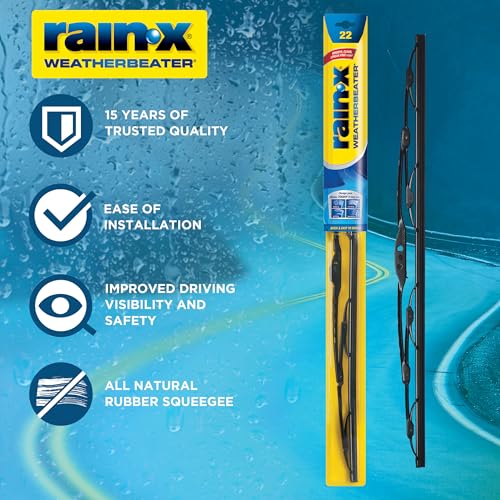
natural-rubber squeegee
designed to maintain contact with the windshield while resisting normal environmental deterioration.
Wiper rubber is continuously exposed to:
- Heat
- Cold
- Rain
- Snow
- Windshield washer fluid
- Road salt
- Dirt
- UV exposure
- Ozone
Those conditions eventually cause rubber to harden, crack or split.
The WeatherBeater design is intended to resist this type of deterioration during normal use.
Galvanized Steel Frame
Rather than using an integrated beam, WeatherBeater uses a:
galvanized steel frame.
Galvanizing helps protect the steel structure against corrosion caused by:
- Water
- Road salt
- Humidity
- Winter driving
- Repeated environmental exposure
A rigid frame also supports the multiple pressure points responsible for pushing the rubber wiping edge against the windshield.
Multiple Pressure Points
Traditional framed blades use several articulated contact points to distribute spring force across the rubber squeegee.
The WeatherBeater design uses multiple pressure points along with embedded friction reducers to help maintain even windshield contact.
This can help reduce:
- Streaks
- Unwiped areas
- Chatter
- Uneven blade pressure
Proper wiper-arm spring tension is still essential.
Even the best replacement blade cannot compensate for a bent or worn-out wiper arm.
WeatherBeater vs. Beam Wiper Blades
The biggest difference between WeatherBeater and premium blades such as Bosch ICON or Rain-X Repellency is construction.
Rain-X WeatherBeater
Uses:
Conventional articulated frame
Advantages include:
- Lower cost
- Proven design
- Easy replacement
- Broad compatibility
Beam Wiper Blade
Uses:
Integrated flexible beam
Potential advantages include:
- More uniform contact on heavily curved glass
- Lower-profile aerodynamics
- Fewer exposed joints
- Better resistance to snow accumulation
Neither design is automatically correct for every driver.
WeatherBeater makes sense when a quality conventional replacement is all the vehicle needs.
For a broader comparison, read Pro Street’s Best Windshield Wiper Blades for Clearer Drives guide:
Best Windshield Wiper Blades for Clearer Drives
Rain-X WeatherBeater vs. Rain-X Repellency
These two Rain-X products target different buyers.
WeatherBeater
Focuses on:
- Traditional construction
- Natural-rubber wiping edge
- Galvanized frame
- Affordable replacement
Rain-X Repellency
Adds:
- Beam construction
- Windshield water-repellency treatment
- Hydrophobic water-beading technology
WeatherBeater does not need to be marketed as applying Rain-X water-repellent coating to the windshield.
That feature belongs to specific Rain-X water-repellency blade lines.
Keeping those technologies separate prevents customer confusion and gives each product its own search intent.
24-Inch Driver-Side Wiper
The larger blade in this package measures:
24 inches
or approximately:
610mm.
This is commonly used as the driver-side blade on compatible vehicles.
The larger sweep helps clear the driver’s primary field of view.
18-Inch Passenger-Side Wiper
The second blade measures:
18 inches
or approximately:
457mm.
On applications using this bundle, the shorter blade typically serves the passenger side.
The different lengths help account for:
- Windshield shape
- Wiper pivot location
- Overlap
- Cowl geometry
This is why many vehicles use mismatched front wiper sizes.
Do Not Buy Wipers by Length Alone
A vehicle using a:
24-inch + 18-inch
combination does not automatically use Rain-X 820148.
Correct fitment can also depend on:
- Wiper-arm attachment
- Vehicle year
- Make
- Model
- Windshield configuration
- Driver/passenger position
Always verify fitment before purchasing.
Rain-X maintains an official blade finder for matching blades to specific vehicles:
Rain-X also confirms that WeatherBeater blades are offered in numerous individual sizes, including both 18-inch and 24-inch lengths.
Multi-Adapter Installation
The WeatherBeater package uses a multi-adapter system designed to work with several common wiper-arm configurations where specified.
Rain-X maintains dedicated WeatherBeater installation instructions for arm types including:
- Large J-hook
- Small J-hook
- Large pin
- Small pin
- Bayonet
Those official instructions remain available through Rain-X.
For installation help:
Rain-X WeatherBeater Installation Instructions
Don’t Assume the Adapter Fits Every Vehicle
“Multi-adapter” does not mean:
every vehicle ever manufactured.
Modern cars use many different wiper-arm attachment systems.
Always check the specific application before purchasing.
Some vehicles may require a different Rain-X blade family or connection type.
How to Install Rain-X WeatherBeater Wipers
Exact installation varies by wiper arm, but the general procedure is:
- Turn the vehicle off.
- Raise the wiper arm away from the windshield.
- Rotate the old blade to access the connection.
- Release the old wiper blade.
- Confirm the WeatherBeater adapter configuration.
- Install the new blade onto the arm.
- Verify the adapter locks securely.
- Carefully lower the blade onto the windshield.
Repeat for the second side.
Always follow the correct Rain-X instructions for your specific wiper-arm style.
Protect the Windshield During Installation
Place a folded towel over the windshield before removing the old blade.
Once the blade is removed, the metal wiper arm is exposed.
If that spring-loaded arm snaps back against the glass, it can potentially chip or crack the windshield.
That’s an impressively expensive way to save four seconds during wiper installation.
Test the Wipers After Installation
After installing both blades:
- Apply windshield washer fluid.
- Operate the wipers at low speed.
- Verify complete windshield contact.
- Check for interference.
- Run them at higher speed.
- Listen for chatter or unusual noise.
A properly installed blade should move smoothly across the windshield without contacting:
- The other blade
- Windshield trim
- Cowl
- A-pillar
Signs Your Old Wipers Need Replacement
Common symptoms include:
- Streaking
- Smearing
- Chattering
- Squeaking
- Skipping
- Torn rubber
- Cracked rubber
- Hardened wiping edge
- Missed windshield sections
Wipers often deteriorate slowly enough that the driver gets used to reduced visibility.
Then the first major rainstorm arrives and provides the performance review.
Inspect the Rubber Squeegee
Lift the blade away from the glass and examine the wiping edge.
Look for:
- Cracks
- Tears
- Flattened rubber
- Hardening
- Missing sections
- Separation from the frame
Physical damage is a clear sign that replacement is due.
Clean the Windshield First
Not every streak means the wiper blade is bad.
Windshields accumulate:
- Road film
- Wax residue
- Silicone
- Grease
- Bugs
- Tree sap
- Dirt
Clean the windshield thoroughly before condemning otherwise healthy blades.
Also wipe the rubber squeegee with a damp cloth.
If streaking continues, replacement may be necessary.
All-Weather Use
WeatherBeater blades are designed for everyday year-round use.
The natural-rubber squeegee and galvanized frame are intended to tolerate typical exposure to:
- Rain
- Hot weather
- Cold weather
- Washer fluid
- Road salt
This makes them suitable as a straightforward replacement blade for daily-driven vehicles.
Summer Wiper Wear
Summer can be surprisingly hard on windshield wipers.
A parked windshield can become extremely hot in direct sunlight.
Heat, UV and ozone can gradually:
- Harden rubber
- Create cracks
- Reduce flexibility
- Increase streaking
A vehicle doesn’t need to see frequent rain for its wiper blades to wear out.
Winter Wiper Care
Cold weather introduces different challenges.
Before using the wipers:
- Remove heavy snow
- Defrost the windshield
- Free frozen blades from the glass
Do not rely on the wiper motor to break blades loose from heavy ice.
That can damage:
- Wiper rubber
- Frame
- Linkage
- Motor
The scraper is still the preferred tool for archaeological ice removal.
Road Salt and Winter Grime
Road salt can collect on both the windshield and wiping edge.
This can create a cloudy film even when the wipers appear to be functioning normally.
Use adequate washer fluid and periodically clean the blades during winter driving.
Rain-X specifically describes the WeatherBeater’s natural-rubber construction as resistant to deterioration caused by road salt and washer fluid.
Replace Both Front Blades Together
The Rain-X 820148 package makes it convenient to replace both front blades at the same time.
That’s generally useful because both blades have experienced the same:
- Age
- Heat
- Sun exposure
- Rain
- Cold
- Ozone
If one is badly degraded, the other often isn’t far behind.
Check Your Wiper Arms
While replacing the blades, inspect the arms.
Check for:
- Corrosion
- Bent metal
- Weak spring tension
- Loose mounting hardware
- Damaged connectors
Weak arm tension can cause even a brand-new blade to streak or skip.
Check Washer Fluid and Nozzles
New wiper blades are only part of the windshield-cleaning system.
Also inspect:
- Washer-fluid level
- Washer pump
- Hoses
- Spray nozzles
- Spray pattern
A new wiper blade dragging dry road grit across the glass isn’t accomplishing much besides redistributing dirt.
Conventional Wipers Still Make Sense
Beam blades get most of the marketing attention, but traditional wipers remain useful.
A conventional blade can be a smart choice when:
- The vehicle was designed around conventional blades
- Replacement cost matters
- Snow accumulation is not a major concern
- Premium beam construction isn’t necessary
- You want a straightforward OEM-style replacement
Rain-X continues to maintain WeatherBeater in its current conventional-wiper lineup.
WeatherBeater vs. Premium Wipers
Premium blades can offer additional technology, but that doesn’t mean every daily driver requires it.
Choose WeatherBeater when the priority is:
reliable conventional wiping at a reasonable replacement cost.
Choose premium beam or silicone blades when the priority is:
- Aerodynamics
- Extreme windshield curvature
- Water repellency
- Premium rubber compounds
- Reduced exposed framework
The best blade is ultimately the one that correctly fits the vehicle and maintains a clean windshield.
Who Should Buy Rain-X 820148?
This package is a strong choice for drivers whose vehicles specifically require:
24-inch driver-side + 18-inch passenger-side windshield wipers
and are compatible with the Rain-X WeatherBeater mounting system.
It is particularly suited to drivers looking for:
- Traditional framed wipers
- Natural-rubber blades
- Two-blade replacement package
- Affordable maintenance
- Rain-X brand recognition
- Everyday all-season use
Always verify fitment first.
Why Buy Rain-X WeatherBeater 820148?
Key features include:
- 24-inch driver-side blade
- 18-inch passenger-side blade
- Two-wiper package
- Traditional conventional-frame design
- Natural-rubber squeegee
- Galvanized steel structure
- Multiple pressure points
- Embedded friction reducers
- Multi-adapter design
- Vehicle-specific installation support
WeatherBeater’s biggest strength is simplicity.
It isn’t trying to be a silicone blade, aerodynamic beam or windshield coating system.
It’s a conventional replacement wiper engineered to do the basic job correctly:
keep the windshield clear.
Important Fitment Note
Do not purchase Rain-X 820148 based solely on its 24-inch and 18-inch blade lengths.
Confirm compatibility using:
Year → Make → Model
and verify the actual wiper-arm connection.
Use the official Rain-X blade finder:
Find the Correct Rain-X Wiper Blade Size
For installation guidance:
Rain-X WeatherBeater Installation Instructions
For information on Rain-X’s complete wiper range:
Related Pro Street Guide
For help comparing conventional, beam, silicone and water-repellent blades:
Best Windshield Wiper Blades for Clearer Drives
That guide can help determine which wiper construction makes the most sense for your vehicle and climate.




There are no reviews yet.