


Rain-X 820147 Blade Sizes
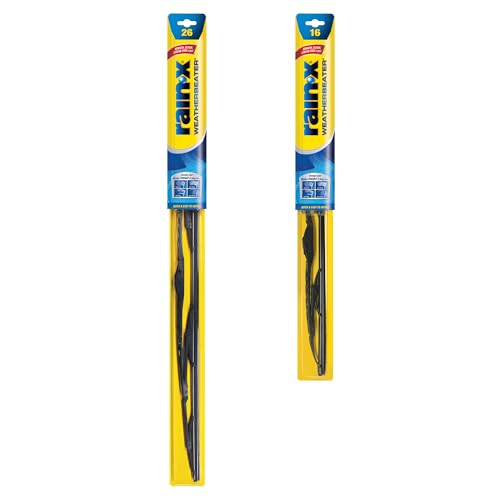
This package includes two different front blade lengths.
The larger blade measures:
26 inches / approximately 660mm
while the smaller blade measures:
16 inches / approximately 406mm.
Many vehicles using a 26/16 configuration place the longer blade on the driver’s side and the shorter blade on the passenger side.
However, blade position should always be verified using the actual vehicle application.
Why Vehicles Use a 26-Inch and 16-Inch Combination
The difference between the two blade lengths is intentional.
Automotive engineers select wiper dimensions based on factors such as:
- Windshield shape
- Wiper pivot position
- Glass curvature
- Cowl clearance
- A-pillar clearance
- Blade overlap
- Required sweep pattern
A shorter passenger-side blade can prevent interference while still clearing the intended portion of the windshield.
Rain-X WeatherBeater Traditional Wiper Construction
WeatherBeater uses a conventional articulated frame rather than a single-piece beam structure.
The frame transfers wiper-arm pressure through several support points positioned along the rubber wiping edge.
This established design offers:
- Straightforward construction
- Broad application coverage
- Familiar installation
- Reliable everyday wiping
- Value-oriented replacement
It is especially appropriate for drivers who want to maintain a traditional wiper design rather than converting to a premium beam blade.
Galvanized Steel Support Frame
The WeatherBeater frame is manufactured from:
galvanized steel.
Galvanization helps provide corrosion resistance while retaining the rigidity needed to support the wiping edge.
Windshield wipers operate in constant exposure to:
- Rainwater
- Road spray
- Washer fluid
- Salt
- Snow
- Heat
- Moisture
Protecting the metal structure against corrosion is therefore an important part of conventional blade durability.
Natural-Rubber Wiping Edge
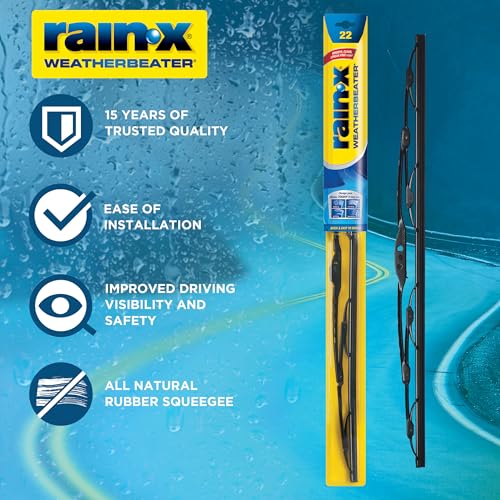
Rain-X WeatherBeater blades use a:
natural-rubber squeegee.
The rubber is designed to remain flexible while resisting common environmental damage.
The manufacturer describes the wiping material as resistant to deterioration caused by:
- Cold weather
- Hot weather
- Windshield-washer fluid
- Road salt
Environmental exposure and storage conditions will still influence actual blade life.
Multiple Pressure Points
The external WeatherBeater frame transfers force from the wiper arm through several articulated contact points.
These pressure points help keep the wiping edge against the windshield as it moves through its sweep.
Good pressure distribution helps reduce:
- Missed areas
- Streaks
- Uneven wiping
- Skipping
Proper wiper-arm tension remains important regardless of blade construction.
Embedded Friction Reducers
WeatherBeater also incorporates embedded friction reducers.
These are intended to help the blade assembly move smoothly while maintaining even contact against the windshield.
Reduced friction can help minimize symptoms such as:
- Chatter
- Jerky movement
- Uneven blade motion
Glass condition, contamination and wiper-arm condition can also contribute to these symptoms.
Pre-Installed Multi-Adapter
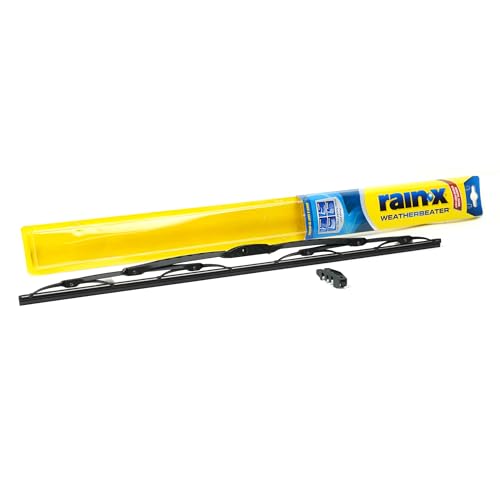
Rain-X 820147 comes with a:
pre-installed multi-adapter.
The adapter is intended to simplify installation across compatible traditional wiper-arm designs.
Rather than describing the blade as universally compatible, it is more accurate to say the adapter supports multiple common connection types.
Correct compatibility should still be confirmed before purchase.
Vehicle-Specific Fitment Matters
Rain-X 820147 should not be purchased simply because the vehicle appears to use:
26-inch and 16-inch blades.
Correct windshield-wiper selection also depends on:
- Vehicle year
- Manufacturer
- Model
- Wiper-arm connector
- Front windshield application
Two blades can share identical lengths while using different mounting systems.
Always use a vehicle fitment checker before ordering.
OEM Quality Does Not Mean Genuine OEM
The supplied product description markets WeatherBeater as meeting or exceeding original-equipment standards for areas including:
- Quality
- Construction
- Durability
That does not make Rain-X WeatherBeater a factory-installed blade from the vehicle manufacturer.
Rain-X 820147 should be described as:
an aftermarket replacement wiper package designed to provide OE-style fit and performance where specified.
Avoid presenting it as genuine Toyota, Honda, Ford, Nissan or other manufacturer-original equipment unless specifically documented.
Installing Rain-X 820147 WeatherBeater Blades
Exact installation depends on the wiper arm.
A typical replacement process involves:
- Park the vehicle and turn the ignition off.
- Raise the wiper arm from the windshield.
- Release the old blade from its connector.
- Remove the worn blade.
- Align the WeatherBeater adapter with the arm.
- Slide or lock the new blade into place.
- Verify that the connector is secure.
- Carefully return the blade to the glass.
- Repeat the procedure on the opposite side.
Never assume a blade is locked simply because it appears attached.
Give it a gentle pull before lowering the arm.
Protect the Windshield During Replacement
Place a folded towel between the exposed wiper arm and windshield while changing each blade.
Once the old blade has been removed, the metal arm can snap back against the glass.
A direct impact can potentially:
- Chip the windshield
- Crack the glass
- Damage windshield coatings
That makes a towel one of the cheapest pieces of windshield insurance available.
Clean the Windshield Before Testing New Blades
A dirty windshield can make new wipers behave like worn-out blades.
Before testing Rain-X 820147, clean away:
- Bug residue
- Road film
- Grease
- Tree sap
- Dirt
- Wax buildup
- Silicone contamination
Contamination can cause:
- Smearing
- Chatter
- Skipping
- Streaking
Clean glass allows the new wiping edge to make consistent contact.
Test the Wipers After Installation
Once both blades are installed:
- Apply washer fluid.
- Operate the wipers at low speed.
- Confirm both blades remain secure.
- Check the complete sweep.
- Verify the blades do not contact one another.
- Test at a faster wiper speed.
Look for:
- Smooth movement
- Clean wipe patterns
- Proper edge contact
- No arm interference
If a new blade skips or streaks badly, inspect the windshield and wiper arm before replacing the blade again.
Do Not Install a Longer Passenger Blade Without Checking Clearance
Replacing a 16-inch blade with a longer one may look like an easy way to increase wiping area.
It can also cause:
- Blade collision
- A-pillar contact
- Windshield trim contact
- Cowl interference
- Incorrect sweep geometry
Use the dimensions specified for the vehicle rather than assuming larger is better.
WeatherBeater Compared With Beam-Style Wipers
WeatherBeater uses a conventional frame.
A beam blade uses a flexible frameless support structure.
WeatherBeater Advantages
- Familiar traditional design
- Straightforward replacement
- Natural-rubber squeegee
- Galvanized steel structure
- Cost-conscious positioning
Beam Blade Advantages
- Lower aerodynamic profile
- Fewer exposed joints
- Improved snow-shedding characteristics
- Continuous flexible support
The appropriate choice depends on the vehicle and buyer preference.
Rain-X 820147 vs. Rain-X Repellency 26″ + 16″
Rain-X offers another 26/16 package in its Repellency range, but it is a different product.
Rain-X 820147 WeatherBeater
Uses:
- Conventional articulated frame
- Natural rubber
- Galvanized steel
- Multiple pressure points
- Traditional replacement design
Rain-X 810348 Repellency
Uses:
- Premium beam construction
- Integrated water-repellent treatment
- Hydrophobic water-beading technology
- Frameless blade design
The shared 26/16 dimensions do not make these products interchangeable from a construction or feature standpoint.
The vehicle application must still be verified.
WeatherBeater vs. Bosch ICON
The two products occupy different parts of the replacement-wiper market.
Rain-X WeatherBeater
Designed around:
- Traditional framed construction
- Natural-rubber wiping edge
- Straightforward maintenance
- Value
Bosch ICON
Designed around:
- Premium beam architecture
- Application-specific blade geometry
- ClearMax 365 technology
- Aerodynamic blade control
Drivers looking for a basic traditional replacement may prefer WeatherBeater, while buyers prioritizing premium beam technology may prefer ICON.
For a broader explanation of windshield-wiper choices:
Best Windshield Wiper Blades for Clearer Drives
All-Season Everyday Use
WeatherBeater is designed for routine year-round driving conditions.
Typical use includes:
- Rain
- Road spray
- Summer heat
- Cold weather
- Light snow
Because WeatherBeater uses an exposed articulated frame, snow and ice can collect around its joints more readily than with some frameless blade designs.
Cold-Weather Wiper Care
Before operating the blades after freezing conditions:
- Defrost the windshield.
- Remove accumulated snow.
- Confirm the blades are free from the glass.
- Clear heavy ice manually.
Do not use the wiper motor to break frozen blades loose.
That can place unnecessary stress on:
- Wiper linkage
- Motor
- Arms
- Blade structure
Hot-Weather Wiper Care
Summer heat and ultraviolet exposure can gradually harden rubber.
Inspect WeatherBeater blades for:
- Cracking
- Splitting
- Hardened rubber
- Uneven wiping
- Torn edges
A blade can deteriorate significantly even during periods when it rarely rains.
When Should WeatherBeater Blades Be Replaced?
Common signs of worn windshield wipers include:
- Streaks
- Smearing
- Chatter
- Skipping
- Squeaking
- Torn rubber
- Missing sections of the wipe
- Reduced visibility in rain
The most important indicator is always deteriorating visibility.
Inspect the Wiper Arms Too
Poor wiping is not always caused by the blade.
Inspect the vehicle’s wiper arms for:
- Corrosion
- Bending
- Weak spring tension
- Damaged connectors
- Loose mounting hardware
A weak arm may not apply enough pressure for even a new blade to wipe correctly.
Check the Washer System
Wiper replacement is also a good time to inspect:
- Washer-fluid level
- Pump operation
- Washer hoses
- Spray nozzles
- Spray pattern
Proper washer-fluid coverage helps the blades remove road grime instead of dragging dry contamination across the windshield.
Replace Both Front Blades as a Pair
Rain-X 820147 provides both blades in a single package.
Replacing the pair together makes sense because both old blades have generally experienced the same:
- Age
- UV exposure
- Heat
- Rain
- Ozone
- Road contamination
Installing both new blades helps restore consistent wiping across the windshield.
Who Should Choose Rain-X 820147?
Rain-X 820147 is suited to drivers whose vehicles specifically call for this:
26-inch + 16-inch WeatherBeater configuration
and who prefer a conventional replacement blade.
It can be a good choice for shoppers prioritizing:
- Traditional wiper construction
- Natural-rubber wiping edges
- Galvanized steel support
- Two-blade packaging
- Straightforward installation
- Everyday all-season use
Key Rain-X 820147 Features
Highlights include:
- Rain-X 820147 exact part number
- 26-inch + 16-inch front blade combination
- Two windshield wipers
- Conventional articulated construction
- Natural-rubber wiping edges
- Galvanized steel frames
- Multiple pressure points
- Embedded friction reducers
- Pre-installed multi-adapters
- Vehicle-specific fitment
- Year-round replacement use
Important Fitment Notice
Before purchasing Rain-X 820147, verify:
Vehicle Type → Year → Make → Model → Wiper Arm Connection
Do not rely solely on:
26″ + 16″
blade dimensions.
Connector design and vehicle application remain essential parts of proper fitment.
Related Pro Street Resources
For help understanding the differences between framed, beam, silicone and water-repellent blades:
Best Windshield Wiper Blades for Clearer Drives
For more advice on choosing vehicle-specific replacement components:
Official Rain-X Resources
Rain-X Conventional Wiper Blades
Rain-X WeatherBeater Installation Instructions



There are no reviews yet.