

Return-Style EFI Fuel Pressure Regulator
This PQY unit is a return-style, or bypass, fuel pressure regulator.
Instead of simply restricting fuel supply to control pressure, a return-style regulator allows excess fuel to flow through a dedicated return line and back toward the fuel tank.
A typical system is arranged as:
Fuel Tank → Fuel Pump → Fuel Filter → Fuel Rail → Regulator → Return Line → Fuel Tank
This arrangement allows the fuel pump to supply the engine while the regulator controls pressure by bypassing fuel that the engine does not currently require.
Return-style regulation is widely used in modified EFI applications because it provides predictable pressure control across changing engine loads when the fuel system is correctly designed.
Two ORB10 Feed Ports and One ORB10 Return Port
The regulator body provides three primary fuel connections:
- 2x ORB10 feed/inlet ports
- 1x ORB10 return port
- 1x 1/8-inch NPT gauge port
- 1x vacuum/boost reference connection
The dual feed ports provide flexibility for custom fuel-system layouts, including dual-rail arrangements.
Because the kit includes several adapter sizes, builders can configure the regulator around the flow requirements and plumbing already planned for the vehicle rather than being locked into one hose size.
AN6, AN8 and AN10 Fittings Included
One of the strongest features of this kit is the amount of fuel-system hardware included.
The package provides:
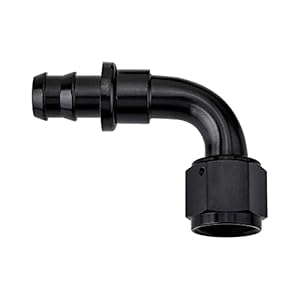
- 3x AN10 ORB to AN6 fittings
- 3x AN10 ORB to AN8 fittings
- 3x AN10 ORB to AN10 fittings
- 1x AN10 ORB port plug
This gives builders considerably more flexibility when planning feed and return plumbing.
An AN6 system may be sufficient for one application, while a high-output forced-induction or high-volume E85 build could require larger plumbing. Fuel-line size should always be selected according to actual fuel demand, pump capacity, fuel type, pressure, line length, and system restrictions.
E85 and Ethanol Fuel Compatible
The PQY adjustable regulator is designed for use with gasoline and compatible ethanol/alcohol fuel systems, including E85 applications.
E85 can substantially increase the volume of fuel required to support a given power level compared with gasoline. That means the pump, injectors, filter, regulator, feed line, and return line all need to be sized as a complete system.
Simply installing a huge pump and hoping the rest of the fuel system develops a strong work ethic isn’t much of a strategy.
The regulator is not intended for diesel fuel applications.
Vacuum and Boost Reference Connection
The regulator includes a vacuum/boost reference port, an important feature for EFI applications where fuel pressure needs to track changes in intake-manifold pressure.
In a manifold-referenced system, the regulator responds to manifold vacuum and boost so the pressure differential across the injectors can remain appropriate as engine load changes.
For example, a forced-induction application commonly requires fuel pressure to increase as boost pressure rises.
This is particularly important on:
- Turbocharged engines
- Supercharged engines
- High-performance EFI conversions
- Standalone ECU applications
- High-flow aftermarket fuel systems
The exact base pressure and pressure-reference strategy should always follow the requirements of the injectors, ECU calibration, and engine combination.
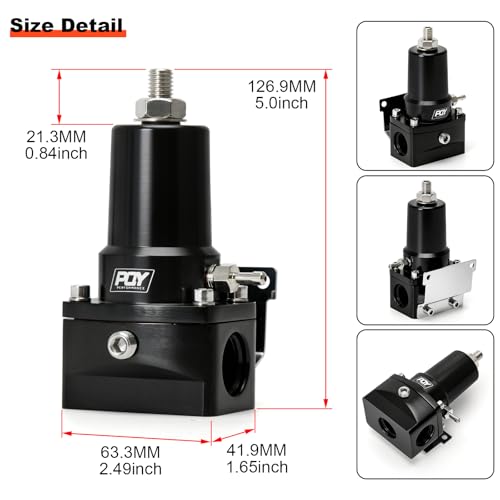
CNC-Machined 6061-T651 Billet Aluminum Construction
The PQY regulator body is manufactured from 6061-T651 billet aluminum and CNC-machined for accurate fuel passages and fitting interfaces.
Billet aluminum provides a useful combination of strength, corrosion resistance, relatively low weight, and machinability, making it a common material for performance fuel-system components.
The regulator’s compact design also makes it easier to mount in custom engine bays where fuel rails, intake plumbing, ignition components, intercooler piping, and wiring are all competing for the same increasingly mythical piece of empty space.
Integrated 1/8-Inch NPT Fuel Pressure Gauge Port
A dedicated 1/8-inch NPT port allows a fuel-pressure gauge or compatible pressure-sensor arrangement to be installed directly at the regulator.
The kit already includes a pressure gauge, providing an immediate way to check base fuel pressure during initial setup.
A gauge is particularly useful when:
- Setting base fuel pressure
- Verifying pump operation
- Diagnosing pressure loss
- Checking regulator adjustment
- Confirming pressure after fuel-system modifications
- Troubleshooting rich or lean operating conditions
If an EFI vehicle is experiencing unexplained pressure-control problems, Pro Street’s P0089 Fuel Pressure Regulator Performance guide explains how regulator, pump, sensor, and fuel-delivery faults can produce pressure-related drivability problems.
What Is Base Fuel Pressure?
Base fuel pressure is the pressure setting established under the conditions specified by the fuel-system or ECU manufacturer, commonly with the regulator reference line disconnected from manifold pressure where applicable.
The correct base pressure is determined by the fuel injectors and engine-management strategy.
Do not automatically set this regulator to its maximum 140 PSI capability.
More fuel pressure does not automatically mean more power.
Excessive pressure can exceed injector specifications, overload the fuel pump, reduce pump flow, increase electrical demand, create leaks, or cause calibration problems.
Set the regulator according to the requirements of the actual EFI system.
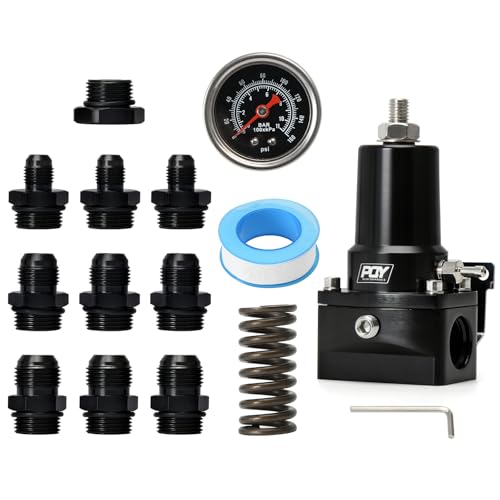
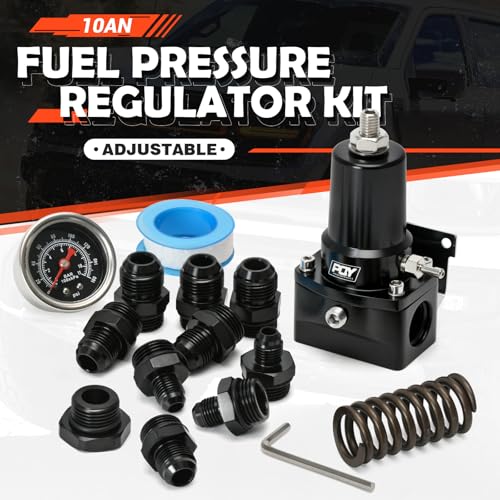
Complete Fuel Pressure Regulator Kit
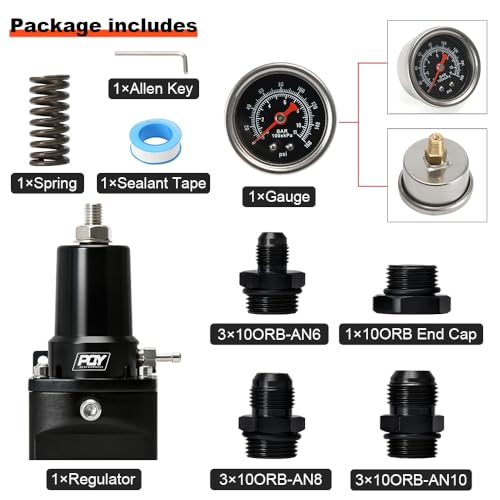
The package includes:
- 1x PQY adjustable fuel pressure regulator
- 1x fuel pressure gauge
- 1x 30–80 PSI preinstalled regulator spring
- 1x 80–140 PSI replacement spring
- 1x AN10 ORB port plug
- 1x thread sealant tape
- 1x Allen key
- 3x AN10 ORB to AN6 fittings
- 3x AN10 ORB to AN8 fittings
- 3x AN10 ORB to AN10 fittings
This selection gives builders several options for configuring a custom return-style fuel system without immediately purchasing a separate collection of adapter fittings.
Ideal for Performance EFI Fuel Systems
The PQY adjustable regulator can be a practical choice for custom EFI builds requiring more fuel-system flexibility than an original fixed-pressure regulator can provide.
Potential applications include:
- EFI engine swaps
- Turbocharged street cars
- Supercharged engines
- E85 conversions
- Standalone EFI systems
- Aftermarket fuel rails
- High-flow electric fuel pumps
- Dual fuel-rail installations
- Custom return-style fuel systems
- Performance gasoline applications
Because this is a universal component, installation requirements vary significantly between vehicles.
Fuel Pressure Regulator Installation Considerations
Before installing the regulator, determine the intended fuel-system layout, feed-line size, return-line size, pump capacity, injector requirements, and target base pressure.
The regulator should be securely mounted and protected from excessive engine and exhaust heat.
When assembling the fuel system:
- Determine the required base fuel pressure.
- Select AN6, AN8, or AN10 adapters according to system requirements.
- Install compatible fuel-rated lines and fittings.
- Connect the feed/rail plumbing to the appropriate regulator ports.
- Connect the return port to a properly sized return line.
- Connect the vacuum/boost reference line where required.
- Install the included pressure gauge.
- Prime the fuel system and inspect every connection for leakage.
- Start the engine and establish the correct base pressure.
- Verify pressure response under the operating conditions required by the EFI system.
If you’re building a return system from scratch, understanding component placement before cutting hose saves considerable frustration. The Pro Street fuel pressure regulator installation guide provides additional information on regulator installation and fuel-system plumbing.
Why Choose the PQY 30–140 PSI EFI Fuel Pressure Regulator Kit?
The PQY regulator combines wide pressure adjustability, high-flow ORB10 ports, multiple AN fitting sizes, E85 compatibility, vacuum/boost reference capability, and billet-aluminum construction in one universal package.
Its two-spring design supports applications requiring anywhere from approximately 30 PSI to 140 PSI, while the included AN6, AN8, and AN10 adapters provide considerable freedom when designing feed and return plumbing.
For EFI builders who want a configurable return-style regulator rather than being locked into one pressure range and fitting size, this kit provides the hardware needed to build around the requirements of the engine.
Frequently Asked Questions
What is the pressure range of the PQY fuel pressure regulator?
The regulator supports approximately 30–140 PSI using two interchangeable springs.
What pressure range does the installed spring support?
The preinstalled spring is intended for approximately 30–80 PSI.
How do I use the 80–140 PSI range?
Install the included higher-pressure spring and adjust the regulator according to the manufacturer’s procedure.
Is this a return-style fuel pressure regulator?
Yes. This is a return/bypass-style regulator designed to use a dedicated fuel return line.
Does the regulator work with E85?
Yes. It is advertised for compatible E85, ethanol/alcohol, and gasoline fuel systems.
Can I use this regulator with diesel fuel?
No. This regulator is not intended for diesel applications.
What fuel-line fittings are included?
The kit includes AN10 ORB-to-AN6, AN8, and AN10 adapters, with three fittings of each size.
Does it include a fuel pressure gauge?
Yes. A pressure gauge is included, and the regulator provides a 1/8-inch NPT gauge port.
Can I use this regulator on a turbocharged engine?
The regulator includes a vacuum/boost reference connection, making it suitable for properly configured forced-induction EFI systems. The pressure settings and reference configuration must match the engine-management and injector requirements.
Is 140 PSI better than 60 PSI?
No. Maximum pressure is a capability, not a target. Fuel pressure should be set according to the injectors, ECU calibration, fuel pump, and engine requirements.
Can I use AN10 feed lines and an AN6 return line?
The included adapters make different configurations physically possible, but line sizing should be determined from the actual pump flow, fuel demand, pressure, return restriction, and system design. An undersized return line can prevent the regulator from controlling pressure correctly.






There are no reviews yet.