
What’s Included?
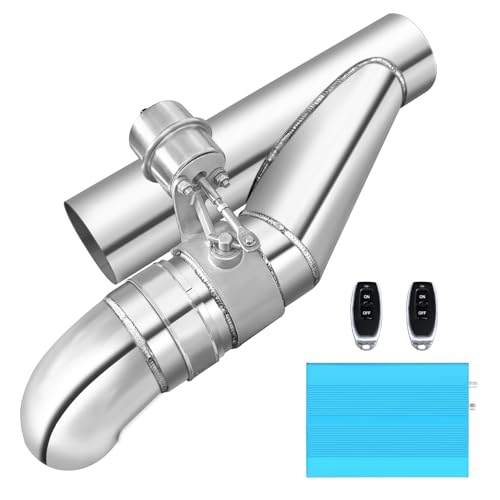
The Peastorm single-valve kit includes:
- 1 electric exhaust valve
- 1 control module
- 1 angled elbow
The supplied listing identifies the valve inlet and outlet as:
3-inch outside diameter
and specifies:
12V operating voltage
This is the single-valve version of Peastorm’s electronic exhaust-cutout system rather than the larger dual-valve package.
Single-Valve Exhaust Cutout
The biggest distinction with this Peastorm kit is simple:
you get one valve.
That makes it a logical choice for:
- Single 3-inch exhaust systems
- Single-pipe turbo exhausts
- Custom Y-pipe installations
- Vehicles needing only one bypass valve
- Custom exhaust fabrication
If your vehicle uses a true dual exhaust and you want to bypass both sides independently, a dual-valve kit may be the more appropriate configuration.
Remote-Controlled Exhaust Sound
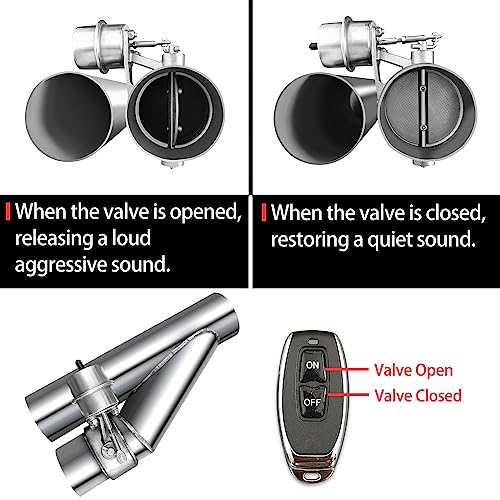
The Peastorm system lets the driver operate the exhaust valve remotely.
With the valve:
OPEN
exhaust can exit through the shorter cutout path.
The result is typically a much louder and more aggressive exhaust note.
With the valve:
CLOSED
exhaust continues through the vehicle’s conventional system.
Depending on the exhaust layout, that can include:
Resonator → Muffler → Tailpipe
giving you the quieter exhaust configuration again.
How Does a Valvetronic Exhaust Cutout Work?
The principle is straightforward.
A motorized butterfly valve controls an alternate exhaust route.
Quiet Mode
Close the cutout.
Exhaust continues through the normal muffler system.
Loud Mode
Open the cutout.
Exhaust gains access to a shorter path that can bypass downstream sound-control components.
That gives a performance vehicle two distinct personalities without permanently removing the muffler.
3-Inch Exhaust Compatibility
The Peastorm valve has a documented:
3-inch inlet/outlet outside diameter
which is approximately:
76.2mm
Three-inch exhaust tubing is commonly used on:
- Turbocharged cars
- Supercharged vehicles
- Modified V8s
- Performance trucks
- Street/strip cars
- High-output custom builds
The important word is:
compatible.
A universal 3-inch valve is not automatically a bolt-on part for every vehicle with an exhaust system.
Measure Before Ordering
Peastorm specifically advises checking installation space before purchasing.
Do that.
Also measure the exhaust.
Verify:
- Pipe outside diameter
- Connection type
- Valve dimensions
- Elbow dimensions
- Available ground clearance
Do not rely solely on what someone told you the exhaust size was.
A surprising number of “3-inch exhausts” become something else entirely when introduced to a tape measure.
Our How to Install Exhaust Cutout the Right Way guide covers sizing and placement in more detail.
Why Choose a Single 3-Inch Valve?
A single valve can be ideal for vehicles using one main exhaust pipe.
For example, a turbocharged four-cylinder may have:
Turbo → Downpipe → Catalytic Converter → 3″ Mid-Pipe → Muffler
A single cutout can create an alternate route from that main pipe without requiring two valves.
That makes this configuration particularly relevant to many:
- Turbo imports
- Sport compacts
- Single-exhaust trucks
- Custom turbo builds
There’s little reason to buy two valves when the exhaust gives you exactly one pipe to put them in.
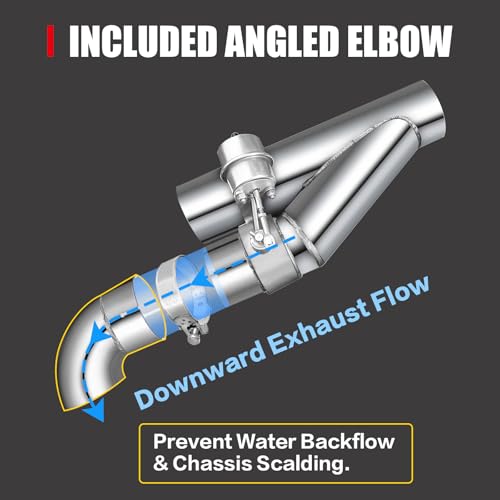
Angled Elbow Included
The kit includes an angled elbow for the cutout outlet.
This serves two important purposes.
First, it helps direct exhaust gases away from the underside of the vehicle.
Second, the angled configuration can help reduce the opportunity for water to collect directly in the outlet depending on how the system is positioned.
Correct orientation is still essential.
Protect the Chassis From Exhaust Heat
Open cutouts release extremely hot exhaust gases underneath the vehicle.
Do not point the outlet directly toward:
- Floorpan
- Fuel tank
- Fuel lines
- Brake lines
- Wiring
- Plastic panels
- Rubber bushings
The included elbow gives the installer more control over the direction of the exhaust discharge.
That doesn’t eliminate the need to choose a safe location.
Water-Resistant Motor Design
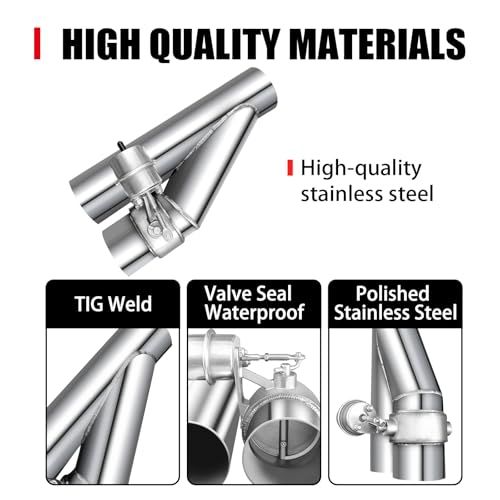
Peastorm describes the electric actuator as using a water-resistant design intended to improve durability underneath the vehicle.
That’s useful because the motor can encounter:
- Road spray
- Dirt
- Dust
- Condensation
- Vibration
Unless an actual IP waterproof rating is documented, however, it is better to describe the motor as:
water-resistant
rather than completely waterproof.
Avoid intentionally exposing the actuator to standing water or direct high-pressure washing.
12-Volt Operation
The system operates from:
12 volts
making it compatible with conventional automotive electrical architecture when installed correctly.
The control module and valve motor still need proper:
- Power
- Ground
- Wiring
- Circuit protection
Follow the wiring supplied with the specific kit.
Do not improvise electrical connections simply because the system is “only 12 volts.”
A short circuit remains remarkably uninterested in that argument.
Keep Wiring Away From Exhaust Heat
Route the valve wiring away from:
- Headers
- Turbochargers
- Catalytic converters
- Exhaust tubing
Also avoid:
- Driveshafts
- Steering components
- Suspension movement
- Sharp sheet metal
Use secure automotive connectors and appropriate heat protection where necessary.
Welding or Clamp Installation
Peastorm lists the system as supporting:
welding or clamp quick connection
depending on the exhaust layout and compatible hardware.
A clamp connection can simplify installation where the tubing dimensions and available space allow it.
For a permanent custom system, professional welding may provide:
- Better sealing
- Strong attachment
- Cleaner packaging
- Less movement
The best method depends on the vehicle and exhaust design.
Mock Everything Up First
Before welding anything permanently:
- Measure the exhaust.
- Select the valve location.
- Position the cutout.
- Install the elbow temporarily.
- Check ground clearance.
- Check motor clearance.
- Check wiring clearance.
- Cycle the valve.
- Tack the assembly.
- Recheck everything.
Then complete the installation.
Our full How to Install Exhaust Cutout the Right Way article explains why this order matters.
Check Ground Clearance
A valve and elbow occupy considerably more space than a straight piece of exhaust tubing.
This becomes particularly important on:
- Lowered cars
- Sports cars
- Vehicles with low exhaust routing
Make sure the valve doesn’t become the lowest point under the vehicle.
The electric motor was designed to rotate a butterfly valve.
It was not designed to negotiate speed bumps personally.
Keep the Motor Away From Extreme Heat
The valve lives directly in the exhaust stream.
The electric motor doesn’t.
When selecting the installation point, avoid unnecessary actuator exposure to extreme heat from:
- Header collectors
- Turbocharger outlets
- Catalytic converters
Moving the cutout farther downstream can reduce thermal stress on the actuator and wiring.
Can a Peastorm Exhaust Cutout Add Horsepower?
Potentially, but there is no universal horsepower gain.
Opening the valve creates a shorter exhaust route.
If the conventional exhaust is restrictive at high airflow, bypassing some downstream components may reduce restriction.
Actual results depend on:
- Engine
- Turbocharger
- Headers
- Catalytic converter
- Exhaust diameter
- Mufflers
- Cutout location
- Engine calibration
On some vehicles, the difference may be measurable.
On others, the primary performance characteristic is that everyone within three blocks becomes aware the valve has opened.
Turbocharged Applications
A single 3-inch cutout can be particularly relevant to turbocharged cars.
Many turbo performance systems use one large exhaust pipe downstream of the turbine.
Reducing downstream restriction may benefit a turbo system depending on:
- Turbocharger size
- Downpipe
- Catalytic converter
- Muffler restriction
- Boost pressure
- Engine calibration
A cutout should complement a correctly sized turbo exhaust rather than compensate for an undersized downpipe or other major restriction.
V8 and Muscle-Car Applications
The Peastorm valve can also be incorporated into V8 exhaust systems.
However, check the layout first.
A traditional true-dual V8 exhaust may require:
two valves
if the goal is to bypass both banks.
A single-valve kit may work better where the exhaust merges into one pipe before the cutout location.
For true-dual systems, see our X Pipe vs H Pipe: Which Sounds Better? guide before deciding on valve placement.
Exhaust Sound With the Valve Open
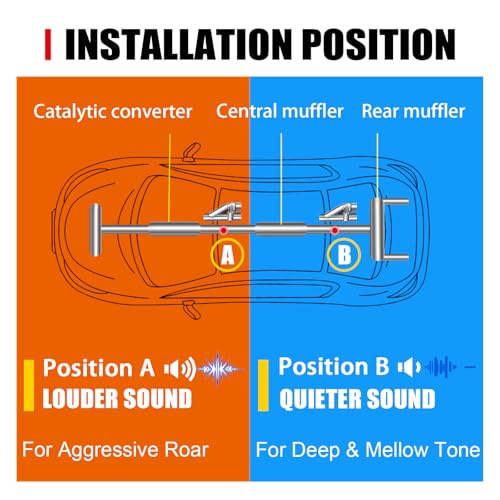
The amount of sound change depends heavily on where the valve is positioned.
A cutout installed upstream of:
- Resonator
- Muffler
- Long tailpipe
can produce a dramatic change.
A cutout located close to the rear muffler may produce a less extreme difference.
Engine configuration matters too.
A turbo four-cylinder, naturally aspirated six-cylinder and cammed V8 aren’t going to sound remotely alike through the same 3-inch valve.
Does an Engine Need Exhaust Backpressure?
Not in the simplistic way the phrase is commonly used.
Engine performance depends on:
- Exhaust velocity
- Pressure
- Scavenging
- Pulse timing
- Pipe diameter
- Pipe length
Excessive restriction can hurt performance.
But that doesn’t mean every engine should use the largest possible exhaust.
Correct exhaust sizing depends on the complete engine combination.
Works With Custom Cat-Back Systems
A Peastorm cutout can also complement a conventional performance cat-back.
The cat-back provides the normal exhaust path.
The valve adds the alternate route.
If you’re deciding how much of your existing exhaust to replace, read our Catback Exhaust vs Axleback: Which Wins? guide.
Test the Valve Before Final Installation
Before welding the cutout permanently into the vehicle, connect the electrical system and test it.
Verify that the valve:
- Opens completely
- Closes completely
- Moves smoothly
- Responds consistently to the remote
- Does not bind
This is considerably easier to verify on a workbench than underneath a completed exhaust system.
Check for Exhaust Leaks
After installation, run the engine with the valve closed and inspect the system.
Watch and listen for:
- Ticking
- Soot
- Exhaust odor
- Leaking connections
- Leakage around the closed valve
Then open the valve and confirm that the outlet safely clears surrounding components.
Recheck connections after several heat cycles.
Street-Legal Considerations
Electric exhaust cutouts can be restricted on public roads.
Potential legal issues include:
- Exhaust-noise limits
- Muffler requirements
- Exhaust-bypass laws
- Emissions regulations
California owners should be particularly cautious with exhaust bypass devices.
Our Is My Exhaust Legal? guide provides additional background, but always verify current state and local regulations.
Don’t Bypass Required Emissions Equipment
Do not install or operate the Peastorm cutout in a manner that unlawfully bypasses required:
- Catalytic converters
- Oxygen sensors
- Emissions-control components
A street-oriented installation should preserve required emissions-system operation.
Peastorm Single Valve vs. Dual Valve Kit
Choosing between the two configurations is mostly about the exhaust layout.
Peastorm Single 3-Inch Valve
Best suited to:
- Single 3-inch exhaust
- Single-pipe turbo systems
- One-valve custom installations
Includes:
1 valve + 1 controller + 1 elbow
Peastorm Dual 3-Inch Valve System
Better suited to:
- True dual exhaust
- Dual-pipe V8 systems
- Applications requiring a valve on each bank
Don’t buy the dual kit merely because two valves sounds twice as fast.
Match the hardware to the exhaust.
Who Should Buy the Peastorm 3-Inch Exhaust Cutout?
This single-valve kit makes sense for someone with a compatible:
3-inch exhaust system
who wants remote-controlled exhaust sound without installing two separate valves.
Potential applications include:
- Turbo cars
- Performance imports
- Muscle cars
- Trucks
- Restomods
- Street/strip cars
- Custom exhaust builds
It is particularly well suited to single-pipe systems.
Why Buy the Peastorm 3-Inch Valvetronic Exhaust Cutout?
Key features include:
- 3-inch inlet/outlet OD
- Single electric exhaust valve
- Remote-controlled operation
- 12V electrical system
- Water-resistant motor design
- Angled elbow included
- Control module included
- Loud/quiet exhaust control
- Weld or compatible clamp installation
- Universal custom fitment
For a vehicle using a single 3-inch performance exhaust, this Peastorm kit provides a straightforward way to add remote-controlled exhaust bypass capability without stepping up to an unnecessary dual-valve system.
Specifications at a Glance
Brand: Peastorm
Product: Valvetronic Electric Exhaust Cutout
Exhaust Diameter: 3 inches
Approximate Metric Diameter: 76.2mm
Inlet/Outlet: 3-inch OD
Valves: 1
Control Modules: 1
Elbows: 1
Operating Voltage: 12V
Control: Remote
Motor: Water-resistant design
Installation: Weld or compatible clamp connection
Fitment: Universal
Primary Application: Single-pipe electronically controlled exhaust bypass
Always verify exhaust diameter, available installation space, electrical requirements and current package contents before ordering.
![DNA MOTORING CBE-ME06L4-BT Stainless Steel Cat Back Exhaust System [Compatible with 06-09 Mitsubishi Eclipse 2.4L l4]](https://m.media-amazon.com/images/I/41d2gtIZC4L._SS300_.jpg)
![DNA MOTORING CBE-CS09-4853L-4DR Stainless Steel Cat Back Exhaust System [Compatible with 07-13 Silverado 1500/07-13 Sierra 1500 Crew/Extended Cab Short Bed]](https://m.media-amazon.com/images/I/41UreDyap1L._SS300_.jpg)
![DNA MOTORING CBE-HC06EX-BT Catback Exhaust System [for 06-11 Honda Civic EX/LX/DX]](https://m.media-amazon.com/images/I/51FR7GqCrNL._SS300_.jpg)
![DNA MOTORING CBE-TSX Stainless Steel Cat Back Exhaust System [Compatible with 04-08 Acura TSX CL9 2.4L]](https://m.media-amazon.com/images/I/41bg-qpaEkL._SS300_.jpg)
![DNA MOTORING CBE-IS300-NRT Stainless Steel Cat Back Exhaust System [Compatible with 01-05 IS300 Altezza XE10]](https://prostreetonline.com/wp-content/uploads/2025/11/69080e69c218311850d674c43ffb63d16d4897ce3978773021ab8-300x300.jpg)
![DNA MOTORING CBE-HC01EX-NRT Cat Back Exhaust System [Compatible with 01-05 Honda Civic EX 2/4DR 1.7L]](https://prostreetonline.com/wp-content/uploads/2025/11/690804ee20e75000c49a2fb05c10ca6392781bf5f3fbe31b6cad0-300x300.jpg)
![DNA MOTORING CBE-WRX02-OE Stainless Steel Cat Back Exhaust System [Compatible with 02-07 Subaru Impreza WRX/WRX STI]](https://prostreetonline.com/wp-content/uploads/2025/11/6907fa4c767fefdf1ea807cf4abe771f0454efc8abd78991019b5-300x300.jpg)



There are no reviews yet.