
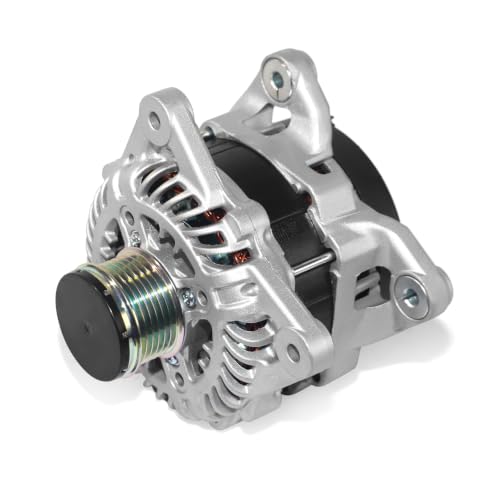


Nissan Alternator OEM and Interchange Part Numbers
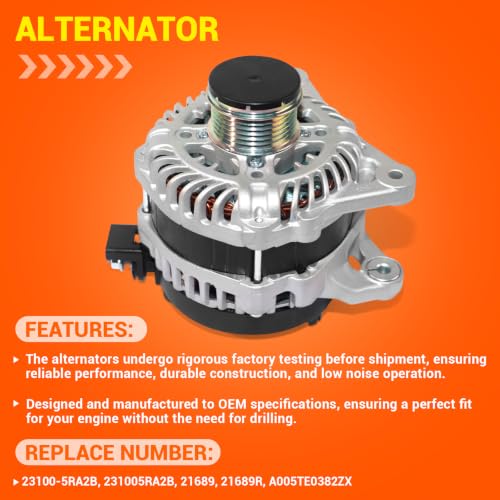
The seller lists five part-number references.
| Part number | Description |
|---|---|
| 23100-5RA2B | Nissan OE reference |
| 231005RA2B | Same reference without hyphen |
| 21689 | Aftermarket interchange |
| 21689R | Aftermarket interchange |
| A005TE0382ZX | Alternator identification reference |
These numbers are useful when researching replacement options, but an interchange listing alone does not guarantee compatibility with every vehicle.
The safest approach is to compare the original alternator label and verify the replacement through a VIN-specific parts catalog.
What Does a 120-Amp Alternator Actually Do?
An alternator converts mechanical energy from the running engine into electrical energy.
It supplies power to vehicle electrical systems and helps recharge the battery after starting.
The replacement alternator is advertised with a 120-amp rated output.
At a nominal charging voltage of 14 volts:
120 amps × 14 volts = 1,680 watts
That’s approximately 1.68 kilowatts of theoretical electrical output at rated current.
However, the alternator does not continuously produce 1,680 watts.
Actual electrical output depends on alternator speed, temperature, regulator control and vehicle electrical demand.
A 120-amp rating also doesn’t mean every accessory can continuously consume 120 amps without affecting battery charging.
The vehicle’s complete electrical load must be considered.
Key Features of the 23100-5RA2B Replacement Alternator
120-Amp Electrical Output
The alternator is rated at 120 amps, making it a potential replacement for vehicles originally equipped with a compatible 120-amp unit.
Six-Groove Serpentine Pulley
The seller specifies a six-groove pulley.
Correct pulley configuration matters because the alternator must align with the engine’s accessory-drive belt.
Before installation, compare pulley diameter, groove count, offset and design with the original alternator.
OEM-Style Mounting
The manufacturer advertises a direct-fit design intended to match the original mounting arrangement without drilling.
This claim should be confirmed by comparing the replacement with the original alternator before installation.
Factory Testing
The seller states that the alternators undergo factory testing before shipment.
However, specific test procedures, output curves and independent durability results are not provided.
Low-Noise Operation
The product description advertises low-noise operation.
Keep in mind that alternator noise can also originate from worn bearings, a damaged pulley, a belt tensioner or other accessory-drive components.
Seven Signs Your Nissan Versa or Kicks Alternator Is Failing
1. Battery Warning Light Comes On
The battery-shaped warning light can indicate that the charging system is not operating correctly.
Despite its name, it doesn’t automatically mean the battery needs replacement.
Alternator problems, wiring faults, belt issues and charging-control problems can all contribute.
For a detailed explanation, read our guide to why your battery light is on.
2. Battery Keeps Dying
If your Versa or Kicks repeatedly requires a jump-start, the alternator may not be replenishing the battery while the engine runs.
But a worn battery or parasitic electrical draw can produce similar symptoms.
Test before replacing parts.
3. Headlights Dim or Flicker
Unstable charging-system voltage can cause noticeable lighting fluctuations.
These changes may become more obvious when electrical accessories are operating.
4. Electrical Accessories Malfunction
Low voltage can contribute to warning messages, slow accessories and intermittent electronic problems.
Modern vehicles depend on stable electrical power for numerous control modules.
5. Whining or Grinding Sounds
Alternator bearings or pulley problems can produce abnormal noise.
Inspect the belt, tensioner and nearby accessory-drive components before blaming the alternator.
6. Burning Smell
Overheated wiring, a damaged alternator or a slipping belt can produce a burning odor.
If you notice smoke or melting insulation, stop operating the vehicle safely.
7. Engine Won’t Restart
When the alternator stops charging, the battery supplies power until its stored energy becomes insufficient.
Eventually, the vehicle may stall or fail to restart.
How to Test a Nissan Versa or Kicks Alternator
Before ordering a replacement alternator, perform a basic charging-system diagnosis.
A digital multimeter can help determine whether the battery is receiving charging voltage.
Step 1: Check Battery Voltage With the Engine Off
With the battery rested and the engine off, measure voltage across the battery terminals.
A fully charged conventional 12-volt lead-acid battery typically reads approximately 12.6 volts.
A lower reading may indicate a discharged battery.
Step 2: Start the Engine
Measure battery voltage again with the engine running.
Many conventional charging systems operate around 13.5–14.8 volts during active charging.
However, modern Nissan charging controls may vary voltage depending on operating conditions.
A single reading outside that range does not automatically prove alternator failure.
Use the appropriate Nissan service specifications and diagnostic procedure.
Step 3: Turn On Electrical Accessories
Activate the headlights, blower motor and rear-window defroster.
Observe the charging-system response.
Step 4: Inspect the Serpentine Belt
A damaged or slipping belt can prevent an otherwise functional alternator from producing adequate electrical output.
Check for cracking, contamination, glazing and abnormal tensioner operation.
Step 5: Test Charging Cables and Grounds
Excessive resistance in the charging cable or ground circuit can cause low voltage at the battery.
Our automotive voltage-drop testing guide explains how to identify electrical resistance problems under load.
For a more complete charging-system diagnosis, see How to Test Alternator Output With a Multimeter.
Never disconnect the battery while the engine is running to test the alternator. This outdated method can damage sensitive vehicle electronics.
How to Replace a Nissan Versa or Kicks Alternator
The exact replacement procedure depends on the model year, engine compartment layout and factory service instructions.
Always follow the appropriate Nissan service manual.
General Alternator Replacement Procedure
- Park the vehicle safely, turn off the engine and allow it to cool.
- Disconnect the negative battery terminal.
- Identify the alternator location and accessory-belt routing.
- Remove components required for safe access.
- Release serpentine-belt tension according to the service manual.
- Remove the belt from the alternator pulley.
- Disconnect the alternator electrical connector and main output cable.
- Remove the mounting bolts.
- Carefully remove the original alternator.
- Compare the original unit with the replacement.
- Verify the 120-amp rating, six-groove pulley, mounting points and electrical connector.
- Install the new alternator using the correct factory torque specifications.
- Reinstall the belt and confirm proper alignment.
- Reconnect the battery.
- Start the engine and verify charging-system operation.
Do not guess bolt torque specifications or assume that the same access procedure applies to both models.
Five Mistakes to Avoid When Buying a Nissan Replacement Alternator
1. Buying Based on Engine Size Alone
Two Nissan vehicles equipped with a 1.6L engine may use different alternator configurations.
Verify the original part number.
2. Ignoring the Pulley
A six-groove pulley must also have the correct diameter, offset and design.
3. Overlooking the Electrical Connector
A replacement alternator can physically mount to the engine while using an incompatible electrical connection or regulator configuration.
4. Replacing the Alternator Without Testing the Battery
A deteriorated battery can continue causing starting problems after the alternator has been replaced.
5. Ignoring Damaged Wiring
A corroded charging cable or poor ground can make a healthy alternator appear defective.
Aftermarket 120-Amp Alternator vs. OEM Nissan Alternator
| Feature | Aftermarket 120A Alternator | OEM Nissan Alternator |
|---|---|---|
| Product type | Aftermarket replacement | Original equipment/service replacement |
| Advertised output | 120 amps | Depends on VIN and original specification |
| Voltage | 12V | Vehicle-specific |
| Pulley | Six-groove | Vehicle-specific |
| Fitment | Seller-advertised applications | VIN-specific parts catalog |
| Testing | Factory tested, seller advertised | Manufacturer-specific |
| Warranty | Not specified | Depends on part and seller |
| Price | Varies | Varies |
An aftermarket alternator can be a reasonable replacement option when it matches the original unit’s mechanical and electrical specifications.
However, the supplied product listing does not include independent long-term reliability data, detailed regulator specifications or verified output-test results.
Those factors should be considered when comparing replacement options.
Frequently Asked Questions
What years of Nissan Versa use this 120-amp alternator?
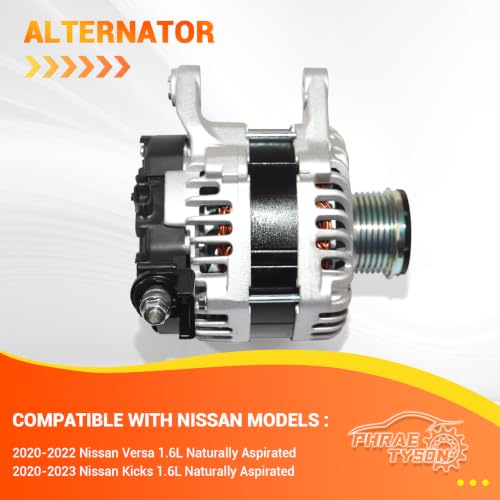
The seller advertises compatibility with 2020–2022 Nissan Versa 1.6L naturally aspirated models.
Does it fit a 2023 Nissan Versa?
The 2023 Versa is not included in the supplied compatibility listing. Verify fitment separately rather than assuming it is compatible.
What years of Nissan Kicks use this alternator?
The seller lists 2020–2023 Nissan Kicks 1.6L naturally aspirated applications.
Does it fit a 2024 Nissan Kicks?
The 2024 Kicks is not included in the supplied listing. Check a VIN-specific parts catalog.
How many amps is this alternator?
It is advertised as a 120-amp alternator.
Is it a 12-volt alternator?
Yes. The seller specifies a 12-volt electrical system.
What pulley does it use?
The product listing specifies a six-groove pulley.
Is 23100-5RA2B an OEM part number?
It is listed as a Nissan OE reference for this replacement alternator. Confirm the number against your original unit or a Nissan parts catalog.
Is 21689R the same as 23100-5RA2B?
The seller lists both as interchange references for the replacement product. Confirm the specific configuration before ordering.
Can a bad alternator drain the battery?
A failing alternator can leave the battery discharged because it is no longer replenishing the energy used by the vehicle.
Should I replace the battery with the alternator?
Not automatically. Test the battery and replace it if its condition warrants replacement.
Final Verdict: Is This 120-Amp Nissan Alternator Worth Buying?
The 120-amp 12V replacement alternator for Nissan Versa and Kicks is advertised as a direct-fit aftermarket option for 2020–2022 Nissan Versa and 2020–2023 Nissan Kicks models equipped with the naturally aspirated 1.6L engine.
Its advertised features include a six-groove pulley, clockwise rotation, factory testing and OEM-style mounting.
For owners dealing with charging-system failure, it may be worth considering if the original alternator matches the listed interchange numbers and specifications.
Before purchasing, verify the original part number, 120-amp rating, electrical connector, pulley and vehicle VIN.
And before replacing anything, test the battery, charging cables and accessory-drive belt.
A little diagnosis now can save you from replacing a perfectly good alternator later.







There are no reviews yet.