
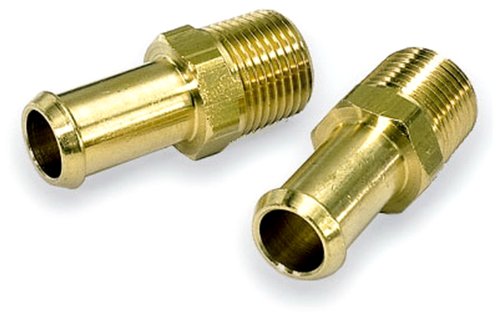
Brass Construction
The Moroso 65380 uses brass construction.
Brass is commonly used in automotive fluid plumbing because it combines useful corrosion resistance with good machinability and practical sealing characteristics for threaded fittings.
Moroso specifically markets these fittings for use with components such as:
- Electric fuel pumps
- Fuel-pressure regulators
They may also be appropriate for other compatible fuel-system components using the same thread and hose requirements.
Compatibility should be determined by the component ports and fuel-system design—not by the vehicle’s year, make or model.
Designed for Electric Fuel Pumps
Moroso specifically lists electric fuel pumps as one of the intended uses for the 65380.
A typical arrangement might be:
FUEL TANK
↓
FUEL HOSE
↓
ELECTRIC FUEL PUMP
↓
FUEL HOSE
↓
FILTER / REGULATOR
↓
ENGINE
Where a compatible electric pump uses a 3/8-inch NPT female port and the system uses 3/8-inch hose, the 65380 provides the transition between them.
Always verify the actual pump-port specifications before ordering.
Designed for Fuel-Pressure Regulators
The 65380 is also intended for compatible fuel-pressure regulators.
A regulator is responsible for maintaining the fuel pressure required by the engine’s carburetor or fuel-injection system.
The fitting simply provides the mechanical transition between the regulator’s compatible NPT port and the fuel hose.
For a deeper look at why pressure matters and how regulators work, see the Fuel Pressure Regulator Guide for Street Builds.
That guide explains regulator operation, return versus returnless systems, base pressure, boost reference and why an expensive fuel system can still run badly when pressure isn’t controlled correctly.
Fuel Pressure Matters
A fuel fitting doesn’t create pressure.
But a bad fitting can certainly lose it.
Fuel pressure needs to remain within the range required by the engine and fuel-delivery system.
Pressure that falls below specification can cause:
- Lean operation
- Hesitation
- Loss of power
- Hard starting
- Misfires
- Poor acceleration
- Fuel-pressure diagnostic codes
Your P0087 Fuel Rail/System Pressure Too Low Guide explains how inadequate pump output, restrictions, leaks and regulator problems can all prevent an engine from maintaining commanded fuel pressure.
A leaking connection belongs on that diagnostic list.
Don’t Blame the Pump Before Checking the Plumbing
When fuel pressure is low, it’s easy to immediately condemn the electric pump.
Check the complete system first.
Inspect:
- Fuel hose
- Hose clamps
- Threaded fittings
- Filters
- Pump voltage
- Pump ground
- Fuel-pressure regulator
- Return line
- Tank pickup
- Fuel pressure under load
Your existing How to Test a Toyota Supra Fuel Pump article is a useful example of testing the pump itself rather than assuming a fuel-delivery problem automatically means the pump has failed.
The same diagnostic principle applies to a performance fuel system.
Measure first.
Replace second.
Use Fuel-Rated Hose
The 3/8-inch barb should be used with proper fuel-rated hose appropriate for the system.
Do not substitute generic:
- Vacuum hose
- Heater hose
- Coolant hose
- Windshield-washer hose
- Random rubber tubing from the garage
Fuel hose is engineered for contact with gasoline and applicable fuel blends.
Hose specifications also vary depending on whether the hose is being used for:
- Low-pressure carbureted fuel
- EFI supply
- Return line
- Vapor service
- Submerged in-tank service
Select hose based on the actual fuel, pressure and installation environment.
Moroso Fuel Hose Options
Moroso currently lists its own fuel and vapor hose in the same product family as the 65380.
Relevant options include:
65185 — 3/8-inch ID Fuel Hose, 10 feet
65186 — 3/8-inch ID Fuel Hose, 25 feet
Those are particularly natural cross-sells because their 3/8-inch inside diameter corresponds to the hose side of the 65380.
Moroso identifies those hoses as SAE 30R7KX.
Always verify that the hose specification is suitable for the operating pressure and fuel used in the customer’s particular system.
3/8-Inch NPT Is a Tapered Pipe Thread
NPT stands for:
National Pipe Taper
Unlike a straight-thread fitting that typically relies on a dedicated O-ring, crush washer or flare to make the fluid seal, NPT threads are tapered.
As the fitting is threaded into a compatible female NPT port, the threads progressively engage.
That means installation technique matters.
Don’t treat an NPT fitting like a conventional bolt.
Use Appropriate Thread Sealant
A compatible thread sealant may be required on the NPT side according to the pump, regulator or component manufacturer’s instructions.
Use a sealant specifically suitable for:
- Gasoline
- The fuel being used
- The fitting material
- The operating pressure
Avoid excessive sealant.
You don’t want pieces of sealing material entering the fuel system and traveling toward a regulator, carburetor or injector.
The sealing product belongs on the threads—not inside the fuel passage.
Be Careful With PTFE Tape
Some builders routinely wrap every pipe fitting in PTFE tape.
Fuel systems deserve more thought.
Improperly applied tape can shred during assembly, allowing pieces to enter the fuel circuit.
If the component manufacturer specifies a fuel-compatible paste or liquid thread sealant, follow that recommendation.
If tape is approved, apply it correctly and keep it away from the first thread and fluid passage.
Don’t Overtighten NPT Fittings
NPT fittings become progressively tighter as they are installed.
More torque isn’t automatically better.
Excessive tightening can:
- Damage the brass fitting
- Crack an aluminum pump housing
- Crack a regulator body
- Damage female threads
- Distort the port
- Make future removal difficult
Thread the fitting correctly and follow the component manufacturer’s installation recommendations.
A brass fitting does not need to become structurally integrated with the regulator.
Secure the Fuel Hose Properly
A hose barb relies on the hose fitting tightly over the barb and being retained appropriately for the application.
Use a fuel-compatible clamp or retention method suitable for:
- Hose type
- Fuel pressure
- Temperature
- Location
Position the clamp correctly over the barb area.
Do not clamp the very end of the hose where it cannot properly compress around the fitting.
Inspect the Hose After Installation
After the hose is installed, check that it isn’t:
- Kinked
- Twisted
- Stretched
- Rubbing sharp metal
- Touching exhaust components
- Resting against headers
- Pinched by brackets
- Pulled sideways against the fitting
Fuel hose should be routed with enough slack for engine movement without allowing it to contact moving or hot components.
Check Every Connection for Leaks
Fuel leaks are not a minor inconvenience.
After completing the system, pressurize it according to the vehicle or fuel-system manufacturer’s procedure and inspect every connection.
Pay particular attention to:
- NPT fitting threads
- Hose-to-barb connections
- Pump fittings
- Regulator fittings
- Filter connections
- Fuel rail
- Return plumbing
Your How to Install Injectors in a 2JZ guide makes the same point when dealing with modified fuel-system plumbing: inspect all fittings and injector seals and stop immediately if fuel leakage is found.
Fuel-system installation is finished when it has been leak-tested—not when the last wrench is put down.
Never Check Fuel Leaks With a Flame
This should be obvious.
Unfortunately, automotive history has repeatedly demonstrated that obvious instructions still need to be written.
Use:
- Visual inspection
- Clean shop towel
- Proper pressure testing
- Appropriate leak-detection procedures
Never use an open flame around a fuel system.
Work in a well-ventilated area and keep ignition sources away.
Relieve Fuel Pressure Before Service
Before disconnecting an existing fuel line, relieve system pressure according to the manufacturer’s service procedure.
Your How to Service a VQ35 Fuel System demonstrates the general principle: relieve fuel pressure before opening the system and disconnect the battery where appropriate to reduce the chance of an accidental electrical spark.
Specific procedures vary by vehicle and fuel system, so always follow the applicable service information.
EFI vs Carbureted Fuel Systems
A 3/8-inch fuel hose doesn’t tell you whether the system is carbureted or fuel injected.
Those systems can operate at very different pressures.
A conventional carbureted system may operate at relatively low pressure, while port fuel injection typically operates substantially higher.
Modern direct injection operates at pressures far beyond ordinary rubber-hose plumbing on the high-pressure side.
The Moroso 65380 should therefore only be used where:
- The fitting size is correct
- The hose specification is correct
- The component is designed for a hose-barb connection
- The operating pressure is appropriate
Do not install a low-pressure hose-barb arrangement into a high-pressure direct-injection circuit.
Not a High-Pressure GDI Fitting
Modern gasoline direct-injection systems can operate at hundreds or thousands of PSI on the high-pressure side.
Those systems use specialized:
- Hard lines
- Fittings
- Pumps
- Fuel rails
- Sealing systems
The 65380 is not a substitute for a factory high-pressure GDI fitting.
Your P0094 Fuel System Small Leak Detected Guide discusses how dramatically fuel pressures vary between conventional port injection, gasoline direct injection and common-rail diesel systems.
Use the fitting only in an appropriate low-pressure fuel-hose application.
Universal Fitment
Your distributor feed lists:
Fit Type: Vehicle Specific
That should be changed.
The Moroso 65380 is:
Universal / plumbing-size specific
It isn’t selected according to:
- Year
- Make
- Model
- Engine
It’s selected according to:
3/8-inch NPT female port
plus
3/8-inch ID compatible fuel hose
This is a plumbing component, not a vehicle-fitment component.
Package Quantity Matters
The official Moroso listing states:
Two per package
Include that prominently in the ecommerce listing.
Customers comparing fittings frequently compare single-piece prices against multi-packs, and burying the quantity in fine print creates unnecessary confusion.
Related Moroso Fuel Fittings
Moroso offers several related fittings for different hose requirements.
The catalog currently includes:
65375 — Fuel Hose Fitting
65380 — 3/8 NPT to 3/8 Hose
65390 — Fuel Hose Fitting
along with multiple straight and 90-degree fuel-line fittings.
Do not substitute based solely on appearance.
Match the thread size, hose size, fitting angle and application.
Fuel Pressure Gauge Fittings
Moroso also offers dedicated fuel-pressure gauge adapters, including:
- 65300
- 65310
- 65315
- 65360
These serve a different purpose from the 65380.
The 65380 adapts fuel hose to a compatible component port.
A fuel-pressure gauge fitting provides the appropriate connection for pressure measurement.
That distinction makes them useful cross-sells rather than duplicate products.
Measuring Fuel Pressure After Installation
Whenever a modified fuel system is being commissioned, verifying pressure is good practice.
Check pressure according to the requirements of the carburetor, injectors or fuel-system manufacturer.
For EFI systems, pressure should be checked under the conditions specified by the manufacturer.
Your Fuel Pressure Regulator Guide explains why regulator settings and fuel pressure must match the engine’s injectors and tuning strategy.
Don’t assume that because the engine starts, fuel pressure is correct.
Diagnose Pressure Problems Systematically
If pressure is incorrect after installation, work through the system logically.
Check:
- Fuel level
- Pump power and ground
- Pump output
- Fuel filter restriction
- Supply hose
- Fittings
- Regulator
- Return line
- Fuel pressure
- Leaks
Your DTC P0089 Fuel Pressure Regulator Service Guide reinforces the same approach by measuring actual rail pressure and checking pump voltage before condemning the regulator.
A fuel fitting is cheap.
Guessing your way through an entire fuel system is not.
Package Dimensions
Your supplied distributor information lists:
Package Height: 11.938 cm / approximately 4.70 inches
Package Length: 2.54 cm / approximately 1.00 inch
Package Width: 7.874 cm / approximately 3.10 inches
These are package dimensions rather than physical fitting dimensions.
For customer compatibility, the important specifications are:
3/8-inch NPT
and
3/8-inch hose
Country of Origin Correction
Your distributor feed identifies:
Country of Origin: China
However, Moroso’s current USMCA documentation lists part number 65380 as USA origin.
For Pro Street Online, I would use the current Moroso manufacturer documentation and list:
Country of Origin: United States
Moroso 65380 Specifications
Part Number: 65380
Product: Fuel Hose Fittings
Material: Brass
Thread: 3/8-inch NPT male
Hose Size: 3/8-inch
Style: Straight hose adapter
Quantity: 2 per package
Typical Applications: Compatible electric fuel pumps and fuel-pressure regulators
Fitment: Universal / plumbing-size specific
Recommended Hose: Compatible 3/8-inch ID fuel-rated hose appropriate for the operating pressure and fuel
Package Height: Approximately 4.70 inches, supplied distributor data
Package Length: Approximately 1.00 inch, supplied distributor data
Package Width: Approximately 3.10 inches, supplied distributor data
Country of Origin: USA according to current Moroso documentation
Who Should Buy the Moroso 65380?
The 65380 makes sense for builders plumbing an appropriate:
- Electric fuel pump
- Fuel-pressure regulator
- Carbureted fuel system
- EFI low-pressure/supply circuit
- Street performance fuel system
- Street/strip car
- Hot rod
- Muscle car
- Project car
- Race car
The important compatibility question isn’t:
“What car does it fit?”
It’s:
“Does my component have a 3/8-inch NPT port, and is my system designed for 3/8-inch fuel hose?”
If both answers are yes and the hose/pressure specifications are appropriate, you’re asking the right question.
Final Verdict
The Moroso 65380 Fuel Hose Fitting Kit is a simple solution for adapting a 3/8-inch NPT female fuel-system port to 3/8-inch hose.
Moroso builds the fittings from brass, supplies two per package, and specifically recommends them for compatible electric fuel pumps and fuel-pressure regulators.
They’re universal fittings rather than vehicle-specific components, which also means the distributor fitment field should be corrected before publishing.
Choose the right hose.
Use the right sealant.
Secure the hose properly.
Then pressure-test every connection before driving.
Because the fuel system is one area where “I tightened it and it looks okay” is not an acceptable leak-test procedure.







There are no reviews yet.