
Why Replace the Factory NC Miata Expansion Tank?
The original NC expansion tank is a plastic component that spends its life exposed to:
- Engine-bay heat
- Pressurized coolant
- Repeated heating and cooling cycles
- Vibration
- UV exposure where applicable
- Years of chemical contact with coolant
Moroso specifically identifies the 63779 as a replacement for factory tanks that have become cracked or discolored and notes that factory tanks can fail after repeated high-heat situations.
A visibly deteriorated tank deserves attention because the NC doesn’t use its reservoir merely as a convenient bottle for storing extra coolant.
This is part of the pressurized cooling system.
The NC Miata Uses a Pressurized Expansion Tank
Understanding the difference between an expansion tank and a simple overflow bottle matters here.
A conventional overflow bottle usually sits outside the pressurized side of the cooling system. Expanding coolant moves into the bottle as the engine heats and can be drawn back into the radiator as the system cools.
A pressurized expansion tank is different.
It forms part of the pressurized cooling circuit and acts as a fill, expansion and pressure-control point.
That means the integrity of the tank itself matters.
A cracked or weakened pressurized reservoir can lead to:
- Coolant leakage
- Loss of system pressure
- Reduced boiling margin
- Air entering the cooling system
- Unstable coolant level
- Overheating
For a deeper explanation of how the reservoir, pressure cap, radiator, thermostat, water pump and cooling fans interact, read the Complete Car Cooling System Guide.
Fabricated Aluminum Construction
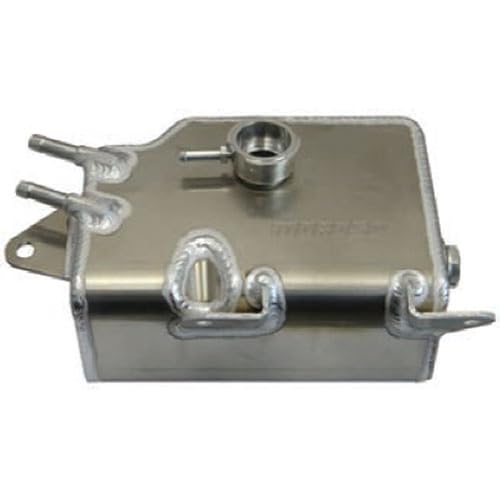
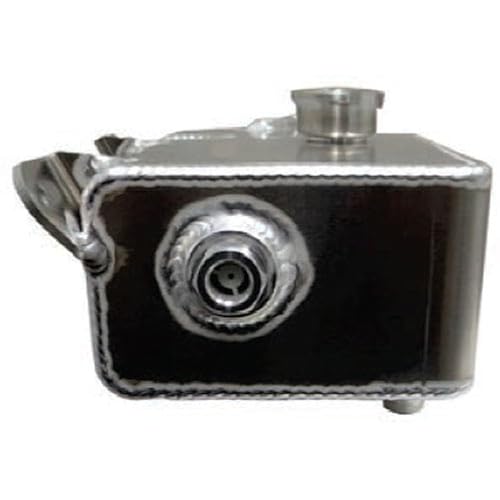
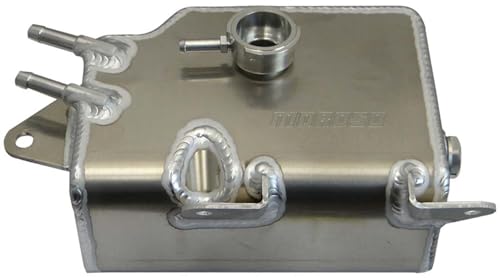
Moroso fabricates the 63779 from aluminum rather than molded plastic.
The primary benefit is durability.
Moroso specifically designed the tank as a stronger replacement for the factory reservoir in applications subjected to repeated high-temperature operation.
That’s particularly appealing on an NC used for:
- Track days
- Autocross
- Canyon driving
- Hot-climate operation
- Modified street use
- Extended high-RPM driving
It also removes one aging plastic component from an increasingly older cooling system.
Direct Bolt-In Replacement
The 63779 is not a generic universal coolant tank that requires the owner to invent brackets and hose routing.
Moroso describes it as a:
Direct bolt-in replacement
for the original 2006–2015 Miata tank.
That makes it particularly attractive for a street/track car where reliability matters more than fabricating an elaborate custom cooling system.
The goal is simple:
Remove the aging factory tank and replace it with a purpose-built aluminum component designed for the same application.
Retains the Factory Pressure Cap
Moroso equips the 63779 with a billet aluminum filler neck designed to accept the factory:
SAE Type B / 43 mm cap
This is an important feature.
The pressure cap is an operating component of the cooling system, not simply a lid.
It controls system pressure and therefore contributes to the coolant’s boiling margin.
Reusing the factory cap format means the owner doesn’t need to convert the NC to an unusual proprietary cap merely because the reservoir has been upgraded.
Inspect the Pressure Cap During Installation
Being able to reuse the original-style cap does not mean an old cap should automatically be transferred without inspection.
Check the cap for:
- Damaged seals
- Hardened rubber
- Corrosion
- Physical damage
- Incorrect pressure rating
- Evidence of leakage
A weak cap can allow pressure to escape even when the new aluminum tank is perfectly sealed.
If you’re diagnosing coolant loss rather than replacing the tank purely as a preventive upgrade, use the My Pro Street Cooling-System and Radiator-Cap Pressure Test Guide before firing the parts cannon.
A cold pressure test can help expose leaks at the expansion tank, cap, hoses, radiator, thermostat housing, water pump and other cooling-system connections.
Why Cooling-System Pressure Matters
A pressurized cooling system raises the coolant’s boiling point.
When pressure is lost through a:
- Cracked expansion tank
- Weak cap
- Loose hose
- Damaged seal
- Leaking radiator
- Failed fitting
the cooling system loses part of that boiling margin.
That’s one reason a small expansion-tank crack can become more important during track use or high ambient temperatures.
The engine may appear fine during easy driving but begin losing coolant or producing temperature problems under sustained load.
Don’t Assume Every Overheating NC Needs a New Tank
The 63779 solves an expansion-tank problem.
It isn’t a universal cure for overheating.
If your Miata runs hot, diagnose the complete system.
Possible causes include:
- Low coolant
- Cooling-system leak
- Air trapped in the system
- Weak pressure cap
- Thermostat problem
- Water-pump problem
- Restricted radiator
- Poor radiator airflow
- Cooling-fan problem
- Incorrect coolant mixture
- Internal engine leakage
The Complete Car Cooling System Guide walks through those systems individually so you can identify the actual failure instead of replacing everything that contains coolant.
Pressure-Test a Suspected Cracked Tank
Plastic expansion tanks don’t always fail dramatically.
Small cracks may only leak when the system becomes hot and pressurized.
Evidence can include:
- Dried coolant residue
- Colored staining
- White crust around a seam
- Intermittent coolant smell
- Gradually falling coolant level
- Dampness around the reservoir
- Leakage near the cap
- Temperature instability
A cold pressure test is one of the safest ways to reproduce that pressure without deliberately overheating the engine.
Follow the How to Pressure Test a Car Cooling System and Radiator Cap procedure and never exceed the vehicle’s specified test pressure.
Never Open the Tank Hot
The expansion tank is part of the pressurized cooling system.
Never remove its cap when the engine is hot.
Hot coolant can remain above its atmospheric boiling point while held under pressure. Suddenly releasing that pressure can allow coolant to boil rapidly and escape as hot liquid and steam.
Let the engine cool completely before opening the system.
This isn’t the automotive equivalent of opening a warm soda carefully.
The consequences are considerably less refreshing.
Bleed the Cooling System After Replacement
Replacing the expansion tank opens the cooling system.
Any coolant lost or drained during installation must be restored correctly, and trapped air must be removed.
Air pockets can interfere with:
- Coolant circulation
- Heater operation
- Temperature-sensor readings
- Thermostat behavior
- Water-pump operation
- Consistent engine temperature
Use the factory Mazda bleeding procedure where available.
The My Pro Street Cooling-System Bleeding Guide also explains why trapped air causes temperature problems, how pressurized expansion-tank systems differ from radiator-cap systems, and how to verify that the system is actually full.
Use the Correct Coolant
Installing an aluminum expansion tank is also a good opportunity to inspect coolant condition.
Do not choose replacement coolant solely by color.
Coolant chemistry, inhibitor package and manufacturer specifications matter more than whether the liquid looks green, blue, orange or like something removed from a convenience-store slush machine.
If the existing coolant is old, contaminated or of uncertain type, use the My Pro Street Coolant Types Guide to understand IAT, OAT, HOAT and related coolant families before refilling the system.
Always use coolant meeting Mazda’s applicable specification for the vehicle.
Aluminum Doesn’t Eliminate Cooling-System Maintenance
The Moroso tank removes the factory plastic reservoir from the equation, but the rest of the cooling system still requires inspection.
On an aging NC Miata, check:
- Upper radiator hose
- Lower radiator hose
- Heater hoses
- Hose clamps
- Radiator
- Cooling fans
- Thermostat
- Water pump
- Pressure cap
- Coolant condition
Replacing one weak component doesn’t magically reset the age of every rubber, plastic and mechanical part connected to it.
Good Upgrade for Track-Day Miatas
The NC is a popular track platform because of its relatively low weight, predictable chassis and straightforward mechanical layout.
Track operation also increases cooling-system demands.
Long periods at high engine speed and load produce substantially more heat than commuting to work.
A fabricated aluminum expansion tank doesn’t increase radiator core area or make the water pump spin harder. What it does accomplish is replacing an aging plastic pressure vessel with a stronger aluminum component.
That’s a meaningful reliability upgrade when the car is expected to spend long sessions at operating temperature.
Useful Preventive Upgrade
You don’t necessarily need to wait until the factory tank breaks.
An original tank on a 2006 NC can now have roughly two decades of heat cycles behind it.
Inspect the plastic for:
- Yellowing
- Severe discoloration
- Surface cracking
- Cracks around fittings
- Deformation
- Coolant staining
- Brittle hose connections
Condition matters more than mileage.
A low-mileage car that spent years heat-soaking in a hot climate can have very different plastic aging from a higher-mileage car stored indoors.
Finish It Your Way
Moroso supplies the tank in fabricated aluminum form.
According to Moroso, it can be:
- Left in its natural finish
- Polished
- Painted
- Powder coated
- Chromed
That makes the 63779 equally appropriate for a functional track car or a detailed engine bay.
If applying a coating, protect all:
- Hose sealing surfaces
- Threads
- Cap sealing surfaces
- Filler-neck interfaces
A beautiful powder-coated tank that no longer seals correctly is technically still an upgrade—just not in the direction you wanted.
Related Moroso NC Miata Component
Moroso also manufactures the 63777 Aluminum Power Steering Tank specifically for the 2006–2015 Mazda Miata.
That tank is also fabricated from aluminum and designed as a direct replacement for the stock reservoir.
For customers building a clean NC engine bay, the two make a logical pairing:
63779 — Aluminum Coolant Expansion Tank
63777 — Aluminum Power Steering Tank
The combination replaces two visible factory reservoirs with application-specific fabricated aluminum components.
Don’t Confuse the Miata Generations
Moroso offers several Miata tanks, and they should remain separate in the Pro Street Online catalog.
NA Miata
Moroso 63780
1990–1997 Miata
NB Miata
Moroso 63781
1999–2005 Miata
NC Miata
Moroso 63779
2006–2015 MX-5 Miata
ND Miata
Moroso 63778
2016-up MX-5 Miata
This is also why the supplied phrase:
“Replaces Stock Tank in Miata 90–98”
should be completely removed from the 63779 listing.
It describes the wrong generation.
Vehicle-Specific Fitment Is Correct
Unlike several universal Moroso products we’ve corrected recently, the distributor’s Vehicle Specific attribute is correct for the 63779.
Recommended catalog fitment:
Make: Mazda
Model: MX-5 Miata
Years: 2006–2015
Generation: NC
Fitment Type: Vehicle Specific
That is considerably more useful than simply saying “Miata,” since four generations of the car now exist and Moroso offers different tanks for several of them.
Package Information
Your distributor data lists:
Package Length: 7 inches
Package Height: 13 inches
Package Width: 10 inches
Package Weight: 2.55 pounds
These are package/shipping dimensions and should not be presented as the physical dimensions of the installed tank.
Made in the USA
Moroso’s current country-of-origin documentation identifies part number 63779 as:
Country of Origin: USA
That matches the distributor information supplied with the product.
Moroso 63779 Specifications
Part Number: 63779
Product: Coolant Expansion Tank
Application: 2006–2015 Mazda MX-5 Miata
Miata Generation: NC
Fitment: Vehicle Specific
Construction: Fabricated aluminum
Filler Neck: Billet aluminum
Pressure Cap Compatibility: Factory SAE Type B / 43 mm cap
Installation: Direct bolt-in replacement for factory tank
Finish: Natural fabricated aluminum; can be polished, chromed, painted, powder coated or left as supplied
Package Dimensions: 7 × 13 × 10 inches, according to supplied distributor data
Package Weight: 2.55 pounds, according to supplied distributor data
Country of Origin: United States
Who Should Buy the Moroso 63779?
The Moroso 63779 is a strong upgrade for an NC Miata with:
- Cracked factory expansion tank
- Severely discolored reservoir
- Brittle aging plastic
- Evidence of coolant leakage
- Frequent track use
- High-temperature operating conditions
- Modified engine
- Detailed engine bay
- Preventive cooling-system maintenance
It’s particularly attractive for owners who intend to keep the car long term and would rather replace the aging plastic tank with a fabricated aluminum component.
What This Tank Does Not Do
The 63779 does not automatically:
- Lower coolant temperature
- Increase radiator capacity
- Repair a bad head gasket
- Fix a weak water pump
- Repair a clogged radiator
- Remove trapped air
- Fix failed cooling fans
- Correct the wrong coolant mixture
It improves the durability of the expansion tank.
That’s its job.
If the vehicle already has an overheating problem, diagnose the problem before assuming an aluminum reservoir will cure it.
Final Verdict
The Moroso 63779 Aluminum Coolant Expansion Tank is a direct-fit reliability upgrade for the 2006–2015 NC Mazda MX-5 Miata.
Moroso replaces the factory plastic reservoir with fabricated aluminum construction and a billet aluminum filler neck while retaining compatibility with the original SAE Type B / 43 mm pressure cap.
For an aging street-driven NC, it eliminates a plastic pressure vessel that has already endured years of heating and cooling cycles. For a track-driven Miata, it provides a more robust expansion tank without forcing the owner into a custom cooling-system conversion.
And unlike a universal aluminum tank, the 63779 was actually designed to bolt into the NC.
Which is useful, because the average Miata already has enough previous-owner engineering without adding a coolant tank held in place by a hardware-store bracket and three optimistic zip ties.






There are no reviews yet.