
What Does a Coolant Expansion Tank Do?
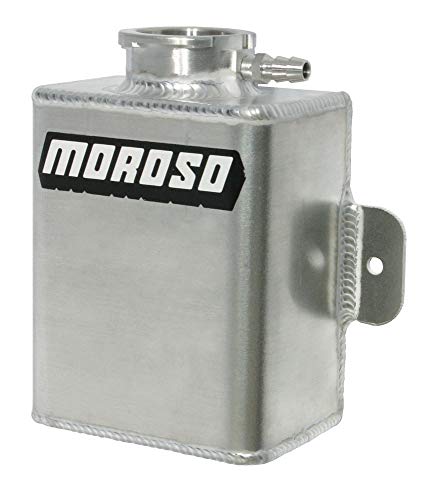
A pressurized coolant expansion tank gives heated coolant room to expand while providing a high fill point for the cooling system.
Depending on the system design, it can help:
- Manage coolant expansion
- Maintain a full cooling circuit
- Provide a remote fill point
- Separate trapped air from circulating coolant
- Position the pressure cap at a useful high point
- Route discharged coolant to a recovery tank
The Complete Car Cooling System Guide explains how the expansion tank, radiator, water pump, thermostat, pressure cap and cooling fans work together.
The important point is that an expansion tank is an operating component of the cooling circuit—not merely an aluminum bottle mounted beside the radiator.
Expansion Tank vs. Overflow Tank
These terms are frequently used interchangeably, but they describe different functions.
Pressurized Expansion Tank
A pressurized expansion tank is part of the cooling system itself.
It normally uses a pressure cap and can serve as the system’s fill point.
Coolant Recovery Tank
A recovery tank sits outside the main pressurized circuit.
Coolant expelled past the radiator or expansion-tank cap enters the recovery bottle as the engine heats and may be drawn back as the system cools.
Simple Overflow Catch Can
A basic overflow container catches discharged coolant but may not necessarily provide full coolant recovery.
The Moroso 63766 is a pressurized expansion tank, although Moroso also uses “catch can” terminology in the product description.
Don’t confuse it with a simple non-pressurized overflow bottle.
1.25-Quart Capacity
Moroso specifies the 63766 at:
1.25 quarts
That capacity makes the tank compact enough for custom engine bays while still providing meaningful expansion volume.
The correct expansion volume depends on the complete cooling system.
Factors include:
- Total coolant capacity
- Engine size
- Radiator size
- Operating temperature
- Coolant mixture
- Pressure setting
- Hose volume
- Intended use
A universal tank should be sized as part of the system rather than selected simply because it fits the available corner of the engine bay.
Fabricated Aluminum Construction
Moroso manufactures the 63766 from:
Fabricated aluminum
Aluminum provides a durable alternative to many molded-plastic reservoirs while keeping weight reasonable.
For custom and racing applications, fabricated construction also works naturally with:
- Aluminum radiators
- AN plumbing
- Custom brackets
- Engine-swap cooling systems
- Race-car engine bays
The raw aluminum appearance also fits naturally into a performance engine compartment.
Integral Mounting Bracket
Moroso builds the tank with an:
Integral mounting bracket
This simplifies fabrication because the installer doesn’t need to design a separate tank cradle from scratch.
The bracket still needs to be attached to a sufficiently rigid structure.
Avoid mounting the tank to:
- Thin unsupported sheet metal
- Flexible plastic panels
- Hot exhaust shielding
- Components that move relative to the chassis
Remember that the tank becomes heavier once filled with coolant.
A mounting location that feels solid with an empty aluminum tank may behave differently after coolant, vibration and track use are added.
Billet Aluminum Filler Neck
Moroso equips the 63766 with a:
Billet filler neck
The filler neck provides the pressure-cap mounting point and includes a:
Barbed overflow fitting
for routing discharged coolant away from the tank.
The cap is a functional pressure-control device.
It should never be selected only according to what fits the neck.
Compatible With Standard-Size Radiator Caps
The Moroso 63766 uses the standard radiator-cap format employed by Moroso’s racing-cap family.
Moroso currently lists these options:
63307 — 6–8 lb
63309 — 8–10 lb
63313 — 12–16 lb
63316 — 14–18 lb
63320 — 19–21 lb
63324 — 23–25 lb
63328 — 27–29 lb
63332 — 31–33 lb
This gives builders a broad range of pressure choices.
It does not mean every one of those caps is appropriate for every installation.
Choose Radiator-Cap Pressure Carefully
The correct cap pressure is determined by the complete cooling system.
Verify the pressure capability of:
- Radiator
- Expansion tank
- Heater core
- Hoses
- Hose clamps
- Water-pump seals
- Thermostat housing
- Coolant fittings
- Recovery tank
- Engine components
Higher cap pressure increases coolant boiling margin.
It also increases stress on every pressurized cooling-system component.
Do not automatically install the highest-pressure cap Moroso sells.
A 31–33 psi cap is not an achievement badge.
Higher Pressure Doesn’t Automatically Make an Engine Run Cooler
Increasing cap pressure raises the coolant’s boiling margin.
It doesn’t directly improve:
- Radiator airflow
- Radiator heat transfer
- Water-pump output
- Fan operation
- Thermostat operation
- Coolant mixture
- Engine calibration
If the engine is overheating, diagnose the actual problem.
Your Bad Thermostat vs. Bad Water Pump Guide explains how to distinguish circulation and thermostat problems instead of assuming every temperature problem needs another cooling-system part.
1/2-Inch NPT Bottom Port
Moroso provides:
One 1/2-inch NPT female fitting
on the bottom of the tank.
The bottom location makes this a logical primary coolant connection in a custom expansion-tank installation.
Because it is NPT, the port accepts an appropriate male pipe-thread fitting.
The actual hose or AN size used beyond that fitting depends on the cooling-system design.
Don’t confuse:
1/2-inch NPT thread size
with
1/2-inch hose size.
They are not the same measurement.
3/8-Inch NPT Side Port
The tank also includes:
One 3/8-inch NPT female fitting
on the side.
Depending on the cooling-system design, this can support a secondary coolant or bleed connection.
This is particularly useful in custom systems where air needs a controlled path from a high point in the engine or radiator toward the expansion tank.
The exact plumbing arrangement depends on the vehicle.
Expansion Tanks Can Help With Air Separation
A properly positioned expansion tank can provide a high point where air migrates out of the circulating coolant.
This becomes especially useful in:
- Engine swaps
- Mid-engine cars
- Rear-mounted radiators
- Low-mounted radiators
- Custom turbo systems
- Complex heater circuits
- Race-car cooling layouts
Air naturally wants to migrate toward high points.
Giving it a deliberate path to the expansion tank is considerably better than allowing it to collect inside a cylinder head.
Mount the Tank High Enough
Tank location is critical.
In many custom cooling systems, the expansion tank should be positioned at or near the system’s effective high point so trapped air can migrate toward it.
A beautifully fabricated expansion tank mounted below the engine’s highest coolant passage may look excellent while doing very little to help bleeding.
Your How to Bleed a Car Cooling System and Remove Air Pockets explains why remote expansion tanks, engine-swap hose loops, cylinder-head passages and heater cores can trap air when the fill point is poorly positioned.
Design the fill point before drilling mounting holes.
Ideal for Engine Swaps
The 63766 is particularly useful for engine swaps.
A swap can change the relationship between:
- Engine height
- Radiator height
- Thermostat location
- Heater core
- Coolant hoses
- Turbocharger coolant lines
- Factory fill point
The original vehicle may have been designed around an engine with a completely different coolant layout.
A remote expansion tank lets the builder establish a new high fill point rather than pretending the original radiator neck still occupies the ideal location.
Useful With Low-Mounted Radiators
Custom vehicles sometimes place the radiator lower than parts of the engine.
That can make filling and bleeding difficult because air becomes trapped above the radiator cap.
A remote pressurized expansion tank positioned higher in the system can provide a better fill and deaeration point.
This is one of the strongest applications for the Moroso 63766.
Useful With Remote Radiators
Race cars, kit cars and specialty builds may use:
- Rear-mounted radiators
- Side-mounted radiators
- Remote heat exchangers
- Long coolant pipes
These configurations create additional high points where air can collect.
A properly plumbed expansion tank can help manage those systems.
But plumbing design becomes more important as the cooling circuit becomes more complicated.
Turbocharged Engines Can Create Additional High Points
Water-cooled turbochargers introduce additional coolant hoses and passages.
Depending on turbo location, those circuits may sit above the radiator.
Your How to Bleed a Car Cooling System specifically covers turbocharger coolant lines among the places where trapped air can collect.
A correctly positioned expansion tank can help provide a path for that air to escape.
Pressure-Test the System After Installation
Any custom coolant-tank installation introduces new:
- Fittings
- Hose connections
- Clamps
- Welds
- Plumbing joints
After installation, pressure-test the cooling system cold.
The My Pro Street Cooling-System Pressure Test Guide explains how to safely pressurize a cold system and inspect the radiator, hoses, expansion tank, fittings, water pump and other potential leak points.
Never exceed the system’s rated test pressure.
More pressure doesn’t make the test more accurate.
It merely makes finding the weakest component more dramatic.
Pressure-Test the Radiator Cap Too
A new aluminum expansion tank doesn’t compensate for a bad pressure cap.
A cap can fail because of:
- Weak spring
- Damaged seal
- Corrosion
- Incorrect pressure rating
- Damaged recovery valve
- Wrong physical cap dimensions
The same My Pro Street Cooling-System and Radiator-Cap Pressure Test Guide covers testing the cap separately.
Verify the cap rather than assuming a new part is automatically correct.
Never Open the Tank While Hot
Because the 63766 functions as a pressurized expansion tank, treat the filler cap exactly as you would a radiator cap.
Never remove it from a hot system.
Pressurized coolant can remain above its atmospheric boiling point.
Suddenly releasing pressure can cause the coolant to boil rapidly and discharge hot liquid and steam.
Wait until the engine is completely cold before opening the tank.
Bleed the Cooling System After Installation
Installing an expansion tank means opening and modifying the cooling system.
The system must then be refilled and bled correctly.
Your Cooling-System Bleeding Guide covers:
- Pressurized expansion tanks
- Radiator-cap systems
- Spill-free funnels
- Bleed screws
- Vacuum filling
- Heater-core air
- Engine-swap systems
- Remote tanks
Use the vehicle or engine manufacturer’s procedure whenever one exists.
For a custom cooling system, develop a fill and bleed strategy around the actual plumbing layout.
Choose the Correct Coolant
A new aluminum tank is also a good opportunity to verify what’s circulating through the engine.
Don’t choose coolant solely by color.
Your Car Coolant Types Explained: IAT vs. OAT vs. HOAT explains the different inhibitor technologies and why mixing incompatible coolant families can cause problems.
Use coolant that meets the requirements of the:
- Engine
- Radiator
- Water pump
- Heater core
- Other cooling-system materials
An engine swap may require more thought than simply using whatever coolant originally belonged in the chassis.
Don’t Mix Coolant Types Blindly
Custom builds often contain parts from several manufacturers.
That can make coolant selection less obvious.
If the existing coolant chemistry is unknown, don’t automatically top it off with whatever color happens to be nearby.
Mixing incompatible coolant technologies can reduce corrosion protection or create deposits.
Identify what’s in the system or flush it appropriately before refilling.
Use Compatible NPT Fittings
The Moroso tank provides female NPT ports.
Use fittings that are compatible with:
- Coolant
- Aluminum
- System pressure
- Hose type
- Operating temperature
Avoid overtightening tapered pipe fittings into aluminum.
NPT threads tighten progressively as they engage.
Excessive torque can damage the tank fitting.
Use an appropriate coolant-compatible thread-sealing method according to the fitting manufacturer’s instructions.
Support the Coolant Hoses
Do not allow heavy coolant hoses to hang from the tank fittings.
Long hoses filled with coolant can apply substantial leverage to a fitting during:
- Engine movement
- Acceleration
- Braking
- Cornering
- Vibration
Support hoses where necessary and provide enough flexibility to prevent side-loading the tank connections.
Route the Overflow Hose Safely
The filler neck includes a barb for an overflow hose.
Route that hose away from:
- Exhaust
- Belts
- Pulleys
- Tires
- Brakes
- Driver compartment
On a competition vehicle, coolant discharge requirements may also be governed by sanctioning-body rules.
A recovery tank may be required.
Check the applicable rulebook.
Expansion Tank vs. Recovery Tank
If the system needs coolant recovery rather than simply an expansion/fill tank, Moroso offers dedicated recovery tanks.
Examples include:
63657 — 1-quart coolant recovery tank
63660 — 1-quart coolant recovery tank
63769 — 4-quart recovery tank
Moroso also offers the 63772 combination expansion and recovery system, which packages both functions into one assembly.
Choose the system architecture first.
Then choose the tank.
Moroso 63772 Combination System
For builds that need both a pressurized expansion section and a dedicated recovery reservoir, the:
Moroso 63772
may be a better fit.
Its expansion section uses:
- 1.25-quart capacity
- 1/2-inch NPT bottom port
- 3/8-inch NPT side port
- Billet radiator filler neck
while a separate 1-quart recovery section allows expelled coolant to be collected and returned.
The 63766 is simpler and more compact when only the expansion-tank function is needed.
Moroso 63773 Adds a Sight Tube
Another close alternative is:
Moroso 63773
The 63773 uses the same general universal 1.25-quart expansion-tank concept but adds a:
Sight tube
That allows coolant level to be checked externally.
Choose:
63766 for the straightforward rectangular universal tank.
Choose:
63773 when an external coolant-level sight tube is desirable.
Compatible Moroso Racing Caps
Natural cross-sells include the Moroso cap family:
63307 — 6–8 psi
63309 — 8–10 psi
63313 — 12–16 psi
63316 — 14–18 psi
63320 — 19–21 psi
63324 — 23–25 psi
63328 — 27–29 psi
63332 — 31–33 psi
The correct cap is determined by system design.
Do not recommend 63332 merely because it has the largest number.
Package Information
Your distributor data lists:
Package Height: 11.43 cm / approximately 4.50 inches
Package Length: 22.098 cm / approximately 8.70 inches
Package Width: 17.018 cm / approximately 6.70 inches
Package Weight: 1.65 kg / approximately 3.64 lb
These are package/shipping measurements and should not be presented as the installed dimensions of the tank.
Country of Origin
Your distributor feed lists:
Country of Origin: United States
That can be retained as distributor-supplied country-of-origin information.
Moroso 63766 Specifications
Part Number: 63766
Product: Universal Coolant Expansion Tank / Catch Can
Shape: Rectangular
Capacity: 1.25 quarts
Construction: Fabricated aluminum
Mounting: Integral mounting bracket
Bottom Port: 1/2-inch NPT female
Side Port: 3/8-inch NPT female
Filler Neck: Billet
Overflow Connection: Barbed fitting at filler neck
Radiator Cap: Accepts compatible standard-size / Moroso Racing Radiator Caps
Fitment: Universal / custom installation
Package Height: Approximately 4.50 inches
Package Length: Approximately 8.70 inches
Package Width: Approximately 6.70 inches
Package Weight: Approximately 3.64 lb
Country of Origin: United States according to supplied distributor data
Who Should Buy the Moroso 63766?
The Moroso 63766 is a strong choice for:
- Engine swaps
- Race cars
- Track cars
- Hot rods
- Restomods
- Custom cooling systems
- Remote-radiator applications
- Low-mounted radiator installations
- Turbocharged builds with complex coolant routing
- Vehicles needing a remote pressurized fill point
It’s particularly useful when the builder needs a compact aluminum expansion tank rather than a vehicle-specific plastic reservoir.
Who Should Choose Something Else?
Consider another solution if you need:
- Direct bolt-in vehicle-specific fitment
- Integrated coolant-level sensor
- Larger expansion capacity
- Dedicated recovery reservoir
- External sight tube
- Factory hose connections
For example:
63773 adds a sight tube.
63772 combines expansion and recovery functions.
Moroso also offers numerous vehicle-specific tanks for Miata, Mustang, Corvette, BMW, Subaru and other applications.
Final Verdict
The Moroso 63766 Universal Coolant Expansion Tank is a compact 1.25-quart fabricated-aluminum reservoir for custom cooling systems that need a remote pressurized expansion and fill point.
Its integrated mounting bracket, billet filler neck, 1/2-inch NPT bottom port and 3/8-inch NPT side port give builders considerable flexibility when designing engine-swap, race-car or custom cooling-system plumbing.
The biggest catalog correction is simple:
This is universal, not vehicle-specific.
And because it is universal, installation quality matters.
Mount it intelligently, establish proper air-bleed routing, choose the correct pressure cap, support the hoses, pressure-test the finished system and bleed it completely.
A remote expansion tank can solve a lot of custom cooling-system packaging problems.
It cannot solve plumbing designed entirely around the principle of “that hose looked like it reached.”







There are no reviews yet.