
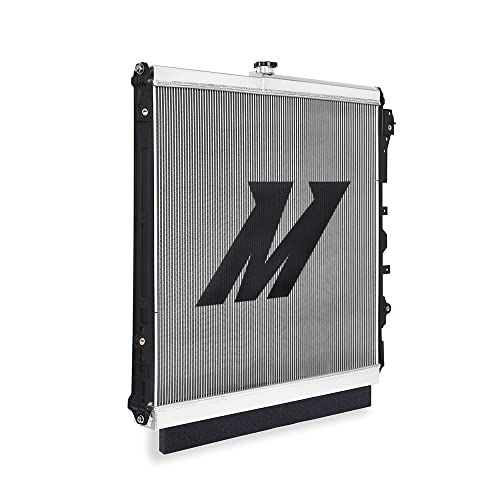
70% More Coolant Capacity – What Does It Mean?
One of the standout features of the Mishimoto MMRAD-TUN-07 is its advertised 70% increase in radiator coolant capacity.
Greater coolant capacity provides additional fluid volume to absorb and transport engine heat.
For trucks operating under demanding conditions, this increased capacity can provide additional thermal reserve.
However, coolant volume alone does not determine radiator performance.
Heat transfer also depends on coolant flow, radiator core design, airflow, ambient temperature, and the engine’s heat output.
Mishimoto combines the increased coolant capacity with a larger core volume and additional external fin surface area.
12% Increased Core Volume
The radiator’s two-row core provides 12% more core volume compared with the factory radiator used in Mishimoto’s comparison.
The larger core is designed to support improved heat exchange between circulating coolant and incoming air.
15% More External Fin Surface Area
Radiator fins transfer heat from the coolant tubes into the surrounding airflow.
By increasing external fin surface area by 15%, Mishimoto provides additional heat-transfer surface area.
This design is particularly useful when the cooling system is operating under sustained engine load.
For more information on radiator efficiency and overheating prevention, visit our Complete Car Cooling System Guide.
Full-Aluminum Construction for Long-Term Durability
Many factory-style radiators use plastic end tanks attached to an aluminum cooling core.
Although these designs work well under normal conditions, repeated heat cycles and aging can eventually weaken plastic components and seals.
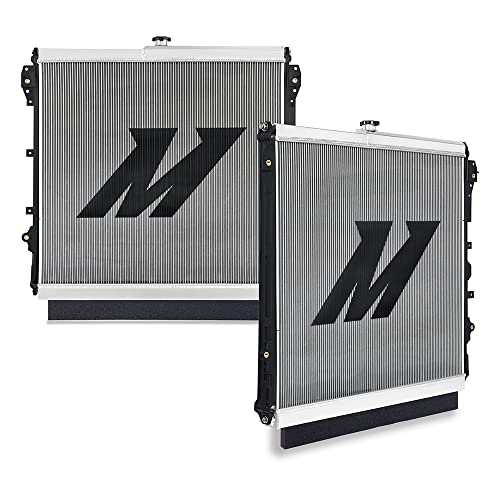
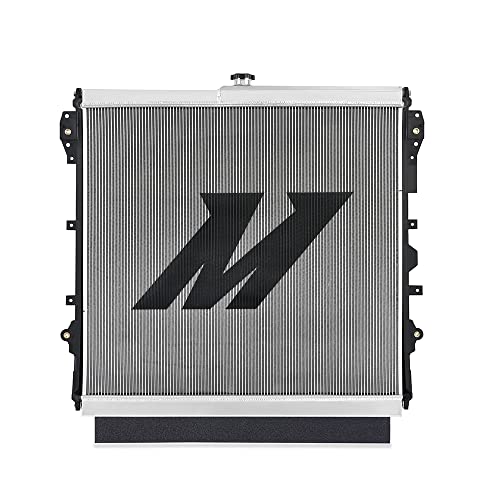
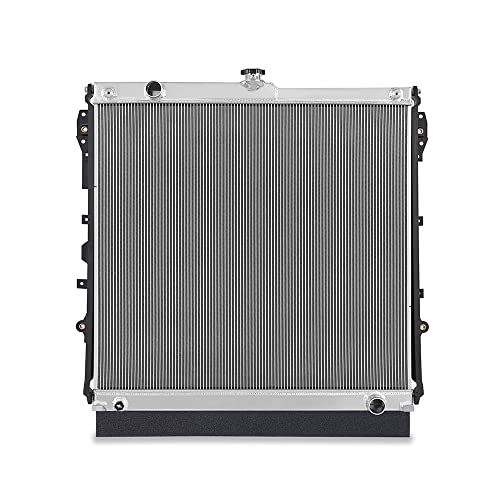
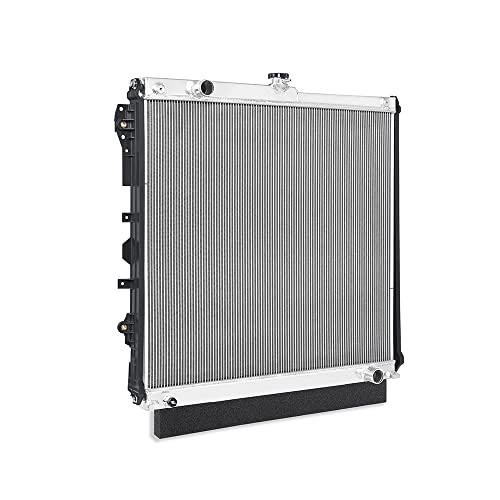
The Mishimoto MMRAD-TUN-07 uses full-aluminum construction designed for increased durability and reliable heat transfer.
Aluminum offers several advantages for automotive radiators, including corrosion resistance when paired with appropriate coolant, efficient heat conduction, and favorable strength-to-weight characteristics.
The full-aluminum design also provides a performance-oriented appearance under the hood.
For Tundra owners planning to keep their trucks for years, replacing a deteriorated radiator with a durable aluminum unit can be a worthwhile investment.
Mishimoto MMRAD-TUN-07 Technical Specifications
| Specification | Details |
|---|---|
| Manufacturer | Mishimoto |
| Part Number | MMRAD-TUN-07 |
| Product Type | Performance Aluminum Radiator |
| Toyota Tundra Fitment | 2007–2021, supported configurations |
| Toyota Sequoia Fitment | 2008–2021, supported configurations |
| Advertised Engine Applications | 4.6L, 4.7L, 5.7L |
| Radiator Construction | Full Aluminum |
| Core Configuration | 2-Row |
| Core Thickness | 42mm |
| Coolant Capacity Increase | 70% |
| Core Volume Increase | 12% |
| External Fin Surface Increase | 15% |
| Automatic Transmission Cooler | Integrated |
| Mounting Brackets | Included |
| Installation Design | Direct-Fit |
Fitment note: Confirm the specific engine, transmission, model year, radiator connections, and factory cooling package before ordering. Mishimoto’s supplied description does not establish compatibility with every engine and transmission combination across the full advertised year range.
Designed for Toyota Tundra 4.6L, 4.7L and 5.7L V8 Engines
The second-generation Toyota Tundra was offered with several engine configurations, including Toyota’s popular V8 powerplants.
Each engine relies on effective coolant circulation and sufficient radiator airflow to maintain its intended operating temperature.
Toyota Tundra 5.7L i-FORCE V8
The 5.7L i-FORCE V8 is one of the most recognizable engines associated with the second-generation Tundra.
Known for its strong torque output and durability, the 5.7L engine is popular among truck owners who tow trailers, carry heavy loads, and travel long distances.
During sustained engine load, the cooling system must continuously transfer heat away from the engine.
The Mishimoto radiator’s increased coolant capacity and enlarged heat-transfer surfaces are designed to provide additional cooling capability.
Toyota Tundra 4.6L V8
The 4.6L V8 offers a balance of everyday drivability and truck performance.
Owners replacing an aging radiator may benefit from the Mishimoto’s aluminum construction and increased cooling capacity.
Proper fitment verification is essential because cooling system configurations vary between engines and model years.
Toyota Tundra 4.7L V8
The 4.7L Toyota V8 has a longstanding reputation for durability.
For older Tundra models equipped with this engine, cooling system maintenance becomes increasingly important as mileage accumulates.
Replacing a deteriorated radiator can help restore reliable temperature regulation and reduce the risk of coolant leaks.
A Performance Radiator for Towing and Heavy-Duty Driving
Toyota Tundra owners frequently use their trucks for towing, hauling, outdoor recreation, and long-distance travel.
These activities can place additional demands on the cooling system.
When towing a trailer or climbing steep grades, the engine operates under sustained load and generates additional heat.
A radiator with increased heat-transfer capability may help manage these demands.
Why Cooling Capacity Matters When Towing
Sustained Engine Load: Pulling a trailer increases the amount of heat the engine must dissipate.
Hot Weather Operation: Higher ambient temperatures reduce the temperature difference between the radiator and surrounding air, making heat rejection more challenging.
Low-Speed Driving: Slow climbs and stop-and-go traffic can reduce natural airflow through the radiator.
Transmission Heat: Automatic transmissions also generate heat, especially during towing and repeated acceleration.
The Mishimoto MMRAD-TUN-07 addresses these challenges with a larger coolant capacity, increased fin surface area, and an integrated transmission cooler.
However, an upgraded radiator does not increase the truck’s factory towing rating or replace the need for properly functioning fans, coolant hoses, thermostats, and transmission cooling components.
Integrated Automatic Transmission Cooler
One of the most important features of the Mishimoto MMRAD-TUN-07 is its built-in automatic transmission cooler.
Automatic transmissions generate heat as hydraulic fluid circulates through the transmission and torque converter.
Excessive transmission fluid temperatures can accelerate fluid deterioration and increase wear. Find coolant leaks using this DIY guide at my.prostreetonline.com.
For compatible Tundra and Sequoia applications, the radiator-integrated cooler allows the transmission cooling circuit to connect to the replacement radiator.
Benefits of the Integrated Cooler
- Supports compatible factory transmission cooling arrangements.
- Helps manage automatic transmission fluid temperature.
- Simplifies installation compared with a radiator requiring a completely separate cooler arrangement.
- Preserves a factory-style cooling system configuration for supported vehicles.
Before installation, confirm that the transmission cooler fittings and plumbing match your vehicle.
Some Toyota models use additional transmission cooling components, and those systems should be retained or modified only according to the appropriate service requirements.
How to Install a Mishimoto MMRAD-TUN-07 Radiator on a Toyota Tundra
The Mishimoto radiator is engineered as a direct-fit replacement for supported Toyota Tundra and Sequoia applications.
Its included brackets are designed to simplify installation.
Although radiator replacement is a manageable project for experienced DIY mechanics, proper coolant handling and transmission cooler connections are essential.
Step 1: Drain the Factory Cooling System
Allow the engine to cool completely.
Never remove a radiator cap while the cooling system is hot or pressurized.
Position a drain pan beneath the radiator and drain the coolant according to Toyota’s factory service procedure.
Inspect the existing coolant for contamination, corrosion, or other signs of cooling system deterioration.
If the coolant is heavily contaminated, additional cooling system cleaning may be necessary.
Step 2: Remove the Factory Radiator
Disconnect the upper and lower radiator hoses.
Remove the appropriate fan shroud, brackets, and mounting hardware.
Disconnect transmission cooler lines where applicable, taking precautions to prevent fluid loss and contamination.
Carefully remove the original radiator without damaging the air-conditioning condenser or surrounding components.
Step 3: Install the Mishimoto Aluminum Radiator
Position the Mishimoto MMRAD-TUN-07 into the factory radiator mounting area.
Use the supplied brackets as directed by Mishimoto’s installation instructions.
Verify that the radiator sits securely and that the inlet, outlet, and mounting points align correctly.
Confirm clearance between the radiator, cooling fans, engine accessories, and surrounding components.
Step 4: Reconnect the Cooling and Transmission Lines
Reconnect the upper and lower radiator hoses using suitable clamps.
Attach the transmission cooler lines using the appropriate fittings and seals.
Inspect all connections for proper engagement and alignment.
Do not force incompatible transmission fittings into the radiator.
Step 5: Refill and Bleed the Cooling System
Refill the cooling system using coolant that meets Toyota’s specifications for the vehicle.
Follow the applicable Toyota coolant bleeding procedure to remove trapped air.
Air pockets can cause unstable temperature readings, reduced heater performance, and engine overheating.
For more information about coolant circulation and proper system operation, read our Complete Car Cooling System Guide.
Step 6: Test the Cooling System
Start the engine and allow it to reach normal operating temperature while monitoring coolant temperature.
Confirm proper thermostat operation and cooling fan engagement.
Inspect all radiator hoses, mounting points, and transmission cooler connections for leaks.
After the system cools, recheck the coolant level and inspect the installation.
Common Toyota Tundra Overheating Problems
A radiator upgrade can improve cooling capability, but it is important to identify the actual cause of overheating before replacing components.
Radiator Leaks
Aging radiators may develop leaks around the end tanks, seams, or hose connections.
Coolant loss reduces the system’s ability to transfer heat.
Failing Thermostat
A thermostat that remains closed can restrict coolant circulation and cause rapid engine temperature increases.
Water Pump Problems
A failing water pump can reduce coolant circulation or allow coolant to escape through worn seals.
Cooling Fan Issues
An improperly functioning fan or fan clutch can reduce radiator airflow, particularly during low-speed driving.
Damaged Radiator Hoses
Cracked, swollen, or collapsed hoses can cause coolant leaks or restrict circulation.
Trapped Air
Air pockets can interrupt coolant flow and cause overheating after radiator replacement or other cooling system repairs.
Contaminated Coolant
Old or incompatible coolant can contribute to corrosion and internal cooling system deposits.
For additional troubleshooting information, visit our Complete Car Cooling System Guide.
Complete Your Toyota Tundra Cooling System Upgrade
When replacing a radiator, inspect the surrounding cooling system components.
Radiator Hoses: Replace hoses showing cracks, swelling, or deterioration.
Thermostat: Verify correct operation and replace it when necessary.
Water Pump: Inspect for coolant leaks, bearing noise, and other signs of failure.
Cooling Fan and Fan Clutch: Confirm proper airflow through the radiator.
Radiator Cap: Use a cap with the correct pressure rating and compatible design.
Toyota-Compatible Coolant: Use the manufacturer-recommended coolant formulation.
Transmission Cooler Lines: Inspect fittings, hoses, and seals for leaks or damage.
Explore additional radiators, cooling system components, and performance upgrades at Pro Street Online.
Is the Mishimoto MMRAD-TUN-07 Worth It?
For Toyota Tundra and Sequoia owners who want to improve cooling system capability, the Mishimoto MMRAD-TUN-07 offers several advantages over an aging factory radiator.
Its full-aluminum construction, two-row 42mm core, increased coolant capacity, and integrated automatic transmission cooler make it a compelling option for compatible applications.
The radiator is particularly appealing for owners who:
- Tow trailers or carry heavy loads.
- Operate their trucks in hot climates.
- Want to replace an aging factory radiator.
- Prefer full-aluminum cooling system components.
- Maintain high-mileage Toyota trucks.
- Want increased radiator coolant capacity and heat-transfer surface area.
While the radiator cannot compensate for a malfunctioning water pump, thermostat, or cooling fan, it provides additional cooling system capacity when properly installed.
Upgrade Your Toyota Tundra Radiator at Pro Street Online
Whether you’re maintaining a 5.7L Toyota Tundra, upgrading a 4.6L V8 truck, or replacing the radiator in a Toyota Sequoia, dependable cooling is essential for long-term engine reliability.
The Mishimoto MMRAD-TUN-07 Performance Aluminum Radiator combines a two-row 42mm core, full-aluminum construction, increased coolant capacity, and an integrated automatic transmission cooler in a direct-fit package.
With manufacturer-reported improvements of 70% in radiator coolant capacity, 12% in core volume, and 15% in external fin surface area, this radiator is engineered to deliver increased cooling capability for compatible Toyota trucks and SUVs.
Shop Mishimoto performance radiators, Toyota Tundra cooling upgrades, and replacement engine cooling components at www.ProStreetOnline.com.





There are no reviews yet.