

Why Core Design Matters More Than Row Count Alone
A radiator’s cooling performance depends on several factors, including:
- Coolant flow through the radiator tubes.
- Aluminum core thickness and tube configuration.
- Radiator fin density and heat-transfer surface area.
- Airflow through the front bumper and radiator.
- Proper cooling fan operation.
- Ambient temperature and engine heat output.
A properly designed two-row aluminum radiator can provide excellent cooling performance without requiring an unnecessarily thick or restrictive core.
For a detailed explanation of radiator operation and how different cooling components work together, visit our Complete Car Cooling System Guide.
TIG-Welded Aluminum Construction for Long-Term Durability
Many factory-style radiators use plastic end tanks attached to an aluminum cooling core.
Although these designs are effective under normal conditions, aging plastic components and seals can eventually deteriorate after years of heat cycling.
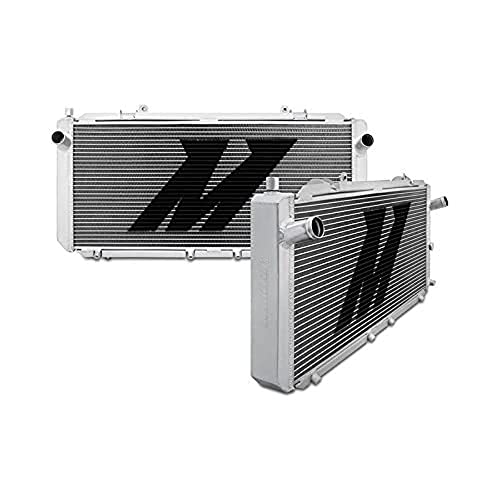
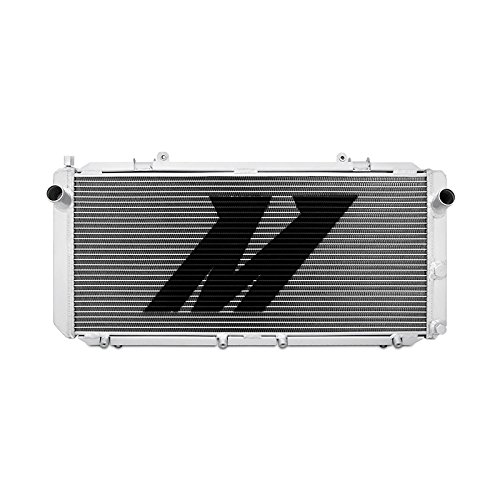
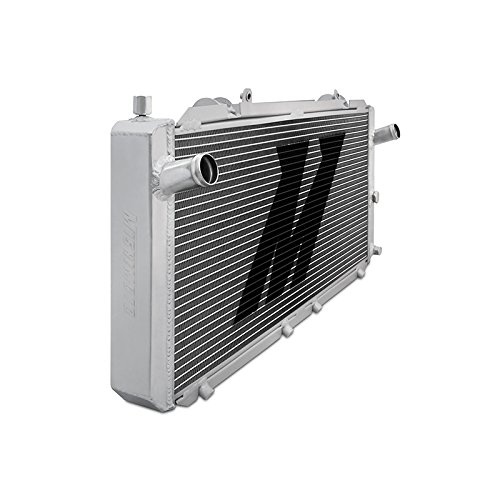
The Mishimoto MMRAD-MR2-90 uses TIG-welded aluminum construction designed for durability and consistent cooling performance.
Its aluminum tanks and core provide a performance-focused alternative to conventional radiator designs.
For MR2 owners restoring older vehicles, replacing a deteriorated factory radiator can also reduce the risk of unexpected coolant leaks.
Magnetic Drain Plug
The included magnetic drain plug is another useful feature.
Unlike a conventional drain plug, the magnetic design can attract and retain some ferrous metallic particles circulating through the cooling system.
This can make coolant maintenance more convenient and help reveal certain types of metallic contamination.
However, the magnetic drain plug does not replace proper coolant changes, system flushing, or mechanical inspection.
Mishimoto MMRAD-MR2-90 Technical Specifications
| Specification | Details |
|---|---|
| Manufacturer | Mishimoto |
| Part Number | MMRAD-MR2-90 |
| Product Type | Performance Aluminum Radiator |
| Advertised Fitment | 1990–1997 Toyota MR2 |
| Chassis Platform | SW20 |
| Radiator Construction | TIG-Welded Aluminum |
| Core Configuration | 2-Row |
| Overall Dimensions | 29.8 × 14.75 × 2.15 inches |
| Core Dimensions | 26.38 × 12.13 inches |
| Core Thickness | 1.65 inches |
| Inlet Diameter | 1.25 inches |
| Outlet Diameter | 1.25 inches |
| Tank Wall Thickness | 0.08 inches |
| Drain Plug | Magnetic |
| Advertised Cooling Improvement | Up to 30% |
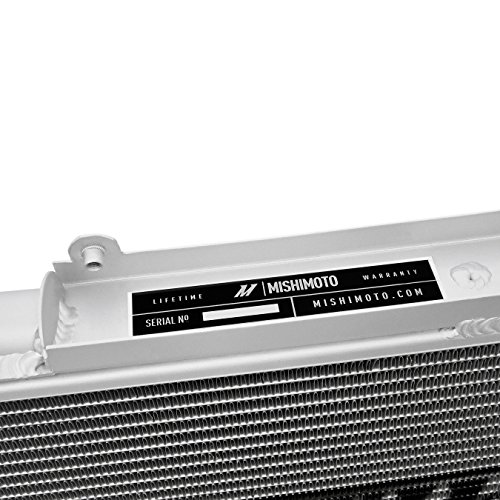
| Warranty | Mishimoto Lifetime Warranty |
Fitment note: Confirm the radiator’s dimensions, mounting points, hose connections, fan shroud compatibility, and vehicle configuration before purchasing. Market-specific model years and modified MR2 cooling systems may require additional verification.
Designed for Toyota MR2 SW20 Naturally Aspirated and Turbo Applications
The second-generation Toyota MR2 was available with naturally aspirated and turbocharged engines, depending on the market and model year.
Both configurations depend on proper radiator performance and coolant circulation.
Naturally Aspirated Toyota MR2
Naturally aspirated SW20 models provide a lightweight, responsive sports car experience.
Even without forced induction, an aging cooling system can cause temperature instability during traffic, hot weather, or extended spirited driving.
Replacing a deteriorated factory radiator with a Mishimoto aluminum unit can help restore reliable cooling system operation.
Toyota MR2 Turbo with the 3S-GTE Engine
The turbocharged Toyota MR2 remains one of the most desirable Japanese performance cars of its era.
The 3S-GTE engine produces additional heat during boost and sustained high-load operation.
For turbocharged MR2 owners, a properly functioning radiator is especially important.
The Mishimoto MMRAD-MR2-90 provides a performance-oriented cooling option, but radiator capacity must be considered alongside the thermostat, water pump, cooling fans, and overall engine condition.
Modified and Engine-Swapped MR2 Builds
The SW20 platform is also popular for custom engine swaps and higher-output performance builds.
However, radiator fitment and cooling capacity should be evaluated carefully when changing engine configurations.
A radiator designed for a factory MR2 application may require custom hoses, mounting modifications, or additional cooling upgrades on an engine-swapped vehicle.
Why the Toyota MR2 Cooling System Requires Special Attention
The Toyota MR2 cooling system is different from that of a typical front-engine vehicle.
Because the engine is mounted behind the passenger compartment and the radiator is located at the front, coolant must travel through long underbody pipes.
This arrangement introduces several maintenance considerations.
Long Coolant Pipes
The MR2 uses extended coolant plumbing between the engine and front radiator.
Leaks, corrosion, or restrictions anywhere along these pipes can affect cooling system operation.
Trapped Air Can Cause Overheating
Air pockets are a particular concern when servicing an MR2 cooling system.
If coolant is drained and the system is not properly bled, trapped air may interfere with coolant circulation.
This can cause inconsistent temperature readings, reduced heater performance, or overheating.
Cooling Fan Operation
The front-mounted radiator relies on adequate airflow, especially when the vehicle is stationary or moving slowly.
Faulty cooling fans or electrical controls can cause temperatures to rise even when the radiator itself is in good condition.
Coolant System Maintenance
Proper coolant chemistry, regular inspection, and correct bleeding procedures are essential for preserving the reliability of an older MR2.
For more information about coolant circulation, radiator operation, and troubleshooting, read our Complete Car Cooling System Guide.
How to Install a Mishimoto MMRAD-MR2-90 Radiator on a Toyota MR2
Replacing the radiator on a second-generation Toyota MR2 requires attention to the vehicle’s unique coolant plumbing.
The radiator is located at the front of the vehicle, but the engine is mounted at the rear.
This makes proper coolant bleeding especially important.
Step 1: Prepare the Vehicle
Park the MR2 on a level surface and allow the engine to cool completely.
Never open a hot or pressurized cooling system.
Disconnect the battery if the installation procedure requires working near electric cooling fans or their wiring.
Step 2: Drain the Cooling System
Position suitable drain containers beneath the appropriate coolant drain points.
Drain the coolant according to Toyota’s factory service procedure.
Because the MR2 uses long coolant pipes, draining the front radiator alone may not remove all coolant from the system.
Inspect the existing coolant for rust, contamination, or other signs of cooling system deterioration.
Step 3: Remove the Factory Radiator
Remove the necessary front trim, covers, and mounting components to access the radiator.
Disconnect the upper and lower radiator hoses.
Disconnect cooling fan electrical connections and remove the fan assembly or shroud as required.
Carefully remove the original radiator without damaging the air-conditioning condenser or nearby components.
Step 4: Install the Mishimoto Aluminum Radiator
Position the Mishimoto MMRAD-MR2-90 into the radiator mounting area.
Confirm that the mounting points align and that the radiator sits securely.
Verify clearance between the radiator, cooling fans, front bodywork, and surrounding components.
Reconnect the appropriate hoses and fan assembly using compatible hardware.
Step 5: Refill and Properly Bleed the MR2 Cooling System
Refill the cooling system using coolant appropriate for the Toyota MR2 engine and radiator materials.
Follow the factory Toyota MR2 bleeding procedure, including the applicable bleed points and service hoses.
The MR2’s long coolant plumbing makes proper air removal critical.
Do not assume the system is fully bled simply because the radiator appears full.
Step 6: Verify Cooling System Operation
Start the engine and monitor coolant temperature.
Confirm that the thermostat opens and that the radiator cooling fans operate when required.
Inspect all hose connections, drain plugs, and radiator mounting points for leaks.
After the engine cools, recheck coolant level and repeat the applicable bleeding checks if necessary.
Common Toyota MR2 Overheating Problems
An upgraded radiator can help improve cooling performance, but it is important to diagnose the complete system when overheating occurs.
Trapped Air in the Cooling System
Improper bleeding can leave air pockets inside the MR2’s long coolant plumbing.
This is a common concern after radiator replacement, coolant changes, and cooling system repairs.
Failing Thermostat
A thermostat that fails to open properly can restrict coolant circulation and cause rapid temperature increases.
Water Pump Problems
A failing water pump can reduce coolant circulation or allow coolant to escape through worn seals.
Corroded or Restricted Radiator
Older radiators may develop internal deposits that reduce heat transfer efficiency.
Cooling Fan Failure
A malfunctioning electric fan, relay, or fan-control circuit can cause overheating during idling and low-speed driving.
Damaged Coolant Pipes and Hoses
Leaks or restrictions in the MR2’s extended cooling system plumbing can reduce cooling performance.
Before replacing components, inspect the complete cooling system and identify the cause of the problem.
Our Complete Car Cooling System Guide explains the fundamentals of coolant flow, radiator efficiency, and overheating diagnosis.
Complete Your Toyota MR2 Cooling System Upgrade
When replacing the radiator, consider inspecting other components that influence cooling system reliability.
Radiator Hoses: Replace hoses showing cracks, swelling, or deterioration.
Thermostat: Verify correct operation and replace it when necessary.
Water Pump: Inspect for leaks, bearing noise, and other signs of failure.
Cooling Fans: Confirm proper fan operation and airflow through the radiator.
Coolant Pipes: Inspect the MR2’s long underbody coolant pipes for leaks, corrosion, and damage.
Radiator Cap: Use the correct pressure-rated cap in the appropriate cooling system location.
Toyota-Compatible Coolant: Use coolant that meets the engine manufacturer’s specifications.
Explore additional performance radiators, cooling system components, and Toyota engine upgrades at Pro Street Online.
Is the Mishimoto MMRAD-MR2-90 Worth It?
For Toyota MR2 owners who want to improve cooling system reliability, the Mishimoto MMRAD-MR2-90 offers several advantages over a deteriorated factory radiator.
Its two-row aluminum core, TIG-welded construction, magnetic drain plug, and vehicle-specific design make it a compelling option for compatible SW20 applications.
The radiator is particularly appealing for owners who:
- Are restoring a second-generation Toyota MR2.
- Want to replace an aging factory radiator.
- Drive a naturally aspirated or turbocharged MR2.
- Participate in spirited driving or occasional track events.
- Prefer aluminum cooling system components.
- Want a radiator backed by Mishimoto’s Lifetime Warranty.
While an upgraded radiator cannot compensate for trapped air, a failing thermostat, or a malfunctioning water pump, it provides a performance-oriented replacement when properly installed.
Upgrade Your Toyota MR2 Radiator at Pro Street Online
Whether you’re restoring a classic SW20, maintaining a turbocharged 3S-GTE, or preparing your Toyota MR2 for weekend performance driving, dependable cooling is essential.
The Mishimoto MMRAD-MR2-90 Performance Aluminum Radiator combines a two-row aluminum core, TIG-welded construction, and a magnetic drain plug in a radiator designed for compatible 1990–1997 Toyota MR2 models.
With Mishimoto’s advertised cooling efficiency improvements of up to 30%, this radiator offers a compelling upgrade for enthusiasts who want to improve the reliability and cooling capability of their mid-engine Toyota.
Shop Mishimoto aluminum radiators, Toyota MR2 cooling upgrades, and performance engine components at www.ProStreetOnline.com.







There are no reviews yet.