
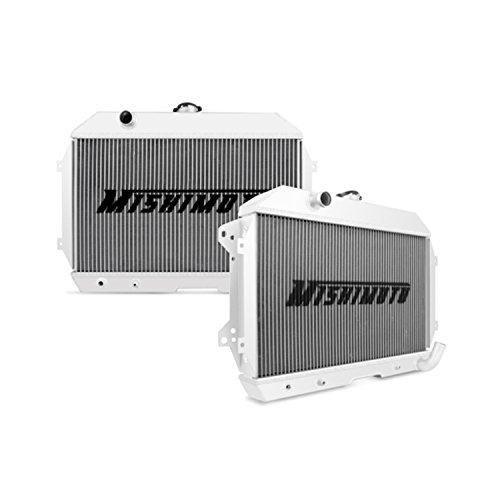
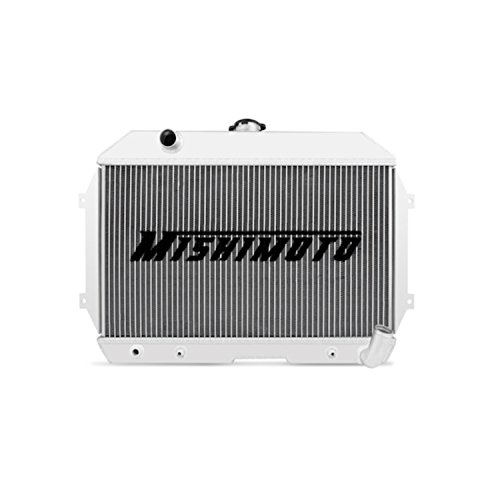
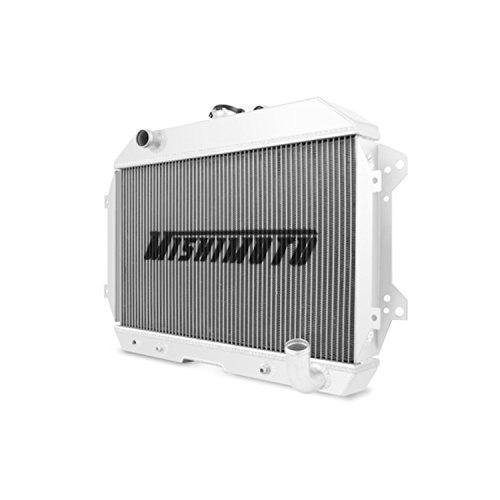
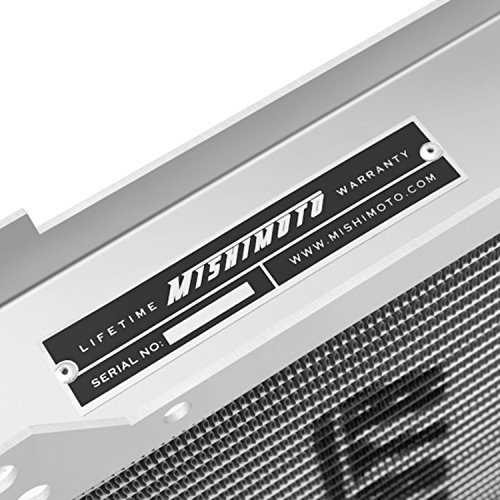
All-Aluminum Construction for Classic Z-Car Reliability
Original Datsun radiators were designed using the materials and manufacturing methods available during the early 1970s.
Although properly maintained factory radiators can remain serviceable, decades of corrosion and repeated thermal cycling can eventually reduce their reliability.
The Mishimoto MMRAD-DATS-70 uses all-aluminum construction designed to provide a durable replacement for aging cooling components.
Advantages of Aluminum Radiator Construction
Efficient Heat Transfer: Aluminum conducts heat effectively, supporting radiator cooling performance.
Durable Construction: Modern aluminum radiator assemblies offer an alternative to aging factory cooling components.
Performance Appearance: Polished aluminum end tanks complement restored and modified Datsun engine bays.
Increased Fluid Capacity: Mishimoto advertises additional coolant capacity compared with the factory radiator.
Long-Term Serviceability: Replacing an aging radiator can reduce the risk of leaks caused by deteriorated original components.
The result is a radiator designed to combine modern construction with classic Z-car performance.
Increased Coolant Capacity for Improved Thermal Management
One of the advertised advantages of the Mishimoto MMRAD-DATS-70 is increased coolant capacity.
Additional coolant volume can increase the system’s thermal mass, potentially slowing temperature changes during short periods of increased engine load.
However, coolant capacity alone does not determine radiator performance.
Effective cooling also depends on airflow, heat-transfer surface area, coolant circulation, and the condition of the engine’s cooling system.
For street-driven and modified Datsun Z-cars, the Mishimoto radiator provides an upgraded cooling component intended to support consistent temperature management.
High-Pressure Radiator Cap and Magnetic Drain Plug
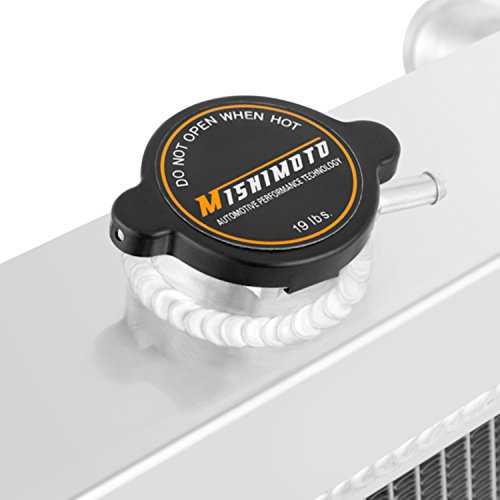
The Mishimoto MMRAD-DATS-70 includes a high-pressure radiator cap and magnetic drain plug according to the supplied product specifications.
High-Pressure Radiator Cap
A radiator cap maintains pressure within the cooling system, helping raise the coolant mixture’s boiling point.
This provides additional protection against premature coolant boiling when the cooling system is operating correctly.
However, higher pressure does not automatically reduce normal operating temperatures.
It can also place additional stress on aging hoses, seals, and other cooling system components.
Important: Confirm the supplied cap’s pressure rating and compatibility with the vehicle’s cooling system before installation.
Magnetic Drain Plug
The magnetic drain plug can attract certain ferrous metallic particles that may circulate through the cooling system.
During coolant changes, the plug can be inspected for metallic contamination.
However, it does not capture nonmagnetic debris, prevent all corrosion, or replace routine coolant maintenance.
Mishimoto MMRAD-DATS-70 Technical Specifications
| Specification | Details |
|---|---|
| Manufacturer | Mishimoto |
| Part Number | MMRAD-DATS-70 |
| Product Type | Performance Aluminum Radiator |
| Finish | Silver / Polished Aluminum |
| Primary Application | Datsun 240Z |
| Additional Advertised Application | Datsun 260Z |
| Advertised 240Z Fitment | 1970–1973 |
| Advertised 260Z Fitment | 1974–1975 |
| Radiator Construction | All-Aluminum |
| Core Configuration | 2-Row |
| Overall Dimensions | 27.3 × 19.16 × 6.2 inches |
| Core Dimensions | 23.15 × 13.58 inches |
| Core Thickness | 1.65 inches |
| Inlet Diameter | 1.38 inches |
| Outlet Diameter | 1.38 inches |
| Tank Wall Thickness | 0.08 inches |
| Radiator Cap | High-Pressure, Included |
| Drain Plug | Magnetic |
| Warranty | Mishimoto Lifetime Warranty |
Fitment note: The advertised overall depth of 6.2 inches may include projecting components rather than the core itself. Confirm the manufacturer’s measurement diagram and available fan clearance before ordering.
Designed for the Datsun 240Z and 260Z L-Series Engines
The original Datsun Z-car platform is best known for its Nissan L-series inline-six engines.
These engines remain popular because of their smooth power delivery, mechanical simplicity, and extensive restoration and performance support.
1970–1973 Datsun 240Z – L24 Engine
The Datsun 240Z features the legendary 2.4L L24 inline-six engine.
Its combination of responsive performance and lightweight construction helped establish the Z-car as an affordable sports car icon.
Maintaining proper coolant circulation is important for preserving engine reliability, particularly in vehicles that have accumulated decades of use.
The Mishimoto MMRAD-DATS-70 provides a performance-oriented replacement for compatible factory radiator configurations.
1974–1975 Datsun 260Z – L26 Engine
The Datsun 260Z introduced the larger 2.6L L26 inline-six engine.
Although the 260Z shares much of its underlying architecture with the 240Z, model-year and market differences can affect cooling system configurations.
The Mishimoto MMRAD-DATS-70 is advertised for 1974–1975 260Z applications, but owners should verify the original radiator dimensions, mounting points, hose locations, and fan clearance before installation.
Modified L-Series Performance Builds
The Nissan L-series engine remains a popular platform for performance modifications.
Common upgrades include carburetor conversions, cylinder head work, camshaft upgrades, exhaust systems, and increased displacement.
These changes can increase engine heat output under sustained load.
An upgraded radiator may be beneficial, but cooling performance depends on the entire system.
For heavily modified engines, verify radiator capacity, fan clearance, hose routing, and cooling system compatibility.
Performance Cooling for Classic Datsun Street and Track Builds
The Datsun 240Z and 260Z remain popular among enthusiasts who enjoy spirited driving, vintage motorsports, and classic Japanese performance.
Different driving environments place different demands on the cooling system.
Daily Driving
During traffic and low-speed operation, radiator airflow depends heavily on the cooling fan.
A properly functioning radiator and fan system helps maintain stable engine temperatures.
Spirited Driving
Extended acceleration and high engine load increase heat generation.
The radiator must dissipate this heat while maintaining adequate coolant circulation.
Vintage Racing and Track Days
Sustained high-RPM operation can place significant demands on an older engine’s cooling system.
The Mishimoto aluminum radiator provides a performance-oriented replacement designed for enthusiasts who want modern cooling components.
However, radiator upgrades alone do not guarantee lower operating temperatures under every condition.
Proper airflow, coolant circulation, and overall engine health remain essential.
Classic Datsun Radiator Fitment and Installation Considerations
The Mishimoto MMRAD-DATS-70 is designed for compatible classic Datsun Z-car applications.
However, vehicles more than five decades old may have undergone numerous repairs and modifications.
Before installation, inspect the existing cooling system carefully.
Important Fitment Considerations
Radiator Mounting Points: Verify that the replacement radiator aligns with the vehicle’s original mounting locations.
Upper and Lower Hoses: Confirm that the radiator inlet and outlet positions match the existing cooling system.
Mechanical Fan Clearance: Check the distance between the radiator and engine-driven fan.
Fan Shroud Compatibility: Verify that the original or aftermarket shroud fits correctly.
Air-Conditioning Components: Inspect condenser clearance on equipped vehicles.
Engine Swaps: Modified engine installations may require different radiator dimensions or hose routing.
A radiator advertised for factory applications does not guarantee compatibility with every modified Z-car.
How to Install the Mishimoto MMRAD-DATS-70 Radiator
Replacing the radiator on a classic Datsun 240Z or 260Z can be a manageable DIY project for experienced enthusiasts.
However, careful coolant handling, mounting alignment, and cooling system bleeding are essential.
Step 1: Allow the Engine to Cool
Park the vehicle on a level surface and allow the engine to cool completely.
Never remove a radiator cap while the cooling system is hot or pressurized.
Disconnect the battery if the procedure requires working around electrical components or cooling fan wiring.
Step 2: Drain the Original Cooling System
Position a suitable drain pan beneath the radiator.
Drain the coolant according to the applicable factory service procedure.
Inspect the coolant for rust, contamination, or debris.
If significant corrosion is present, additional cooling system cleaning may be necessary.
Step 3: Remove the Original Radiator
Disconnect the upper and lower radiator hoses.
Remove the fan shroud or other components obstructing radiator removal.
Remove the radiator mounting hardware.
Carefully lift the original radiator from the engine compartment without damaging surrounding components.
Step 4: Install the Mishimoto Aluminum Radiator
Position the Mishimoto MMRAD-DATS-70 into the radiator mounting area.
Confirm that the radiator sits securely and that the mounting points align correctly.
Inspect clearance around the mechanical fan, hoses, engine accessories, and nearby components.
Do not force the radiator into position if mounting points or hose connections do not match.
Step 5: Reconnect the Radiator Hoses
Attach the upper and lower radiator hoses using suitable clamps.
Inspect the hoses for cracking, swelling, or deterioration.
Replace damaged hoses before refilling the cooling system.
Step 6: Verify Radiator Cap Compatibility
Confirm that the supplied radiator cap is appropriate for the vehicle’s cooling system.
A higher-pressure cap should not be installed without considering the condition and pressure ratings of the hoses, heater core, and other components.
Step 7: Refill and Bleed the Cooling System
Refill the cooling system using coolant appropriate for the Nissan L-series engine and aluminum radiator.
Follow the applicable coolant filling and bleeding procedure to remove trapped air.
Air pockets can cause unstable temperature readings and overheating.
Our Complete Car Cooling System Guide explains why proper coolant circulation and air removal are essential.
Step 8: Verify Cooling System Operation
Start the engine and monitor coolant temperature.
Confirm that the thermostat opens and that the cooling fan operates correctly.
Inspect all radiator hose connections, the drain plug, and the radiator cap for leaks.
After the engine cools, recheck coolant level and mounting hardware.
Common Datsun 240Z and 260Z Overheating Problems
An upgraded radiator can restore cooling capability, but overheating may result from other mechanical problems.
Clogged Original Radiator
Decades of corrosion and mineral deposits can restrict coolant flow and reduce heat transfer.
Failing Thermostat
A thermostat that remains closed can prevent adequate coolant circulation.
Weak Water Pump
A worn water pump may reduce coolant flow or develop leaks.
Cooling Fan Problems
A damaged mechanical fan, malfunctioning fan clutch where equipped, or improperly installed electric fan can reduce airflow.
Damaged Radiator Hoses
Cracked or collapsed hoses can cause coolant loss or restrict circulation.
Trapped Air
Air pockets can interfere with coolant circulation after radiator replacement or other cooling system repairs.
Internal Engine Problems
Combustion gases entering the cooling system can cause excessive pressure, coolant loss, and overheating.
These symptoms may result from head gasket damage or other internal engine problems and should be properly diagnosed.
Before replacing expensive components, inspect the complete cooling system and identify the underlying cause.
Visit our Complete Car Cooling System Guide for additional cooling system troubleshooting information.
Complete Your Datsun Z-Car Cooling System Upgrade
When replacing the radiator, consider inspecting related cooling system components.
Radiator Hoses: Replace hoses showing cracks, swelling, or deterioration.
Thermostat: Verify correct operation and replace it when necessary.
Water Pump: Inspect for coolant leaks, bearing noise, and other signs of failure.
Cooling Fan: Confirm proper operation and adequate airflow through the radiator.
Radiator Cap: Verify the correct pressure rating for the vehicle’s cooling system.
Coolant: Use a coolant formulation compatible with the engine and aluminum radiator.
Fan Shroud: Confirm proper fitment and airflow through the radiator.
Explore additional Datsun Z-car radiators, classic Japanese performance components, and engine cooling upgrades at Pro Street Online.
Is the Mishimoto MMRAD-DATS-70 Worth It?
For Datsun 240Z and 260Z enthusiasts seeking a modern cooling system upgrade, the Mishimoto MMRAD-DATS-70 offers several advantages.
Its two-row aluminum core, polished end tanks, increased coolant capacity, magnetic drain plug, and included high-pressure radiator cap make it a compelling alternative to aging factory cooling components.
This radiator is particularly appealing for owners who:
- Are restoring a 1970–1973 Datsun 240Z.
- Own a compatible 1974–1975 Datsun 260Z.
- Want to replace a leaking or internally restricted factory radiator.
- Drive a stock or modified Nissan L-series inline-six.
- Participate in spirited driving or vintage motorsports events.
- Prefer modern aluminum radiator construction.
- Want a radiator backed by Mishimoto’s Lifetime Warranty.
While an upgraded radiator cannot compensate for a failing thermostat, weak water pump, or malfunctioning cooling fan, it provides a performance-oriented replacement when properly installed.
Upgrade Your Datsun 240Z or 260Z Radiator at Pro Street Online
Whether you’re restoring an original 240Z, maintaining a classic 260Z, or upgrading a modified L-series engine, dependable cooling is essential.
The Mishimoto MMRAD-DATS-70 Performance Aluminum Radiator combines a two-row aluminum core, all-aluminum construction, polished end tanks, increased coolant capacity, a magnetic drain plug, and an included high-pressure radiator cap in a performance-oriented cooling package.
Designed for compatible classic Datsun Z-car applications, this radiator offers a practical upgrade for enthusiasts seeking modern cooling system durability while preserving the character of their vintage Japanese sports car.
Shop Mishimoto performance radiators, Datsun 240Z cooling upgrades, Nissan L-series engine components, and classic Japanese performance parts at www.ProStreetOnline.com.







There are no reviews yet.