


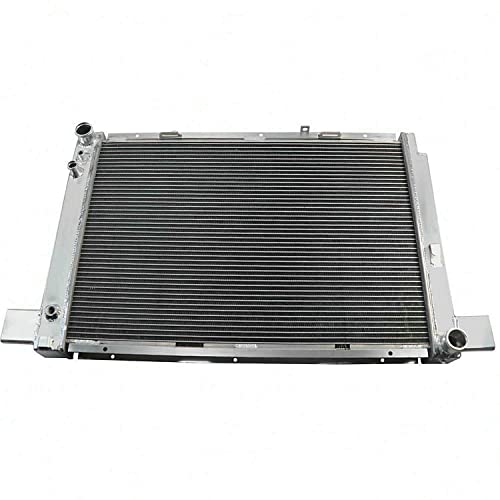
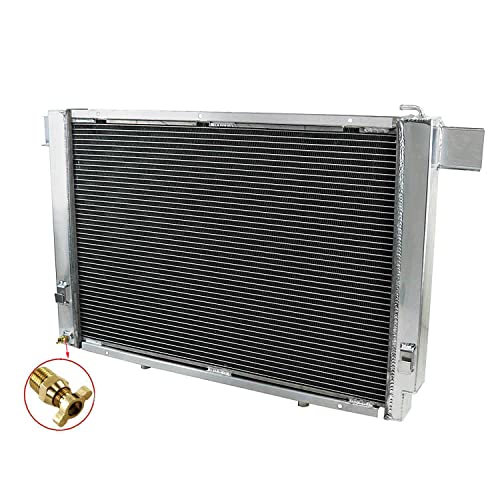
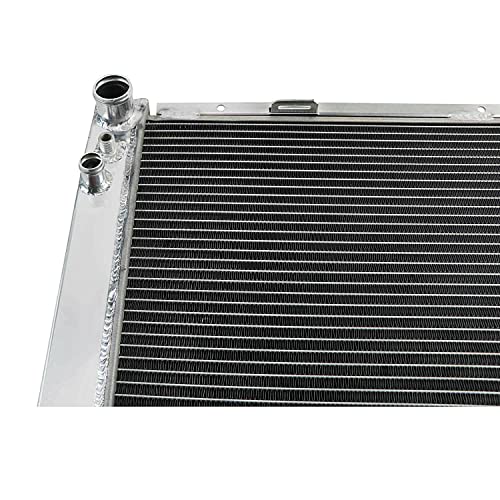
Three-Row Aluminum Core for Improved V8 Cooling
The radiator features a three-row aluminum core measuring approximately 25.98 × 18.03 inches, with a thickness of 1.73 inches.
Its design is intended to provide sufficient heat-transfer capability for compatible Mercedes-Benz 5.0L V8 applications.
As hot coolant circulates through the radiator tubes, heat transfers into the aluminum core and is carried away by airflow.
Why Radiator Core Design Matters
Radiator cooling performance depends on several factors:
- Coolant flow through the radiator tubes.
- Core thickness and tube configuration.
- Fin density and heat-transfer surface area.
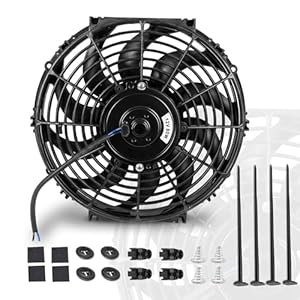
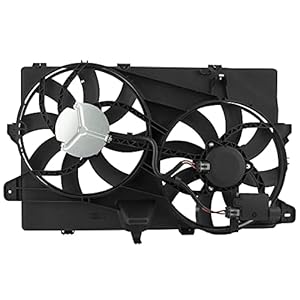
- Cooling fan operation.
- Airflow through the radiator.
- Ambient temperature and engine load.
A properly engineered three-row radiator can provide additional cooling capability compared with certain factory-style designs.
However, row count alone does not guarantee better performance.
Tube dimensions, fin density, coolant circulation, and airflow are equally important.
The manufacturer advertises a 30–45% improvement in cooling efficiency compared with stock radiators.
This is a manufacturer-supplied claim rather than an independently verified result, and it should not be interpreted as a guaranteed reduction in engine operating temperature.
T-5052 Aluminum Construction for Durability
One of the advertised features of this radiator is its T-5052 aluminum construction.
5052 aluminum alloy is commonly used in fabricated components because of its corrosion resistance and formability.
The supplied product description identifies the radiator as using T-5052 aluminum, although the exact material specifications for individual components are not provided.
Advantages of Aluminum Radiator Construction
Efficient Heat Transfer: Aluminum conducts heat effectively, supporting coolant-to-air heat exchange.
Durable Construction: Aluminum radiator assemblies provide an alternative to aging factory cooling components.
Corrosion Resistance: With compatible coolant and proper maintenance, aluminum radiator construction can provide dependable service.
Performance Appearance: Aluminum construction provides a clean, upgraded appearance under the hood.
Long-Term Serviceability: Replacing a deteriorated radiator can reduce the risk of leaks caused by aging original components.
The result is a performance-oriented radiator designed for enthusiasts who want modern cooling components in their classic Mercedes-Benz.
Designed for the Mercedes-Benz R129 SL-Class
The R129 SL-Class was introduced for the 1990 model year in the United States and remained in production through 2002.
Its combination of luxury, performance, and advanced engineering made it one of Mercedes-Benz’s most recognizable grand touring roadsters.
The 5.0L V8 models are particularly desirable among enthusiasts.
1990–1993 Mercedes-Benz 500SL
The early R129 500SL features a 5.0L V8 engine and sophisticated chassis engineering.
Maintaining proper cooling system operation is essential for preserving engine reliability.
The three-row aluminum radiator is advertised as a replacement for compatible 1990–1993 Mercedes-Benz 500SL applications.
1994–2002 Mercedes-Benz SL500
The SL500 continued the R129’s tradition of V8 performance and luxury.
Over its production run, the SL500 received numerous mechanical and electronic updates.
Because engine and cooling system configurations changed during the R129 generation, exact radiator compatibility should be confirmed before purchasing.
Mercedes-Benz M119 and M113 V8 Engines
The R129 SL500 platform used different 5.0L V8 engine families during its production run.
Earlier models used the M119 V8, while later models transitioned to the M113 V8.
These engines differ in construction, accessories, and cooling system arrangements.
Important: The advertised 1990–2002 fitment range should not be treated as proof that one radiator fits every M119- and M113-powered R129. Verify the original radiator part number, hose connections, mounting points, and transmission cooler configuration before ordering.
3-Row Aluminum Radiator Technical Specifications
| Specification | Details |
|---|---|
| Product Type | Performance Aluminum Radiator |
| Vehicle Manufacturer | Mercedes-Benz |
| Vehicle Platform | R129 SL-Class |
| Advertised Fitment | 1990–2002 |
| Early Model Application | 1990–1993 500SL |
| Later Model Application | 1994–2002 SL500 |
| Engine Application | 5.0L V8 Gasoline |
| Radiator Construction | Aluminum |
| Advertised Material | T-5052 Aluminum |
| Core Configuration | 3-Row |
| Core Dimensions | 25.98 × 18.03 inches |
| Core Thickness | 1.73 inches |
| Overall Dimensions | 35.43 × 20.86 × 4.52 inches |
| Inlet Diameter | 1.5 inches |
| Outlet Diameter | 1.5 inches |
| Advertised Cooling Improvement | 30–45% |
| Installation Type | Advertised OE-Style Replacement |
Measurement note: The manufacturer uses an unconventional orientation for the core dimensions. Confirm the radiator’s actual height, width, and depth against the vehicle’s original radiator and the manufacturer’s dimensional drawing.
Performance Cooling for Daily Driving and Highway Cruising
The Mercedes-Benz SL500 was designed as a luxury grand touring vehicle capable of comfortable long-distance driving.
However, different driving conditions place different demands on the cooling system.
Daily Driving
During traffic and low-speed operation, radiator airflow depends heavily on the cooling fan system.
A properly functioning radiator and fan assembly helps maintain stable coolant temperatures.
Highway Cruising
Extended highway driving requires consistent coolant circulation and heat dissipation.
A properly maintained radiator helps the engine operate within its intended temperature range.
Hot Weather Operation
Higher ambient temperatures reduce the temperature difference between the radiator and surrounding air.
This makes cooling system condition and airflow especially important.
Spirited Driving
Repeated acceleration and sustained engine load increase heat generation.
The radiator must dissipate this heat while maintaining adequate coolant circulation.
An upgraded radiator can support cooling system reliability, but it cannot compensate for a malfunctioning thermostat, water pump, or cooling fan.
OE-Style Radiator Replacement for Mercedes-Benz R129
The radiator is advertised as an OE-style replacement for compatible Mercedes-Benz 500SL and SL500 models.
Its vehicle-specific design is intended to simplify installation compared with universal radiators requiring custom fabrication.
Benefits of OE-Style Fitment
Factory-Style Mounting: Intended to align with compatible original radiator mounting locations.
Correct Hose Routing: Vehicle-specific inlet and outlet positions help preserve factory coolant hose connections.
Reduced Fabrication: A properly matched replacement radiator generally avoids extensive modifications.
Cooling System Integration: The radiator must work with the vehicle’s cooling fans, shrouds, hoses, and pressure-control components.
Performance Appearance: Aluminum construction provides an upgraded appearance under the hood.
Before installation, verify compatibility with the vehicle’s transmission cooler connections and auxiliary cooling components.
How to Install a 3-Row Aluminum Radiator on a Mercedes-Benz SL500
Replacing the radiator on an R129 Mercedes-Benz can be a manageable project for experienced enthusiasts, but the cooling system layout varies by model year and engine.
Proper coolant handling, fan clearance, and transmission cooler compatibility are essential.
Step 1: Allow the Engine to Cool
Park the vehicle on a level surface and allow the engine to cool completely.
Never open the coolant expansion tank or remove a pressure cap while the system is hot or pressurized.
Step 2: Drain the Cooling System
Position a suitable drain pan beneath the radiator.
Drain the coolant according to the applicable Mercedes-Benz factory service procedure.
Inspect the coolant for corrosion, contamination, or debris.
Step 3: Remove the Original Radiator
Remove the necessary fan shrouds and components obstructing radiator removal.
Disconnect the upper and lower radiator hoses.
Disconnect any transmission cooler lines or auxiliary connections attached to the radiator, where applicable.
Remove the radiator mounting hardware.
Carefully lift the original radiator from the engine compartment without damaging surrounding components.
Step 4: Compare the Replacement Radiator
Before installation, compare the new radiator with the original.
Verify:
- Overall radiator dimensions.
- Core thickness.
- Mounting bracket locations.
- Upper and lower hose connections.
- Cooling fan and shroud clearance.
- Transmission cooler fittings.
- Auxiliary cooling connections, if equipped.
Do not force the radiator into position if the mounting points or hose connections do not match.
Step 5: Install the Aluminum Radiator
Position the replacement radiator into the factory mounting area.
Confirm that the radiator sits securely and that the mounting points align correctly.
Reconnect compatible cooling fans, shrouds, and mounting components.
Step 6: Reconnect Hoses and Cooling Connections
Reconnect the upper and lower radiator hoses using suitable clamps.
Reconnect transmission cooler lines if the replacement radiator supports the original cooling arrangement.
If the radiator does not include the required cooler connections, a compatible cooling solution must be established before operating the vehicle.
Step 7: Refill and Bleed the Cooling System
Refill the cooling system using coolant that meets Mercedes-Benz specifications for the engine and model year.
Follow the factory filling and air-removal procedure.
Trapped air can interfere with coolant circulation and cause overheating.
Step 8: Verify Cooling System Operation
Start the engine and monitor coolant temperature.
Confirm that the thermostat opens and that the cooling fans operate correctly.
Inspect all radiator hose connections and fittings for leaks.
After the engine cools, recheck coolant level and mounting hardware.
Common Mercedes-Benz SL500 Overheating Problems
An upgraded radiator can restore cooling capability, but overheating may result from other mechanical problems.
Aging Factory Radiator
Older radiators can develop leaks, weakened seals, and restricted coolant passages.
Failing Thermostat
A thermostat that remains closed can prevent proper coolant circulation.
Weak Water Pump
A failing water pump may reduce coolant flow or develop leaks.
Cooling Fan Problems
A malfunctioning mechanical fan clutch, electric auxiliary fan, relay, or control system can reduce airflow through the radiator.
Damaged Radiator Hoses
Cracked or collapsed hoses can cause coolant loss or restrict circulation.
Trapped Air
Air pockets can interfere with coolant circulation after radiator replacement or other cooling system repairs.
Cooling System Pressure Problems
A faulty pressure cap or damaged expansion tank can interfere with proper system pressure regulation.
Internal Engine Problems
Combustion gases entering the cooling system can cause excessive pressure, coolant loss, and overheating.
Before replacing expensive components, inspect the complete cooling system and identify the underlying cause.
Complete Your Mercedes-Benz SL500 Cooling System Upgrade
When replacing the radiator, consider inspecting related cooling system components.
Radiator Hoses: Replace hoses showing cracks, swelling, or deterioration.
Thermostat: Verify correct operation and replace it when necessary.
Water Pump: Inspect for coolant leaks, bearing noise, and other signs of failure.
Cooling Fans: Confirm proper operation and adequate airflow through the radiator.
Expansion Tank: Inspect for cracks, leaks, and deterioration.
Pressure Cap: Verify the correct pressure rating for the vehicle’s cooling system.
Coolant: Use a coolant formulation approved for the specific Mercedes-Benz engine and model year.
Transmission Cooler: Confirm compatible connections for automatic-transmission applications.
Explore additional Mercedes-Benz cooling components, performance radiators, and engine maintenance parts at Pro Street Online.
Is This 3-Row Aluminum Radiator Worth It for Your Mercedes-Benz SL500?
For R129 Mercedes-Benz enthusiasts seeking a cooling system upgrade, this three-row aluminum radiator offers several potential advantages.
Its aluminum construction, substantial cooling core, and OE-style replacement design make it an appealing alternative to aging factory cooling components.
This radiator may be particularly useful for owners who:
- Are restoring a 1990–1993 Mercedes-Benz 500SL.
- Own a compatible 1994–2002 Mercedes-Benz SL500.
- Want to replace a leaking or internally restricted radiator.
- Drive an M119- or M113-powered R129 with verified radiator compatibility.
- Want additional cooling capability for demanding driving conditions.
- Prefer modern aluminum radiator construction.
- Want a performance-oriented replacement for an aging factory radiator.
Proper fitment remains the most important consideration.
Because the R129 platform used different V8 engines and cooling system configurations, verify compatibility before purchasing.
Upgrade Your Mercedes-Benz R129 Cooling System at Pro Street Online
Whether you’re restoring a classic 500SL, maintaining a daily-driven SL500, or preparing your Mercedes-Benz for extended highway cruising, dependable cooling is essential.
The 3-Row Aluminum Performance Radiator for 1990–2002 Mercedes-Benz 500SL and SL500 combines a three-row cooling core, T-5052 aluminum construction, and a heavy-duty design intended to support reliable engine temperature management.
Advertised for compatible R129 5.0L V8 applications, this radiator offers a performance-oriented replacement for owners seeking modern cooling system durability and heat-transfer capability.
Shop Mercedes-Benz SL500 radiators, European performance cooling components, and engine maintenance parts at www.ProStreetOnline.com.






There are no reviews yet.