


Prepare the Paint First
Start with thoroughly washed, clean paint. If bonded contamination remains, address it before compounding.
Understanding what a clay bar removes that washing can leave behind helps you decide whether your paint needs additional preparation.
Do not try to compensate for a dirty surface with more pressure. That usually creates another correction job.
Intended for Glossy Paint Finishes
Ultimate Compound is described as suitable for clear coats and glossy automotive paint when used as directed.
Check compatibility before application. Do not assume a paint-correction compound is appropriate for matte finishes, satin finishes, wraps or unpainted trim.
On thin, failing or previously repaired paint, assess the finish carefully before attempting abrasive correction.
Finish with Paint Protection
Compounding corrects the surface; it does not replace your protection step.
After inspecting the finish and completing any necessary refinement, apply a compatible wax, sealant or coating. Pro Street’s guide to waxing your car explains how protection fits into a regular exterior-care routine.
Product Specifications
| Specification | Detail |
|---|---|
| Brand | Meguiar’s |
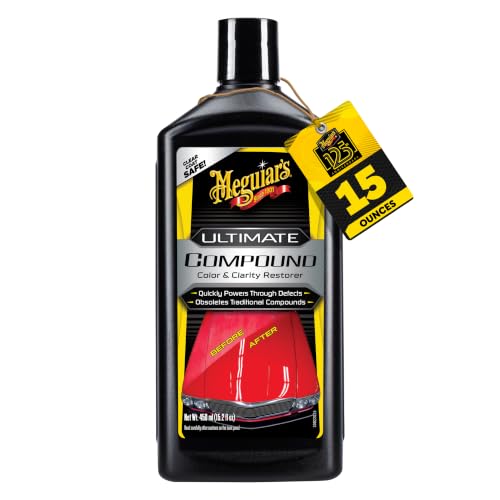
| Product | Ultimate Compound |
| Bottle size | 15.2 oz |
| Product type | Abrasive paint-correction compound |
| Technology | Micro-abrasive formula |
| Application methods | Hand or dual-action polisher |
| Intended finishes | Compatible clear coats and glossy automotive paint |
| Target defects | Suitable scratches, swirls, oxidation and water-spot defects |
Bring Back the Finish Beneath the Defects
If washing leaves your paint clean but still dull or swirled, Meguiar’s Ultimate Compound gives you a correction step before applying protection.
Add the 15.2-ounce bottle to your detailing kit and start with a small test section.
Add to Cart
Frequently Asked Questions
Will Ultimate Compound remove every scratch?
No. It can correct suitable surface defects, but scratches extending through the paint cannot be restored by compounding. Deep damage may require professional repair.
Can I apply it by hand?
Yes. The supplied product information lists application by hand or dual-action polisher.
Is it safe for clear coats?
It’s described as clear-coat safe when used as directed. Abrasive correction still requires appropriate technique and a sound paint surface.
Will it remove water spots?
It may correct suitable water-spot defects. Results depend on whether the marks are surface deposits or etched damage and how deeply the finish is affected.
Is a haze-free finish guaranteed?
No. Final results depend on paint type, condition, pad selection and technique. Inspect a test section; some finishes may benefit from a finer polishing step.
Should I wax afterward?
Apply suitable protection after correction and any necessary finishing steps. Follow the instructions for your chosen wax, sealant or coating.



There are no reviews yet.