
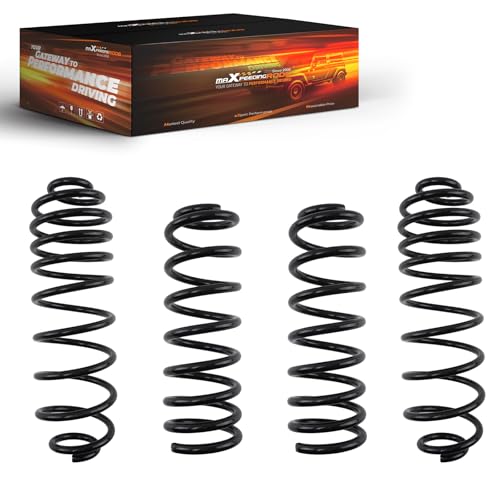

maXpeedingrods 1.5-Inch Front and 3-Inch Rear Lowering Springs for Chevy Trailblazer and GMC Envoy
The maXpeedingrods lowering spring kit gives select two-wheel-drive Chevrolet Trailblazer and GMC Envoy models a lower, more level street stance. With an advertised 1.5-inch front drop and 3-inch rear drop, the kit reduces the factory wheel gap and addresses the pronounced rear-high rake found on many stock GMT360 SUVs.
Manufactured from cold-wound 55CrSi chromium-silicon steel, these springs are intended as direct replacements for the original coil springs. The substantial rear drop makes shock selection, bump-stop clearance and rear suspension geometry especially important.
Vehicle Fitment
| Years | Make | Model | Drivetrain |
|---|---|---|---|
| 2002–2009 | Chevrolet | Trailblazer | 2WD |
| 2002–2009 | GMC | Envoy | 2WD |
The supplied application information only confirms standard Chevrolet Trailblazer and GMC Envoy models with two-wheel drive.
Models Requiring Additional Verification
Do not assume compatibility with:
- Chevrolet Trailblazer EXT
- Chevrolet Trailblazer SS
- GMC Envoy XL
- GMC Envoy XUV
- Saab 9-7X
- Buick Rainier
- Oldsmobile Bravada
- Isuzu Ascender
- Four-wheel-drive models
- All-wheel-drive models
- Vehicles with factory rear air-leveling suspension
These vehicles may share parts of the GMT360 platform, but wheelbase, weight, drivetrain and suspension calibration can differ. Shared architecture does not make every spring interchangeable—GM saved that kind of simplicity for exactly nowhere.
$153.99
Lowering Height
The advertised ride-height reduction is:
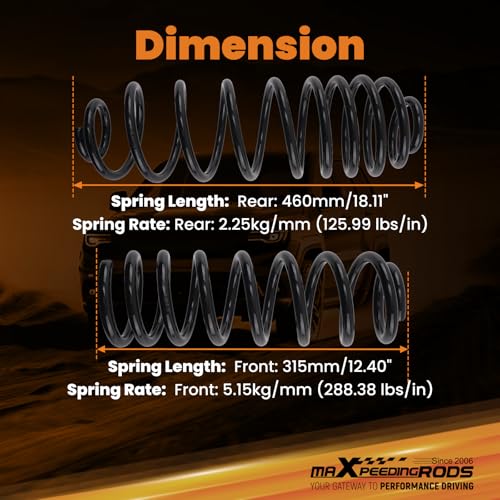
- Front: approximately 1.5 inches
- Rear: approximately 3 inches
This uneven drop is designed to reduce the factory rake and produce a more level street-oriented stance.
Actual finished ride height may vary based on:
- Vehicle trim
- Engine and transmission weight
- Factory suspension package
- Existing spring wear or sag
- Cargo and audio equipment
- Shock condition
- Wheel and tire dimensions
- Normal settling after installation
Measure the vehicle before installation from the wheel-hub center to the fender opening. Repeat the measurement after installation and again after the springs have settled.
More Level Street-SUV Stance
The factory Trailblazer and Envoy typically sit higher in the rear to accommodate passengers and cargo. A three-inch rear drop brings the rear body closer to the front height while the 1.5-inch front drop reduces front wheel gap.
The result should provide:
- Reduced factory rake
- Less front and rear wheel gap
- Lower overall profile
- More balanced wheel-to-fender spacing
- Cleaner street-truck appearance
This setup is intended for appearance and street handling. It does not increase payload, towing capacity or axle ratings.
If the vehicle regularly carries heavy cargo or tows near its rated limit, consider how the three-inch rear drop affects suspension travel before installation. A lower SUV with a trailer still obeys physics, even if the stance looks considerably better.
Improved Handling Response
Reducing ride height lowers the vehicle’s center of gravity. When paired with suitable shocks and correct alignment, the springs may provide:
- Reduced body roll
- More controlled steering transitions
- Less brake dive
- Reduced rear suspension movement
- More planted highway behavior
- Quicker response during lane changes
Lower springs cannot compensate for worn shocks, bushings, tires or steering components. The complete chassis must be in good condition for the vehicle to handle predictably.
Review the My Pro Street daily-driver suspension guide for more information about balancing ride height, handling and everyday comfort.
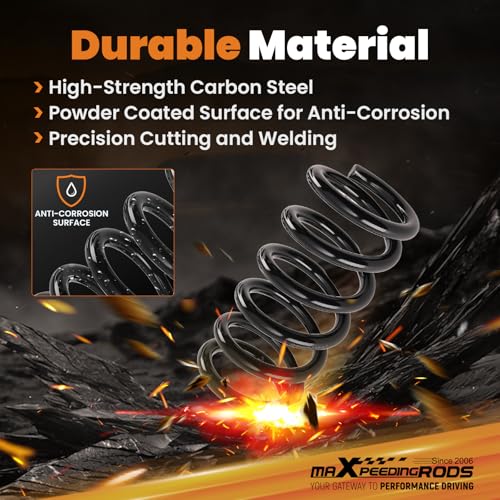
55CrSi Chromium-Silicon Steel
These springs are manufactured from cold-wound 55CrSi steel, a chromium-silicon alloy selected for components subjected to repeated compression and high cyclic loads.
The manufacturer specifies a tensile-strength range of:
- 1,500–1,600 MPa
This construction is intended to provide:
- Resistance to fatigue
- Consistent spring geometry
- Structural resilience
- Stable compression characteristics
- Long-term ride-height control
Actual service life depends on installation quality, road conditions, climate, vehicle weight and coating condition. Additional product information is available through maXpeedingrods.
Factory Shock Compatibility
The springs fit the original suspension mounting structure, but a three-inch rear drop requires careful shock selection.
Standard-length shocks may operate too deeply within their normal travel after lowering. This can lead to:
- Reduced compression travel
- Repeated bottoming
- Weak rebound control
- Excessive bouncing
- Damaged bump stops
- Premature shock wear
- Unstable handling with cargo
Lowering-compatible shocks are strongly recommended, especially at the rear. They should be selected for the actual compressed and extended lengths required by the new ride height.
The My Pro Street guide explaining how lowering springs affect shock life covers the relationship between spring height, damper stroke and bump travel.
Rear Suspension Considerations
A three-inch rear drop is substantial. Inspect the entire rear suspension after installation and through its complete range of travel.
Check:
- Bump-stop clearance
- Shock length
- Panhard-bar angle
- Rear axle position
- Brake-hose clearance
- ABS wiring
- Sway-bar link angle
- Exhaust clearance
- Tire-to-fender clearance
- Driveshaft and pinion relationship
Lowering a solid-rear-axle vehicle can shift the axle laterally because of the Panhard bar’s operating angle. If the rear wheels no longer sit evenly within the fenders, an adjustable Panhard bar or correction bracket may be required.
Inspect the Existing Suspension
The vehicles covered by this kit are now older platforms. Inspect the suspension and steering system before installing new springs.
Check:
- Front shocks
- Rear shocks
- Upper control arms
- Lower control arms
- Ball joints
- Tie-rod ends
- Control-arm bushings
- Panhard-bar bushings
- Sway-bar links
- Wheel bearings
- Spring isolators
- Bump stops
New springs can expose worn components that were already allowing excessive movement. They will not repair clunks, loose steering or deteriorated bushings.
Browse the My Pro Street How-To library for more suspension, steering and maintenance guidance.
Wheel and Tire Clearance
The three-inch rear drop reduces available tire clearance considerably, especially with oversized wheels or aggressive offsets.
Inspect clearance at:
- Full steering lock
- Full suspension compression
- Front fender liners
- Rear wheel openings
- Shock bodies
- Control arms
- Brake hoses
- Inner wheel wells
- Exhaust components
A wheel that clears while parked can still rub when the SUV carries passengers or travels over a dip.
Installation Requirements
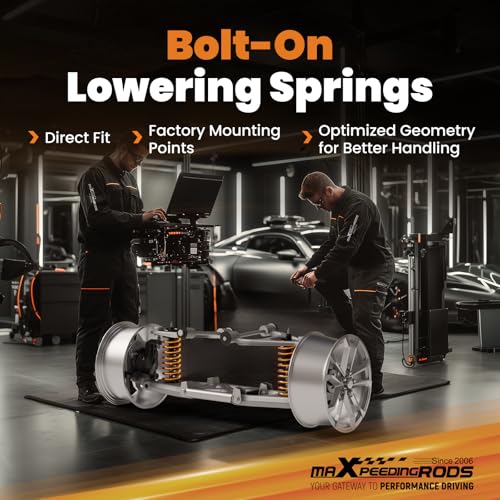
The springs use the factory-style mounting locations, but professional installation is recommended. Coil springs store substantial energy and must be handled using appropriate tools and procedures.
A proper installation should include:
- Confirming model and drivetrain compatibility.
- Measuring the original ride height.
- Raising and safely supporting the vehicle.
- Removing the original springs.
- Inspecting spring seats and isolators.
- Checking shock and bump-stop condition.
- Installing the front and rear springs correctly.
- Confirming every spring is properly seated.
- Checking brake-hose and ABS-wire clearance.
- Inspecting rear axle position.
- Checking wheel and tire clearance.
- Performing a professional alignment.
Suspension hardware passing through bonded rubber bushings should be tightened according to the appropriate service procedure. Tightening these components with the suspension hanging can preload and damage the bushings.
Alignment Is Required
Changing ride height alters suspension geometry. A professional alignment should be performed after installation and rechecked after the springs settle.
The technician should inspect:
- Front toe
- Front camber
- Caster
- Steering-wheel position
- Rear axle alignment
- Rear thrust angle
- Tire clearance
Incorrect alignment can cause unstable handling and rapid tire wear. The NHTSA tire-safety guide provides additional information about tire inspection and abnormal tread wear.
Package Contents
Based on the product title, the kit should include:
- Two front lowering coil springs
- Two rear lowering coil springs
However, one supplied product bullet only describes direct replacement of the front springs. Verify the seller’s package photograph and itemized contents before ordering.
The following parts are not listed as included:
- Front or rear shocks
- Panhard bar
- Rear axle correction bracket
- Bump stops
- Spring isolators
- Alignment components
- Installation hardware
Warranty
The lowering spring kit includes:
- One-year limited warranty against qualifying product defects
- Lifetime technical support
Review the complete warranty terms for installation requirements, proof of purchase, corrosion exclusions and coverage limitations.
Frequently Asked Questions
What years does this lowering kit fit?
It is advertised for 2002–2009 Chevrolet Trailblazer and GMC Envoy models with two-wheel drive.
How much does it lower the vehicle?
The advertised drop is approximately 1.5 inches in front and three inches in the rear.
Does it fit a 4WD Trailblazer?
No. The supplied fitment only lists two-wheel-drive models.
Does it fit the Trailblazer SS?
Compatibility should not be assumed. The Trailblazer SS has different drivetrain, weight and suspension requirements.
Will it fit an Envoy XL or Trailblazer EXT?
Not without explicit manufacturer confirmation. Extended-wheelbase models have different dimensions and rear loading.
Will factory shocks work?
They may physically mount, but lowering-compatible shocks are recommended—particularly with the three-inch rear drop.
Is an adjustable Panhard bar required?
It may be needed if lowering shifts the rear axle laterally. Measure the wheel position after installation before selecting correction components.
Does the kit increase towing capacity?
No. Lowering springs do not increase payload, axle or towing ratings. Reduced rear travel may also require more careful load management.
Final Verdict
The maXpeedingrods lowering spring kit provides a strong visual transformation for select 2002–2009 Trailblazer and Envoy 2WD models. Its 1.5-inch front and three-inch rear drop reduces factory rake while giving the GMT360 platform a cleaner street-SUV profile.
The rear drop is aggressive enough that shocks, bump stops, axle position and tire clearance must be checked carefully. Confirm that the package includes all four springs and verify standard-wheelbase fitment before ordering.
Visit My Pro Street for more suspension articles, installation guides and practical build information.
Specification: maXpeedingrods 1.5-Inch Front and 3-Inch Rear Lowering Springs for Chevy Trailblazer and GMC Envoy
|
User Reviews
Be the first to review “maXpeedingrods 1.5-Inch Front and 3-Inch Rear Lowering Springs for Chevy Trailblazer and GMC Envoy”
You must be logged in to post a review.





There are no reviews yet.