
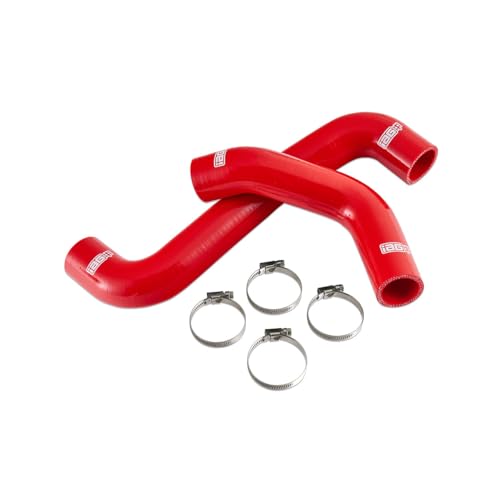

Four-Ply Silicone Construction
Each hose is manufactured from four-ply reinforced silicone with a wall thickness of approximately 5mm. The reinforced construction helps the hoses tolerate elevated coolant temperatures and pressure without becoming soft, swollen, or prone to collapse.
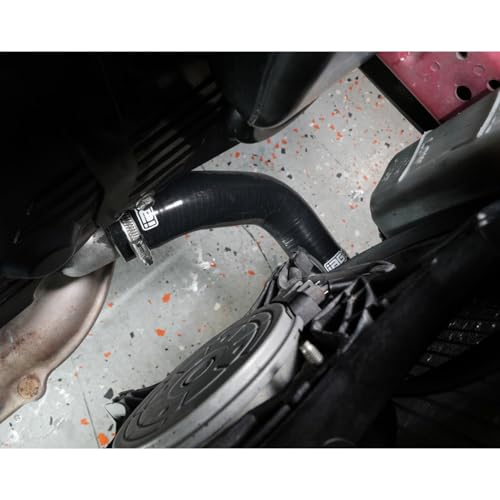
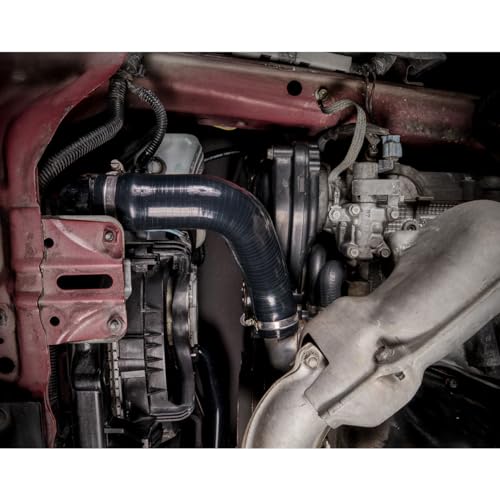
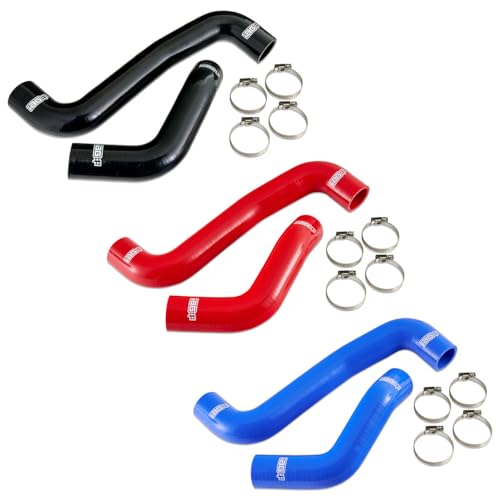
The pre-formed bends follow the original Subaru hose routing, allowing the hoses to clear surrounding engine components without pinching. They also add a clean red accent to an engine bay that otherwise contains roughly seventeen shades of black plastic.
Key benefits include:
- Four-ply reinforced silicone construction
- Approximately 5mm hose-wall thickness
- Improved heat and pressure tolerance
- Resistance to chemical and age-related breakdown
- Pre-formed bends designed around factory routing
- Suitable for stock, modified, street, and track-driven cars
- Red finish for a more visible engine-bay upgrade
What’s Included?
The kit includes:
- One upper radiator hose
- One lower radiator hose
- One stainless-steel clamp kit
This is a main radiator hose kit. It does not replace every heater, bypass, expansion-tank, or turbo coolant hose in the vehicle.
Direct Replacement Fit
The IAG hoses connect to the factory-style radiator inlet, radiator outlet, and engine coolant ports. No cutting or permanent modification should be required when installed on a compatible application.
Inspect the radiator necks before installation. A corroded, cracked, or distorted radiator connection can still leak with a new hose and clamp. A shiny new hose cannot negotiate with damaged plastic.
If the car has already experienced inconsistent temperatures, use our complete cooling-system guide to inspect the radiator, thermostat, water pump, fans, cap, and coolant condition instead of assuming the hoses are the only problem.
When Should WRX or STI Radiator Hoses Be Replaced?
Consider replacing the hoses when you find:
- Cracks near either hose connection
- Soft, swollen, or oil-contaminated sections
- Coolant residue around the clamps
- A hose that remains flattened after cooling
- Bulges that appear when the engine is warm
- Repeated coolant loss
- Visible abrasion from contact with another component
- An unexplained coolant smell after driving
Our guide to why a car overheats while driving covers other problems that can produce similar symptoms. If the radiator itself appears damaged or restricted, review these signs of a failing radiator before replacing parts at random.
Installation Notes
Only open the cooling system after the engine has cooled completely. Pressurized hot coolant can cause severe burns.
A typical installation involves draining enough coolant to bring the level below both radiator-hose connections, removing the factory clamps and hoses, cleaning the sealing surfaces, and installing the new hoses without twisting or stretching them.
Useful installation practices include:
- Confirm the upper and lower hoses against the original parts.
- Inspect each radiator and engine connection for damage.
- Position clamps behind the raised bead on each fitting.
- Keep the hoses away from belts, fans, pulleys, and sharp brackets.
- Refill with coolant meeting the vehicle manufacturer’s specifications.
- Bleed trapped air according to the Subaru service procedure.
- Allow the engine to reach operating temperature and inspect every connection.
- Recheck the coolant level after the engine has cooled.
For additional maintenance guidance, see how to flush a car cooling system. Don’t rely on radiator stop-leak to compensate for a deteriorated hose; our article explaining whether radiator stop-leak can cause damage covers why that shortcut can create new problems.
Why Bleeding the Cooling System Matters
Air trapped in a WRX or STI cooling system can interrupt coolant circulation and produce unstable temperatures, poor heater performance, or an overheating condition. If the temperature rises while the heater blows cold air, stop driving and inspect the system. That combination can indicate low coolant or an air pocket, as explained in our guide to a car overheating while the heater blows cold.
Never continue driving a Subaru with an active overheating warning. Aluminum cylinder heads and excess heat have never enjoyed a healthy relationship. Review when you should stop driving your car if you’re unsure whether the vehicle is safe to move.
Frequently Asked Questions
Does this kit fit a 2015–2021 Subaru WRX?
No. It fits the 2015–2021 WRX STI, but not the standard FA20-powered WRX from those years.
Does it fit a 2008–2014 WRX STI?
Yes. The kit fits both the 2008–2014 WRX and the 2008–2014 WRX STI.
Does the kit include upper and lower radiator hoses?
Yes. It includes one upper hose, one lower hose, and stainless-steel clamps.
Are these hoses made from rubber?
No. They are constructed from four-ply reinforced silicone and measure approximately 5mm thick.
Is this a complete coolant-hose replacement kit?
No. It replaces the primary upper and lower radiator hoses. It does not include every heater, bypass, turbo, or expansion-tank hose.
Can silicone hoses fix an overheating Subaru?
They can correct a problem caused by a leaking, damaged, or collapsing radiator hose. They will not repair a failed thermostat, water pump, radiator, cooling fan, head gasket, or incorrectly bled system. Read our bad thermostat versus bad water pump guide when diagnosing an overheating condition.
Should the coolant be replaced during installation?
Replacing or properly filtering the drained coolant is sensible, especially if its age or condition is unknown. Always use coolant compatible with the vehicle and follow Subaru’s fill-and-bleed procedure. Subaru also recommends checking the coolant level as part of routine maintenance. Subaru coolant-care guidance
Product Specifications
| Specification | Details |
|---|---|
| Brand | IAG Performance |
| Product | Silicone Radiator Hose Kit |
| Color | Red |
| Material | Reinforced silicone |
| Construction | Four-ply |
| Approximate wall thickness | 5mm |
| Fitment type | Direct replacement |
| Upper hose included | Yes |
| Lower hose included | Yes |
| Clamps included | Yes, stainless steel |
| Modification required | No, on verified applications |
| Primary application | 2008–2014 WRX; 2008–2021 STI |





There are no reviews yet.