
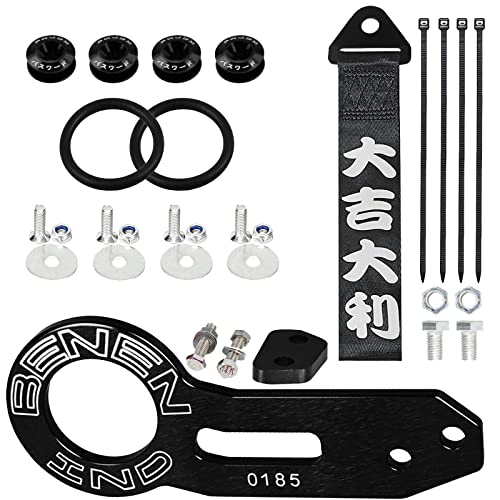


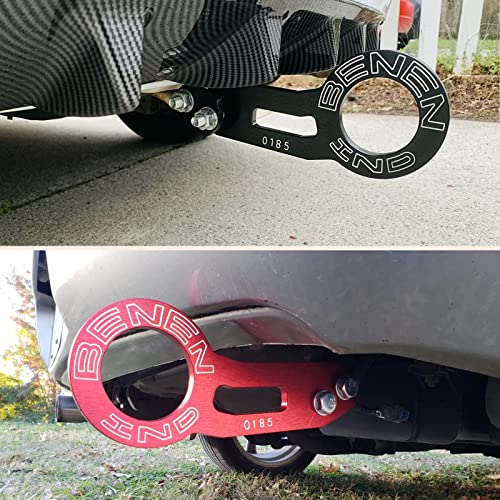
On a street or show build, this kit can create a similar appearance without replacing the entire bumper. The black finish works especially well with:
- Carbon-fiber-look aero components
- Black wheels
- Front splitters
- Rear diffusers
- Canards
- Side skirts
- Widebody panels
- Track-inspired decals
- Dark exterior trim
The strap reportedly includes Chinese characters translated by the seller as “good luck” and “all the best.” Buyers should verify the exact characters and translation from clear product photography before publishing that meaning as fact.
For a coordinated exterior package, our car body kit guide for street and track builds explains how bumper accessories, splitters, side skirts and rear aero should work within one visual theme.
What the Quick-Release Fasteners Actually Do
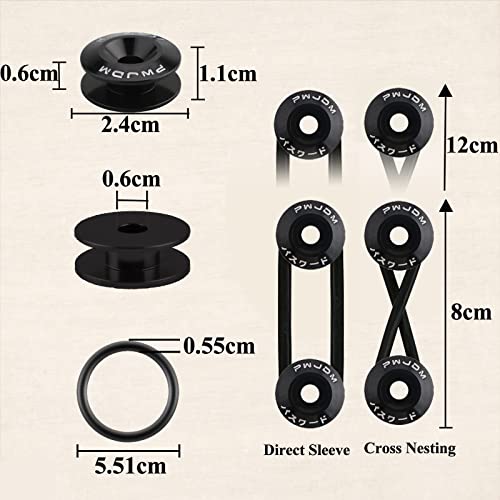
The four CNC-machined fasteners are intended to help secure and release a removable bumper cover. They are commonly installed in pairs near the joint between the bumper cover and adjacent body panel.
Flexible O-rings stretch between the fasteners, applying tension that helps hold the bumper-cover edge in place.
This can be useful on vehicles where the bumper is removed regularly for:
- Track preparation
- Trailer loading
- Intercooler access
- Engine-bay service
- Aero adjustments
- Show-car setup
- Drift-event repairs
- Project-car fabrication
Quick-release fasteners should supplement properly engineered bumper mounting. They should not replace the vehicle’s crash beam, impact absorbers, structural brackets or all factory attachment points.
The bumper cover is cosmetic bodywork. The bumper reinforcement is crash structure. They share a neighborhood, not a job description.
Is This a Functional Tow Hook?
Not based solely on the supplied information.
A functional recovery point requires:
- A verified working-load rating
- A defined safety factor
- Vehicle-specific mounting instructions
- Structural attachment to the chassis
- Correct fasteners and thread engagement
- Compatibility with the direction of the recovery load
- Inspection after use
- Approval for the intended motorsport or towing application
This kit lists an aluminum hook and nylon strap but does not provide a rated load, certification standard or verified chassis-mounting system.
Until that information is supplied, treat both pieces as decorative accessories.
Never attach a winch, tow rope, recovery strap or tow-truck cable to:
- A thin bumper cover
- Quick-release fasteners
- Sheet-metal body tabs
- Decorative aluminum hooks
- License-plate brackets
- Plastic crash absorbers
- Unverified universal hardware
Our towing guide for the 2002–2003 Acura RSX explains why factory tow provisions, tie-down points and bumper components are not interchangeable.
Functional Tow Strap vs. Decorative Tow Strap
A genuine racing tow strap is engineered and rated to pull a vehicle from a disabled position. It must attach to an approved structural point, remain accessible and comply with the rules of the track or sanctioning organization.
A decorative strap creates the visual appearance but may not provide:
- Certified webbing strength
- Reinforced stitching
- Rated mounting hardware
- Heat resistance
- Abrasion resistance
- UV durability
- Chassis-specific installation
Do not assume a nylon strap is recovery-rated because it resembles one used on a race car. Seatbelts, backpack straps and dog leashes are also made from webbing. The details matter.
Universal Fitment Requires Planning
The kit is marketed for passenger cars and custom builds, but actual fitment depends on the vehicle’s bumper design and available mounting points.
Before purchasing, inspect:
- Bumper-cover thickness
- Fender-to-bumper seam
- Factory bumper brackets
- Crash-beam position
- Parking sensors
- Blind-spot radar units
- Fog lights
- Wiring harnesses
- Air ducts
- Intercoolers
- Washer reservoirs
- Factory threaded tow-eye receivers
- Clearance behind the proposed holes
A universal part normally requires measuring, drilling and possibly custom reinforcement. Our vehicle-fitment guide explains why body style, bumper design and existing modifications matter even when a product claims broad compatibility.
Important Bumper Safety Information
This kit must not be used to remove or bypass structural crash components.
Do not remove:
- Front or rear reinforcement beams
- Energy-absorbing foam
- Factory impact brackets
- Airbag sensors
- Radar mounts
- Required bumper fasteners
- Wiring retainers
- Factory tow-eye receivers
Modern bumpers can contain sensors for automatic emergency braking, parking assistance, blind-spot monitoring and rear cross-traffic alert. Drilling without inspecting the rear of the panel can damage expensive electronics.
Disconnecting or relocating a sensor may also require professional calibration.
How to Install the Bumper Quick Releases
Professional installation is recommended when the bumper contains electronics or when the installer cannot access the rear of the proposed mounting area.
Tools You May Need
- Painter’s tape
- Measuring tape
- Removable marker
- Plastic trim tools
- Socket and wrench set
- Drill and suitable bits
- Deburring tool
- Corrosion-protection coating
- Washers or backing plates
- Torque wrench
- Safety glasses
Hardware requirements vary by bumper construction and installation location.
Step 1: Remove or Loosen the Bumper Cover
Follow the vehicle-specific procedure. Remove factory clips and screws carefully so the original mounting system can be retained wherever possible.
Do not pull the cover away while wiring remains connected.
Step 2: Inspect Behind the Panel
Locate wiring, sensors, brackets, ducts and structural components. Make sure the proposed drilling locations provide safe clearance.
Step 3: Align the Bumper
Before marking any holes, position the bumper so the panel gap is correct.
Quick releases should maintain an already aligned bumper—not drag badly fitting bodywork into submission.
Step 4: Mark Both Fastener Locations
Place one fastener on the bumper cover and the corresponding fastener on the adjacent fender or body panel. The pair must align closely enough for the O-ring to apply even tension.
Repeat on the opposite side if installing two pairs.
Step 5: Check the O-Ring Stretch
Temporarily position the fasteners and confirm that the O-ring can stretch between them without excessive tension.
Too little tension may not retain the panel. Excessive tension can deform the bumper, damage paint or pull the hardware through the material.
Step 6: Drill Pilot Holes
Protect the paint with masking tape and drill the smallest appropriate pilot hole. Increase the opening gradually to match the supplied hardware.
Wear eye protection and collect debris before it reaches wiring or electronics.
Step 7: Protect Exposed Metal
If drilling through metal, deburr the hole and apply an appropriate corrosion-resistant coating to the exposed edge.
Allow it to dry before final assembly.
Step 8: Install the Fasteners
Use suitable washers or backing plates when required to distribute the load. Tightening a small nut directly against thin plastic can cause cracking or pull-through.
Do not overtighten the aluminum hardware.
Step 9: Reinstall the Bumper
Reconnect all sensors, lamps and wiring. Restore the factory attachment points and confirm that the bumper sits evenly.
Step 10: Attach the O-Rings
Stretch each retaining ring between its corresponding fasteners. Confirm that the ring does not contact a sharp body edge.
Step 11: Inspect After Driving
After the first short drive, check:
- Fastener tightness
- O-ring condition
- Panel alignment
- Paint contact
- Bumper movement
- Wiring clearance
Reinspect periodically and replace stretched, cracked or weathered O-rings.
Installing the Decorative Tow Hook
Mounting depends entirely on the vehicle and the hook’s design.
The safest cosmetic installation uses an appropriate existing threaded receiver or a properly engineered bracket without modifying crash sensors or structural components. However, thread pitch and receiver depth vary between vehicles.
Do not force a universal adapter into a factory tow-eye receiver. Incorrect threads can damage the receiver and make the factory towing provision unusable.
If the hook requires drilling into a bumper cover, it remains decorative. Plastic bumper material cannot safely support a recovery load.
Installing the Nylon Tow Strap
For decorative installation, position the strap where it remains clear of:
- Exhaust components
- Radiators
- Cooling fans
- Drive belts
- Wheels and tires
- Suspension movement
- Road surfaces
- Sharp body edges
- Parking sensors
- License plates
- Lighting equipment
Do not attach the strap only with a cable tie if it could detach on the road. Cable ties can assist with positioning but are not structural tow hardware.
Keep the strap high enough that it cannot drag beneath the vehicle or become caught in moving components.
Street and Track Considerations
Track organizations may require functional tow points at both ends of the vehicle. Decorative hooks and straps may not pass technical inspection.
Before attending an event, verify:
- Required tow-point location
- Minimum opening size
- Load-rating requirements
- Visibility requirements
- Approved strap construction
- Mounting rules
- Front and rear identification markings
A track inspector is unlikely to accept “it looked strong in the product photo” as engineering documentation.
For actual roadside recovery, use the vehicle manufacturer’s specified tow points and towing procedure. If the car is disabled or damaged, a flatbed is often the safest solution.
Care and Maintenance
Clean the aluminum pieces with mild automotive soap and a soft microfiber towel.
Avoid:
- Abrasive metal polish on coated surfaces
- Harsh wheel acid
- Strong solvents
- Pressure washing directly against O-rings
- Allowing the nylon strap to contact oil or fuel
- Leaving damaged hardware installed
Inspect the nylon strap for:
- Fraying
- Fading
- Torn stitching
- Abrasion
- Heat damage
- Chemical contamination
Even when used decoratively, a loose part can detach at speed and damage the vehicle behind you.
Frequently Asked Questions
What is included in the kit?
The package includes one aluminum tow-hook-style accessory, one nylon strap, four CNC quick-release fasteners, stainless hardware, O-rings, cable ties and installation accessories.
Is the kit black?
Yes. This version uses a black exterior finish.
Will it fit every car?
No. It is a universal kit requiring measurement and inspection of the bumper, mounting space and nearby components.
Do the quick releases require drilling?
Most installations will require drilling through the bumper-cover edge and an adjacent mounting area. Inspect behind every proposed hole first.
Can the quick releases replace all factory bumper fasteners?
No. Retain the factory structural mounting and crash components. The quick releases should only supplement appropriate bumper-cover retention.
Can the aluminum hook tow my car?
Do not use it for towing unless the manufacturer provides a verified load rating, compatible structural mounting instructions and approval for that use.
Is the nylon strap recovery-rated?
No verified load rating has been supplied. Treat it as decorative unless certified documentation proves otherwise.
What do the characters on the strap mean?
The seller describes them as expressing “good luck” and “all the best.” Verify the printed characters and translation from the actual product before publishing a definitive meaning.
Can I install the kit on the front bumper?
The quick-release hardware may be fitted to a compatible front or rear bumper. Installation depends on panel construction and clearance.
Is professional installation recommended?
Yes, especially when drilling painted panels or working near parking sensors, radar modules, airbag sensors or other electronics.
Final Thoughts
The black Heart Horse JDM tow strap and bumper quick-release kit gives modified cars a coordinated, track-inspired exterior treatment. Its aluminum hardware, nylon strap and exposed quick-release design can suit show cars, project vehicles and bumpers that are removed frequently.
The important limitation is equally clear: no verified recovery rating has been supplied. Treat the hook and strap as styling accessories, keep the factory crash structure intact and use only manufacturer-approved recovery points when the vehicle actually needs to be moved.
A tow hook that cannot tow is still allowed to look cool. It simply needs an honest job title.



There are no reviews yet.