

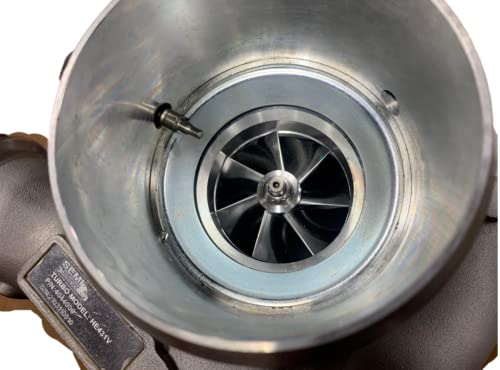
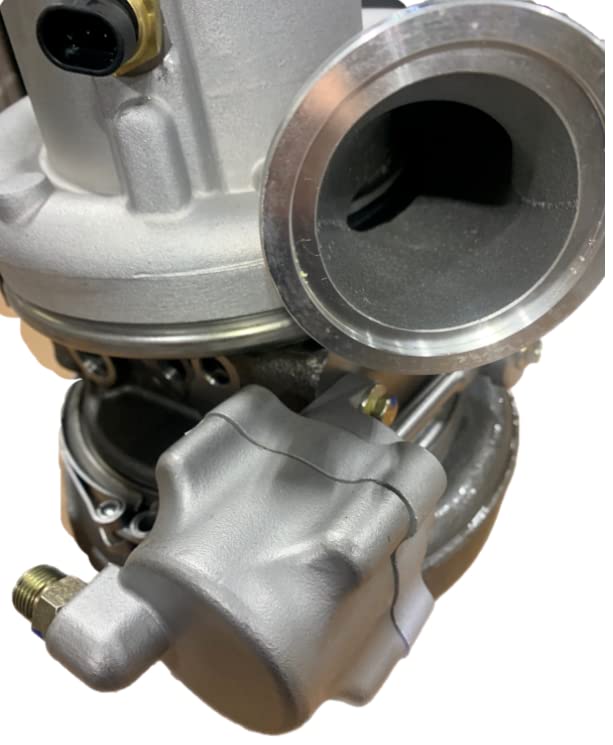
HE431V Billet-Wheel Turbocharger for Cummins ISM, ISMe and QSM11 Engines
Restore boost control and airflow on compatible Cummins heavy-duty diesel engines with this HE431V/HE431VE-style replacement turbocharger featuring an upgraded billet compressor wheel. It is intended for select Cummins ISM, ISMe and QSM11 applications using OE turbo number 4044006 or a confirmed interchange.
This is an engine-specific commercial turbocharger—not a universal diesel upgrade. Cummins used different turbo configurations across engine ratings, CPLs, emissions packages and applications. Confirm the engine serial number and complete turbo data plate before ordering.
Engine Compatibility
Compatible with select:
- Cummins ISM
- Cummins ISM02
- Cummins ISMe
- Cummins QSM11
- Select Cummins ISL applications where the OE number matches
Common applications may include:
- Freightliner trucks
- Freightliner buses
- Kenworth trucks
- Peterbilt trucks
- Commercial and vocational equipment
- Marine propulsion systems
- Marine auxiliary engines
- Industrial equipment
Cummins lists the QSM11 as a marine engine family covering several commercial, recreational and auxiliary applications with multiple power ratings. Cummins Inc.
Important Fitment Requirements
Fitment must be confirmed using:
- Engine serial number
- Cummins CPL number
- Engine model and rating
- Original turbocharger data plate
- Complete OE turbo number
- Actuator type and connector
- Variable-geometry configuration
- Compressor and turbine housing orientation
- Oil and coolant connections
- Exhaust and intake flanges
The engine name alone is not sufficient. Two ISM or QSM11 engines can use different turbochargers depending on horsepower, emissions calibration and installation. Heavy-duty diesel catalogs apparently believe part-number suspense builds character.
$1,250.00
Reference and Interchange Numbers
This turbocharger may replace or interchange with:
- 4044006
- 4044006H
- 4955462
- 4035560
- 4043879
- 4035725
- 4089600
- 4045934
- 5350060
- 3781163
- 3599572
- 3599574
- 4035723
- 4041067
Interchange numbers should not be considered automatically equivalent without verifying the actuator, housing orientation and engine serial number.
Turbocharger Identification
| Specification | Details |
|---|---|
| Turbo family | Holset HE431V/HE431VE style |
| Engine manufacturer | Cummins |
| Primary engine families | ISM, ISMe and QSM11 |
| Engine displacement | Approximately 11.0L |
| Turbo technology | Variable-geometry turbocharger |
| Compressor wheel | Billet aluminum |
| Fuel type | Diesel |
| Replacement type | Engine-specific direct replacement |
| Primary OE reference | 4044006 |
Published interchange data identifies 4044006, 4035560, 4035725, 4043879 and 4955462 with HE431V turbochargers used on Cummins ISM, ISMe and QSM11 engines. turbochargersdirect.com
Billet Compressor Wheel
The upgraded compressor wheel is machined from billet aluminum rather than produced as a conventional cast wheel.
Potential benefits include:
- Improved wheel strength
- Precise blade geometry
- Consistent balance
- Reduced rotating mass, depending on design
- Stable airflow under load
- Increased resistance to fatigue
A billet wheel does not automatically increase engine power. Final airflow and boost remain controlled by the complete compressor design, variable turbine geometry, actuator commands and ECM calibration.
Variable-Geometry Turbo Operation
The HE431V family uses movable turbine vanes to change the effective turbine-nozzle area. This allows the turbocharger to respond across a wide operating range.
At lower engine speed, the vanes can direct exhaust flow to improve turbine response. Under higher load, the geometry changes to regulate turbine speed, exhaust pressure and boost.
Variable geometry may also support:
- Engine-braking operation
- Transient response
- Emissions control
- Exhaust-temperature management
- Boost regulation across changing loads
Cummins describes electronically and pneumatically controlled turbo systems as tools for matching exhaust flow and boost behavior across operating conditions. Cummins Inc.
Actuator Compatibility Matters
The turbocharger actuator must match the vehicle or equipment’s electrical system and ECM calibration.
Before installation, verify:
- Actuator is included when required
- Electrical connector matches
- Position sensor configuration matches
- Communication protocol is correct
- Actuator calibration procedure is available
- Vane mechanism moves freely
Some replacement actuators require electronic calibration after installation. Do not force the actuator lever or manually reposition the vanes without the correct service procedure.
Signs of a Failing HE431V Turbocharger
Replacement may be necessary if diagnosis confirms:
- Low or inconsistent boost
- Excessive shaft movement
- Compressor or turbine damage
- Oil entering the intake or exhaust
- Blue or gray exhaust smoke
- Increased oil consumption
- Metallic scraping or siren-like noise
- Sticking variable vanes
- Actuator faults
- Reduced engine power
- Poor engine-brake performance
- Turbo speed or position codes
Several of these symptoms can also be caused by charge-air leaks, exhaust restrictions, crankcase-pressure problems, sensor faults or damaged wiring.
Diagnose the Original Failure First
Common causes of heavy-duty turbocharger damage include:
- Restricted oil supply
- Contaminated engine oil
- Blocked oil-return passage
- Low oil pressure
- Excessive crankcase pressure
- Charge-air cooler leaks
- Intake restrictions
- Foreign-object damage
- Exhaust-system restrictions
- Sticking variable vanes
- Failed actuator calibration
- Engine overheating
Installing a replacement without correcting the original cause can quickly damage the new unit.
Installation Requirements
Professional heavy-duty diesel installation is strongly recommended.
Before installing the turbocharger:
- Confirm the engine serial and CPL numbers.
- Compare every number on the original turbo data plate.
- Inspect the intake for compressor debris.
- Pressure-test the charge-air cooler and piping.
- Inspect the exhaust system for turbine debris or restrictions.
- Replace the engine oil and filters as required.
- Inspect or replace restricted oil-feed lines.
- Confirm that the oil-return passage is clear.
- Verify the compressor and turbine wheels rotate freely.
- Prime the center housing with approved engine oil.
- Install the correct actuator and complete calibration.
- Check boost, vane position and fault codes after startup.
Cummins explains that the turbine and compressor are mechanically connected, using exhaust energy to drive the compressor and supply additional intake airflow. Clean oil and unrestricted rotation are therefore critical to the complete assembly. cummins.com
Marine QSM11 Installation Notes
For marine applications, also inspect:
- Wet-exhaust components
- Exhaust riser condition
- Seawater or coolant heat exchangers
- Aftercooler condition
- Air-filter restriction
- Engine-room ventilation
- Corrosion around clamps and flanges
Confirm that the replacement turbo matches the exact marine power rating and installation. QSM11 engines cover a broad output range, so matching only the engine family is not enough.
Commercial-Truck Installation Notes
For truck and bus applications, inspect:
- Charge-air cooler for leaks
- Intake boots and clamps
- Exhaust manifold
- EGR-related hardware
- Diesel particulate and aftertreatment restrictions
- Turbo speed and position sensors
- Actuator wiring
- Engine-brake operation
After installation, use Cummins-compatible diagnostic equipment to verify commanded and actual vane positions.
Performance Expectations
This replacement turbocharger is designed to restore:
- Factory boost pressure
- Proper variable-vane control
- Normal throttle response
- Engine-brake operation where applicable
- Original engine power
- Stable operation under load
A billet compressor wheel alone should not be advertised as a guaranteed horsepower or fuel-economy upgrade. Reliable factory operation is the real objective, and on an 11-liter diesel that is already a fairly substantial assignment.
Specification: HE431V Billet-Wheel Turbocharger for Cummins ISM, ISMe and QSM11 Engines
|
User Reviews
Be the first to review “HE431V Billet-Wheel Turbocharger for Cummins ISM, ISMe and QSM11 Engines”
You must be logged in to post a review.






There are no reviews yet.