

525LPH-Class Fuel Delivery for High-Performance Builds
A pump in the 525LPH class is intended for serious performance applications.
Potential applications include:
- Large single-turbo builds
- Twin-turbo engines
- Supercharged vehicles
- High-boost street cars
- E85 conversions
- Flex-fuel vehicles
- Built engines
- Large injector setups
- Engine swaps
- Drag racing
- Street/strip cars
- Track vehicles
A pump this large should be selected because the engine actually needs the additional fuel—not simply because 525 is a bigger number than 340.
Our fuel pump upgrade guide explains why operating pressure, electrical supply and fuel type all affect usable pump capacity.
Built for E85 and Ethanol Fuel Systems
One of the most important features of this F90000285 replacement is its specified E85 compatibility.
E85 can provide significant benefits for high-performance turbocharged and supercharged engines, but ethanol requires substantially more fuel volume than conventional gasoline.
That increased demand affects:
- Fuel-pump capacity
- Injector sizing
- Fuel-line capacity
- Regulator capacity
- Fuel-filter sizing
- ECU calibration
If you’re planning a complete ethanol conversion, read our How to Convert to E85 guide.
Installing an E85-compatible pump solves one important part of the conversion, but the entire fuel system still needs to be evaluated.
Don’t Forget the Fuel Lines
A 525LPH-class pump can move an enormous amount of fuel compared with most factory pumps.
The rest of the fuel system needs to keep up.
Older factory hoses, filters, fittings and feed lines may become restrictions when pump capacity and engine demand increase dramatically.
Ethanol also requires compatible materials throughout the fuel system.
Our guide to upgrading fuel lines for E85 covers the additional plumbing considerations involved when moving a performance vehicle to ethanol.
Installing a massive pump behind undersized plumbing is the fuel-system equivalent of putting a six-lane freeway through a one-lane toll booth.
Match the Pump With Proper Fuel Injectors
Fuel-pump capacity and injector capacity should be planned together.
A 525LPH-class pump may provide enough fuel volume for a serious build, but undersized injectors can still prevent the engine from receiving the required fuel.
This becomes especially important with E85.
Our guide to fuel injector upgrade benefits explains why injector flow rate, fuel pressure and duty cycle should be evaluated when increasing horsepower.
For a properly engineered fuel system, consider the entire path:
Fuel Tank → Pump → Filter → Feed Line → Fuel Rail → Injectors → Regulator → Return
The weakest restriction in that chain can determine the actual capacity of the system.
High-Pressure Fuel Pump Design
High-flow fuel pumps don’t operate at their maximum advertised capacity under every condition.
As fuel pressure increases, pump flow generally decreases.
This is particularly important on turbocharged and supercharged engines using boost-referenced fuel-pressure regulators.
If an engine has a base pressure of approximately 43 PSI and runs 25 PSI of boost, the pump may need to deliver fuel against roughly 68 PSI of rail pressure.
That’s considerably different from evaluating a pump at low pressure.
For high-horsepower applications, always calculate fuel requirements using the expected operating pressure rather than assuming the advertised maximum LPH figure is available under every condition.
Return vs Returnless Fuel Systems
Installing a 525LPH-class pump into a fuel system originally designed around a much smaller factory pump can create pressure-control challenges.
Traditional return-style systems use a regulator and return line to control pressure, while many newer vehicles use electronically controlled returnless systems.
Our guide comparing returnless versus return fuel systems explains the differences and why they matter when increasing fuel-pump capacity.
Before installing this pump, verify that the existing regulator, return line and fuel-pump controller can properly manage the additional flow.
Electrical System Requirements
High-output electric fuel pumps require considerably more electrical capacity than typical factory pumps.
Voltage drop through undersized wiring, worn connectors or weak grounds can reduce actual pump output.
A performance installation should inspect:
- Power-wire size
- Ground-wire size
- Relay capacity
- Fuse protection
- Electrical connectors
- Fuel-pump control module
- Voltage at the pump
For best results, voltage should be measured at the fuel pump while it is operating under load.
A pump advertised as 525LPH doesn’t remain a 525LPH-class performer when the wiring is delivering electrical power through something resembling a warm shoelace.
Noise-Reduction Design
High-capacity fuel pumps can be noticeably louder than stock units, particularly in vehicles with minimal sound insulation.
This F90000285 replacement is described as using noise-reduction technology intended to provide quieter operation compared with conventional high-output pumps.
That’s especially useful for high-horsepower street vehicles where large fuel capacity is required without turning every trip into an acoustic reminder that there’s a giant pump living under the rear seat.
Integrated Safety-Valve Features
The pump incorporates integrated safety-valve features intended to help protect against excessive pressure and support stable fuel-system operation.
The fuel-pressure regulator remains responsible for controlling normal system pressure.
Always verify regulator capacity before substantially increasing pump flow.
A regulator that worked correctly with a factory pump may not necessarily control a much larger high-flow pump without pressure creep or other issues.
400-1168 Installation Kit Compatibility
This package is designed around the 400-1168 installation-kit configuration used with F90000285-style applications.
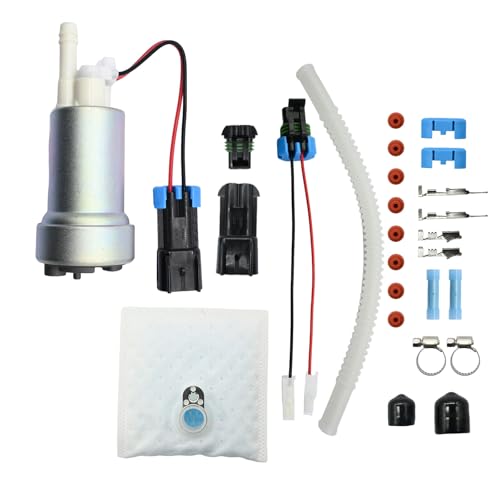
The complete kit includes essential installation components such as:
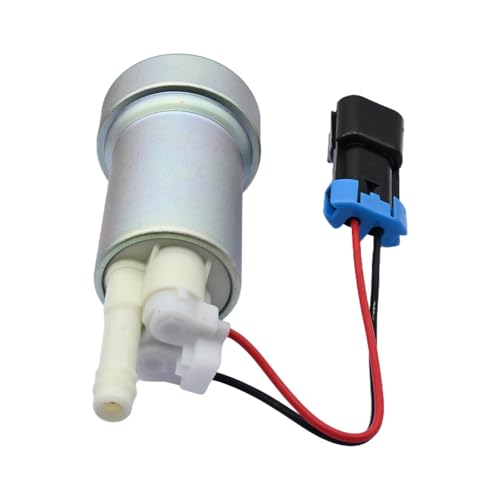
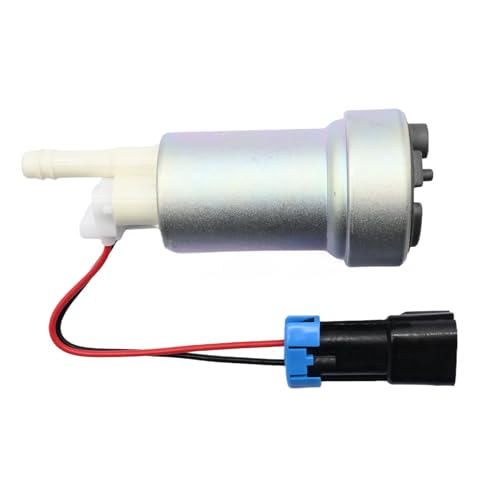
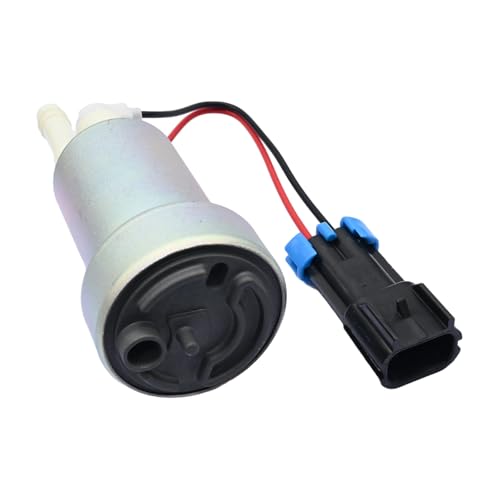
- 525LPH-Class Fuel Pump
- Fuel Strainer
- Replacement Seal
- Electrical Pigtail
- Supporting Installation Components
Always compare the supplied hardware with your existing fuel-pump hanger before beginning installation.
Is This a Direct-Fit Fuel Pump?
The product is marketed as a replacement designed around F90000285 applications and existing mounting points.
However, performance fuel-pump installations vary considerably between vehicles.
Fitment can depend on:
- Fuel-pump hanger
- Pump diameter
- Pump length
- Electrical connector
- Strainer orientation
- Outlet configuration
- Fuel hose
- Vehicle-specific modifications
For that reason, verify your existing F90000285 installation and pump hanger before ordering rather than assuming universal compatibility means guaranteed bolt-in installation.
Professional installation is recommended for modified fuel systems.
Ideal Applications
This F90000285 Hellcat 525LPH replacement pump is an excellent candidate for:
- E85 performance builds
- Flex-fuel vehicles
- High-boost turbo cars
- Large single-turbo systems
- Twin-turbo engines
- Supercharged applications
- Built engines
- Large injector setups
- Engine swaps
- Drag racing
- Street/strip vehicles
- Track cars
- Custom high-performance fuel systems
Why Choose an F90000285 525LPH Replacement Pump?
For builders who already use an F90000285-style pump configuration, this replacement provides a cost-effective route to restoring or upgrading a high-capacity fuel system while retaining compatibility with the 400-1168-style installation arrangement.
Its combination of 525LPH-class capacity, high-pressure operation and E85 compatibility makes it particularly attractive for forced-induction and ethanol-fueled performance vehicles.
Just remember that a giant pump doesn’t fix an undersized fuel system by itself.
Pair it with adequate injectors, ethanol-compatible plumbing, sufficient filtration, a capable regulator and proper electrical wiring.
That’s how you build a fuel system for serious horsepower instead of simply collecting components with impressively large numbers.
Product Specifications
Replacement Part Number: F90000285
Common Application: Hellcat 525 / Walbro 525-style replacement
Product Type: Ultra High-Flow In-Tank Electric Fuel Pump
Nominal Flow Class: 525LPH
Fuel Compatibility: E85 / ethanol applications as specified
Installation Type: In-Tank
Installation Kit Compatibility: 400-1168
Application: High-performance EFI fuel systems
Included Components: Fuel pump, strainer, seal, electrical pigtail and installation hardware
Noise Reduction: Yes, as specified by manufacturer/seller
Safety Valve: Integrated safety-valve design
Warranty: 1 year as specified by manufacturer/seller
Important Fitment Note: This is an aftermarket replacement for F90000285-style applications. It should not be represented as a genuine Walbro or TI Automotive F90000285 unless authenticity is documented. Verify dimensions, electrical requirements, fuel compatibility and vehicle-specific fitment before ordering.







There are no reviews yet.