
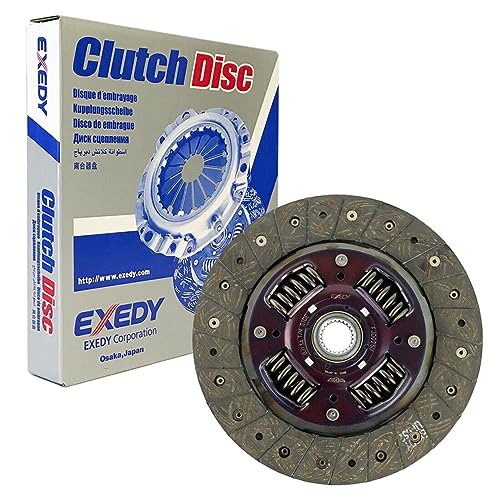
Exedy Clutch Kit & CMPRO Flywheel for Subaru Forester, Impreza, Legacy, Outback, Crosstrek & Baja
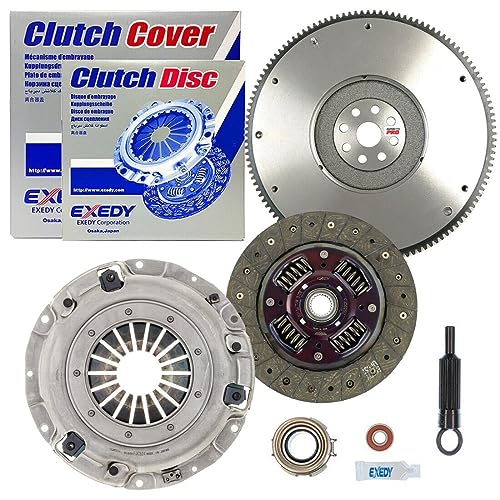
This Exedy clutch and ClutchMaxPRO flywheel package is designed as a complete manual-transmission replacement kit for select naturally aspirated Subaru applications, plus the related 2005 Saab 9-2X.
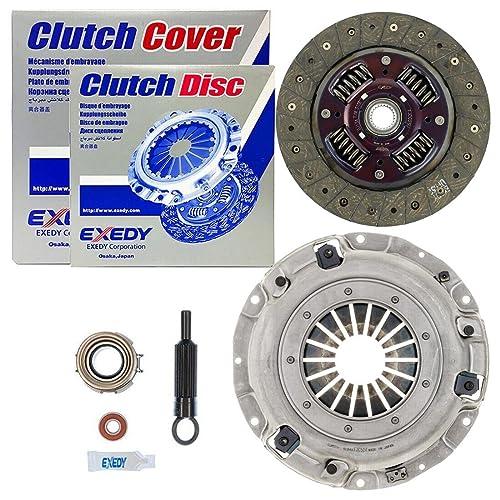
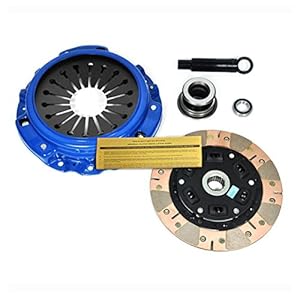
The kit combines:
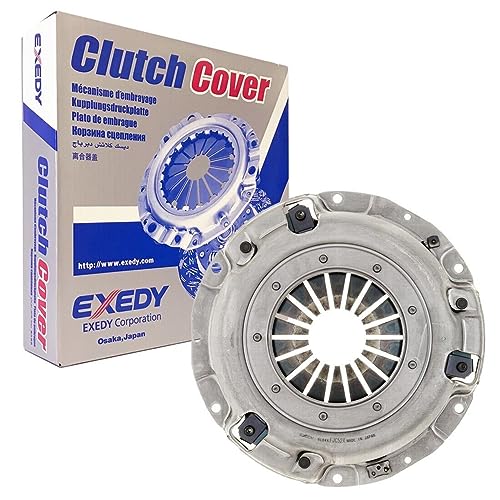
- Exedy pressure plate
- Exedy clutch disc
- ClutchMaxPRO heavy-duty cast flywheel
- Release bearing
- Pilot bushing
- Alignment tool
- Grease pack
- Installation guide
According to the supplied specifications, the clutch disc measures:
8-7/8″ × 1″ × 24 spline
and is intended for select 2.0L, 2.5L and 3.0L naturally aspirated Subaru drivetrain combinations.
This makes the package especially useful for owners who want to replace both the clutch and flywheel at the same time rather than resurfacing or reusing the existing flywheel.
Exedy / CMPRO Subaru Clutch Kit Specifications
| Specification | Details |
|---|---|
| Clutch Brand | Exedy |
| Flywheel Brand | ClutchMaxPRO / CMPRO |
| Product Type | Complete clutch and flywheel replacement kit |
| Clutch Disc Diameter | 8-7/8″ |
| Input Shaft Diameter | 1″ |
| Spline Count | 24 spline |
| Pressure Plate | Exedy |
| Clutch Disc | Exedy |
| Flywheel | CMPRO HD cast flywheel |
| Release Bearing | Included |
| Pilot Bushing | Included |
| Alignment Tool | Included |
| Grease Pack | Included |
| Installation Guide | Included |
| Intended Use | OEM-style replacement |
| Turbo Applications | Not listed for turbo models |
| Warranty | CMPRO advertises 12 months / 15,000 miles |
$374.99
Vehicle Fitment
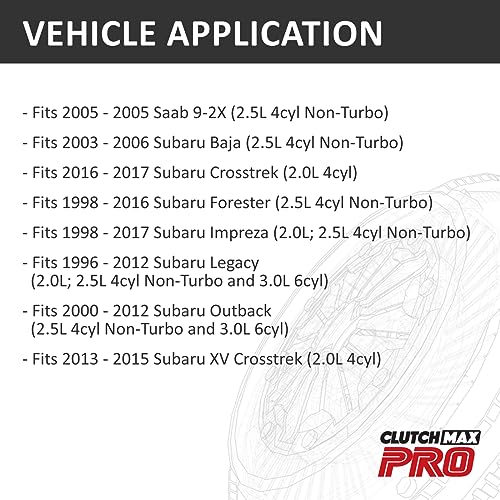
According to the supplied application data, this package is designed for select:
| Vehicle | Engine | Years |
|---|---|---|
| Saab 9-2X | 2.5L 4-cylinder non-turbo | 2005 |
| Subaru Baja | 2.5L 4-cylinder non-turbo | 2003–2006 |
| Subaru Crosstrek | 2.0L 4-cylinder | 2016–2017 |
| Subaru XV Crosstrek | 2.0L 4-cylinder | 2013–2015 |
| Subaru Forester | 2.5L 4-cylinder non-turbo | 1998–2016 |
| Subaru Impreza | 2.0L / 2.5L 4-cylinder non-turbo | 1998–2017 |
| Subaru Legacy | 2.0L / 2.5L 4-cylinder non-turbo / 3.0L 6-cylinder | 1996–2012 |
| Subaru Outback | 2.5L 4-cylinder non-turbo / 3.0L 6-cylinder | 2000–2012 |
These are seller-supplied fitment ranges.
Because Subaru used multiple engines, transmissions, flywheels and clutch configurations across these years, exact drivetrain verification is still required before ordering.
Important: This Kit Is for Naturally Aspirated Applications
The supplied fitment specifically calls out:
non-turbo
applications for several Subaru models.
That distinction matters.
Do not assume this package fits:
- WRX
- STI
- Forester XT
- Legacy GT
- Outback XT
- Baja Turbo
simply because the vehicle shares a similar chassis or engine family.
Turbocharged Subaru models commonly use different clutch and flywheel combinations.
Exedy Clutch Components
Exedy is one of the best-known clutch manufacturers in the automotive industry and supplies clutch components across OEM replacement, performance and motorsport applications.
In this package, Exedy supplies the major friction components:
pressure plate + clutch disc.
That gives buyers an established clutch manufacturer paired with the supplied ClutchMaxPRO flywheel.
ClutchMaxPRO HD Cast Flywheel
The included flywheel is a:
ClutchMaxPRO heavy-duty cast flywheel.
Replacing the flywheel at the same time as the clutch can eliminate uncertainty caused by:
- Heat checking
- Excessive wear
- Grooves
- Hot spots
- Previous resurfacing
- Cracks
- Unknown service history
This can be particularly useful on older Subaru vehicles where the original flywheel may have already seen multiple clutch cycles.
Why Replace the Flywheel With the Clutch?
The clutch disc operates directly against the flywheel friction surface.
If that surface is uneven or damaged, a new clutch may develop:
- Chatter
- Poor engagement
- Uneven wear
- Slipping
- Premature failure
Installing a new flywheel gives the clutch a fresh mating surface.
For many owners, that can simplify a clutch job compared with removing the old flywheel, finding a machine shop, verifying resurfacing limits and reinstalling it.
8-7/8-Inch Clutch Disc
The supplied Exedy disc specification is:
8-7/8 inches in diameter.
The hub is specified as:
1 inch × 24 spline.
These measurements are among the most important fitment details in the listing.
The correct Subaru clutch must match the transmission input shaft and flywheel configuration.
24-Spline Input Shaft
The clutch disc uses a:
24-spline hub.
That means the transmission input shaft must have the corresponding spline configuration.
Never order a clutch based only on:
year + model + engine size
if the transmission has been swapped or replaced.
Older Subarus are commonly modified, and manual-transmission conversions are not unusual.
Verify what is actually installed in the car.
Subaru Forester Fitment
The supplied application range includes select:
1998–2016 Subaru Forester 2.5L non-turbo
models.
This broad range covers several Forester generations, so fitment should not be assumed across every trim level.
Especially verify that the vehicle is:
- Manual transmission
- Naturally aspirated
- Using the specified clutch dimensions
Turbo Forester XT applications should not be assumed compatible.
Subaru Impreza Fitment
The supplied listing includes select:
1998–2017 Subaru Impreza
applications with:
- 2.0L naturally aspirated engines
- 2.5L naturally aspirated engines
This does not mean the kit fits WRX or STI models.
The Impreza platform includes a wide range of powertrains and transmission combinations.
Verify exact engine and transmission fitment.
Subaru Legacy Fitment
According to the supplied information, the kit fits select:
1996–2012 Subaru Legacy
applications with:
- 2.0L naturally aspirated 4-cylinder
- 2.5L naturally aspirated 4-cylinder
- 3.0L 6-cylinder
This is one of the broader application groups in the listing.
Because Legacy drivetrains vary significantly between generations, exact fitment verification is particularly important.
Subaru Outback Fitment
The supplied package is marketed for select:
2000–2012 Subaru Outback
applications with:
- 2.5L non-turbo 4-cylinder
- 3.0L 6-cylinder
Again, turbocharged Outback XT applications should not be assumed compatible.
Subaru Baja Fitment
The supplied fitment includes:
2003–2006 Subaru Baja 2.5L non-turbo.
The Baja shares substantial drivetrain architecture with related Subaru models, which is why many clutch components overlap.
However, the:
Baja Turbo
should be treated as a separate application unless specifically verified.
Subaru XV Crosstrek Fitment
The package also includes select:
2013–2015 Subaru XV Crosstrek 2.0L
applications.
For later naming, the seller also lists:
2016–2017 Subaru Crosstrek 2.0L.
The XV name was dropped in the U.S. market, but the underlying model line continued.
Fitment should still be confirmed by model year and transmission.
2005 Saab 9-2X Fitment
The supplied listing includes:
2005 Saab 9-2X 2.5L non-turbo.
The Saab 9-2X shares significant mechanical architecture with the Subaru Impreza, which is why it appears in many Subaru drivetrain parts catalogs.
However, do not assume that every 9-2X application is identical.
The turbocharged 9-2X Aero should be treated separately unless specifically listed.
Why Engine Size Alone Is Not Enough
A Subaru 2.5L engine designation does not automatically guarantee clutch fitment.
Subaru used different:
- Engine families
- Transmission families
- Flywheel designs
- Clutch diameters
- Input-shaft configurations
across multiple generations.
The exact drivetrain matters more than displacement alone.
What Comes in the Kit?
According to the supplied listing, the package includes:
- 1 × ClutchMaxPRO HD cast flywheel
- 1 × Exedy pressure plate
- 1 × Exedy clutch disc
- 1 × release bearing
- 1 × pilot bushing
- 1 × grease pack
- 1 × clutch alignment tool
- 1 × installation guide
That makes it a relatively complete clutch-service package.
Release Bearing Included
The release bearing is part of the clutch disengagement system.
When the clutch pedal is pressed, the release mechanism applies force to the pressure plate and separates the clutch disc from the flywheel.
Because transmission removal is required to access the clutch, replacing the release bearing during the job is generally preferable to reusing a questionable old bearing.
Pilot Bushing Included
The package also includes a:
pilot bushing.
The pilot component helps support the transmission input shaft in applicable configurations.
Follow the correct Subaru service procedure for the exact engine and transmission combination.
Alignment Tool Included
Correct disc alignment is critical.
Before tightening the pressure plate, the clutch disc needs to be centered relative to the flywheel and pilot location.
If the disc is significantly off-center, the transmission input shaft may not slide into place during reinstallation.
The supplied alignment tool simplifies this step.
Inspect the Rear Main Seal
Clutch replacement provides access to the rear of the engine.
Inspect the rear main seal area for:
- Oil leakage
- Wetness
- Contamination
Engine oil on the clutch disc can cause:
- Slipping
- Chatter
- Burning smell
- Premature failure
Repair any active leaks before installing the new clutch.
Check the Transmission Input Seal
Transmission fluid can create the same type of problem.
Inspect the transmission input area for leakage before reinstalling the gearbox.
A new clutch will not survive long if it is immediately soaked with oil.
Clean the New Flywheel
New flywheels may have protective coatings or residue from manufacturing and storage.
Before installation, clean the friction surface with an appropriate residue-free cleaner.
Do not install the clutch against an oily friction surface.
Cleanliness During Clutch Installation
Avoid touching the clutch friction surfaces with greasy hands.
Keep:
- Oil
- Transmission fluid
- Grease
- Penetrating oil
- Dirty shop rags
away from the disc and flywheel friction areas.
A clutch operates through friction.
Lubricating the friction surface is technically very effective, just not in the direction you were hoping.
Pressure Plate Installation
Install the pressure plate gradually and evenly.
Bolts should typically be tightened:
- In sequence
- In multiple steps
- To the specified torque
Do not fully tighten one bolt while the others remain loose.
Use the appropriate Subaru service specifications for the exact vehicle.
Inspect the Clutch Fork and Pivot
While the transmission is removed, inspect the clutch-release hardware.
Depending on the application, check:
- Clutch fork
- Pivot ball
- Retaining clips
- Release bearing contact surfaces
- Hydraulic system
Wear in these components can affect release quality and pedal feel.
Check the Clutch Hydraulic System
Many Subaru manual-transmission applications use hydraulic clutch actuation.
Inspect:
- Clutch master cylinder
- Slave cylinder
- Hydraulic hose
- Fluid level
- Fluid condition
A hydraulic failure can cause symptoms that resemble an internal clutch problem.
Symptoms of a Worn Clutch
Common signs include:
- RPM increases without matching acceleration
- Slipping under load
- High engagement point
- Chatter during takeoff
- Burning friction smell
- Difficulty transferring power
A worn clutch should be diagnosed before replacement rather than assumed.
Symptoms of Release-System Problems
Problems with the hydraulic or release system can cause:
- Difficulty shifting
- Gear grinding
- Soft pedal
- Incomplete clutch release
- Inconsistent engagement
- Noise when pressing the clutch
These symptoms do not always mean the friction disc is worn.
Clutch Break-In
Follow Exedy and CMPRO’s current break-in instructions for the supplied components.
A new clutch generally needs a period of normal street engagement cycles before being subjected to aggressive use.
Avoid immediately performing:
- Hard launches
- Clutch dumps
- Drag launches
- Heavy abuse
unless the manufacturer specifically states otherwise.
Proper break-in helps the new friction surfaces mate evenly.
Is This a Performance Clutch?
This package is better viewed as an:
OEM-style replacement clutch and flywheel kit
rather than an aggressive racing clutch.
The supplied listing does not position it as a Stage 2 or Stage 3 setup.
That makes it most relevant for:
- Daily-driven Subaru vehicles
- Stock engines
- Mildly modified naturally aspirated cars
- Factory-style clutch replacement
High-output turbocharged builds should use a clutch specifically rated for their torque requirements.
Good Choice for a Daily-Driven Subaru
For a stock or lightly modified naturally aspirated Subaru, replacing the clutch and flywheel together can provide a clean reset of the wear components.
Instead of reusing an unknown flywheel, this package supplies:
new clutch + new pressure plate + new flywheel
as a matched service solution.
Not Intended for WRX or STI Without Verification
This needs to be said clearly:
Do not assume this kit fits WRX or STI models.
The supplied fitment focuses on naturally aspirated Subaru applications.
WRX and STI models typically use drivetrain components designed for different torque levels and transmission configurations.
Use a dedicated WRX/STI clutch when required.
Check the Flywheel Before Ordering
If the vehicle currently has an aftermarket clutch or previous drivetrain modifications, verify the installed flywheel type.
Previous owners may have installed:
- Lightweight flywheel
- Different clutch conversion
- Performance clutch
- Transmission swap
That can change the parts required.
Who Should Consider This Kit?
This package is a strong match for owners of compatible:
- Subaru Forester
- Subaru Impreza
- Subaru Legacy
- Subaru Outback
- Subaru Baja
- Subaru XV Crosstrek
- Subaru Crosstrek
- Saab 9-2X
who want a comprehensive clutch replacement with a new flywheel.
Who Should Verify Further Before Ordering?
Extra verification is important if:
- The vehicle is turbocharged
- The transmission has been swapped
- The engine has been swapped
- The car has an aftermarket flywheel
- The drivetrain has unknown previous modifications
- The vehicle falls near a model-year transition
For older Subarus, the VIN tells you how the car left the factory.
It does not always tell you what is currently bolted underneath it.
Warranty
The supplied CMPRO listing advertises a limited manufacturer warranty of:
12 months or 15,000 miles.
Actual coverage can depend on:
- Proper installation
- Intended usage
- Fitment
- Product condition
- Manufacturer exclusions
Review the current warranty terms before installation.
Fitment Checklist
Before ordering this kit, verify:
Make → Model → Model Year → Engine → Turbo/Non-Turbo → Transmission → 24-Spline Input → Flywheel Configuration
Supplied Applications
2005 Saab 9-2X — 2.5L non-turbo
2003–2006 Subaru Baja — 2.5L non-turbo
2013–2015 Subaru XV Crosstrek — 2.0L
2016–2017 Subaru Crosstrek — 2.0L
1998–2016 Subaru Forester — 2.5L non-turbo
1998–2017 Subaru Impreza — 2.0L / 2.5L non-turbo
1996–2012 Subaru Legacy — 2.0L / 2.5L non-turbo / 3.0L
2000–2012 Subaru Outback — 2.5L non-turbo / 3.0L
Final Take
The Exedy clutch and CMPRO flywheel package is especially attractive for Subaru owners who want to replace the entire clutch friction system instead of reusing or resurfacing the old flywheel.
The kit combines:
Exedy pressure plate
Exedy 8-7/8″ 24-spline clutch disc
ClutchMaxPRO HD cast flywheel
plus the major installation hardware needed for clutch service.
Its supplied fitment covers a broad range of naturally aspirated Subaru vehicles from the late 1990s through the 2010s, including Forester, Impreza, Legacy, Outback, Baja and Crosstrek applications.
The biggest caution is equally straightforward:
Subaru fitment is highly drivetrain-specific.
Do not order by engine displacement alone.
Verify the transmission, spline count, flywheel and turbo/non-turbo configuration first.
Specification: Exedy Clutch Kit & CMPRO Flywheel for Subaru Forester, Impreza, Legacy, Outback, Crosstrek & Baja
|
User Reviews
Be the first to review “Exedy Clutch Kit & CMPRO Flywheel for Subaru Forester, Impreza, Legacy, Outback, Crosstrek & Baja”
You must be logged in to post a review.





There are no reviews yet.