

Designed for Cummins Fuel Systems
Modified Cummins diesel trucks frequently use aftermarket lift pumps to improve low-pressure fuel supply.
A fuel tank sump provides an outlet at the bottom of the tank, allowing fuel to flow directly toward the lift pump rather than relying exclusively on the factory pickup arrangement.
This can be useful in performance applications using:
- High-flow lift pumps
- Larger fuel lines
- Modified injection systems
- Higher horsepower requirements
- Custom return systems
The exact benefits depend on the truck, pump, tank, and complete fuel-system configuration.
Duramax Fuel Tank Sump Applications
The sump can also be incorporated into compatible Duramax fuel-system upgrades.
Duramax owners commonly modify the low-pressure side of the fuel system when adding aftermarket lift pumps, larger fuel lines, filtration systems, or performance injection components.
The dual-port configuration provides additional flexibility when designing feed and return plumbing around those modifications.
Fuel supply and return flow should always be considered as a complete system. The Pro Street Fuel Pressure Regulator Guide provides additional background on how fuel pressure, feed circuits, return circuits, pumps, and regulators work together.
Power Stroke Fuel System Applications
Compatible Ford Power Stroke applications can also benefit from a properly designed sump-fed aftermarket lift-pump system.
By drawing fuel from a low point in the tank, a sump can provide a direct fuel path toward the pump.
However, the sump should never be treated as a universal cure for every fuel-delivery issue. Pump capacity, filtration, fuel-line diameter, return restrictions, injection-system requirements, and electrical supply must all be considered when building a high-flow fuel system.
Integrated Fuel Return Capability
One of the primary advantages of this sump is the ability to incorporate a fuel return line directly into the sump assembly.
Instead of drilling another opening or installing a separate bulkhead fitting elsewhere in the tank, the second sump port can be used as part of the return circuit when appropriate for the fuel-system design.
This can simplify custom plumbing and reduce the number of separate tank penetrations.
A return-style system generally needs a low-restriction path for unused fuel to return to the tank. Excessive restriction in the return circuit can interfere with proper pressure control.
If you’re designing a complete return system, Pro Street’s fuel pressure regulator installation guide provides useful additional information about feed lines, return lines, regulators, and system layout.
Dual Fuel Feeds for High-Flow Applications
The second port can alternatively be used to support dual fuel feeds.
This configuration can be useful when a custom fuel system requires more than one supply line or when the builder wants to feed multiple compatible pumps or circuits.
Whether dual feeds are actually necessary depends on:
- Engine power
- Fuel consumption
- Fuel type
- Pump capacity
- Injection-system requirements
- Feed-line diameter
- Pressure requirements
- Fuel-filter restriction
Adding another fuel line does not automatically increase horsepower. The complete system must actually require and support the additional flow.
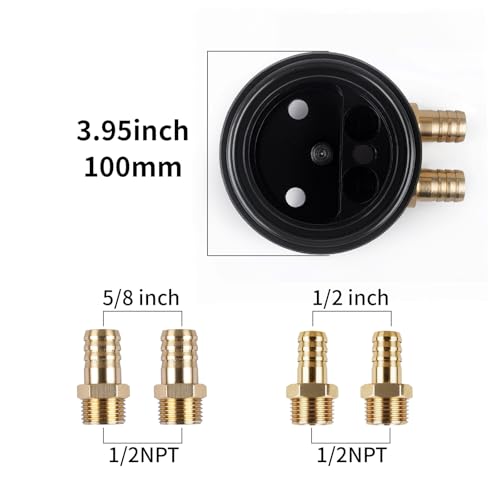
1/2-Inch and 5/8-Inch Interchangeable Barbs
The sump supports interchangeable 1/2-inch and 5/8-inch hose-barb configurations.
This provides flexibility when matching the sump to different lift-pump and fuel-line arrangements.
1/2-Inch Fuel Line
A 1/2-inch connection can be appropriate for many upgraded diesel lift-pump systems where increased flow over the original plumbing is desired.
5/8-Inch Fuel Line
The larger 5/8-inch connection provides another option for high-flow systems requiring larger supply plumbing.
Always size the fuel line according to the actual pump and engine requirements, not simply according to whichever fitting looks more impressive.
An oversized line isn’t inherently harmful in many applications, but mismatched components, poor routing, restrictions, and improper pump selection can undermine the advantages of larger plumbing.
O-Ring Sealing Design
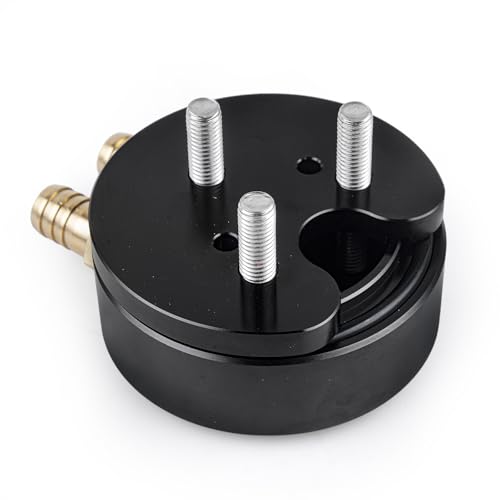
The sump uses an O-ring sealing system where it interfaces with the fuel tank.
When installed correctly on a suitable surface, the seal helps prevent fuel leakage around the sump mounting point.
Correct preparation is critical.
The mounting surface should be:
- Clean
- Flat enough for proper sealing
- Free of heavy corrosion
- Free of burrs
- Properly prepared around the drilled opening
- Compatible with the supplied sealing components
Do not rely on excessive tightening to compensate for poor surface preparation. Crushing or distorting a seal can create the exact leak the installer was trying to prevent.
Why Install a Fuel Tank Sump?
A traditional in-tank pickup draws fuel through a tube or pickup assembly positioned inside the tank.
A sump changes the fuel path by providing an outlet near the bottom of the tank, allowing gravity to help keep the sump supplied with fuel.
Potential advantages can include:
- More direct fuel path to the lift pump
- Support for larger fuel lines
- Reduced dependence on restrictive factory pickup plumbing
- Easier integration with aftermarket lift pumps
- Flexible return-line routing
- Support for high-flow diesel fuel systems
Whether a sump is appropriate depends on how the vehicle is used and how the rest of the fuel system is configured.
Fuel Sump vs. Draw Straw
Both sump and draw-straw systems are commonly used when modifying diesel fuel tanks for aftermarket lift pumps.
A draw straw extends into the tank and pulls fuel from near the bottom.
A fuel sump installs at the bottom of the tank and allows fuel to flow directly out of the tank toward the pump.
Each approach has advantages and tradeoffs.
A sump provides a very direct fuel path but requires creating an opening in the bottom portion of the fuel tank. A draw straw can keep the fuel connection toward the top of the tank but still relies on suction to pull fuel upward through the pickup.
The best choice depends on the vehicle, intended use, tank design, pump requirements, and installer preference.
Fuel Tank Sump Installation Considerations
Installing a sump requires modifying the fuel tank, so careful planning is essential.
Before drilling anything:
- Completely drain the fuel tank.
- Remove or access the tank according to the vehicle service procedure.
- Select a mounting location with adequate clearance.
- Inspect both sides of the proposed installation area.
- Confirm that internal baffling will not interfere.
- Verify that the sump will not hang dangerously below surrounding chassis components.
- Mark the opening carefully.
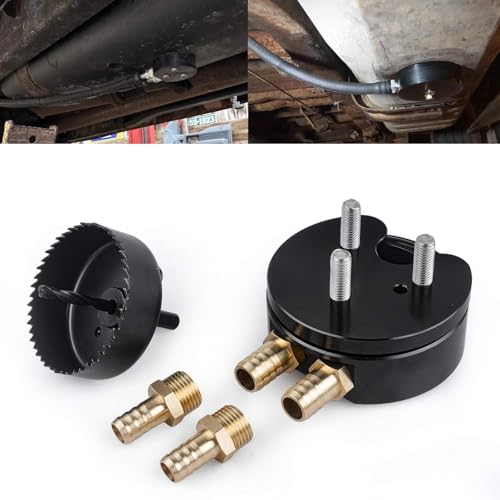
- Drill or cut the tank according to the sump manufacturer’s specifications.
- Remove all drilling and cutting debris from the tank.
- Deburr and clean the mounting surface.
- Install the O-ring and sump components correctly.
- Configure the appropriate 1/2-inch or 5/8-inch connections.
- Route the feed and return hoses safely.
- Add a small amount of fuel and inspect for leakage before completely filling the tank.
- Recheck the installation after the first heat cycle and road test.
Metal or plastic debris must never be left inside the tank after drilling.
Fuel pumps and injectors have very little appreciation for surprise confetti.
Protect the Sump and Fuel Lines
Because the sump is mounted low on the fuel tank, installation location matters.
Make sure the sump and attached fittings are protected from:
- Road debris
- Speed bumps
- Suspension movement
- Driveshafts
- Exhaust components
- Off-road obstacles
- Jacking points
- Chassis contact
This is especially important on lowered trucks or vehicles frequently used off road.
A fuel-system component should never become the lowest vulnerable point beneath the vehicle.
Why Choose a Dual-Port Fuel Tank Sump?
A dual-port sump provides more flexibility than a basic single-feed design.
Key benefits include:
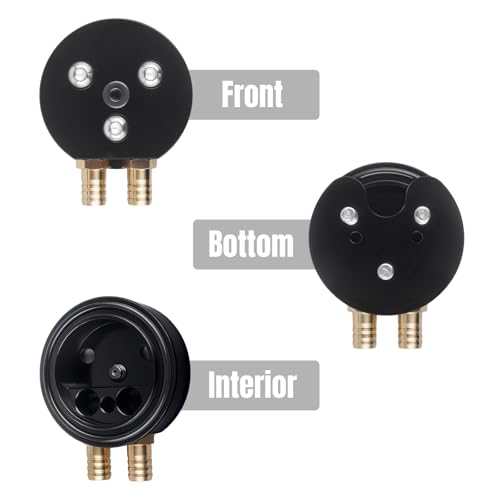
- Dual configurable fuel ports
- Integrated return-line capability
- Dual-feed capability
- 1/2-inch and 5/8-inch barb options
- O-ring sealing design
- Compatible with many FASS and AirDog-style installations
- Useful for Cummins, Duramax, and Power Stroke fuel-system upgrades
- Supports custom diesel and gasoline fuel plumbing
- Direct bottom-feed arrangement for aftermarket lift pumps
For a modified truck using a high-flow lift pump, the dual-port arrangement can simplify fuel-system plumbing while leaving room for future upgrades.
Frequently Asked Questions
What is a fuel tank sump?
A fuel tank sump is a fitting installed at the lower portion of a fuel tank to provide a direct outlet for fuel traveling toward an external pump or lift pump.
What is the advantage of a dual-port fuel sump?
The second port can be used for an integrated return line or an additional fuel feed, depending on the fuel-system configuration.
Will this sump work with a FASS fuel pump?
It is designed for use with compatible FASS-style aftermarket lift-pump systems, provided the fittings, fuel lines, tank, and pump configuration are appropriate.
Will it work with an AirDog lift pump?
Yes, it can be incorporated into compatible AirDog fuel-system installations.
Does it fit Cummins diesel trucks?
The universal design can be used with compatible Cummins fuel-system upgrades. Tank design and installation requirements should be verified before purchase.
Can I use it on a Duramax?
Yes, the sump can be used in compatible Duramax aftermarket lift-pump and fuel-system configurations.
Can it be used on a Power Stroke?
The sump can be incorporated into compatible Power Stroke fuel-system upgrades using an appropriate external lift-pump configuration.
What fuel-line sizes does it support?
The product provides 1/2-inch and 5/8-inch interchangeable hose-barb options.
Can one port be used as a fuel return?
Yes. One of the major purposes of the dual-port design is to allow an integrated return-line configuration.
Can both ports be used as fuel feeds?
Yes, the dual-port arrangement can support a dual-feed configuration where appropriate for the fuel-system design.
Does a fuel sump increase horsepower?
Not directly. A sump can help support adequate fuel supply in a properly designed high-flow system, but it does not create engine power by itself.
Do I have to drill the fuel tank?
Yes. A bottom-mounted fuel tank sump generally requires modifying the tank. Installation should only be performed after the tank has been safely drained and prepared according to the appropriate procedure.



There are no reviews yet.