


T-6061 Aluminum Radiator Construction
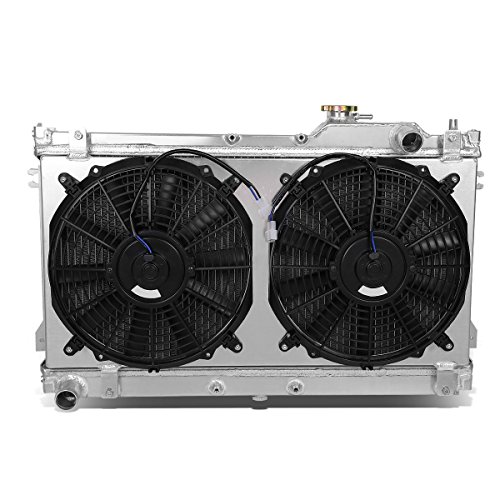
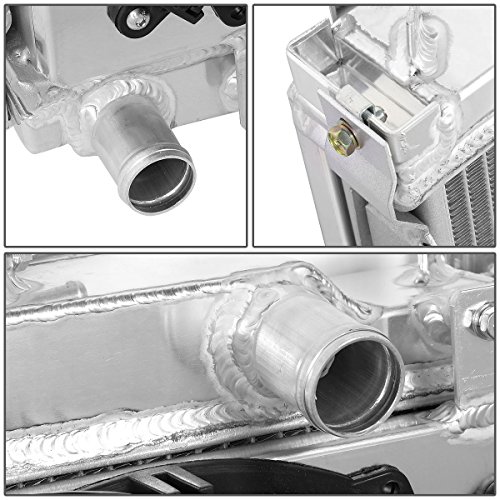
The DNA Motoring RA+FS-MM90-2 is advertised as using full T-6061 aluminum construction.
Aluminum is widely used in automotive radiator manufacturing because it offers effective thermal conductivity and relatively low weight.
A properly manufactured aluminum radiator can provide a durable alternative to aging factory-style radiator assemblies.
Benefits of Aluminum Radiator Construction
Heat Transfer: Aluminum efficiently conducts heat from engine coolant into the radiator’s cooling surfaces.
Durability: Aluminum construction can eliminate certain failure points associated with aging plastic end tanks.
Performance Applications: Aluminum radiators are commonly used in modified street and track vehicles.
Corrosion Resistance: Proper coolant chemistry helps protect aluminum cooling components.
Custom Engine Bay Appearance: A metallic aluminum radiator can complement other performance upgrades.
Material quality, weld integrity, installation, and cooling system maintenance all influence long-term reliability.
Two-Row Aluminum Cooling Core
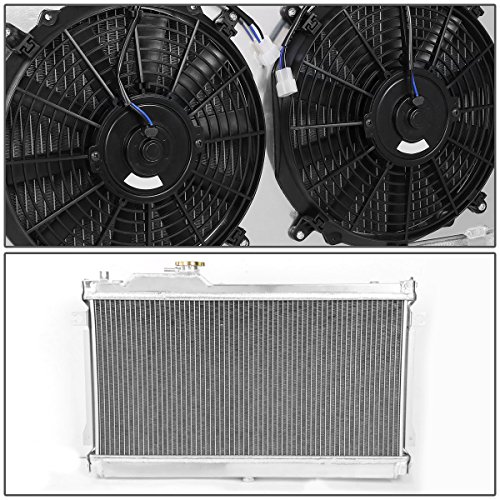
The DNA Motoring Miata radiator features a two-row cooling core measuring 2.25 inches thick.
The core is designed to provide coolant flow and heat-transfer capacity within the available radiator mounting area.
Why Radiator Core Design Matters
Radiator cooling performance depends on several factors:
- Core thickness.
- Coolant tube design.
- Fin density.
- Coolant flow.
- Fan airflow.
- Vehicle speed.
- Ambient temperature.
- Engine operating conditions.
A properly designed two-row aluminum radiator can provide effective cooling for compatible applications.
However, row count alone does not guarantee better cooling.
Tube dimensions, fin design, and airflow management are equally important.
Dual 10-Blade Electric Cooling Fans
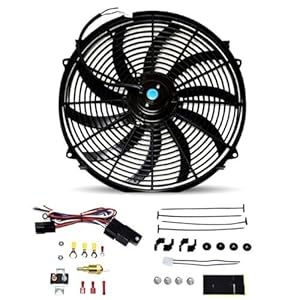
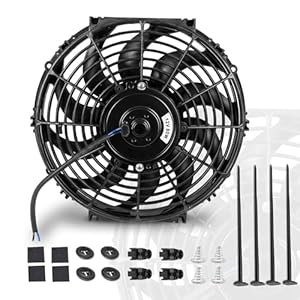
One of the most significant features of this package is the included dual electric fan assembly.
Each fan is advertised as featuring a 10-blade design intended to move air through the radiator core.
Electric fans are particularly important during low-speed driving, extended idling, and traffic.
At highway speeds, natural airflow through the grille helps cool the radiator.
At low speeds, the cooling fan system becomes a primary source of airflow.
Benefits of Dual Electric Cooling Fans
Low-Speed Cooling: Electric fans provide airflow when the vehicle is stationary or moving slowly.
Radiator Coverage: Two fans can help distribute airflow across separate sections of the radiator.
Performance Applications: A properly configured dual-fan system can support cooling during demanding operating conditions.
Engine Bay Packaging: Electric fans can offer installation flexibility compared with some mechanical fan arrangements.
Custom Cooling Systems: Dual-fan configurations are popular in modified Miata builds.
Actual cooling performance depends on fan airflow ratings, shroud design, electrical capacity, and radiator airflow restrictions.
Pre-Assembled Fan Shroud for Easier Installation
The DNA Motoring RA+FS-MM90-2 includes a pre-assembled fan and shroud combination.
This design can simplify installation by reducing the amount of separate fan mounting work required.
Advantages of a Pre-Assembled Fan Shroud
- Reduces the need to position individual fans separately.
- Helps maintain consistent fan placement.
- Provides a convenient radiator and fan package.
- Supports airflow management through the radiator core.
- Can simplify installation in compatible vehicles.
A properly designed shroud helps direct airflow through the radiator rather than allowing air to bypass the cooling core.
However, installation compatibility must still be verified against the vehicle’s mounting arrangement and available clearance.
DNA Motoring RA+FS-MM90-2 Technical Specifications
| Specification | Details |
|---|---|
| Manufacturer | DNA Motoring |
| Part Number | RA+FS-MM90-2 |
| Product Type | Aluminum Radiator and Dual Fan Combo |
| Vehicle Application | Mazda Miata MX-5 |
| Advertised Model Years | 1990–1998 |
| Chassis | NA Miata |
| Radiator Construction | T-6061 Aluminum, Advertised |
| Core Configuration | Two-Row |
| Overall Dimensions | 26.00 × 15.75 × 2.50 Inches |
| Core Dimensions | 25.25 × 12.50 × 2.25 Inches |
| Radiator Inlet Diameter | 1.25 Inches |
| Radiator Outlet Diameter | 1.25 Inches |
| Electric Cooling Fans | 2 |
| Fan Blade Count | 10 Blades Each, Advertised |
| Fan Material | Heat-Resistant Synthetic Material |
| Fan Shroud | Included |
| Fan Assembly | Pre-Assembled |
| Radiator Finish | Metallic Aluminum |
| Cooling Improvement | Manufacturer Claims 35–45% |
| Fan Airflow Rating | Not Provided |
| Fan Current Draw | Not Provided |
| Fan Diameter | Not Provided |
| Fan Controller | Not Specified |
| Transmission Cooler | Not Specified |
Important: The advertised 35–45% cooling improvement is a manufacturer claim. The supplied information does not identify the testing method or establish a guaranteed coolant temperature reduction.
1990–1998 Mazda Miata MX-5 Fitment
The DNA Motoring RA+FS-MM90-2 is advertised for the first-generation Mazda Miata MX-5.
The NA Miata was produced for the U.S. market from 1990 through 1997, with no regular 1998 U.S.-market Miata model year.
Fitment should therefore be confirmed carefully for vehicles advertised as 1998 models.
1990–1993 Mazda Miata 1.6L
Early NA Miata models use Mazda’s 1.6L four-cylinder engine.
These vehicles are popular among enthusiasts because of their lightweight construction and responsive handling.
The DNA Motoring radiator is advertised for compatible early NA Miata applications.
1994–1997 Mazda Miata 1.8L
Later NA Miata models use Mazda’s 1.8L four-cylinder engine.
These vehicles are commonly modified for autocross, track days, and spirited street driving.
The radiator is advertised for compatible later NA Miata applications.
Important Fitment Considerations
Before ordering, verify:
- Model year.
- Engine configuration.
- Manual or automatic transmission.
- Factory radiator dimensions.
- Upper and lower hose connections.
- Radiator mounting locations.
- Fan and shroud clearance.
- Transmission cooler requirements.
Important: Automatic transmission Miata models may require radiator-integrated transmission cooling. The supplied product description does not confirm whether this radiator includes an automatic transmission oil cooler.
Do not assume automatic transmission compatibility without verifying the cooler configuration.
Cooling Performance for Street, Autocross, and Track Driving
The Mazda Miata is widely used for performance driving because of its balanced chassis and lightweight design.
However, sustained engine operation can increase cooling system demands.
Daily Driving
A properly functioning radiator helps maintain stable engine temperatures during normal commuting.
Stop-and-Go Traffic
During traffic and low-speed operation, radiator airflow depends heavily on the electric cooling fans.
Autocross
Repeated acceleration and higher engine loads can increase heat generation.
A properly functioning radiator helps dissipate engine heat between and during runs.
Track Days
Extended high-RPM operation places greater demands on the cooling system.
A properly sized radiator can help manage sustained engine heat.
Turbocharged and Supercharged Miatas
Forced induction increases engine power and can increase heat output.
A performance radiator may help support the cooling system, but the complete engine and cooling configuration must be evaluated.
An upgraded radiator cannot compensate for a malfunctioning thermostat, weak water pump, or improperly functioning cooling fan.
How to Install the DNA Motoring Miata Radiator and Fan Combo
Replacing the radiator on an NA Miata can be a manageable project for experienced DIY mechanics.
However, installation procedures vary by model year, engine, transmission, and cooling system configuration.
Step 1: Allow the Engine to Cool
Park the vehicle on a level surface and allow the engine to cool completely.
Never remove the radiator cap while the cooling system is hot.
Step 2: Drain the Cooling System
Position a suitable drain pan beneath the radiator.
Drain the coolant according to the factory service procedure.
Inspect the coolant for corrosion, contamination, or debris.
Step 3: Remove the Factory Radiator
Disconnect the upper and lower radiator hoses.
Disconnect the factory cooling fan electrical connectors.
Remove the radiator mounting hardware and any components obstructing removal.
Carefully lift the original radiator from the engine compartment.
Step 4: Compare the Replacement Radiator
Before installation, compare the DNA Motoring radiator with the original.
Verify:
- Overall radiator dimensions.
- Mounting bracket locations.
- Upper and lower hose connections.
- Fan shroud clearance.
- Radiator cap configuration.
- Transmission cooler compatibility, if applicable.
- Clearance around engine accessories.
Do not force the radiator into position if the mounting points or hose connections do not match.
Step 5: Install the Aluminum Radiator
Position the replacement radiator into the factory mounting area.
Confirm that the radiator sits securely and that the mounting points align correctly.
Install the appropriate mounting hardware.
Step 6: Connect the Electric Cooling Fans
Connect the dual fans using the correct electrical configuration.
Verify operating voltage, current draw, relay capacity, and circuit protection.
The supplied description does not establish whether the fans are plug-and-play with the factory Miata wiring.
Do not assume the original fan circuit can safely support both replacement fans without checking electrical specifications.
Step 7: Reconnect Radiator Hoses
Reconnect the upper and lower radiator hoses using suitable clamps.
Inspect the hoses for cracking, swelling, or deterioration.
Replace damaged hoses before refilling the cooling system.
Step 8: Refill and Bleed the Cooling System
Refill the system using coolant appropriate for the engine and model year.
Follow the factory coolant filling and air-removal procedure.
Trapped air can interfere with coolant circulation and cause overheating.
Step 9: Verify Cooling System Operation
Start the engine and monitor coolant temperature.
Confirm that the thermostat opens and both electric cooling fans operate correctly.
Inspect all radiator hose connections for leaks.
After the engine cools, recheck coolant level and mounting hardware.
Common NA Miata Cooling System Problems
A radiator replacement may be necessary when the original cooling system develops leaks, restrictions, or physical damage.
Aging Plastic Radiator Tanks
Original Miata radiators can develop deterioration and leaks after years of heat cycling.
Restricted Cooling Passages
Corrosion, contamination, and deposits can reduce coolant flow.
Leaking Radiator Seals
Aging seals can allow coolant to escape from the radiator assembly.
Damaged Cooling Fins
Bent or clogged fins can restrict airflow and reduce heat transfer.
Cooling Fan Problems
A malfunctioning electric fan, relay, or control system can reduce airflow through the radiator.
Thermostat Failure
A faulty thermostat can restrict coolant circulation and contribute to overheating.
Water Pump Problems
A failing water pump can cause coolant leakage or reduced circulation.
Trapped Air in the Cooling System
Improper coolant bleeding can create air pockets and cause overheating.
Before replacing components, inspect the complete cooling system and identify the underlying cause.
Complete Your Mazda Miata Cooling System Upgrade
When replacing the radiator, consider inspecting related components.
Radiator Hoses: Replace hoses showing cracks, swelling, or deterioration.
Thermostat: Verify correct operation and replace it when necessary.
Water Pump: Inspect for coolant leaks, bearing noise, and other signs of failure.
Electric Cooling Fans: Confirm proper operation and adequate airflow through the radiator.
Fan Relays and Wiring: Verify correct electrical capacity and circuit protection.
Radiator Cap: Verify the correct pressure rating for the cooling system.
Coolant: Use a coolant formulation appropriate for the engine and model year.
Transmission Cooling System: Verify compatibility if the vehicle uses an automatic transmission.
Explore additional Mazda Miata, DNA Motoring, and performance cooling components at Pro Street Online.
Is the DNA Motoring RA+FS-MM90-2 Worth It?
For NA Miata owners seeking a complete cooling system upgrade, the DNA Motoring RA+FS-MM90-2 offers several practical advantages.
Its aluminum radiator construction, two-row cooling core, dual electric fans, and pre-assembled shroud make it an appealing alternative to aging factory cooling assemblies.
This radiator combo may be particularly useful for owners who:
- Need to replace a leaking factory radiator.
- Drive a compatible 1990–1997 Mazda Miata.
- Want aluminum radiator construction.
- Are preparing a Miata for autocross or track days.
- Are upgrading a modified street car.
- Want a dual electric fan cooling system.
- Prefer a pre-assembled radiator and fan package.
- Are restoring an aging NA Miata cooling system.
Proper fitment remains the most important consideration.
Confirm the vehicle’s model year, engine, transmission, original radiator dimensions, and cooling system configuration before purchasing.
Upgrade Your Mazda Miata Cooling System at Pro Street Online
Whether you’re restoring an original NA Miata, preparing for an autocross weekend, or building a modified track-day roadster, dependable engine cooling is essential.
The DNA Motoring RA+FS-MM90-2 Aluminum Radiator with Dual Electric Fans and Shroud combines T-6061 aluminum construction, a two-row 2.25-inch cooling core, and dual 10-blade electric fans in a convenient performance-oriented package.
Designed for compatible first-generation Mazda Miata MX-5 applications, this radiator combo offers a practical upgrade for owners seeking improved cooling system durability and effective heat dissipation.
Shop Mazda Miata aluminum radiators, DNA Motoring cooling upgrades, electric radiator fans, and performance cooling components at www.ProStreetOnline.com.






There are no reviews yet.