

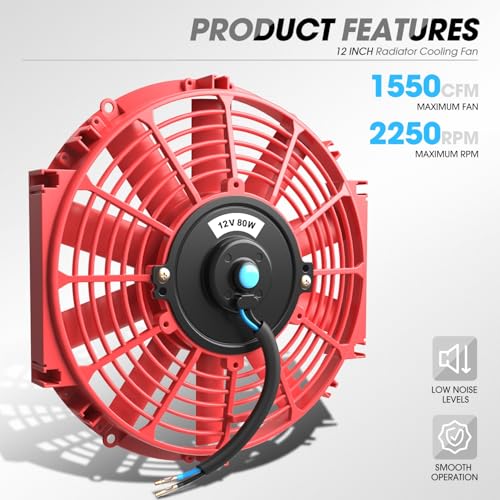

Benefits of a Dual-Fan Configuration
Low-Speed Cooling: Electric fans provide airflow when the vehicle is stationary or moving slowly.
Radiator Coverage: Two fans can help move air through separate sections of a compatible radiator core.
Custom Installation Flexibility: Dual fans may fit radiator layouts where one large fan would interfere with engine accessories.
Performance Applications: Custom cooling systems can benefit from appropriately sized electric fans when paired with the correct radiator and shroud.
Engine Bay Packaging: Slim electric fans may provide additional clearance for engine modifications.
Actual cooling performance depends on radiator dimensions, fan placement, airflow restrictions, and the electrical system.
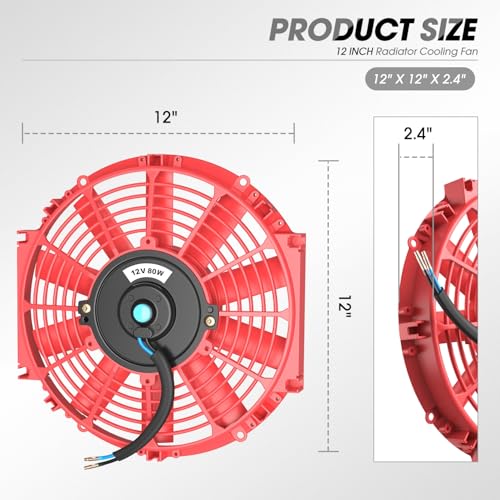
Slim 12-Inch Fan Design for Tight Engine Bays
One of the biggest advantages of slim electric radiator fans is their compact design.
In many modified vehicles, radiator clearance is restricted by engine accessories and aftermarket components.
Common Clearance Challenges
- Water pump pulleys.
- Accessory drive belts.
- Engine-mounted fans.
- Turbocharger piping.
- Intercooler plumbing.
- Custom engine swap components.
- Radiator support structures.
- Aftermarket intake and exhaust components.
A slim electric fan can provide additional installation flexibility.
However, the supplied product description does not specify the exact fan thickness.
Before ordering, measure the available space and confirm the fan’s complete dimensions, including the motor housing and mounting hardware.
Universal Push and Pull Fan Configuration
The DNA Motoring RAF-12-RD+FMK-X2 is advertised as supporting both push and pull configurations.
Pull Configuration
A puller fan is installed behind the radiator, typically on the engine side.
It draws air through the radiator core toward the engine compartment.
This arrangement is commonly used when sufficient clearance is available behind the radiator.
Push Configuration
A pusher fan is installed in front of the radiator.
It pushes air through the radiator core toward the engine compartment.
This arrangement may be useful when there is insufficient clearance behind the radiator.
Which Configuration Is Better?
A properly installed puller fan is often preferred when sufficient clearance is available.
However, the correct configuration depends on radiator packaging, fan design, airflow requirements, and surrounding components.
Important: Confirm the manufacturer’s approved push/pull configuration procedure before installation. Reversing electrical polarity alone does not necessarily provide optimal airflow in both directions.
Red Performance Styling for Custom Engine Bays
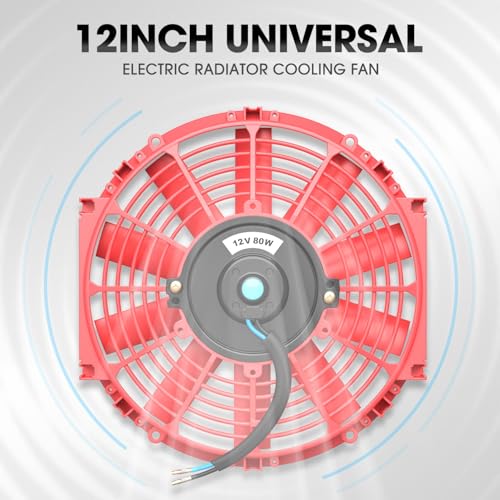
The DNA Motoring dual-fan kit features a red design that stands out from conventional black electric radiator fans.
For enthusiasts building a coordinated engine bay, visible cooling components can contribute to the overall appearance of the vehicle.
Popular Custom Applications
Red cooling fans can complement:
- Red engine bay accents.
- Aftermarket aluminum radiators.
- Custom turbocharger installations.
- Performance intake piping.
- Modified Honda and Acura engine bays.
- Nissan and Toyota performance builds.
- Classic muscle car engine compartments.
- Custom engine swap projects.
While appearance is an added benefit, fan selection should always prioritize cooling capacity, fitment, and electrical compatibility.
DNA Motoring RAF-12-RD+FMK-X2 Technical Specifications
| Specification | Details |
|---|---|
| Brand | DNA Motoring |
| Part Number | RAF-12-RD+FMK-X2 |
| Product Type | Dual Electric Radiator Cooling Fan Kit |
| Number of Fans | 2 |
| Fan Diameter | 12 Inches Each |
| Fan Color | Red |
| Fan Type | Slim Electric Cooling Fan |
| Fan Construction | Lightweight Plastic |
| Fan Configuration | Push / Pull, Advertised |
| Mounting Hardware | Included |
| Vehicle Fitment | Universal |
| Fan Thickness | Not Provided |
| Airflow Rating | Not Provided |
| Fan Speed | Not Provided |
| Current Draw | Not Provided |
| Operating Voltage | Not Confirmed in Supplied Specifications |
| Relay Wiring Kit | Not Specified |
| Temperature Controller | Not Specified |
| Circuit Protection | Not Specified |
Important: Do not assume this kit includes the thermostat switch, relay wiring, or circuit breaker supplied with other DNA Motoring fan packages. Those components are not listed for this specific part number.
What’s Included in the DNA Motoring Dual Fan Kit?
According to the supplied product listing, the package includes:
| Component | Quantity |
|---|---|
| 12-Inch Red Slim Electric Radiator Fan | 2 |
| Fan Mounting Kit | 2 |
The product description identifies mounting tabs and zip-tie-style installation hardware.
Confirm the exact mounting kit contents before purchasing.
Electrical relays, fan controllers, temperature switches, wiring harnesses, and circuit protection may need to be purchased separately.
Universal Electric Radiator Fan Applications
The DNA Motoring dual 12-inch red fan kit is designed for universal applications.
This means it is not guaranteed to bolt directly into every vehicle.
Instead, it can be adapted to compatible radiator and engine bay configurations.
JDM and Import Performance Cars
Electric cooling fans are popular among enthusiasts modifying vehicles such as:
- Honda Civic and Acura Integra.
- Nissan 240SX and Silvia.
- Toyota Supra and MR2.
- Subaru WRX and STI.
- Mitsubishi Lancer Evolution.
- Mazda RX-7 and Miata.
Compatibility depends on radiator dimensions, engine bay clearance, and cooling requirements.
Classic American Muscle Cars
Dual electric fans are also popular in classic Chevrolet, Ford, and Mopar builds.
Common applications include custom cooling systems for:
- Chevrolet Camaro.
- Chevrolet Chevelle.
- Chevrolet Nova.
- Ford Mustang.
- Chevrolet C10.
- Custom small-block and LS-swapped vehicles.
Electric fans can offer packaging flexibility when replacing older mechanical fan arrangements.
Engine Swap Projects
Custom engine swaps often require changes to radiator placement and fan clearance.
A slim electric fan system may help accommodate:
- LS engine swaps.
- Honda K-series swaps.
- Turbocharged engine conversions.
- Custom radiator installations.
- Modified engine accessory layouts.
Before installation, verify that the fans provide sufficient airflow for the engine and radiator combination.
Electric Radiator Fans and Air Conditioning Performance
The supplied description advertises cooling benefits for the radiator, air-conditioning system, intercooler, oil system, and transmission fluid.
However, electric radiator fans do not directly cool all these components.
Their primary function is to move air through the radiator and any adjacent heat exchangers positioned in the airflow path.
Radiator Cooling
The fans move air through the radiator core to help dissipate engine coolant heat.
Air Conditioning Condenser
When installed behind or in front of a condenser and radiator assembly, properly positioned fans can help move air through the A/C condenser.
This may support air-conditioning performance during low-speed operation.
Transmission and Engine Oil Coolers
If transmission or engine oil coolers are positioned in the fan’s airflow path, the fans may help improve airflow across those heat exchangers.
Intercoolers
Air-to-air intercoolers generally rely on airflow through their own heat exchanger.
A radiator fan may influence intercooler airflow only when the components share an appropriate airflow path.
The kit should not be advertised as directly cooling the entire engine bay or every fluid system.
How to Install the DNA Motoring Dual 12-Inch Red Cooling Fans
Installing universal electric radiator fans requires careful planning.
The exact procedure depends on the vehicle, radiator dimensions, fan placement, and electrical system.
Step 1: Measure the Radiator
Before installation, measure the radiator core and available mounting area.
Confirm that two 12-inch fans can fit without contacting surrounding components.
Allow adequate clearance for the fan motors, wiring, and mounting hardware.
Step 2: Choose Push or Pull Configuration
Determine whether the fans will be installed in front of or behind the radiator.
Follow the manufacturer’s approved procedure for configuring the fan direction.
Verify airflow direction before final installation.
Step 3: Install the Fan Mounting Hardware
Secure the fans using the supplied mounting components where appropriate.
Avoid placing excessive stress on radiator tubes or fins.
For performance applications, a properly designed fan shroud or rigid mounting brackets may provide a more durable installation.
Step 4: Plan the Electrical Wiring
Disconnect the vehicle battery before wiring.
Confirm the fans’ operating voltage and current requirements.
Use suitable relays, wiring, and circuit protection appropriate for the combined fan load.
Step 5: Install a Fan Controller
If the vehicle does not already have a compatible electric fan control circuit, install an appropriate fan controller or temperature switch.
A properly configured controller can activate the fans automatically when additional cooling is required.
Step 6: Verify Electrical Capacity
Confirm that the vehicle’s charging system can support the additional electrical load.
Account for the combined operating and startup current of both fans.
Do not guess at current requirements when selecting wiring or circuit protection.
Step 7: Test Fan Operation
Reconnect the battery after completing and inspecting the wiring.
Verify that both fans rotate in the correct direction.
Inspect the wiring for excessive heat, loose connections, or interference with moving components.
Step 8: Monitor Engine Temperature
Run the engine while monitoring coolant temperature.
Confirm that the cooling system maintains appropriate operating temperatures under normal driving conditions.
If temperatures remain excessive, inspect the radiator, thermostat, water pump, airflow path, and cooling system condition.
Common Electric Radiator Fan Installation Mistakes
A properly installed electric fan system can improve cooling performance, but installation errors can reduce effectiveness.
Incorrect Airflow Direction
Fans installed in the wrong direction may move air against the intended airflow path.
Insufficient Radiator Coverage
Fans that cover only a small portion of the radiator may not provide adequate airflow for the engine.
Undersized Wiring
Wiring that cannot safely handle fan current can overheat and create electrical hazards.
Incorrect Relay Capacity
A relay that is not rated for the actual fan load may fail prematurely.
Poor Ground Connections
Weak or corroded grounds can cause intermittent operation or reduced motor performance.
Missing Fan Controller
Without a suitable control system, the fans may not activate when needed.
Inadequate Circuit Protection
Improperly sized or missing fuses and circuit breakers can create serious electrical hazards.
Poor Fan Mounting
Fans mounted directly against fragile radiator fins without appropriate support may damage the core over time.
Careful installation is essential for dependable operation.
Complete Your Performance Cooling System Upgrade
When installing electric radiator fans, consider inspecting the rest of the cooling system.
Performance Radiator: A properly sized radiator provides the heat-transfer capacity needed for the engine.
Radiator Hoses: Replace hoses showing cracks, swelling, or deterioration.
Thermostat: Verify correct operation and use the temperature rating appropriate for the engine.
Water Pump: Inspect for coolant leaks, bearing noise, and other signs of failure.
Fan Shroud: A properly designed shroud can improve airflow through the radiator core.
Temperature Controller: Use a control system appropriate for the engine and cooling requirements.
Wiring and Relays: Verify adequate electrical capacity and circuit protection.
Coolant: Use a coolant formulation appropriate for the engine and radiator materials.
Explore additional electric radiator fans, performance radiators, cooling system accessories, and engine swap components at Pro Street Online.
Is the DNA Motoring Dual 12-Inch Red Fan Kit Worth It?
For enthusiasts seeking a flexible electric radiator fan upgrade, the DNA Motoring RAF-12-RD+FMK-X2 offers several practical advantages.
Its dual slim-fan configuration, lightweight construction, universal mounting hardware, and custom red styling make it appealing for performance-oriented cooling system installations.
This kit may be particularly useful for owners who:
- Want to replace an aging electric radiator fan system.
- Are upgrading a compatible performance radiator.
- Need slim fans for a tight engine bay.
- Are building a custom street or track vehicle.
- Want a distinctive red engine bay appearance.
- Are completing an engine swap project.
- Need flexible push or pull fan placement.
- Prefer a dual-fan configuration for a wide radiator.
Proper sizing and installation remain essential.
Because the kit is universal, compatibility must be determined by radiator dimensions, available clearance, electrical requirements, and the engine’s cooling demands.
Upgrade Your Electric Cooling System at Pro Street Online
Whether you’re building a turbocharged import, restoring a classic muscle car, or completing an LS swap, dependable radiator airflow is essential.
The DNA Motoring RAF-12-RD+FMK-X2 Dual 12-Inch Red Slim Electric Radiator Cooling Fan Kit combines two slim electric fans, universal mounting hardware, and performance-inspired styling in a versatile cooling package.
Designed for compatible push or pull installations, this kit offers a practical foundation for custom radiator cooling systems.
Shop DNA Motoring electric radiator fans, universal cooling fan kits, performance radiators, fan controllers, and engine cooling upgrades at www.ProStreetOnline.com.



There are no reviews yet.