
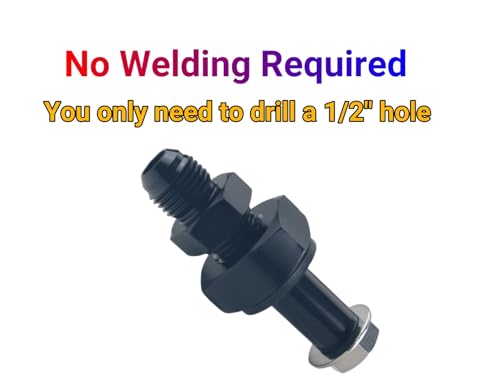
6AN / 9/16-18 Fuel Return Connection
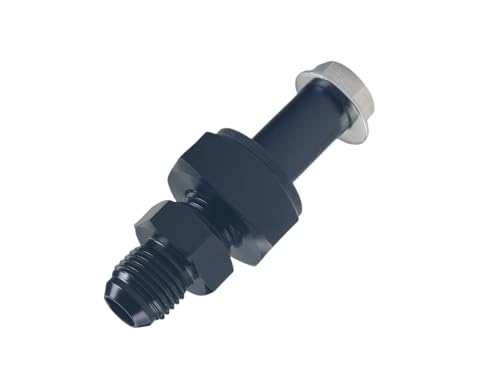
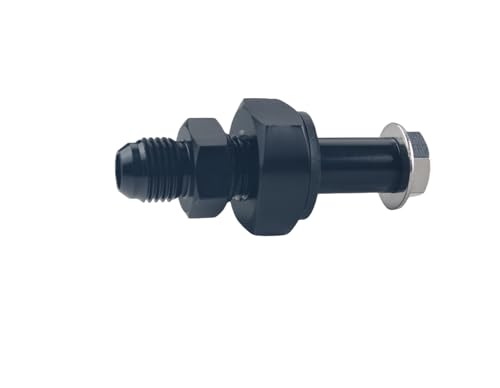
The DEWHEL fitting provides a 6AN connection with 9/16-18 threads.
6AN is commonly used in aftermarket automotive fuel systems and may be appropriate for return circuits in:
- EFI conversions
- Performance fuel systems
- Engine swaps
- Restomods
- Hot rods
- Race cars
- Custom fuel tanks
- Bypass-regulated fuel systems
Always size the return line according to the actual fuel pump and regulator requirements.
A fitting being 6AN doesn’t automatically mean 6AN is the correct line size for every engine combination.
Weldless Expanding Bung Design
The key feature of the DEWHEL return fitting is its weldless mechanical installation.
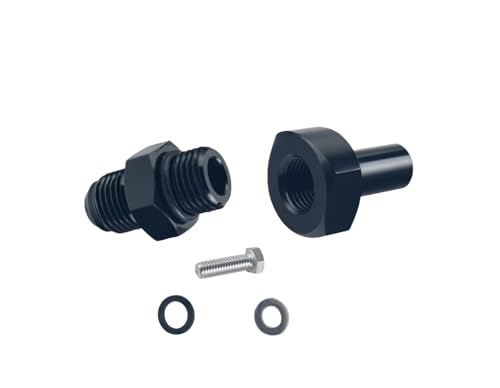
The fitting is inserted into the prepared fuel-tank opening along with its sealing components.
As the installation bolt is tightened, the internal section of the bung collapses and expands against the inside surface of the tank.
This mechanically locks the fitting into position without requiring a retaining nut to be installed from inside the tank.
The design is especially useful where the inside of the tank cannot easily be accessed.
Only a 1/2-Inch Hole Is Required
The DEWHEL fitting installs through a 1/2-inch hole.
Before drilling, determine the final fitting location carefully.
Check for:
- Internal tank baffles
- Fuel-pump modules
- Fuel-level sending units
- Factory pickup tubes
- Tank straps
- Exhaust components
- Suspension components
- Driveshaft clearance
- Fuel-line routing
- Road clearance
The selected area also needs to provide a sufficiently flat surface for the O-ring to seal properly.
Drilling first and discovering the fuel sender directly behind the hole second is technically a learning experience, just not a particularly enjoyable one.
Works with Material Up to 1/4 Inch Thick
The DEWHEL 6AN bung is specified for compatible tank material up to 1/4 inch thick.
This gives builders flexibility when installing the fitting into different compatible fuel tanks or fabricated fuel-system components.
Thickness alone does not guarantee compatibility.
The material and surface must also be suitable for the expanding installation method and provide a stable sealing surface for the O-ring.
O-Ring Seal Included
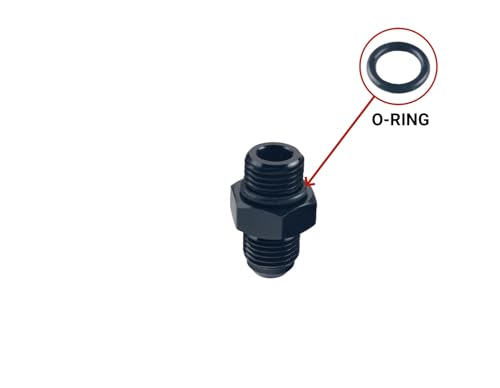
The fitting includes an O-ring to help prevent fuel leakage between the bung and fuel tank.
Correct surface preparation is essential.
The sealing area should be:
- Clean
- Flat
- Properly deburred
- Free from corrosion
- Free from deep scratches
- Free from cutting debris
- Free from excessive paint or coating buildup
Inspect the O-ring before installation and make sure it remains correctly positioned while the bung is being secured.
Designed for Return-Style EFI Fuel Systems
A return-style EFI system regulates fuel pressure by allowing excess pump volume to flow back toward the tank.
A typical system can be arranged as:
Fuel Tank → Fuel Pump → Fuel Filter → Fuel Rail → Bypass Fuel Pressure Regulator → 6AN Return Line → DEWHEL Tank Fitting
The exact configuration varies according to the EFI system and regulator being used.
For a detailed explanation of return-style regulation, the Pro Street Fuel Pressure Regulator Guide explains how bypass regulators control pressure and why return-line sizing matters.
For builders assembling the system themselves, the Pro Street Fuel Pressure Regulator Installation Guide also provides useful background on regulator placement and return plumbing.
Useful for EFI Conversions
Older carbureted vehicles frequently need extensive fuel-system changes when converted to electronic fuel injection.
Depending on the system, an EFI conversion may require:
- Electric high-pressure fuel pump
- EFI-rated fuel hose
- Larger fuel filters
- New feed plumbing
- Bypass fuel pressure regulator
- Dedicated fuel return line
The DEWHEL fitting addresses the final part of that system by creating a dedicated 6AN return point at the tank.
LS Swap Fuel Return Line Applications
The fitting can also be useful when converting an older chassis to an LS-based engine.
An LS swap can require an entirely different fuel-delivery system from the vehicle’s original carbureted or low-pressure EFI arrangement.
Depending on the fuel rail and regulator design, builders may need to add a dedicated return line to the original tank.
The DEWHEL bung provides one way to create that return without welding.
For additional LS swap research, the Pro Street Ultimate GM LS Engine Guide explains the LS engine family and why these engines became so popular for swaps.
Pro Street’s LS1 240SX Swap Guide also provides a practical example of adapting an older chassis to LS-series power.
Fuel Tank Return Bung for Restomod Projects
Restomod projects frequently combine older vehicle architecture with modern engines and EFI systems.
That creates situations where the engine requires a return-style fuel circuit but the original fuel tank provides no suitable return connection.
The DEWHEL 6AN bung can be incorporated into custom systems for:
- Classic muscle cars
- Street rods
- Older imports
- Vintage trucks
- Engine-swapped vehicles
- Custom EFI builds
Actual compatibility depends on the tank construction and fuel-system requirements.
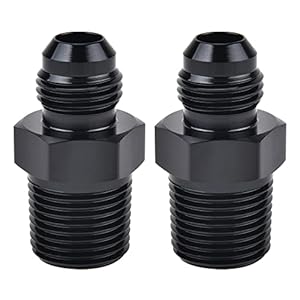
6AN vs. NPT Fittings
A 6AN fitting and an NPT fitting are not interchangeable.
The DEWHEL fitting uses a 9/16-18 6AN connection.
AN connections use straight threads and seal through the appropriate AN interface.
NPT fittings use tapered pipe threads that seal by thread engagement.
If the regulator, filter, pump, or other component uses NPT threads, install the proper NPT-to-AN adapter.
Do not force mismatched threads together.
Threads are surprisingly resistant to motivational speeches.
Return Line Size Matters
A fuel return line needs enough capacity to allow the regulator to bypass the volume supplied by the pump under low engine-demand conditions.
If the return circuit is too restrictive, fuel pressure may become difficult to control.
Return-line capacity is influenced by:
- Hose inside diameter
- Hose length
- Number of fittings
- Tight bends
- Filter restrictions
- Fuel-pump flow
- Regulator design
- Fuel type
The DEWHEL fitting provides a 6AN connection, but the complete system should still be designed around the requirements of the pump and regulator.
Alternative to Welding an AN Bung
A welded bung remains an excellent solution for many fabricated fuel systems when the work is performed correctly.
However, welding a fuel tank requires:
- Proper tank removal
- Safe vapor removal
- Compatible tank material
- Welding equipment
- Experienced fabrication
- Proper post-weld inspection
The DEWHEL fitting provides a mechanical alternative where the tank and application are suitable.
It still permanently modifies the tank, but it eliminates the need to weld the fitting into place.
Alternative to a Fuel Filler-Neck Return
Another common approach is returning fuel through the filler neck.
A filler-neck adapter avoids modifying the main tank shell, while the DEWHEL fitting creates a dedicated tank-mounted return connection.
The better approach depends on the vehicle.
A direct tank bung may make sense when:
- The tank has an accessible mounting surface
- 6AN plumbing is already being used
- A direct return connection is preferred
- The filler neck is difficult to access
- A compact installation is desired
A filler-neck solution may be preferable when drilling the tank itself is undesirable.
60 N·m Installation Specification
The supplied product information specifies approximately 60 N·m during the bung-deformation process and recommends using a suitable power tool where appropriate.
This specification relates to collapsing and seating the expanding bung.
It should not be confused with the normal tightening torque for the 6AN hose connection after installation.
Follow the instructions supplied with the actual fitting during installation.
DEWHEL Fuel Return Bung Installation Overview
A typical installation process includes:
- Determine the correct return-fitting location.
- Safely drain and prepare the fuel tank.
- Verify clearance inside and outside the tank.
- Mark the installation point.
- Drill the required 1/2-inch hole.
- Deburr the opening carefully.
- Remove all drilling debris.
- Clean the O-ring sealing surface.
- Position the O-ring and bung.
- Insert the installation hardware.
- Tighten the installation bolt to collapse the bung according to the supplied instructions.
- Verify the fitting is securely seated.
- Remove the installation hardware as required.
- Connect the 6AN return line.
- Add a small quantity of fuel.
- Inspect the fitting for leakage.
- Complete the system installation.
- Inspect again while the fuel system is operating.
Do not fill the tank completely until the new fitting has passed an initial leak inspection.
Fuel Tank Safety
Fuel-tank modification requires proper safety procedures.
An “empty” gasoline tank can still contain highly flammable vapor.
Never drill a fuel tank simply because the fuel gauge says empty.
Before modifying the tank:
- Drain fuel safely
- Remove or prepare the tank according to proper service procedures
- Eliminate ignition sources
- Work in a properly ventilated area
- Follow appropriate fuel-vapor safety procedures
- Keep suitable fire-safety equipment available
If you are not experienced with fuel-tank modification, have the work performed by a qualified automotive technician or fabricator.
Remove All Drilling Debris
After drilling the 1/2-inch opening, remove every piece of debris from the fuel tank.
Contamination can damage:
- Fuel pumps
- Fuel filters
- Injectors
- Regulators
- Carburetors
This is especially important with EFI systems that use precision fuel injectors.
A twenty-minute cleanup is considerably cheaper than feeding aluminum shavings to a new fuel pump.
Why Choose the DEWHEL 6AN Weldless Fuel Return Bung?
The DEWHEL fitting offers a straightforward way to add a standardized AN return connection without welding.
Key features include:
- 6AN fuel return connection
- 9/16-18 thread
- Weldless installation
- Mechanically expanding bung
- Requires a 1/2-inch mounting hole
- Aluminum construction
- O-ring included
- Designed for material up to 1/4 inch thick
- Suitable for custom return-style systems
- Useful for EFI conversions
- Useful for engine swaps
- Useful for restomod fuel systems
- No access nut required inside the tank
For builders who need a direct 6AN fuel return connection but don’t want to weld a conventional bung into the tank, the DEWHEL kit provides a compact mechanical solution.
Frequently Asked Questions
What is the DEWHEL 6AN fuel tank bung?
The DEWHEL fitting is a weldless expanding fuel tank bung designed to add a 6AN return-line connection to a compatible fuel tank.
What size connection does it provide?
It provides a 6AN / 9/16-18 connection.
What size hole do I need?
Installation requires a 1/2-inch hole.
Does the DEWHEL fuel return bung require welding?
No. The fitting uses a mechanically expanding design and does not require welding.
How does the fitting stay secured inside the tank?
Tightening the installation hardware collapses the bung so it expands against the inside of the tank.
Does it include an O-ring?
Yes. An O-ring is included to help seal the fitting against the tank.
How thick can the tank material be?
The product is specified for compatible material up to 1/4 inch thick.
Can I use this for an EFI return line?
Yes. A dedicated return connection for compatible return-style EFI systems is one of its primary applications.
Can this be used for an LS swap?
Yes, provided the fuel-system design requires an appropriately sized 6AN return and the tank is suitable for installation.
Is 6AN the same as 3/8 NPT?
No. AN and NPT are different thread and sealing systems. Use the appropriate adapter when connecting the two.
What is the 60 N·m specification?
The supplied product information calls for approximately 60 N·m during installation to deform and seat the expanding bung. Follow the instructions supplied with the actual product.
Can I install it without removing the fuel tank?
That depends on the vehicle, tank construction, access, and ability to safely clean the tank afterward. Do not drill a tank unless it has been properly prepared and all debris can be removed.







There are no reviews yet.