

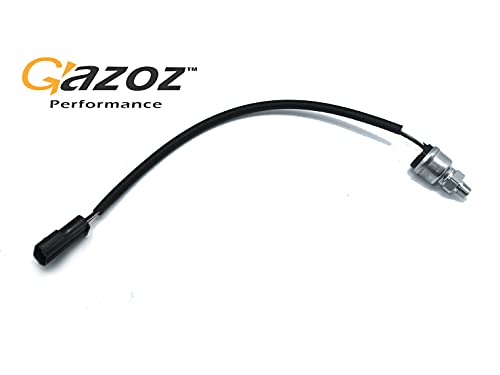
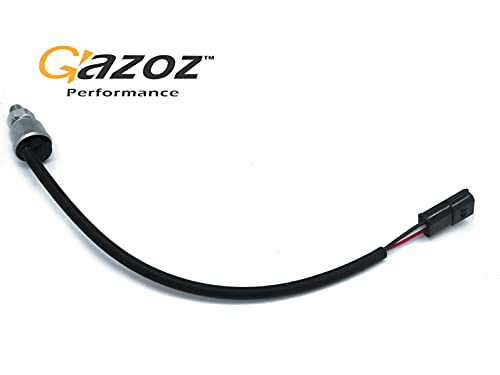

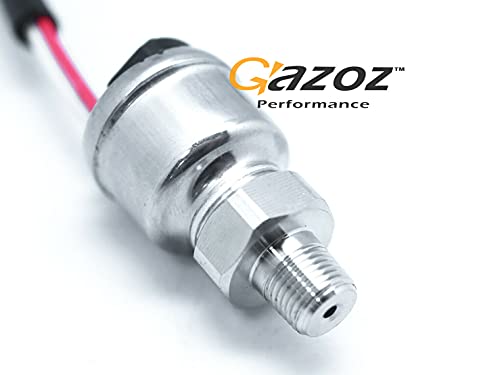
Product Specifications
| Specification | Details |
|---|---|
| Product | Replacement fuel/oil pressure sensor |
| Product type | Aftermarket pressure sender |
| Advertised gauge compatibility | Select Defi Link, BF, ADVANCE and Racer systems |
| Thread specification | 1/8 NPT, per supplier |
| Attached wire length | Approximately 30cm / 12 inches |
| Country of manufacture | Taiwan, per supplier |
| Quantity | One sensor |
| Original Defi product | No verified manufacturer authorization |
| Pressure measurement range | Not independently verified |
| Connector and electrical calibration | Must be confirmed |
| Installation instructions | Not included, per supplier |
| Gauge and control unit | Not included |
| Vehicle application | Universal, based on compatible gauge system |
Why Oil Pressure Monitoring Matters
Oil pressure is one of the most important measurements available to a performance engine owner.
The oil pump must maintain adequate pressure to deliver lubricant throughout the engine, protecting bearings, camshafts, and other moving components.
Low oil pressure can result from insufficient oil, a worn pump, internal engine wear, oil pickup restrictions, or lubrication system leaks.
A functioning aftermarket oil pressure gauge helps drivers observe pressure changes during cold starts, warm idle, and higher-RPM operation.
However, an inaccurate pressure sender can create false confidence or unnecessary alarm.
Our Oil Pressure Warning Light Diagnosis Guide explains the difference between low oil level, genuinely low oil pressure, and a faulty sensor or warning circuit.
If an existing Defi gauge begins showing implausible readings, inspect its wiring and verify actual oil pressure with a known-good mechanical or electronic test instrument before concluding that the sender has failed.
Why Fuel Pressure Monitoring Is Essential
Fuel pressure is particularly important on modified and forced-induction engines.
The fuel system must supply the pressure and flow required by the injectors under changing engine loads.
A fuel pressure problem can affect air-fuel ratio, throttle response, and overall engine reliability.
An electronic fuel pressure gauge can help a driver or technician observe pressure behavior, but only when the sender is correctly calibrated for the gauge and installed in the appropriate pressure circuit.
For more information, our Fuel Pressure Regulator Guide for Street Builds explains how fuel pressure regulation, injector operation, and boost-referenced systems work together.
The sensor must also be specifically rated for the fuel being used and the maximum expected pressure. Do not install an unverified sender in a high-pressure fuel circuit.
Defi Gauge Compatibility: What You Need to Check
The supplier advertises compatibility with several Defi gauge families, but matching a brand name is not enough to guarantee correct operation.
| Gauge system | Supplier-advertised compatibility | Verification needed |
|---|---|---|
| Defi-Link | Claimed | Sensor calibration and original-series wiring |
| Defi-Link BF | Claimed | Exact gauge generation and control unit |
| Defi ADVANCE | Claimed | Electrical response and connector |
| Defi Racer | Claimed | Exact gauge model and sensor calibration |
| GReddy gauges | Claimed | No verified cross-compatibility established |
| Replica Defi gauges | Not recommended | No compatibility guarantee |
Defi’s original replacement pressure sensor is PDF00703S. The manufacturer identifies a 1/8 PT connection for that sensor, which is different from the 1/8 NPT thread advertised for this aftermarket product.
Our How to Install a Defi Boost Gauge tutorial demonstrates how the Defi ADVANCE system uses a control unit and dedicated sensor connections. Although a boost sensor is different from an oil or fuel pressure sender, the article illustrates why correct gauge-system wiring and sensor identification matter.
1/8 NPT vs. 1/8 PT: Why Thread Compatibility Matters
A common installation mistake is assuming that all 1/8-inch pressure sensor fittings use the same thread.
They do not.
1/8 NPT is an American tapered pipe thread standard, while 1/8 PT, commonly associated with BSPT, uses a different thread form and pitch.
Although these fittings can appear similar, they are not interchangeable without the correct adapter.
Forcing an NPT sensor into a PT/BSPT port can damage the threads, compromise sealing, and create an oil or fuel leak.
Before installation, confirm the threaded port specification and select a properly rated adapter if necessary.
Troubleshooting a Defi Pressure Gauge That Reads Incorrectly
A failed pressure sensor is only one possible reason for inaccurate readings.
Before replacing the sender, inspect the sensor connector for corrosion, bent pins, or loose terminals.
Check the wiring harness for damage caused by engine heat, vibration, or contact with moving components.
Confirm that the gauge and control unit are receiving proper power and ground connections.
If the gauge displays zero pressure, an implausibly high reading, or an intermittent signal, compare the reading against a separate calibrated pressure-testing instrument.
Our How to Wire Aftermarket Gauges Right guide covers sensor compatibility, wiring protection, grounding, and common installation mistakes that cause inaccurate gauge readings.
Replacing a sensor without checking the electrical circuit can leave the original problem unresolved.
Installation Considerations
This replacement sensor is intended for a compatible pressure-gauge installation, not direct replacement of a vehicle’s factory ECU pressure sensor.
Before installation, confirm the gauge’s exact model number and original sender specifications.
For oil pressure monitoring, use a suitable sensor adapter or remote mounting arrangement rated for engine oil pressure and temperature. Avoid mounting a heavy sensor directly to a location exposed to excessive engine vibration unless the manufacturer approves it.
For fuel pressure monitoring, depressurize the system using the vehicle manufacturer’s procedure and use only fuel-compatible fittings and sealing methods.
Route the sensor wiring away from exhaust manifolds, turbochargers, ignition components, and sharp edges.
After installation, check all fluid connections for leaks and verify readings against an independent pressure measurement.
Never rely on an unverified replacement sender as the sole indication of safe engine oil or fuel pressure.
Frequently Asked Questions
Will this sensor work with a Defi ADVANCE gauge?
The supplier advertises compatibility, but the exact gauge model, connector, and sensor calibration must be verified before purchase.
Is this a genuine Defi sensor?
No verified evidence establishes this aftermarket product as genuine Defi-manufactured equipment.
What is the genuine Defi fuel and oil pressure sensor part number?
Defi identifies PDF00703S as its pressure sensor for applicable gauge systems.
Is PDF01103S a fuel or oil pressure sensor?
No. Defi lists PDF01103S as an exhaust-temperature sensor, so the supplied cross-reference should not be used as a confirmed replacement number.
Does this sensor have a 1/8 NPT fitting?
The supplier lists 1/8 NPT. Verify the actual fitting before installation.
Can it be installed in a 1/8 PT port?
Not directly. Use a correctly specified, pressure-rated conversion adapter.
Does the sensor work with GReddy gauges?
Compatibility has not been independently verified. Confirm the exact GReddy gauge model and sender requirements.
Does it include a complete wiring harness?
The supplier specifies an approximately 30cm attached lead. A complete gauge-to-control-unit harness is not confirmed.
What vehicles does it fit?
This is a gauge-specific aftermarket component, not a vehicle-specific replacement part. Vehicle compatibility depends on the installed gauge system and the available pressure port.
Repair Your Performance Gauge System Without Replacing the Entire Gauge
A properly functioning fuel or oil pressure gauge is valuable for monitoring engine operation and identifying developing problems.
This 1/8 NPT aftermarket replacement pressure sensor offers a potential repair option for owners of compatible Defi-style gauge systems who need to replace a damaged or nonfunctioning sender.
Confirm the gauge model, pressure range, connector, and thread compatibility before ordering to ensure the correct replacement for your installation.



There are no reviews yet.