
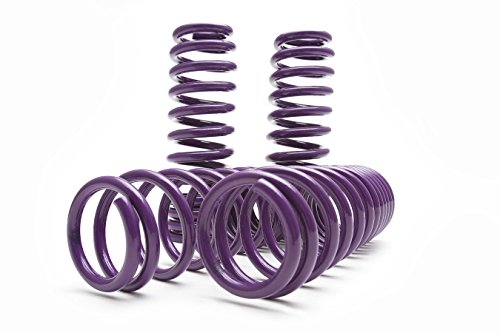
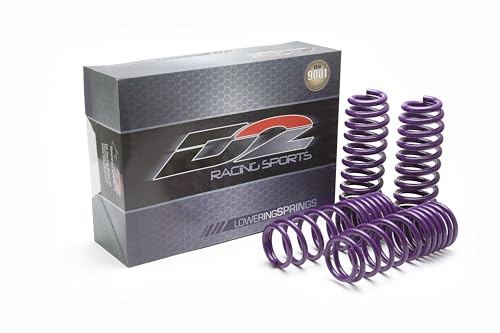
D2 PRO Lowering Springs for 2016–2025 Honda Civic and 2023+ Acura Integra
D2 PRO lowering springs are marketed as a street and light-track suspension upgrade for select 2016–2025 Honda Civic models, 2017–2025 Civic Si models and current-generation Acura Integra applications.
The progressive-rate design increases spring resistance as the suspension compresses, helping balance normal street ride quality with better body control during aggressive driving. However, the advertised fitment spans two Civic generations and a related—but separate—Acura platform. Exact compatibility must be confirmed using the D2 part number, chassis code, trim, body style and factory damper configuration.
Corrected Advertised Fitment
| Make and model | Model years | Important notes |
|---|---|---|
| Honda Civic Sedan | 2016–2025 | Spans tenth- and eleventh-generation platforms |
| Honda Civic Coupe | 2016–2020 | Coupe discontinued after 2020 |
| Honda Civic Hatchback | 2017–2025 | Verify generation and trim |
| Honda Civic Si | 2017–2020, 2022–2025 | No U.S.-market 2021 Civic Si |
| Acura Integra | 2023 and newer | Base/A-Spec fitment requires confirmation |
| Civic Type R | Not confirmed | Do not assume compatibility |
| Integra Type S | Not confirmed | Do not assume compatibility |
The current U.S.-market Acura Integra entered production during 2022 as a 2023 model-year vehicle. Publishing “2022+ Integra” as U.S. fitment may incorrectly imply the existence of a 2022 model-year Integra.
Two Civic Generations Require Verification
The advertised Civic range crosses two distinct chassis generations.
Tenth-Generation Civic
Potential applications include:
- 2016–2021 Civic Sedan
- 2016–2020 Civic Coupe
- 2017–2021 Civic Hatchback
- 2017–2020 Civic Si Sedan or Coupe
Eleventh-Generation Civic
Potential applications include:
- 2022–2025 Civic Sedan
- 2022–2025 Civic Hatchback
- 2022–2025 Civic Si Sedan
The tenth- and eleventh-generation cars use different chassis families, body configurations and suspension calibrations. One D2 spring SKU should not automatically be represented as interchangeable across the entire range.
Confirm whether the listing represents:
- One application-specific kit
- Multiple selectable part numbers
- A marketplace listing combining separate D2 products
- Fitment limited to particular Civic chassis or body styles
A title containing every Civic built since 2016 is convenient. Suspension engineering, tragically, still requests more information.
$190.00
Civic Si Model-Year Correction
The supplied title lists “2017–2025 Civic Si,” but that range is not continuous in the United States.
Correct U.S. fitment years are:
- 2017–2020 Civic Si
- 2022–2025 Civic Si
Honda did not offer a U.S.-market 2021 Civic Si. The tenth-generation Si ended after 2020 and returned on the eleventh-generation platform for 2022.
Do not create a 2021 Civic Si application in the fitment table merely to preserve a convenient year range.
Acura Integra Fitment
The springs may be intended for select current-generation Acura Integra models, potentially including:
- 2023+ Integra Base
- 2023+ Integra A-Spec
- 2023+ Integra A-Spec with Technology Package
The Integra shares its underlying architecture with the eleventh-generation Civic, but that does not automatically establish spring interchangeability. Vehicle weight, damper calibration, ride height and suspension tuning can differ.
Verify compatibility with:
- CVT-equipped Integra
- Six-speed manual Integra
- Adaptive Damper System
- A-Spec package
- Technology Package
Type R and Type S Are Not Confirmed
Do not list this kit for:
- 2017–2021 Honda Civic Type R
- 2023–2025 Honda Civic Type R
- 2024+ Acura Integra Type S
These models use performance-specific suspension components, wider track dimensions, different axle loads and unique damper calibrations. The Type R and Type S also carry substantially different performance requirements from a standard Civic or Integra.
Unless the exact D2 application chart names these models, exclude them.
Progressive-Rate Spring Technology
The supplied description states that spring rate increases as the springs compress. This describes a progressive-rate design.
During lighter suspension movement, the initial portion of the spring can provide a more compliant response. As compression increases, the spring becomes progressively firmer.
This design is intended to provide:
- Reasonable street ride quality
- Increased support during cornering
- Reduced body roll
- Better control under braking
- Reduced acceleration squat
- Improved response during rapid transitions
- Greater resistance to bottoming
Progressive springs do not guarantee a soft ride. Final comfort depends on the spring’s initial and final rates, total lowering amount, damper calibration, bump-stop clearance and tire construction.
Lowering Amount and Spring Rates
The supplied information does not provide:
- Front lowering amount
- Rear lowering amount
- Front spring rate
- Rear spring rate
- D2 part number
Do not invent or estimate these specifications.
The finished ride height may vary according to:
- Civic or Integra chassis
- Sedan, Coupe or Hatchback body
- Engine and transmission
- Vehicle trim
- Factory suspension package
- Damper condition
- Added vehicle weight
- Existing spring wear
- Normal settling
Measure stock ride height from the center of each wheel hub to the fender opening before installation. Repeat the measurement immediately afterward and after the springs settle.
Handling and Stability
Lowering the vehicle’s center of gravity can reduce weight transfer and make the chassis respond more quickly during cornering, braking and lane changes.
Potential benefits include:
- Reduced body roll
- Sharper steering transitions
- Less brake dive
- More controlled acceleration squat
- More planted highway behavior
- Cleaner wheel-to-fender fitment
- Improved driver feedback
D2 markets the kit for street and light-track use. Track suitability still depends on the complete vehicle setup, including:
- Tires
- Brake condition
- Wheel alignment
- Damper control
- Suspension bushings
- Vehicle weight
- Track surface
- Driver experience
Lowering springs alone do not increase the tire’s coefficient of friction. They can help manage chassis movement and keep the contact patches more consistently loaded, but they do not manufacture additional grip from thin air.
Wheel Hop Claims
The supplied description claims reduced wheel hop, particularly during aggressive driving.
Lowering springs may help control some suspension movement, but wheel hop can also be caused by:
- Worn engine or transmission mounts
- Damaged suspension bushings
- Weak dampers
- Excessive compliance in suspension links
- Poor tire grip
- Incorrect tire pressure
- Uneven pavement
- Aggressive clutch engagement
- Traction-control intervention
Do not advertise the springs as a guaranteed cure for wheel hop. Diagnosis should include the complete suspension and drivetrain mounting system.
Factory and Aftermarket Damper Compatibility
The supplied copy does not identify compatible shocks or struts. Verify whether the D2 kit is approved for:
- Standard factory dampers
- Sport or Si dampers
- Civic adaptive dampers
- Integra Adaptive Damper System
- Aftermarket replacement shocks
- Short-stroke performance dampers
Lowering springs reposition the damper farther into its available travel. If the drop is substantial, factory dampers may experience:
- Reduced compression travel
- Frequent bump-stop contact
- Poor rebound control
- Excessive bouncing
- Accelerated seal wear
- Tire cupping
- Harsh impacts
The My Pro Street lowering-spring and shock-wear guide explains how shortened ride height affects damper operation.
Drivers requiring adjustable height and damping should compare these springs with the choices in the My Pro Street daily-driver coilover guide.
Adaptive Damper Warning
Certain Civic and Integra configurations use electronically controlled dampers. Even if a spring physically fits around an adaptive damper, the reduced ride height and different spring rate may affect:
- Damper operating range
- Ride-mode calibration
- Suspension travel
- Impact response
- Warning-light behavior
- Warranty coverage
Do not bypass or remove adaptive suspension equipment without an engineered replacement solution.
Suspension Inspection
Before installing the lowering springs, inspect:
- Front struts
- Rear shocks
- Upper strut mounts
- Rear shock mounts
- Spring isolators
- Dust boots
- Bump stops
- Lower control-arm bushings
- Ball joints
- Tie-rod ends
- Sway-bar links
- Wheel bearings
- Brake hoses
- ABS sensor wiring
- Electronic damper connectors where equipped
Replace worn components while the suspension is disassembled. New springs have a wonderful habit of making old dampers confess immediately.
Browse the My Pro Street How-To library for additional suspension and installation resources.
Wheel and Tire Clearance
Lowering changes available clearance between the tires, fenders and suspension components.
Inspect:
- Tire-to-fender clearance
- Tire-to-strut clearance
- Wheel offset
- Wheel width
- Tire diameter
- Inner fender liners
- Full steering lock
- Full suspension compression
- Brake-hose routing
- ABS-wire clearance
- Underbody clearance
- Exhaust clearance
Aftermarket wheels, spacers and aggressive offsets increase rubbing risk. A tire that clears while parked may contact the body during braking, cornering or suspension compression.
Installation Requirements
Although lowering springs use factory-style mounting positions, installation requires suspension disassembly and proper spring-compression equipment.
A typical installation includes:
- Confirming the chassis, body style and D2 part number.
- Identifying standard or adaptive dampers.
- Measuring the original ride height.
- Raising and safely supporting the vehicle.
- Removing the front strut assemblies.
- Compressing and removing the original front springs.
- Inspecting mounts, boots and bump stops.
- Installing the D2 front springs correctly.
- Removing and replacing the rear springs.
- Confirming correct spring seating and orientation.
- Checking brake-hose and ABS-wire clearance.
- Verifying tire and suspension clearance.
- Torquing the suspension hardware correctly.
- Performing a professional four-wheel alignment.
Professional installation is recommended. “Bolt-on” does not mean “attack the compressed spring with whatever tools happen to be near the lawn mower.”
Alignment Is Required
A professional four-wheel alignment should be performed after installation and rechecked if spring settling changes ride height.
The technician should inspect:
- Front toe
- Rear toe
- Front camber
- Rear camber
- Caster comparison
- Steering-wheel centering
- Thrust angle
Lowering often increases negative camber. Some additional negative camber may benefit cornering, but excessive camber combined with incorrect toe can rapidly wear the inside edges of the tires.
Adjustable rear camber arms, toe links or other alignment components may be required if factory adjustment cannot restore the desired settings.
The NHTSA tire-safety guide provides additional information about tire inspection and abnormal wear.
Package Contents
A complete lowering spring kit is expected to contain:
- Two front lowering springs
- Two rear lowering springs
The following are not identified as included:
- Shocks or struts
- Upper mounts
- Bump stops
- Camber arms
- Toe links
- Adaptive-damper modules
- Spring compressors
- Alignment service
Confirm package contents and the exact D2 part number before ordering.
Frequently Asked Questions
What vehicles do these springs fit?
They are marketed for select 2016–2025 Honda Civic, 2017–2025 Civic Si and current-generation Acura Integra models. Exact chassis and trim compatibility must be confirmed.
Do they fit every 2016–2025 Civic?
That should not be assumed. The range spans two Civic generations and multiple body styles, engines and damper packages.
Do they fit a 2021 Civic Si?
No U.S.-market 2021 Civic Si was produced. Valid Si ranges are 2017–2020 and 2022–2025.
Do they fit a 2022 Acura Integra?
The current U.S.-market Integra begins with model year 2023. Production started during calendar year 2022, which may explain the misleading “2022+” title.
Do they fit the Civic Type R?
Type R fitment is not confirmed and should not be assumed.
Do they fit the Integra Type S?
No confirmed Type S compatibility was supplied.
Are these progressive-rate springs?
Yes. The supplied description states that the spring rate increases as the spring compresses.
How much do they lower the vehicle?
No exact lowering measurement was supplied. Confirm the front and rear drop using the D2 part number.
Can factory shocks be retained?
That depends on the application, lowering amount and damper package. Adaptive-damper vehicles require additional verification.
Are they suitable for track use?
They are marketed for street and light-track driving. Vehicle condition, alignment, tires, brakes and damper compatibility must also be considered.
Is an alignment required?
Yes. Perform a professional four-wheel alignment after installation.
Final Verdict
D2 PRO lowering springs may provide a useful fixed-height upgrade for a compatible Civic or Integra, particularly for drivers seeking reduced body movement without moving to a complete coilover system. Their progressive-rate design is intended to balance street comfort with firmer response under heavier suspension loads.
The supplied fitment is too broad to publish without qualification. Verify whether the kit fits the tenth-generation Civic, eleventh-generation Civic or both, and confirm body style, Si application, adaptive dampers and the exact D2 part number. Correct the Integra range to 2023 and newer for U.S. model-year listings and remove 2021 from Civic Si fitment.
Visit My Pro Street for additional Honda suspension reviews, installation guides and performance advice.
Specification: D2 PRO Lowering Springs for 2016–2025 Honda Civic and 2023+ Acura Integra
|
User Reviews
Be the first to review “D2 PRO Lowering Springs for 2016–2025 Honda Civic and 2023+ Acura Integra”
You must be logged in to post a review.



There are no reviews yet.