
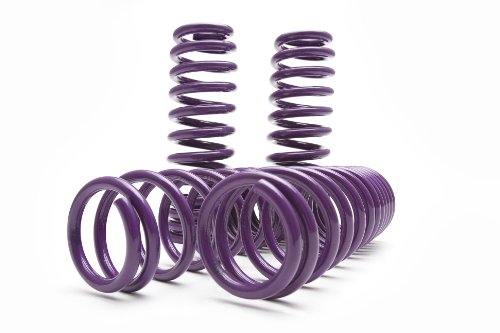
D2 PRO 2-Inch Lowering Springs for 2018–2022 Honda Accord
D2 PRO Series lowering springs give the tenth-generation Honda Accord a full 2-inch front and rear drop, reducing wheel gap while delivering firmer, more responsive handling. Their progressive-rate design is intended to balance street comfort with increased support during cornering, braking and other higher-load situations.
These springs are manufactured from 55-grade chrome-silicon steel in an ISO 9001-certified and TÜV-approved facility. They are also backed by a lifetime unlimited-mileage warranty.
Vehicle Fitment
| Years | Make | Model | Chassis |
|---|---|---|---|
| 2018–2022 | Honda | Accord Sedan | CV1/CV2/CV3 |
Potential applications include Accord models equipped with:
- 1.5-liter turbo engine
- 2.0-liter turbo engine
- Six-speed manual transmission
- CVT
- Ten-speed automatic transmission
Important 2023+ Fitment Warning
The original product title says “2018+,” but Honda introduced the redesigned eleventh-generation Accord for 2023. Unless the manufacturer provides a newer application chart, this kit should be listed for the 2018–2022 tenth-generation Accord only.
$190.00
Do not assume compatibility with:
- 2023-and-newer Honda Accord
- 2017-and-older Accord models
- Honda Civic
- Honda Insight
- Acura TLX
- Vehicles already equipped with coilovers
A plus sign is not a chassis code, despite what some parts listings would have us believe.
Hybrid and Touring Fitment
Honda Accord Hybrid and Touring models require additional verification.
Hybrid models have different vehicle weight and rear loading due to their battery and electrical components. Although the suspension mounting points may appear similar, the finished ride height and spring behavior can differ.
Some Accord Touring models use adaptive dampers. Lowering springs may physically install with these dampers, but the reduced suspension travel can affect ride quality and damper operation.
Before ordering for either configuration, confirm:
- Exact trim
- Engine
- Hybrid or non-hybrid drivetrain
- Factory suspension type
- D2 product number
- Front and rear axle-load specifications
Two-Inch Front and Rear Drop
The advertised lowering amount is:
- Front: 2 inches
- Rear: 2 inches
This creates a level, aggressive street stance and removes much of the factory wheel gap. Actual ride height may vary slightly depending on:
- Engine and transmission weight
- Vehicle trim
- Factory ride-height tolerances
- Shock condition
- Added equipment
- Wheel and tire setup
- Normal spring settling
Measure the car before and after installation from the wheel-hub center to the fender opening. Measuring from the pavement can introduce inconsistencies caused by tire pressure and tire diameter.
Progressive-Rate Spring Design
D2 PRO springs use a progressive rate that becomes firmer as the spring compresses. This allows the suspension to respond more gently to small road imperfections while providing increased support during larger suspension movements.
Potential benefits include:
- Reduced body roll
- More responsive steering transitions
- Reduced brake dive
- More controlled acceleration squat
- Improved highway stability
- Cleaner wheel-to-fender fitment
- Firmer support during aggressive cornering
Progressive springs should still be matched with suitable dampers. A spring can only do its job properly when the shock controls its movement.
For a comparison with adjustable suspension systems, read the My Pro Street guide to the best daily-driver coilovers.
What to Expect From the Ride
A two-inch drop is significant. The Accord should feel firmer and more responsive than stock, but it will also have less suspension travel.
Ride quality depends on:
- Shock and strut condition
- Damper valving
- Bump-stop clearance
- Tire sidewall
- Wheel diameter
- Road surface
- Vehicle load
An Accord running factory 19-inch wheels will generally feel firmer than one using smaller wheels with taller tire sidewalls. Rough pavement, steep driveways and large speed bumps will require additional attention.
“Remarkable ride quality” is subjective. The car may remain comfortable for a lowered build, but it will not ride exactly like stock.
55 Chrome-Silicon Steel Construction
D2 manufactures these springs from 55-grade chrome-silicon steel. This material is selected for its ability to withstand repeated compression and extension while maintaining its intended shape.
The construction is designed to provide:
- Consistent spring response
- Resistance to fatigue
- Stable ride height
- Long-term durability
- Predictable suspension behavior
D2 states that its springs are produced in an ISO 9001-certified and TÜV-approved facility. Product and warranty information should be confirmed through D2 Racing.
Can You Use Factory Shocks?
These lowering springs may physically work with factory-style shocks and struts, but a two-inch drop places the dampers deeper into their normal travel.
This leaves less room for the suspension to compress before reaching the bump stops. Potential consequences include:
- Reduced shock life
- Bottoming over large bumps
- Excessive bouncing
- Poor rebound control
- Damaged bump stops
- Unsettled handling
- Accelerated tire wear
The My Pro Street guide explaining how lowering springs affect shocks covers these issues in greater detail.
Fresh factory dampers may perform acceptably, but lowering-compatible shocks are the better long-term choice for a full two-inch drop.
Suspension Parts to Inspect
Before installation, inspect:
- Front struts
- Rear shocks
- Upper strut mounts
- Rear shock mounts
- Spring isolators
- Bump stops
- Control-arm bushings
- Ball joints
- Tie-rod ends
- Sway-bar links
- Wheel bearings
- Brake hoses
- ABS wiring
Replacing worn mounts and dampers during the spring installation can prevent clunks, bouncing and duplicate labor.
Find more repair and suspension information in the My Pro Street How-To library.
Wheel and Tire Clearance
A two-inch drop can create tire-clearance problems when combined with aggressive wheel width, offset or spacers.
Check clearance at:
- Full steering lock
- Full suspension compression
- Front fender liners
- Rear fender lips
- Front strut bodies
- Rear suspension arms
- Brake hoses
- Underbody panels
A wheel that clears while the Accord is parked may rub during hard cornering, braking or suspension compression.
Installation Requirements
These springs install in the factory suspension locations, but replacing them requires proper tools and suspension experience.
A typical installation involves:
- Measuring the factory ride height.
- Raising and safely supporting the Accord.
- Removing the front strut assemblies.
- Compressing and removing the original springs.
- Inspecting mounts, bearings and bump stops.
- Installing the D2 front springs correctly.
- Removing and replacing the rear springs.
- Confirming every spring is properly seated.
- Checking brake-hose and ABS-wire clearance.
- Torquing suspension hardware correctly.
- Checking wheel and tire clearance.
- Performing a four-wheel alignment.
Professional installation is recommended. Compressed springs store substantial energy and should never be handled with improvised tools.
Alignment Is Required
Changing ride height changes suspension geometry. A professional four-wheel alignment should be completed after installation and rechecked after the springs settle.
The alignment should include:
- Front toe
- Rear toe
- Front camber
- Rear camber
- Caster comparison
- Thrust angle
- Steering-wheel centering
Incorrect toe can destroy tires even when the car appears to drive straight. Adjustable rear camber or toe components may be necessary if the factory adjustment range cannot compensate for the two-inch drop.
The NHTSA tire-safety guide provides additional information about tire inspection and abnormal wear.
Lifetime Unlimited-Mileage Warranty
D2 PRO lowering springs include an advertised lifetime unlimited-mileage warranty.
Buyers should review the complete warranty terms for:
- Original-owner requirements
- Proof-of-purchase requirements
- Professional installation requirements
- Corrosion exclusions
- Damage from improper installation
- Track-use restrictions
- Transferability
The warranty covers qualifying product defects; it does not guarantee against damage caused by incorrect fitment, worn shocks or repeated suspension bottoming.
Package Contents
The kit is expected to include:
- Two front lowering springs
- Two rear lowering springs
The following parts are not listed as included:
- Shocks or struts
- Upper mounts
- Bump stops
- Adjustable control arms
- Camber components
- Spring compressors
- Installation hardware
Frequently Asked Questions
What years does this D2 spring kit fit?
The safest confirmed range is the 2018–2022 Honda Accord, representing the tenth-generation chassis. Do not list 2023-and-newer models without manufacturer confirmation.
How much does it lower the Accord?
Approximately two inches in the front and two inches in the rear.
Does it fit the Accord 2.0T?
The kit is marketed for the 2018-and-newer tenth-generation Accord, but the exact engine and trim should be confirmed through the D2 application chart.
Does it fit the Accord Hybrid?
Hybrid compatibility requires explicit confirmation because vehicle weight and suspension calibration differ.
Can I use the original shocks?
Factory dampers may physically accept the springs, but a two-inch drop reduces available travel. Lowering-compatible dampers are recommended for better control and durability.
Do I need an alignment?
Yes. A four-wheel alignment is required after installation.
Will I need a camber kit?
Possibly. Install the springs, measure the alignment and use the results to determine whether adjustable camber or toe components are necessary.
Final Verdict
D2 PRO lowering springs deliver one of the more aggressive fixed-height drops available for the tenth-generation Accord. The full two-inch reduction gives the car a significantly cleaner stance while the progressive spring design aims to preserve reasonable street manners.
This kit is best treated as a 2018–2022 Accord application unless D2 confirms compatibility with the redesigned 2023-and-newer chassis. Plan for healthy dampers, reduced ground clearance, a professional installation and a complete alignment.
Visit My Pro Street for more Honda guides, suspension reviews and practical installation advice.
Specification: D2 PRO 2-Inch Lowering Springs for 2018–2022 Honda Accord
|
User Reviews
Be the first to review “D2 PRO 2-Inch Lowering Springs for 2018–2022 Honda Accord”
You must be logged in to post a review.





There are no reviews yet.