
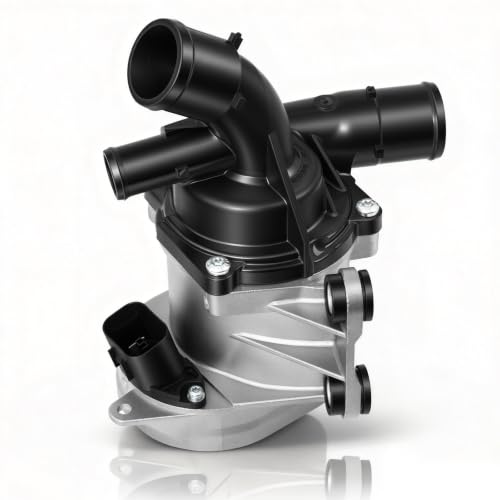

CODEFORGE 55508939 Water Pump Module for GM 2.0L LSY Engines
The CODEFORGE 55508939 water-pump module replaces several original GM pump assemblies used on select Cadillac, Buick, Chevrolet and GMC vehicles equipped with the turbocharged 2.0L LSY engine.
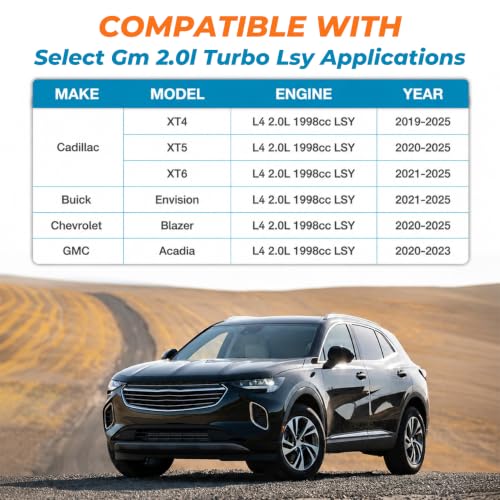
Compatible vehicles include certain Cadillac XT4, XT5 and XT6 models, the Buick Envision, Chevrolet Blazer and GMC Acadia. Fitment must be confirmed by VIN because these vehicles were offered with multiple engines during the same model years.
Important Product Correction
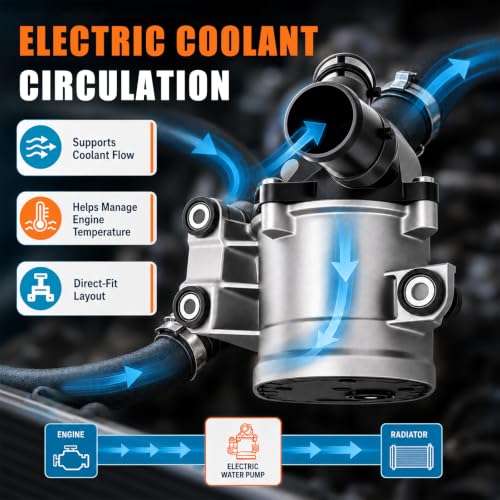
Although many aftermarket listings describe 55508939 as an “electric water pump,” GM’s current catalog identifies replacement number 12738953 as a serpentine-belt-driven engine water pump. The assembly works with GM’s electronically managed cooling system, but the primary pump is mechanically driven.
Calling the entire assembly an electric pump could mislead buyers searching for a standalone brushless coolant pump. The safer product name is:
CODEFORGE 55508939 Engine Water Pump Module for GM 2.0L LSY
GM’s official 12738953 listing describes the pump as driven by the serpentine belt. That distinction belongs prominently on the page—not hidden in the technical equivalent of a witness-protection program.
Vehicle Fitment
| Year | Make | Model | Required engine |
|---|---|---|---|
| 2019–2025 | Cadillac | XT4 | 2.0L turbo LSY |
| 2020–2025 | Cadillac | XT5 | 2.0L turbo LSY |
| 2021–2025 | Cadillac | XT6 | 2.0L turbo LSY |
| 2021–2025 | Buick | Envision | 2.0L turbo LSY |
| 2020–2025 | Chevrolet | Blazer | 2.0L turbo LSY |
| 2020–2023 | GMC | Acadia | 2.0L turbo LSY |
Some current GM catalogs extend replacement number 12738953 into newer model years, including the 2026 Buick Envision. This aftermarket listing should retain its stated 2019–2025 and 2020–2023 coverage unless CODEFORGE confirms additional applications.
$124.99
Verify the LSY Engine
This pump is specifically intended for matching 2.0L LSY turbocharged four-cylinder configurations. It should not be selected solely by vehicle model.
These vehicles may also be equipped with engines such as:
- 1.5L turbocharged four-cylinder
- 2.5L four-cylinder
- 3.6L V6
- Other market-specific powertrains
Before ordering, verify:
- VIN and engine code
- 2.0L LSY engine
- Original pump number
- Housing shape
- Pulley arrangement
- Coolant-port direction
- Electrical connector
- Thermostat-housing configuration
- Gasket and mounting locations
OE and Replacement Numbers
This pump family replaces or cross-references:
- 55506790
- 55508939
- 55510113
- 55515497
- 12724522
- 12738953
GM number 12738953 is the current replacement listed for several earlier numbers. A GM parts catalog identifies it as the replacement for 55506790, 55508939, 55510113, 55515497 and 12724522.
Cross-reference numbers confirm the pump family, but they do not establish that every aftermarket package includes everything supplied with GM’s current service assembly.
Package Contents
The CODEFORGE package includes:
- One engine water-pump module
GM’s genuine 12738953 service assembly may include a pulley, thermostat housing and gaskets. Because the CODEFORGE description only guarantees one pump module, buyers should inspect the product photographs and confirm whether those additional components are included.
Do not promise a thermostat, pulley, mounting bolts or gaskets unless they are shown and listed in the actual package.
Product Specifications
- Brand: CODEFORGE
- Product type: Engine water-pump module
- Primary reference number: 55508939
- Current GM replacement reference: 12738953
- Engine: 2.0L turbocharged LSY
- Drive type: Serpentine-belt driven
- Housing construction: Metal pump body with composite sections
- Installation type: Vehicle-specific replacement
- Package quantity: One
- Fitment verification: VIN and original part number required
How the LSY Cooling System Works
The LSY engine uses active thermal-management strategies to control how heat moves through the engine and related fluid circuits. Coolant flow, valves, thermostat operation, temperature data and fan control work together to regulate:
- Engine warm-up
- Cylinder-head temperature
- Engine-block temperature
- Cabin heating
- Turbocharger heat
- Radiator flow
- Oil and transmission-fluid temperature where applicable
- Cooling under load
The water pump provides coolant circulation, while the broader system determines where that coolant is directed. Our Complete Car Cooling System Guide explains the relationship between the pump, thermostat, radiator, coolant pressure and airflow.
Common Water-Pump Failure Symptoms
A failing LSY water-pump module may produce:
- Engine overheating
- Unstable coolant temperature
- Coolant leakage
- Low-coolant warning
- Dried coolant residue
- Bearing or pulley noise
- Grinding, whining or rumbling
- Weak cabin heat
- Temperature warning
- Coolant odor
- Pump or thermostat-related trouble codes
- Reduced engine performance
Start diagnosis with Why Is My Car Overheating? rather than assuming the pump is responsible for every temperature warning.
If the vehicle overheats mainly at road speed or under sustained engine load, follow Why Does My Car Overheat While Driving? to check coolant flow, radiator condition, airflow and combustion-related problems.
Diagnose Before Ordering
The product description recommends testing pump power, ground and communication. That advice applies only to electrical components associated with the active cooling system—not the mechanical drive of the primary pump itself.
A complete diagnosis should include:
- Scan all modules for cooling-system codes.
- Confirm actual coolant temperature.
- Check coolant level when cold.
- Pressure-test the cooling system.
- Inspect the pump for leakage.
- Inspect pulley alignment and bearing condition.
- Check the serpentine belt and tensioner.
- Inspect the thermostat housing.
- Test cooling-system control valves and circuits.
- Verify coolant-temperature sensor data.
- Confirm cooling-fan operation.
- Check for trapped air.
- Compare radiator inlet and outlet temperatures.
- Inspect for combustion gases when symptoms justify it.
Do not apply 12 volts directly to a component simply because an online listing calls the assembly electric. Identify the connector and circuit through the correct GM wiring diagram first.
Check the Belt and Pulley
Because the pump is mechanically driven, inspect:
- Serpentine-belt condition
- Belt tension
- Automatic tensioner
- Idler pulleys
- Pump-pulley alignment
- Pulley wobble
- Bearing roughness
- Coolant contamination on the belt
- Oil contamination on the belt
A loose, slipping or contaminated belt can reduce pump speed and create charging or accessory-drive symptoms. A noisy pulley may also be mistaken for an internal engine problem.
Replace damaged belts and related hardware according to the GM service procedure. Installing a new pump while leaving a failing tensioner is simply scheduling the next repair in advance.
Locate the Source of Coolant Loss
Inspect the:
- Pump housing
- Pump shaft and seal area
- Thermostat housing
- Gasket surfaces
- Coolant hose connections
- Expansion tank
- Pressure cap
- Radiator seams
- Turbocharger coolant lines
- Heater hoses
- Underbody shield
Coolant may run along the engine or collect inside the splash shield before reaching the ground. Our coolant-leak diagnostic guide explains how to trace dried residue, pressure-dependent leaks and hidden coolant loss.
Never remove a pressure cap while the engine is hot.
Water Pump, Thermostat or Control Valve?
The LSY’s active thermal-management system contains more than one component capable of causing abnormal temperature behavior.
| Symptom | Possible source |
|---|---|
| Coolant at pump shaft or housing | Water pump or gasket |
| Pulley wobble or bearing noise | Water pump bearing |
| Engine warms too slowly | Thermostat or thermal-management control |
| Rapid overheating | Pump, belt, thermostat, low coolant or trapped air |
| No cabin heat with overheating | Low coolant, trapped air or weak circulation |
| Implausible scan-tool temperature | Sensor or wiring |
| Temperature differs by operating mode | Control valve, thermostat or sensor input |
| Fan operates abnormally | Temperature input, control fault or genuine overheating |
Use our bad thermostat versus bad water pump guide to separate their overlapping symptoms.
If the vehicle stores a P0128 thermostat-regulation code, diagnose thermostat operation and temperature data before replacing the pump.
Check Coolant-Temperature Data
Cooling-system decisions depend on accurate temperature information. A faulty sensor or damaged circuit may create:
- Incorrect gauge readings
- Unexpected cooling-fan operation
- Slow warm-up codes
- Temperature warnings
- Rich operation
- Poor fuel economy
- Incorrect thermal-management commands
Our P0115 coolant-temperature circuit guide explains how to test the signal, reference and ground circuits.
Use the P0116 coolant-temperature performance guide when the signal appears electrically valid but behaves incorrectly during warm-up.
For readings that fail intermittently, inspect the connector and harness using our P0119 diagnostic guide.
Installation Overview
Professional installation is recommended because the pump may be integrated with other thermal-management components and requires correct coolant filling and bleeding.
A general installation includes:
- Let the engine cool completely.
- Disconnect battery power when specified.
- Raise and safely support the vehicle.
- Remove shields or components blocking access.
- Drain the approved coolant into a suitable container.
- Release the serpentine-belt tension.
- Remove the belt from the pump pulley.
- Disconnect coolant hoses and applicable connectors.
- Remove the original pump assembly.
- Compare both assemblies side by side.
- Install new gaskets and seals.
- Tighten fasteners in the specified sequence.
- Reinstall the pulley and belt as required.
- Refill with the correct coolant.
- Perform the required bleeding procedure.
- Clear applicable diagnostic codes.
- Confirm stable operating temperature.
- Recheck for leakage after the engine cools.
Use the service information for the exact VIN. Torque values, bleeding procedures and one-time-use fasteners can vary.
Refill and Bleed the System Correctly
Air trapped during service may cause:
- Temperature spikes
- Weak heater operation
- Gurgling
- Pump cavitation
- Unstable coolant level
- Poor circulation
- Recurring warnings
Follow GM’s vacuum-fill or bleeding procedure for the specific vehicle. Do not rely on simply filling the reservoir and taking a hopeful drive around the block.
If coolant is contaminated or incompatible, follow our guide to flushing a cooling system safely.
If the engine overheats while the vents blow cold, review Car Overheats but Heater Blows Cold Air. That combination frequently points toward low coolant, trapped air or inadequate circulation.
Inspect the Radiator and Cooling Fans
A new water pump cannot repair:
- Internally restricted radiator tubes
- Bent or blocked radiator fins
- Failed cooling fans
- Damaged fan wiring
- Weak pressure cap
- Improper coolant mixture
- Combustion gases in the cooling system
- Incorrect engine calibration
- Airflow obstruction
Our guide covering seven signs of a failing radiator can help determine whether the radiator contributes to the overheating condition.
When to Stop Driving
Stop driving if:
- The temperature warning turns red
- Steam is visible
- Coolant is pouring from the vehicle
- The heater suddenly blows cold
- Engine power drops
- Severe knocking begins
- The temperature continues rising
- The serpentine belt comes off
Continuing can damage the cylinder head, head gasket, turbocharger or complete engine. Use When Should You Stop Driving Your Car? to evaluate other serious warning signs.
CODEFORGE Construction and Inspection
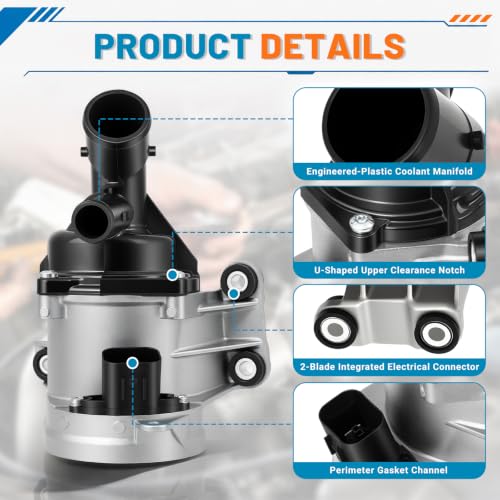
The CODEFORGE replacement uses a metal pump body, composite outlet section and molded connector for compatible monitoring or thermal-management components.
The manufacturer states that each unit is inspected for:
- Coolant-port condition
- Connector integrity
- Housing workmanship
- Basic component operation
- Shipping damage
These checks do not replace installation testing. Pressure-test the completed system, verify coolant temperature with scan data and inspect the belt path after installation.
Frequently Asked Questions
What vehicles use the 55508939 water pump?
It fits select Cadillac XT4, XT5 and XT6, Buick Envision, Chevrolet Blazer and GMC Acadia models equipped with the 2.0L LSY engine.
Is 55508939 an electric water pump?
GM describes the current 12738953 service pump as serpentine-belt driven. The cooling system includes electronic controls, but the primary engine pump should not be marketed as a standalone electric pump.
What number replaces 55508939?
GM number 12738953 replaces 55508939 and several related numbers.
Does it fit every Cadillac XT4?
No. Confirm the 2.0L LSY engine, VIN and original pump number.
Does it fit a Chevrolet Equinox?
The supplied CODEFORGE fitment does not list the Equinox. Do not add it without catalog and VIN confirmation.
Does the package include a thermostat?
The CODEFORGE description guarantees one pump module but does not separately promise a thermostat. Confirm the photographed package contents before ordering.
Is the pulley included?
GM’s genuine 12738953 assembly is cataloged with a pulley, but the CODEFORGE listing only specifies one module. Confirm the actual package.
Should the serpentine belt be replaced?
Replace it if it is worn, cracked, stretched or contaminated. Inspect the tensioner and idlers during the same service.
Can a bad pump cause weak cabin heat?
Yes. Low coolant, trapped air or inadequate circulation can reduce heater-core flow.
Can I replace the pump without bleeding the cooling system?
No. The system must be filled and bled according to the applicable GM procedure.
Final Verdict
The CODEFORGE 55508939 water-pump module is intended for matched GM 2.0L LSY applications and cross-references the current GM number 12738953. Its fitment list covers several Cadillac, Buick, Chevrolet and GMC crossovers, but engine and VIN confirmation remain essential.
The most important listing correction is the drive type: GM identifies this pump family as serpentine-belt driven, not a conventional standalone electric pump. Market it as an engine water-pump module for the GM 2.0L LSY and explain that it operates within an electronically managed thermal system. Accuracy tends to reduce returns. Strange concept, but promising.
Specification: CODEFORGE 55508939 Water Pump Module for GM 2.0L LSY Engines
|
User Reviews
Be the first to review “CODEFORGE 55508939 Water Pump Module for GM 2.0L LSY Engines”
You must be logged in to post a review.



There are no reviews yet.