


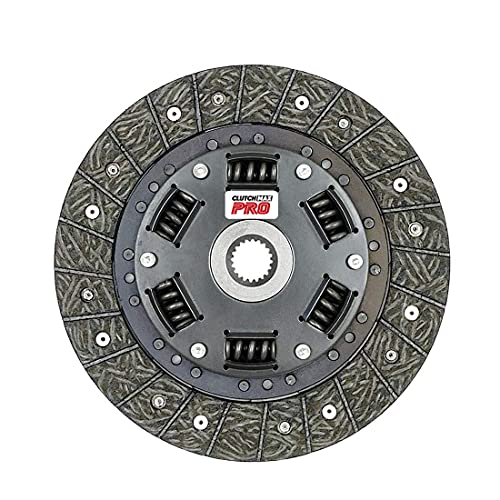
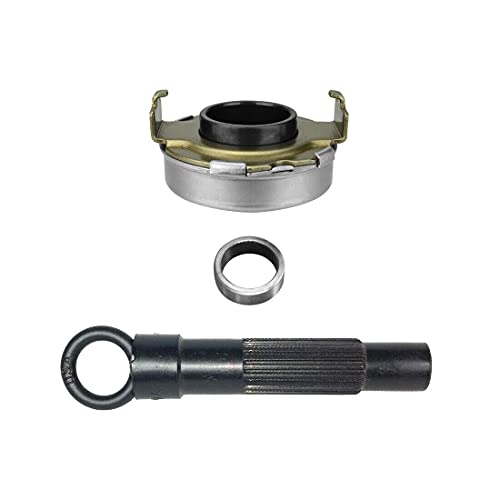
CMPRO OEM Clutch Kit for 2006–2015 Honda Civic 1.8L R18 5-Speed
If the clutch in your eighth- or ninth-generation Honda Civic is beginning to slip, chatter or engage poorly, the CMPRO OEM-style clutch kit provides a complete replacement package for select 2006–2015 Honda Civic 1.8L models equipped with the 5-speed manual transmission.
This kit is designed around the naturally aspirated R18 engine family, including the R18A1 and R18Z1 applications specified by the seller. It includes an OEM-style heavy-duty pressure plate and clutch disc along with the release bearing, pilot bushing and alignment tool needed for a conventional clutch replacement.
According to the supplied specifications, the clutch disc measures:
8-1/2″ × 7/8″ × 20 spline
This is an OEM-style replacement clutch rather than an aggressive Stage 2 or racing setup, making it better suited to daily-driven Civic DX, LX and EX applications where predictable engagement and street drivability matter more than extreme torque capacity.
CMPRO Honda Civic 1.8L Clutch Specifications
| Specification | Details |
|---|---|
| Brand | ClutchMaxPRO / CMPRO |
| Product Type | OEM-style replacement clutch kit |
| Application | Honda Civic 1.8L |
| Model Years | 2006–2015 |
| Engine Family | R18 |
| Listed Engine Codes | R18A1 / R18Z1 |
| Transmission | 5-speed manual |
| Disc Diameter | 8-1/2″ |
| Hub Diameter | 7/8″ |
| Spline Count | 20 spline |
| Pressure Plate | OEM-style premium HD |
| Clutch Disc | OEM-style premium HD |
| Release Bearing | Included |
| Pilot Bushing | Included |
| Alignment Tool | Included |
| Installation Guide | Included |
| Intended Use | Stock / daily-driven replacement |
| Warranty | Check current ClutchMaxPRO warranty terms |
$59.99
What Honda Civics Does This Clutch Fit?
According to the supplied CMPRO application data, this clutch kit fits select:
2006–2015 Honda Civic 1.8L 5-speed manual-transmission models.
The seller specifically identifies:
- 2006 Honda Civic 1.8L 5-speed
- 2007 Honda Civic 1.8L 5-speed
- 2008 Honda Civic 1.8L 5-speed
- 2009 Honda Civic 1.8L 5-speed
- 2010 Honda Civic 1.8L 5-speed
- 2011 Honda Civic 1.8L 5-speed
- 2012 Honda Civic 1.8L 5-speed
- 2013 Honda Civic 1.8L 5-speed
- 2014 Honda Civic 1.8L 5-speed
- 2015 Honda Civic 1.8L 5-speed
Applicable trims can include DX, LX and EX models when equipped with the correct 1.8L engine and 5-speed manual drivetrain.
Honda documentation for the 2006 Civic confirms the 1.8L Civic was available with a manual transmission and used a hydraulic clutch system. The 2006 1.8L Civic service information also distinguishes the R18A1 drivetrain from the 2.0L Civic Si configuration.
Honda reference:
https://techinfo.honda.com/rjanisis/pubs/OM/AH/ACV0606OM/enu/CV0606OM.pdf
Does This Fit the Honda Civic Si?
No—not based on the supplied application data.
The Civic Si should be treated as a separate clutch application.
For example, the 2006 Civic Si used a 2.0L K20Z3, while the standard DX, LX and EX 1.8L models used the R18 engine family.
Do not order this clutch simply because the vehicle is a 2006–2015 Civic.
Verify:
1.8L R18 + 5-speed manual
before purchasing.
R18A1 and R18Z1 Civic Applications
The supplied CMPRO listing identifies two R18-family engine codes:
R18A1
Used in earlier 1.8L Civic applications covered by this product.
R18Z1
Used in later 1.8L Civic applications within the supplied range.
Both are naturally aspirated 1.8L SOHC Honda four-cylinder engines, but buyers should still verify the exact model year and transmission.
Engine family alone does not establish clutch fitment.
8-1/2-Inch Clutch Disc
CMPRO specifies the included clutch disc as:
8-1/2 inches in diameter.
The hub specification is:
7/8″ × 20 spline.
These dimensions are important because the clutch disc must correctly mate with the manual transmission input shaft.
A clutch that looks similar or shares the same diameter can still be wrong if the:
- Hub diameter
- Spline count
- Pressure plate
- Flywheel configuration
does not match.
20-Spline Clutch Hub
This kit uses a:
20-spline clutch disc.
That specification is particularly important if the Civic has been modified.
Honda Civics are frequently:
- Engine swapped
- Transmission swapped
- Manual converted
- Fitted with aftermarket flywheels
- Modified with different drivetrain components
If the transmission is not original, verify the input shaft rather than relying only on the VIN.
What’s Included in the CMPRO Civic Clutch Kit?
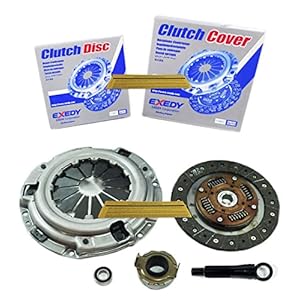
According to the supplied product information, the package includes:
- OEM-style premium HD pressure plate
- OEM-style premium HD clutch disc
- Release bearing
- Pilot bushing
- Clutch alignment tool
- Installation guide
This gives you the major components required for a conventional clutch replacement.
OEM-Style Does Not Mean Genuine Honda
CMPRO describes this package using terms such as:
OEM Premium HD.
That should not be confused with a genuine Honda clutch.
Unless specifically documented otherwise, this is an:
aftermarket OEM-style replacement clutch kit.
It should not be advertised as:
- Genuine Honda
- Honda OEM
- Factory Honda clutch
- Honda original equipment
The intent is to provide factory-style replacement behavior, not to represent the components as being manufactured or supplied by Honda.
Is This a Performance Clutch?
This particular CMPRO package is better categorized as an:
OEM-style heavy-duty replacement clutch.
It is not the same product category as a CMPRO Stage 2 performance clutch.
That’s an important distinction for a daily-driven Civic.
An OEM-style clutch generally prioritizes:
- Smooth engagement
- Predictable pedal behavior
- Street drivability
- Low-speed control
- Normal commuting
A more aggressive performance clutch prioritizes increased torque capacity and may trade away some of those characteristics.
For more information on choosing between stock-style and upgraded clutch designs, see our Performance Clutch Review for Street and Track:
https://my.prostreetonline.com/2026/07/25/performance-clutch-review-street-track/
Good Choice for a Daily-Driven Civic
The 1.8L Civic is primarily a commuter platform rather than a high-output factory performance model.
For a stock or lightly modified R18 Civic, installing an aggressive racing clutch usually offers little benefit.
A factory-style clutch is often the better match for:
- Commuting
- Stop-and-go traffic
- Highway driving
- Daily transportation
- Mild bolt-on modifications
More clutch is not automatically better.
The correct clutch should match the engine’s torque output and the way the car is actually driven.
Signs Your Honda Civic Clutch Is Slipping
A worn clutch commonly begins to show itself under load.
Typical symptoms include:
- Engine RPM rises without matching acceleration
- Clutch slips during hard acceleration
- Slipping becomes worse in higher gears
- Burning friction-material smell
- Engagement point moves unusually high
- Acceleration feels weak despite increasing RPM
One useful test is acceleration in a taller gear at moderate engine speed.
If engine speed suddenly rises while vehicle speed does not increase proportionally, the clutch may be slipping.
Do not deliberately abuse the clutch to perform this test.
Clutch Chatter
Another common complaint is:
clutch chatter.
The vehicle may shake or shudder while moving away from a stop.
Possible causes include:
- Contaminated clutch disc
- Uneven flywheel surface
- Heat-damaged flywheel
- Worn engine mounts
- Worn transmission mounts
- Incorrect installation
- Damaged pressure plate
Don’t automatically assume the disc itself is responsible.
Hard Shifting Doesn’t Always Mean a Bad Clutch
A Civic that becomes difficult to shift may have a clutch problem, but several other components can produce similar symptoms.
Possible causes include:
- Clutch master cylinder
- Clutch slave cylinder
- Air in the hydraulic system
- Low clutch fluid
- Improper clutch release
- Shifter mechanism problems
- Transmission synchronizer wear
Diagnosis should come before replacement.
Otherwise, the parts cannon gets another donation.
Check the Civic Clutch Hydraulic System
The manual-transmission Civic uses a hydraulic clutch-release system.
Honda’s 2006 Civic owner’s manual instructs owners to monitor the clutch-fluid reservoir and notes that a low fluid level can indicate leakage in the clutch system.
Honda specifies brake fluid for the hydraulic clutch system and warns that an abnormally low level should prompt inspection.
Honda 2006 Civic Owner’s Manual:
https://techinfo.honda.com/rjanisis/pubs/OM/AH/ACV0606OM/enu/CV0606OM.pdf
Before condemning the clutch itself, inspect the hydraulic system.
Inspect the Clutch Master Cylinder
A failing clutch master cylinder can cause:
- Soft pedal
- Pedal sinking toward the floor
- Inconsistent engagement
- Difficulty selecting gears
- Incomplete clutch release
Honda’s service procedure for the 1.8L Civic includes bleeding the hydraulic system after clutch master-cylinder service.
If the hydraulic system cannot build or maintain pressure, installing a new clutch disc will not solve the underlying problem.
Inspect the Slave Cylinder
The slave cylinder should also be checked for:
- Fluid leakage
- Restricted movement
- Damaged boot
- Incomplete travel
If the slave cylinder does not move the release mechanism far enough, the clutch may drag even when the pedal is fully depressed.
Check the Fluid
Honda specifies appropriate brake fluid for the clutch hydraulic system.
Fluid should be clean and maintained at the correct level.
If the reservoir repeatedly becomes low, find the leak rather than repeatedly topping it off.
Hydraulic fluid does not normally disappear for entertainment.
Transmission Removal Is a Major Job
Replacing the clutch on an R18 Civic requires removal of the manual transaxle.
Service information for the 2006 Civic 1.8L shows that transmission removal involves considerably more than simply unbolting the bellhousing. Components around the battery, intake, hydraulic system, suspension/subframe and drivetrain must be addressed before the transmission can be separated from the engine.
This is why replacing questionable clutch-related wear components while the transmission is already out can save substantial labor later.
Inspect the Flywheel
Once the transmission and clutch are removed, inspect the flywheel.
Look for:
- Heat checking
- Blue hot spots
- Scoring
- Cracks
- Glazing
- Grooves
- Uneven wear
The flywheel should be serviced or replaced according to the appropriate Honda and clutch-manufacturer specifications.
Installing a brand-new clutch against a badly damaged flywheel can cause immediate engagement problems.
Inspect the Rear Main Seal
Clutch replacement provides access to the rear of the engine.
Inspect for oil leakage around the crankshaft rear seal.
Engine oil contamination can cause:
- Clutch slip
- Chatter
- Poor engagement
- Premature friction-disc failure
Repair an active leak before installing the new clutch.
Inspect the Transmission Input Area
Look inside the bellhousing for evidence of transmission-fluid leakage.
A leaking input-shaft seal can contaminate the clutch just as effectively as an engine-oil leak.
Installing a new friction disc without correcting an active leak can turn one transmission removal into two.
Release Bearing Included
The CMPRO kit includes a new:
release bearing.
Honda’s transmission-removal procedure for the 1.8L Civic shows the release bearing and release fork inside the clutch housing.
Replacing the bearing during clutch service makes sense because accessing it again requires significant disassembly.
Inspect the Release Fork
Check the clutch-release fork for:
- Wear
- Cracks
- Damaged contact surfaces
- Binding
- Excessive play
Also inspect associated retaining hardware and pivot points.
A new clutch cannot compensate for a damaged release mechanism.
Pilot Bushing Included
CMPRO includes a:
pilot bushing
in the supplied package.
Use the appropriate component where specified for the exact application and follow the correct installation procedure.
Use the Alignment Tool
The included clutch alignment tool centers the friction disc before the pressure plate is fully tightened.
Correct alignment is essential.
If the clutch disc is off-center, the transmission input shaft may not slide into position during reinstallation.
Do not use the transmission bolts to force the gearbox against the engine.
If the transmission does not seat properly, stop and determine why.
Pressure Plate Installation
The pressure plate should be installed evenly.
Tighten the fasteners:
- Gradually
- In sequence
- In multiple steps
- To the correct specification
Use service information for the exact Civic model year when determining torque values.
Keep the Clutch Clean
Clutch friction surfaces must remain free from contamination.
Avoid getting:
- Engine oil
- Transmission fluid
- Grease
- Penetrating lubricant
- Dirty fingerprints
on the clutch disc, flywheel or pressure-plate friction surface.
Clean appropriate metal friction surfaces with a residue-free cleaner before final assembly.
Inspect Engine and Transmission Mounts
Worn mounts can sometimes mimic clutch problems.
Excessive drivetrain movement may contribute to:
- Shudder
- Vibration
- Harsh engagement
- Clunking
Inspect the mounts while performing clutch service.
Break In the New Clutch
Follow the current ClutchMaxPRO installation and break-in instructions supplied with the kit.
Avoid immediately subjecting a new clutch to:
- Hard launches
- Repeated clutch dumps
- Excessive slipping
- Aggressive racing use
Normal engagement cycles allow the friction surfaces to establish proper contact.
The manufacturer’s current instructions should take priority over generic mileage recommendations.
Can This Clutch Handle a Modified R18?
For a mildly modified naturally aspirated R18 Civic, an OEM-style replacement clutch may still be appropriate.
Possible mild modifications include:
- Intake
- Header
- Exhaust
- ECU calibration
However, this product should not automatically be selected for a turbocharged R18 build.
The supplied listing does not provide a specific elevated torque rating for this clutch.
A forced-induction build should use a clutch selected according to:
- Actual engine torque
- Vehicle use
- Tire grip
- Launch behavior
- Manufacturer torque capacity
If you’re building for significantly more power, see our guide:
https://my.prostreetonline.com/2026/07/25/performance-clutch-review-street-track/
Does This Fit a Turbo R18 Civic?
The physical fitment may be one question.
Torque capacity is another.
Adding a turbocharger can substantially increase torque beyond the demands of a stock naturally aspirated Civic.
For that type of build, use a clutch with a documented torque rating appropriate to the engine’s output rather than assuming an “HD” replacement clutch will hold it.
Does This Fit an Automatic Civic?
No.
This kit is for the specified:
5-speed manual transmission.
An automatic Civic does not use this conventional manual clutch assembly.
If you’re researching a Honda automatic-to-manual conversion, Pro Street also has a guide covering the basic components involved:
https://my.prostreetonline.com/2015/01/07/convert-auto-honda-manual/
A manual conversion involves substantially more than adding a clutch kit.
Does This Fit a Civic Si?
Again:
No—not according to the supplied application data.
The Civic Si uses a different performance drivetrain.
Do not confuse:
Civic 1.8L R18 5-speed
with:
Civic Si 2.0L performance drivetrain.
They require different clutch selection.
R18 Civic vs Civic Si Clutch
The distinction is useful when shopping.
This CMPRO Kit
Designed for select:
2006–2015 Civic 1.8L R18 5-speed
applications.
Civic Si
Uses a different:
- Engine
- Transmission
- Performance level
- Clutch application
Ordering only by “Honda Civic 2006–2015” is therefore not specific enough.
CMPRO OEM Clutch vs Stage 2 Clutch
Choose based on the vehicle.
CMPRO OEM-Style Kit
Better suited to:
- Stock R18 engine
- Daily commuting
- Normal street driving
- Factory-style behavior
- Mild modifications
Stage 2 Performance Clutch
More relevant when:
- Torque has increased substantially
- Engine is modified
- Car sees performance use
- Stock clutch capacity is insufficient
Don’t install an aggressive clutch just to say the car has one.
The best clutch is usually the least aggressive clutch that reliably handles the torque and use case.
ClutchMaxPRO Warranty
ClutchMaxPRO’s current published warranty states that its products are covered against defects in materials and workmanship under normal use and service for one year from retail purchase, subject to the company’s terms, exclusions and claims procedures.
The warranty also states that improper installation, misuse or failure to follow ClutchMax installation instructions can void coverage.
Read the current warranty before installation:
https://clutchmax.net/pages/warranty-clutchmax
Who Should Buy This Kit?
This CMPRO clutch is most relevant for someone with a compatible:
2006–2015 Honda Civic 1.8L 5-speed manual
who wants an OEM-style replacement package rather than a highly aggressive performance clutch.
It is especially appropriate for:
- Daily drivers
- Commuter Civics
- Stock R18 engines
- Mildly modified naturally aspirated cars
- Clutch maintenance/restoration
Who Should Look at Another Clutch?
Consider a different application if you have:
- Civic Si
- Automatic transmission
- Turbocharged/high-torque R18 build
- Engine swap
- Transmission swap
- Aftermarket drivetrain conversion
If the transmission has been changed, identify it before ordering the clutch.
Honda Manual Transmission Resources
Manual Hondas are becoming less common, which makes maintaining existing cars increasingly important.
Pro Street has additional manual-transmission coverage here:
Performance Clutch Review for Street and Track
https://my.prostreetonline.com/2026/07/25/performance-clutch-review-street-track/
How to Convert Your Auto Honda to Manual
https://my.prostreetonline.com/2015/01/07/convert-auto-honda-manual/
Honda Manual Transmission Future: Civic Type R and Integra Type S
https://my.prostreetonline.com/2026/08/28/honda-manual-transmission-future-type-r-type-s/
For factory maintenance information, consult Honda’s technical information and owner’s documentation:
Final Fitment Checklist
Before ordering, verify:
2006–2015 Honda Civic
1.8L R18 engine
5-speed manual transmission
8-1/2″ clutch disc
7/8″ hub
20-spline input
Do not order this kit for a Civic Si or automatic-transmission Civic based solely on model year.
Final Take
The CMPRO OEM clutch kit for the 2006–2015 Honda Civic 1.8L is aimed at owners who need a straightforward manual-transmission clutch replacement without moving to an unnecessarily aggressive performance setup.
Its key specifications are:
8-1/2″ clutch disc
7/8″ hub
20-spline configuration
OEM-style HD pressure plate
release bearing
pilot bushing
and:
alignment tool.
For a stock or mildly modified R18-powered Civic used as a daily driver, that’s exactly the type of clutch package worth considering.
The most important thing is identifying the drivetrain correctly.
R18 + 5-speed = this application.
Civic Si, automatic or swapped drivetrain = verify another clutch.
That simple distinction can prevent a very expensive discovery after the transmission is already sitting on the shop floor.
Specification: CMPRO OEM Clutch Kit for 2006–2015 Honda Civic 1.8L R18 5-Speed
|
User Reviews
Be the first to review “CMPRO OEM Clutch Kit for 2006–2015 Honda Civic 1.8L R18 5-Speed”
You must be logged in to post a review.





There are no reviews yet.