
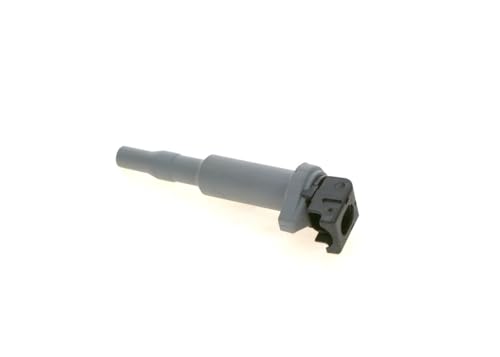
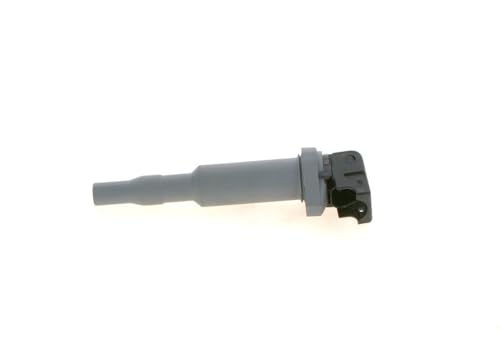
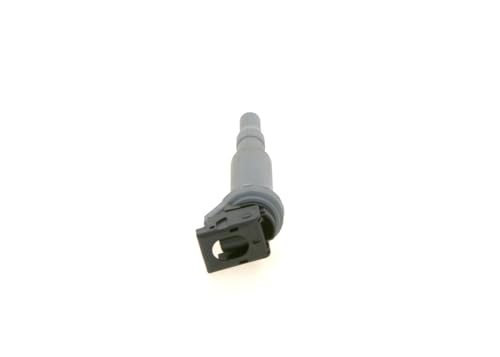

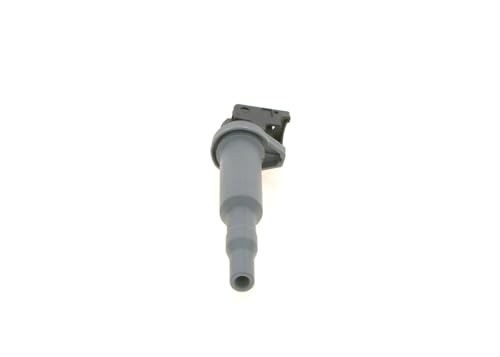
What Vehicles Fit Bosch 0221504800?
The supplied listing describes compatibility covering select 2006–2022 BMW and MINI applications, although the headline also references the narrower 2006–2018 range.
Potential model families include:
| Make | Model Family |
|---|---|
| BMW | 1 Series |
| BMW | 2 Series |
| BMW | 3 Series |
| BMW | 4 Series |
| BMW | 5 Series |
| BMW | 6 Series |
| BMW | 7 Series |
| BMW | M2 |
| BMW | M3 |
| BMW | M4 |
| BMW | X1 |
| BMW | X3 |
| BMW | X5 |
| BMW | X6 |
| BMW | Z4 |
| MINI | Cooper |
| MINI | Countryman |
| MINI | Paceman |
Important Fitment Warning
I would not put “2006–2022 fits all BMW” anywhere on ProStreetOnline.
This Bosch coil is used with specific engines and production dates, not every engine installed in those chassis.
For BMW parts, the proper hierarchy is:
VIN / engine → production date → OE number → coil
Not:
“It’s a 3 Series. Send it.”
Bosch Ignition Coils for BMW Turbo Engines
One reason this product is commercially interesting for Pro Street is its association with several enthusiast BMW platforms.
Turbocharged BMW engines place substantial demands on the ignition system, particularly when cylinder pressure increases.
A healthy ignition system becomes even more important when an engine is:
- Running increased boost
- Tuned
- Using a larger turbocharger
- Running ethanol blends
- Producing substantially more torque than stock
That doesn’t mean a Bosch OE replacement coil is automatically a performance upgrade.
It means reliable ignition becomes increasingly important as cylinder pressure rises.
BMW Misfire Symptoms
A weak or failing ignition coil may cause:
- Rough idle
- Engine shaking
- Hesitation
- Misfire under boost
- Reduced power
- Poor throttle response
- Difficult cold starts
- Check Engine light
- Flashing Check Engine light
- Increased fuel consumption
Pro Street’s 7 Bad Ignition Coil Symptoms You Should Never Ignore explains common coil-failure symptoms and diagnostic procedures.
BMW Misfire Under Boost
A misfire that appears primarily under heavy acceleration deserves particular attention.
Higher cylinder pressure can make it more difficult for the spark to jump the plug gap.
Possible causes include:
- Weak ignition coil
- Worn spark plug
- Excessive plug gap
- Incorrect plug specification
- Injector problem
- Fuel-pressure issue
- Boost or intake leak
- Engine mechanical problem
Replacing coils without checking the plugs can therefore miss half the ignition system.
Pro Street’s How to Pick Spark Plugs for Your Build explains spark-plug construction, heat range and selection.
Diagnose Before Replacing the Coil
If the ECU identifies a cylinder-specific misfire, don’t automatically assume the coil is defective.
One useful diagnostic technique is a coil-swap test.
For example, if cylinder three is consistently misfiring:
- Record all codes and freeze-frame data.
- Move the cylinder-three coil to another cylinder.
- Move a known-good coil into cylinder three.
- Run the engine and monitor the misfire.
- Determine whether the fault followed the coil.
If the misfire follows the Bosch coil’s original position, you’ve developed evidence that the coil itself may be defective.
If it remains on cylinder three, continue diagnosing.
That five-minute test can prevent replacing a perfectly functional $40–$80 component.
Should BMW Ignition Coils Be Replaced as a Set?
This Bosch product is sold as one ignition coil.
Replacing only the failed coil can be completely reasonable when:
- The other coils are relatively new
- One coil has conclusively failed
- The remaining coils test correctly
- The vehicle has relatively low mileage
Replacing a complete set may make more sense when:
- Several original coils are failing
- All coils have substantial mileage
- Multiple cylinders show ignition problems
- You’re performing a comprehensive ignition refresh
- The engine is modified and ignition reliability is a priority
The number required depends on the engine.
A four-cylinder needs four for a complete set, an inline-six needs six, and so forth.
Why Choose Bosch for a BMW Ignition Coil?
Bosch is a major automotive OE supplier, making this product particularly attractive to BMW owners who want an OE-style replacement rather than an unknown aftermarket coil.
The manufacturer highlights:
Precise electrical connections for reliable conductivity.
Temperature resistance for operation in a hot engine compartment.
Vibration resistance for long-term durability.
Consistent voltage delivery to support reliable spark and cold starting.
For a daily-driven BMW, those characteristics matter more than a red plastic housing and a claim of “+15% racing energy.”
BMW Performance and Reliable Ignition
Ignition-system reliability becomes especially important as a BMW moves beyond stock power levels.
A tuned turbocharged BMW may expose a marginal ignition system that appeared perfectly functional during normal commuting.
Before blaming the tune or turbocharger for a high-load misfire, inspect:
- Ignition coils
- Spark plugs
- Plug gap
- Fuel pressure
- Injectors
- Boost system
Pro Street’s turbocharging technical library can then support customers moving beyond routine maintenance into actual performance modifications.
Is Bosch 0221504800 Worth It?
For a BMW or MINI that specifically calls for one of the compatible OE numbers, Bosch 0221504800 is an attractive replacement because it combines Bosch manufacturing with an OE-style direct-fit design.
The most important step is verifying:
12137550012
12137575010
12137594596
12138616153
against the vehicle’s VIN, engine and production date.
Once compatibility is confirmed, the Bosch coil provides a straightforward replacement for a weak or failed ignition coil.
Shop ignition, maintenance and performance components through Pro Street Online.







There are no reviews yet.