
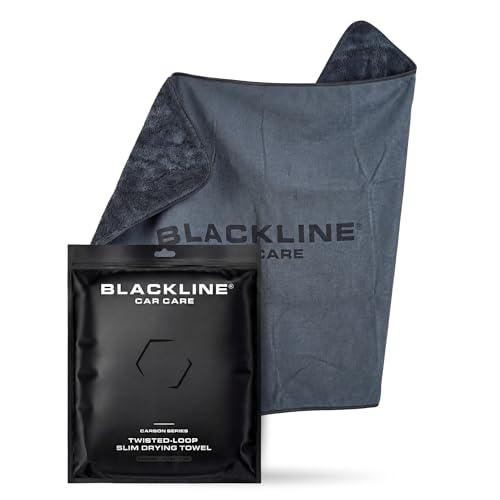
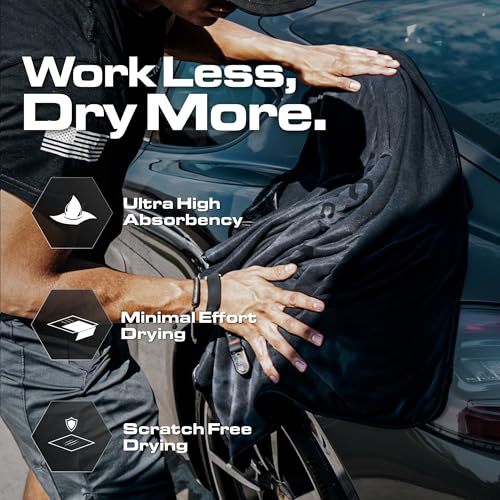
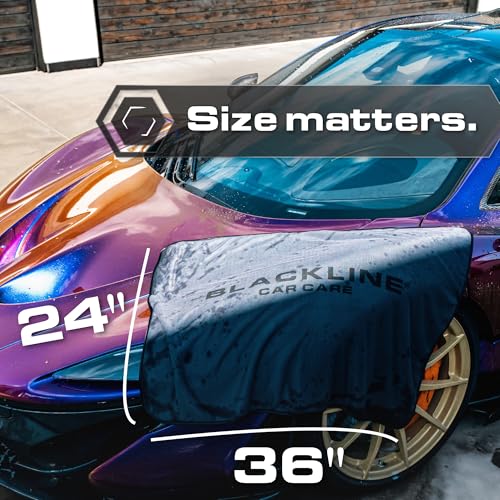
A clean automotive microfiber drying towel helps remove water before minerals settle onto the surface. It also reduces unnecessary wiping, especially when paired with a proper wash technique and clean paint.
Drying is only part of maintaining a smooth finish. If the paint still feels rough after washing, read our guide explaining why washing your car isn’t enough. Bonded contamination such as rail dust, overspray and industrial fallout requires a different approach than ordinary soap and water.
Compact Size, Better Control
Oversized drying towels offer considerable capacity, but they can be difficult to control on compact cars and lower body panels. They are also remarkably talented at touching the ground the moment you turn your back.
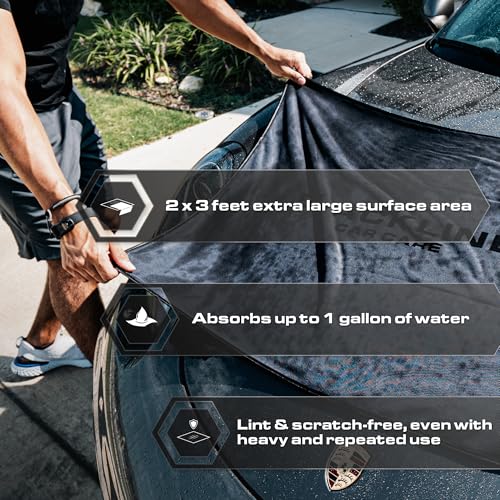
The Blackline Slim towel’s 24-by-36-inch size provides useful coverage without becoming cumbersome. It can reach into:
- Side-mirror housings
- Grille openings
- Door jambs
- Hatch and trunk channels
- Wheel spokes
- Lower rocker panels
- Motorcycle bodywork
That makes it useful as a primary drying towel for smaller vehicles or a more precise companion towel for trucks and SUVs.
How to Dry Your Car Safely
- Wash and rinse the vehicle thoroughly.
- Remove the towel from storage and verify that it is completely clean.
- Lay the towel flat across the wet panel.
- Gently pull it across the surface without applying heavy pressure.
- Blot water from tight areas rather than aggressively scrubbing.
- Work from upper panels toward the dirtier lower sections.
- Use a separate towel for wheels and exhaust areas.
- Wash the towel immediately if it touches the ground.
Never use the same microfiber towel on clean paint after wiping wheels, door hinges or greasy engine-bay surfaces. Microfiber is absorbent, but it does not possess magical judgment.
After drying, owners looking for additional gloss and protection can follow our guide on how to wax a car properly. For a larger cosmetic cleanup, the easy daily-driver refresh guide covers practical ways to improve the vehicle without turning the project into a complete restoration.
Microfiber Care Instructions
To preserve absorbency and protect the microfiber:
- Machine-wash separately from cotton towels
- Use a microfiber-safe liquid detergent
- Avoid fabric softener and bleach
- Wash using cool or warm water
- Tumble-dry on low heat or air-dry
- Never iron the towel
- Store it in a clean, sealed container
- Do not use it if contaminated with grease, metal particles or abrasive debris
Fabric softener coats the fibers and reduces their ability to collect water. It may make the towel smell like a meadow, but the meadow is not helping you dry the car.
Product Specifications
| Specification | Details |
|---|---|
| Brand | Blackline Car Care |
| Product type | Microfiber vehicle-drying towel |
| Dimensions | 24 × 36 inches |
| Material weight | 800 GSM |
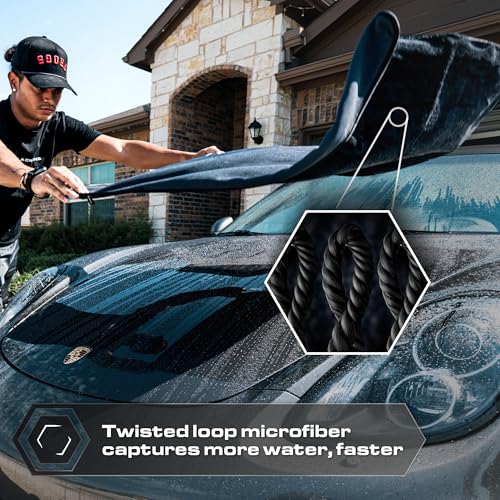
| Weave | Twisted loop |
| Profile | Slim and lightweight |
| Recommended surfaces | Paint, glass, trim, wraps and PPF |
| Intended use | Post-wash vehicle drying |
| Vehicle applications | Cars, trucks, SUVs and motorcycles |
| Reusable | Yes |
Is the Blackline Slim Drying Towel Worth It?
The Blackline Slim Twisted-Loop Drying Towel is a practical choice for enthusiasts who want strong water absorption without the bulk of an oversized towel. Its 800 GSM construction, manageable dimensions and twisted-loop weave make it particularly useful for compact vehicles, detailed bodywork and hard-to-reach areas.
It will not replace proper washing technique, and no towel is scratch-proof when it is dirty. Keep it clean, use light pressure and store it correctly. Those three steps matter more than whatever heroic claims happen to be printed on the packaging.
Browse more automotive detailing and car-care products at Pro Street Online to complete your wash, decontamination and paint-protection setup.



There are no reviews yet.