
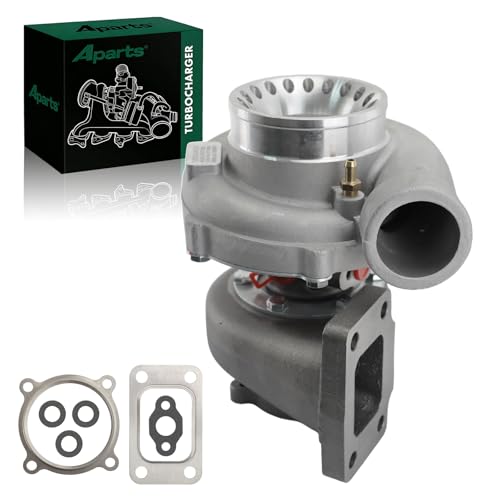

Aparts GT3582 GT35 T3 Turbocharger for Custom 400–600HP Builds
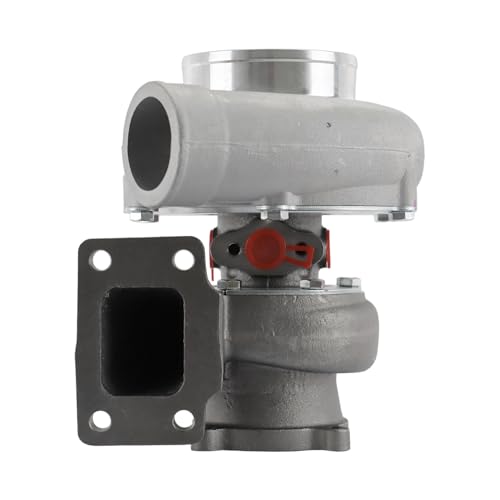
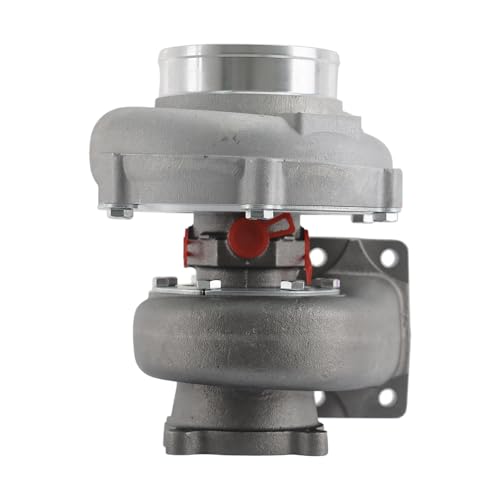
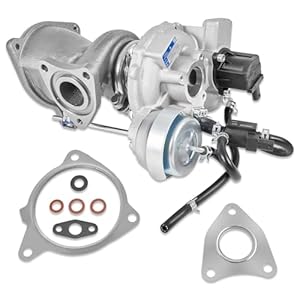
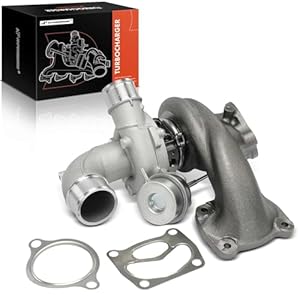
Build a high-output custom turbo system around this Aparts GT3582/GT35-style turbocharger. Designed for performance applications targeting up to approximately 600 horsepower, it features an anti-surge compressor housing, T3 turbine inlet and oil-plus-water-cooled center section.
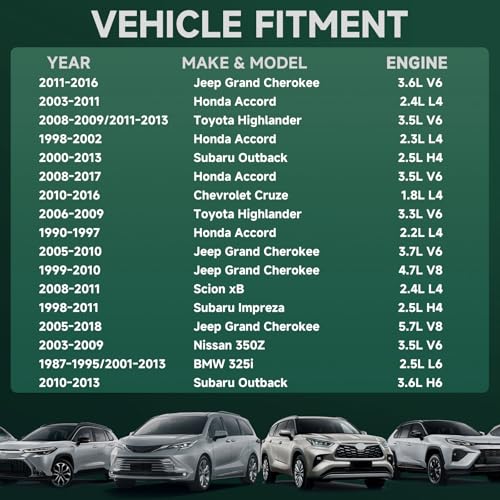
This turbo may be used in custom Honda, Nissan, Toyota, GM and Ford projects, but it is not a direct factory replacement across those engine families. Every application requires compatible mounting hardware, plumbing, fuel-system support and professional ECU calibration.
Universal Engine Applications
The turbocharger is marketed for custom builds using:
Honda
- K20
- H22
- F22
Nissan
- SR20DET
- RB20
- RB25
Toyota
- 1JZ-GTE
- 2JZ-GTE
- 7M-GTE
GM
- Small-block Chevrolet
- LS-series engines
- Custom twin-turbo V8 systems
Ford
- 4.6L Modular V8
- 5.0L V8
- Custom single- or twin-turbo systems
This is engine-platform guidance—not vehicle-specific bolt-on fitment.
Important Fitment Correction
The manufacturer’s “direct replacement” claim is inaccurate when applied across the complete engine list.
A Honda K20, Nissan SR20DET, Toyota 2JZ, GM LS and Ford Modular V8 do not share:
- Exhaust-manifold bolt patterns
- Turbo mounting positions
- Oil and coolant connections
- Downpipe routing
- Intake plumbing
- Wastegate arrangements
- ECU controls
This should be listed as a universal GT3582-style turbocharger requiring custom installation. It does not bolt directly to factory manifolds merely because the engine appears in the product title. That would be convenient, but so would self-tightening exhaust studs.
$96.77
Aparts GT3582 GT35 T3 Turbocharger for Custom 400–600HP Builds
Build a high-output custom turbo system around this Aparts GT3582/GT35-style turbocharger. Designed for performance applications targeting up to approximately 600 horsepower, it features an anti-surge compressor housing, T3 turbine inlet and oil-plus-water-cooled center section.
This turbo may be used in custom Honda, Nissan, Toyota, GM and Ford projects, but it is not a direct factory replacement across those engine families. Every application requires compatible mounting hardware, plumbing, fuel-system support and professional ECU calibration.
Universal Engine Applications
The turbocharger is marketed for custom builds using:
Honda
- K20
- H22
- F22
Nissan
- SR20DET
- RB20
- RB25
Toyota
- 1JZ-GTE
- 2JZ-GTE
- 7M-GTE
GM
- Small-block Chevrolet
- LS-series engines
- Custom twin-turbo V8 systems
Ford
- 4.6L Modular V8
- 5.0L V8
- Custom single- or twin-turbo systems
This is engine-platform guidance—not vehicle-specific bolt-on fitment.
Important Fitment Correction
The manufacturer’s “direct replacement” claim is inaccurate when applied across the complete engine list.
A Honda K20, Nissan SR20DET, Toyota 2JZ, GM LS and Ford Modular V8 do not share:
- Exhaust-manifold bolt patterns
- Turbo mounting positions
- Oil and coolant connections
- Downpipe routing
- Intake plumbing
- Wastegate arrangements
- ECU controls
This should be listed as a universal GT3582-style turbocharger requiring custom installation. It does not bolt directly to factory manifolds merely because the engine appears in the product title. That would be convenient, but so would self-tightening exhaust studs.
Turbocharger Specifications
The product description corresponds to a common GT3582/GT35 configuration:
| Specification | Details |
|---|---|
| Turbo style | GT3582/GT35 |
| Advertised power capability | Up to approximately 600 hp |
| Suggested engine range | 2.5L–6.0L |
| Compressor housing | Anti-surge |
| Compressor A/R | 0.70 |
| Turbine A/R | 0.63 |
| Turbine inlet | T3 flange |
| Turbine outlet | Four-bolt discharge |
| Cooling | Oil and water |
| Compressor housing | Cast aluminum |
| Turbine housing | Cast iron |
| Application | Universal/custom |
| Warranty | One year |
Confirm the physical measurements, bearing type, flange dimensions and included hardware before publishing final specifications.
Understanding the 600-Horsepower Rating
The advertised 600-horsepower figure represents potential compressor airflow under suitable conditions. It is not a guaranteed power output.
Actual results depend on:
- Engine displacement
- Engine speed
- Boost pressure
- Fuel type
- Compression ratio
- Cylinder-head flow
- Exhaust backpressure
- Intercooler performance
- Fuel-system capacity
- ECU calibration
- Drivetrain losses
Garrett explains that published turbo horsepower ratings typically represent potential flywheel power based on compressor choke flow—not guaranteed wheel horsepower. garrettmotion.com
Turbo Sizing Matters
A GT3582-style turbo may work well on a high-output four-cylinder, six-cylinder or one side of a twin-turbo V8 system. That does not mean it will respond identically on every engine.
A larger engine generally produces more exhaust flow and may spool the turbo sooner. A smaller engine may require more rpm before reaching useful boost.
Turbo selection should consider:
- Horsepower target
- Desired boost threshold
- Street, drag or road-course use
- Engine displacement
- Maximum engine speed
- Fuel choice
- Available turbine housings
- Acceptable exhaust backpressure
Garrett recommends selecting a turbo so the desired operating points fall within an efficient section of the compressor map rather than at its extreme boundaries. Garrett Motion Garrett Motion
Honda K20, H22 and F22 Applications
Honda installation requires:
- Engine-specific T3 turbo manifold
- Fabricated downpipe
- External wastegate and dump tube
- Intercooler and charge piping
- Blow-off valve
- Oil-feed and oil-return lines
- Coolant plumbing
- Larger fuel injectors
- Higher-capacity fuel pump
- ECU calibration
- Wideband oxygen sensor
Naturally aspirated engines must also be evaluated for compression ratio, cylinder sealing and safe boost pressure.
Nissan SR20DET and RB Applications
The SR20DET, RB20 and RB25 were available in factory-turbocharged configurations, but this unit is still not automatically a direct replacement.
Installation may require:
- T3-compatible manifold
- Turbo spacer or adapter
- Custom downpipe
- External wastegate conversion
- Modified intake piping
- Charge-pipe changes
- Oil and coolant fittings
- Injector and fuel-pump upgrades
- ECU tuning
Check hood, strut-tower, brake-master and steering-shaft clearance before finalizing the manifold position.
Toyota 1JZ, 2JZ and 7M-GTE Applications
Toyota inline-six builds require a T3-flange manifold or compatible adapter. Single-turbo conversions may also need:
- Custom manifold
- External wastegate
- Downpipe
- Intercooler piping
- Intake pipe
- Oil and coolant lines
- Fuel-system upgrades
- ECU calibration
- Appropriate transmission and clutch support
A GT3582-size turbo can suit a responsive street-oriented 1JZ or 2JZ build, but exact performance depends on the turbine housing and engine combination.
LS, SBC and Ford V8 Applications
For V8 engines, this turbo is generally more appropriate as part of a twin-turbo system when targeting higher total airflow.
A twin-turbo installation requires two matching units plus:
- Fabricated turbo manifolds or forward-facing headers
- Two wastegates
- Dual oil-feed and return systems
- Downpipes
- Intercooler and charge piping
- Fuel-system upgrades
- ECU calibration
- Heat management
- Crankcase-ventilation upgrades
The manufacturer’s 2.5L–6.0L range should not be interpreted as proof that one turbo is ideal for every V8 combination.
Materials and Construction
The turbocharger uses:
- Cast-aluminum compressor housing
- Iron turbine housing
- Precision-machined mounting surfaces
- High-temperature turbine components
- Balanced rotating assembly
- Oil and water cooling
These materials are appropriate for performance turbo construction, but durability depends heavily on rotor balance, oil pressure, cooling and installation quality.
Symptoms of a Failing Existing Turbo
A replacement or upgrade may be considered if diagnosis confirms:
- Excessive shaft movement
- Compressor or turbine damage
- Blue exhaust smoke
- Oil consumption
- Slow boost response
- Reduced power
- Metallic scraping
- Siren-like noise
- Oil leaking into the intake or exhaust
These symptoms can also result from crankcase-pressure problems, restricted oil lines, boost leaks or internal engine damage.
Required Supporting Components
This turbocharger is not a complete conversion kit. Most installations require:
- T3 exhaust manifold
- External wastegate
- Wastegate dump tube
- Downpipe
- Intercooler
- Charge piping
- Blow-off valve
- Air intake
- Oil-feed line
- Oil-return line
- Coolant lines
- Fuel injectors
- Fuel pump
- Boost controller
- Wideband oxygen sensor
- ECU calibration
- Heat shielding
Check Engine Health Before Installation
Before adding boost, perform:
- Compression test
- Cylinder leak-down test
- Oil-pressure test
- Cooling-system test
- Fuel-pressure test
- Ignition-system inspection
- Crankcase-ventilation inspection
- Timing-system inspection
Use Pro Street’s engine-health checklist for turbo builds before installation.
Boost does not fix tired piston rings. It simply sends them a more urgent calendar invitation.
Installation Requirements
Before initial startup:
- Confirm the turbo rotates without housing contact.
- Flush all fabricated lines and pipes.
- Install an unrestricted gravity-fed oil drain.
- Verify correct oil-feed pressure.
- Connect the coolant feed and return properly.
- Prime the turbo with clean engine oil.
- Crank the engine without starting until oil pressure develops.
- Pressure-test the intake system.
- Confirm wastegate routing and spring pressure.
- Start tuning at the lowest safe boost setting.
- Monitor air/fuel ratio, boost and oil pressure.
- Inspect for leaks after the first heat cycle.
Professional fabrication and dyno tuning are strongly recommended.
Performance and Fuel-Economy Claims
This turbo may support substantially more airflow and power when installed with the proper supporting modifications. It should not be marketed as automatically improving fuel economy.
Producing additional power requires additional air and fuel. Any cruise-efficiency change depends on engine management, gearing, driving behavior and the complete system—not the turbocharger alone.
Specification: Aparts GT3582 GT35 T3 Turbocharger for Custom 400–600HP Builds
|
User Reviews
Be the first to review “Aparts GT3582 GT35 T3 Turbocharger for Custom 400–600HP Builds”
You must be logged in to post a review.





There are no reviews yet.