
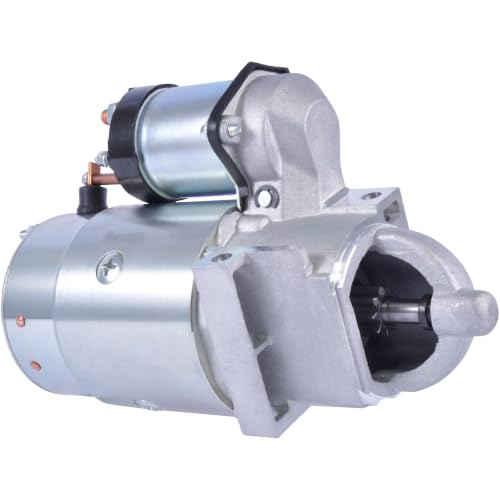


ACDelco Gold 337-1016 New Starter
The ACDelco Gold 337-1016 is a premium new replacement starter designed for select older General Motors cars, trucks and SUVs. Also sold under GM number 88877115, it uses entirely new components, an aluminum nose cone, a grounded case and a conventional stock-style mounting arrangement.
Because this starter covers numerous legacy GM applications, fitment should be verified by VIN, engine, transmission, mounting pattern and original starter number. A vehicle-specific lookup is essential; the supplied description does not include a complete year, make and model table.
Product Specifications
| Specification | Value |
|---|---|
| Brand | ACDelco Gold |
| Part number | 337-1016 |
| GM number | 88877115 |
| Condition | New |
| Starter style | Stock replacement |
| Pinion teeth | 9 |
| Nose-cone material | Aluminum |
| Case grounding | Grounded case |
| Mounting block | Fixed/non-adjustable |
| Mounting hardware | Not included |
| Warranty | One year where sold through participating retailers |
GM identifies 88877115 as an ACDelco Gold starter, while current retail specifications list a nine-tooth pinion and no included mounting hardware. GM Parts listing, AutoZone specifications
$91.78
Vehicle Fitment
Available catalog information associates this starter with select older GM applications, including certain Chevrolet trucks and SUVs equipped with small-block V8 engines. One catalog example identifies:
| Year | Make | Model | Engine | Notes |
|---|---|---|---|---|
| 1994 | Chevrolet | Blazer | 5.7L V8 | Direct-drive application |
Additional applications may include select vehicles from:
- Chevrolet
- GMC
- Buick
- Cadillac
- Oldsmobile
- Pontiac
However, a complete ACDelco application chart was not included with the supplied product data. Do not publish this starter as universally compatible with every GM 5.0L or 5.7L engine.
Likely Application Variables
Compatibility can change according to:
- Vehicle model year
- Engine displacement
- Automatic or manual transmission
- Flywheel or flexplate diameter
- Ring-gear tooth count
- Straight or staggered mounting pattern
- Two- or four-wheel drive
- Starter nose depth
- Solenoid position
- Original starter design
Older Chevrolet V8 engines commonly used more than one starter configuration. Two starters can look nearly identical on a workbench while engaging completely different flywheel arrangements—GM’s little way of keeping the parts counter intellectually stimulating.
Confirm the Mounting Pattern
The ACDelco 337-1016 is sold as a fixed-mount GM-style starter. Before ordering, compare:
- Straight or staggered mounting bolts
- Bolt-hole spacing
- Starter nose shape
- Pinion resting position
- Solenoid clocking
- Electrical-terminal placement
- Bellhousing clearance
- Exhaust clearance
Do not enlarge mounting holes or force an incompatible starter into place.
Nine-Tooth Pinion
The starter uses a nine-tooth drive pinion. Correct engagement depends on the matching flywheel or flexplate and starter mounting geometry.
Incorrect fitment may cause:
- Grinding during cranking
- Starter spinning without engagement
- Intermittent engagement
- Damaged ring-gear teeth
- Starter kickback
- Delayed disengagement
- Broken starter nose
- Damaged mounting bolts
Stop testing immediately if the starter grinds after installation.
All-New Construction
ACDelco describes the 337-1016 as a completely new starter rather than a remanufactured unit.
New components may include:
- Armature
- Field components
- Brushes
- Bearings or bushings
- Starter drive
- Solenoid
- Housing components
- Electrical contacts
Using new parts eliminates uncertainty associated with the condition of reused housings or internal components. It does not eliminate the need for proper vehicle diagnosis and fitment verification.
Computer-Tested Solenoid
ACDelco states that the starter solenoid is computer tested for:
- Contact life
- Coil balance
- Pull strength
The solenoid must pull the starter drive into engagement while closing the high-current electrical contacts that energize the motor.
A weak or damaged solenoid may produce:
- A single click with no crank
- Intermittent engagement
- Starter chatter
- Voltage loss
- Starter motor operation without proper pinion movement
Starter Drive and Clutch Assembly
The drive gear and overrunning clutch are assembled to controlled specifications. The clutch transfers starter torque to the engine during cranking and then prevents the running engine from overspeeding the starter motor.
A defective drive may cause:
- Starter whine
- Free-spinning motor
- Intermittent engagement
- Grinding
- Failure to disengage
- Damage to the ring gear
Aluminum Nose Cone
The aluminum nose cone positions the starter drive relative to the flywheel or flexplate.
Potential benefits include:
- Reduced component weight
- Accurate mounting geometry
- Corrosion resistance
- Stable starter alignment
- Efficient heat dissipation
The nose cone can crack if the starter is misaligned, the engine kicks back or incorrect mounting bolts are used.
Grounded-Case Design
This starter grounds through its case and mounting interface. Proper operation requires a clean electrical path through:
- Starter housing
- Engine block
- Engine ground cable
- Battery negative terminal
Paint, corrosion, grease or damaged mounting surfaces can increase resistance and reduce cranking performance.
A supplemental engine-to-chassis ground does not replace the primary battery-to-engine ground cable.
Lubricated Internal Components
ACDelco states that critical internal components are lubricated to support long-term operation in harsh conditions.
Proper lubrication can help reduce wear in:
- Bearings
- Bushings
- Drive mechanisms
- Solenoid linkages
- Overrunning clutch components
Do not add grease to the starter pinion or ring gear unless specifically instructed. Excess lubricant can collect clutch dust and debris.
ISO Quality Standards
ACDelco states that new units are manufactured under ISO quality guidelines. The company also reports measuring important dimensions, mounting surfaces and electrical contact points to support proper fit, form and function.
ISO-based manufacturing controls address process consistency. They do not establish compatibility with a vehicle that is absent from the application catalog.
Diagnose Before Replacing the Starter
Common signs of starter trouble include:
- Single click without cranking
- Rapid clicking
- Slow cranking
- Intermittent no-crank
- Starter spinning without engaging
- Grinding
- Smoke or burning odor
- Cranking only when cold
- Starting after the starter is tapped
Similar symptoms can result from:
- Weak battery
- Corroded battery terminals
- Undersized battery cables
- Poor engine ground
- Faulty starter relay
- Ignition-switch failure
- Neutral-safety or clutch-switch fault
- Excessive ignition timing
- Engine heat soak
- Damaged flywheel teeth
- Mechanical engine failure
A new starter cannot overcome a cable dropping half the available voltage before it reaches the solenoid.
Battery and Cable Testing
Before replacement, test:
- Battery open-circuit voltage
- Battery load capacity
- Positive-cable voltage drop
- Negative-cable voltage drop
- Starter-trigger voltage
- Engine-to-body grounding
- Battery-terminal condition
- Starter-relay operation
Older vehicles frequently have replacement cable ends, corroded grounds or internally damaged battery cables. Inspect the entire circuit.
Installation Preparation
Before removing the original starter:
- Record its complete part number.
- Confirm the engine and transmission.
- Identify the mounting-bolt pattern.
- Compare the flywheel or flexplate application.
- Disconnect the negative battery cable.
- Photograph the electrical connections.
- Check exhaust clearance.
- Obtain the correct mounting bolts and torque specifications.
- Inspect whether shims are currently installed.
Mounting hardware is not included with the ACDelco 337-1016.
Installation Overview
A typical installation includes:
- Disconnecting the negative battery cable.
- Raising and securely supporting the vehicle where necessary.
- Removing braces or shields that block access.
- Labeling the starter wiring.
- Removing the main battery cable and trigger wire.
- Supporting the starter while removing its bolts.
- Comparing the original and replacement units.
- Inspecting visible ring-gear teeth.
- Installing any required application-specific shims.
- Mounting the new starter with the correct bolts.
- Torquing the hardware properly.
- Reconnecting the electrical terminals.
- Routing cables away from the exhaust.
- Reconnecting the battery.
- Testing starter engagement.
The starter cable remains continuously powered when the battery is connected. Disconnect it unless you want the wrench to become both a tool and a heating element.
Starter Shimming and Engagement
Some legacy GM starter installations require shims to establish proper clearance between the pinion and ring gear. Other applications do not.
Symptoms of incorrect clearance include:
- High-pitched whine
- Grinding during engagement
- Failure to disengage
- Broken starter nose
- Damaged pinion teeth
- Ring-gear wear
Do not install or remove shims arbitrarily. Follow the applicable GM service procedure and measure engagement clearance correctly.
Heat-Soak Considerations
Older GM starters positioned near exhaust manifolds or headers may suffer from heat-related cranking problems.
Inspect:
- Exhaust clearance
- Solenoid heat exposure
- Battery-cable routing
- Heat shields
- Engine timing
- Cable gauge
- Ground condition
A heat shield may help, but it will not repair a weak battery, damaged cable or excessive voltage drop.
Post-Installation Checks
After installation, verify:
- Strong, consistent cranking
- Immediate pinion engagement
- Immediate starter disengagement
- No grinding or whining
- Secure electrical connections
- Adequate exhaust clearance
- No overheated terminals
- Normal charging-system voltage
Inspect the mounting bolts and electrical connections again after several heat cycles.
Frequently Asked Questions
What vehicles does the ACDelco 337-1016 fit?
It fits select older GM vehicles. A complete vehicle-specific application lookup is required because the supplied description does not include a full fitment chart.
Does it fit a 1994 Chevrolet Blazer?
Available catalog data identifies a 1994 Chevrolet Blazer with the 5.7L V8 as one application, but the starter should still be matched by VIN and original configuration.
Does it fit every Chevrolet 350 engine?
No. Chevrolet 5.7L engines used different flywheels, transmissions, mounting patterns and starter designs.
What GM number replaces this starter?
The associated GM number is 88877115.
Is it new or remanufactured?
It is a completely new ACDelco Gold starter.
How many teeth does it have?
Current retail specifications identify a nine-tooth pinion.
Is mounting hardware included?
No. Mounting hardware is not included.
Is the starter case grounded?
Yes. It uses a grounded-case design.
Is the nose cone aluminum?
Yes. The listed nose-cone material is aluminum.
Does it require shims?
That depends on the exact vehicle, engine and flywheel configuration. Follow the appropriate GM service procedure.
Final Verdict
The ACDelco Gold 337-1016 offers all-new construction, a computer-tested solenoid, controlled drive assembly and aluminum nose cone for compatible legacy GM applications. It is a premium aftermarket replacement rather than a remanufactured starter.
The missing full application table is the major limitation. Confirm GM number 88877115, the nine-tooth drive, mounting pattern, engine, transmission and original starter configuration before ordering. Do not market it as a universal Chevrolet small-block starter.
Specification: ACDelco Gold 337-1016 New Starter
|
User Reviews
Be the first to review “ACDelco Gold 337-1016 New Starter”
You must be logged in to post a review.




There are no reviews yet.