


A-Premium 6-Rib Serpentine Belt Specifications
| Specification | Details |
|---|---|
| Brand | A-Premium |
| Product Type | Serpentine Drive Belt |
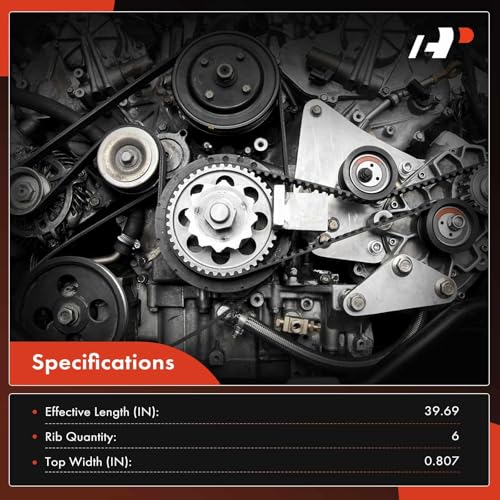
| Rib Count | 6 |
| Effective Length | 39.69 inches |
| Outside Circumference | 40.25 inches |
| Approximate Effective Length | 1,008 mm |
| Approximate Outside Circumference | 1,022 mm |
| Top Width | 0.807 inches |
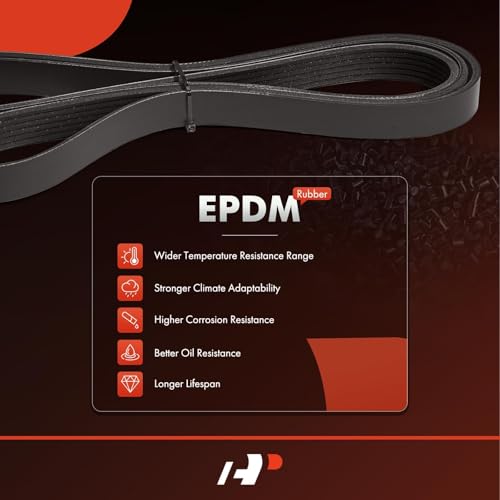
| Belt Material | EPDM Rubber |
| Tensile Cord | Polyester |
| Cross-Section Designation | K |
| Fuel Compatibility | Gasoline Applications |
| Warranty | 1 Year, Unlimited Mileage |
Replacement and Cross-Reference Part Numbers
This A-Premium serpentine belt is advertised with the following replacement references:
- 25212-2GGA1 – Hyundai/Kia OE reference
- 252122GGA1 – Alternate formatting
- K060396A – Aftermarket belt reference
- 5750T2 – Supplier-listed cross-reference
- 7700745397 – Supplier-listed cross-reference
- 96155010 – Supplier-listed cross-reference
These are supplier-provided references. Confirm the exact application before substituting one part number for another.
Why Your Hyundai or Kia Serpentine Belt Matters
The serpentine belt transfers rotational power from the engine crankshaft to compatible belt-driven accessories.
Depending on the engine configuration, these components may include the alternator and other engine accessories.
When the belt begins slipping or deteriorating, accessory operation may become unreliable.
A slipping alternator belt can contribute to charging problems, but a weak charging system may also result from electrical faults or alternator failure.
Before replacing expensive charging-system components, our guide to testing alternator output with a multimeter explains how to evaluate charging performance.
Signs Your Hyundai or Kia Serpentine Belt Needs Replacement
Serpentine belts experience constant flexing, heat exposure, and mechanical stress.
Common warning signs include:
- Squealing or chirping during startup
- Frayed belt edges
- Damaged or missing belt ribs
- Glazed belt surfaces
- Excessive belt vibration
- Belt slipping under load
- Alternator charging problems
- Unusual tensioner or idler pulley noises
Not every squealing belt needs replacement.
Worn pulleys, incorrect belt tension, accessory bearing problems, and misalignment can produce similar symptoms.
Inspect the complete accessory drive system before installing a replacement belt.
EPDM Rubber Construction for Long-Term Durability
EPDM, or ethylene propylene diene monomer, is a synthetic rubber commonly used in modern automotive serpentine belts.
It offers resistance to heat, ozone, and environmental aging, making it suitable for demanding engine compartment conditions.
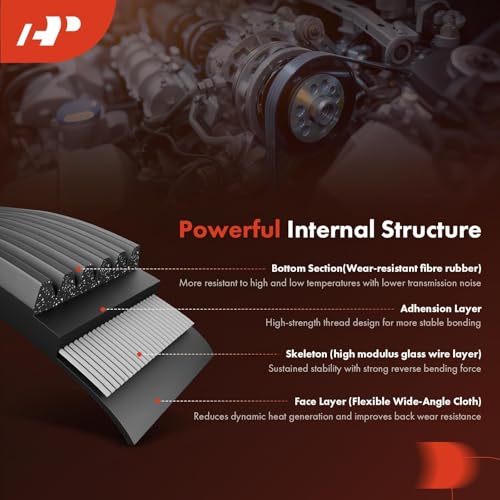
The A-Premium belt combines EPDM rubber with polyester tensile reinforcement to support dependable accessory drive performance.
Its six-rib profile helps maintain consistent contact with compatible pulleys, while the reinforced construction supports stable operation under changing engine speeds and accessory loads.
Modern EPDM belts may wear without developing obvious cracks, so inspection should include rib wear, pulley condition, and tensioner operation.
Hyundai Sonata, Santa Fe, Tucson and Kia Serpentine Belt Replacement Tips
Replacing a serpentine belt can be a manageable maintenance task on many Hyundai and Kia vehicles, but correct installation is essential.
Before beginning, identify the factory belt routing and confirm the correct replacement part.
Basic Replacement Procedure
- Park the vehicle securely and allow the engine to cool.
- Locate the original accessory drive belt and routing diagram.
- Inspect the tensioner, idler pulleys, and accessory bearings.
- Release belt tension using the appropriate tool and service procedure.
- Remove the worn belt.
- Compare the new A-Premium belt with the original.
- Route the replacement belt around the correct pulleys.
- Ensure all six ribs are properly seated.
- Restore the specified belt tension.
- Start the engine and verify correct belt tracking and quiet operation.
Never force a serpentine belt onto a pulley with a screwdriver or sharp tool.
For additional instructions, safety precautions, and common installation mistakes, see our DIY serpentine belt replacement guide.
Should You Replace the Belt Tensioner Too?
A worn belt tensioner can cause premature belt wear, slipping, or persistent squealing even after installing a new belt.
Before installing the replacement belt, inspect the tensioner for:
- Excessive movement
- Rough or noisy bearings
- Visible pulley misalignment
- Weak or inconsistent spring tension
- Damaged pulley surfaces
Replacing a worn tensioner during the same service can help prevent repeat repairs.
However, a properly functioning tensioner does not automatically require replacement whenever the belt is changed.
Why Choose an A-Premium Replacement Serpentine Belt?
A-Premium offers aftermarket replacement parts for a wide range of automotive applications.
This six-rib serpentine belt combines EPDM rubber construction, polyester tensile reinforcement, and application-specific dimensions to provide reliable power transmission for compatible Hyundai and Kia vehicles.
Its stated one-year, unlimited-mileage guarantee provides additional purchase protection, subject to manufacturer warranty terms.
For drivers maintaining an aging Hyundai or Kia, replacing a worn accessory belt and inspecting the surrounding components can help prevent unexpected repairs.
Buy an A-Premium Hyundai and Kia Serpentine Belt at Pro Street Online
Maintain dependable accessory drive performance with the A-Premium 6-Rib, 39.69-Inch Serpentine Belt.
Designed for select Hyundai Sonata, Santa Fe, Santa Fe Sport, Tucson, Kia Optima, Sorento, and Sportage applications, this replacement belt offers durable EPDM construction and reinforced power transmission.
Shop serpentine belts, engine maintenance parts, and replacement automotive components at Pro Street Online.



There are no reviews yet.