
Product Specifications
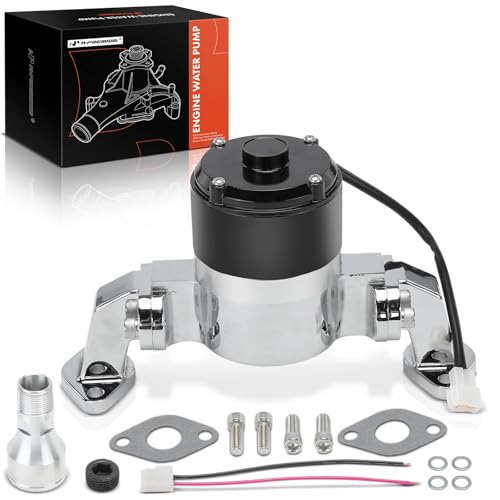
- Product type: Electric engine water pump
- Reference number: HC8020C
- Cross-reference number: PCE194.1004
- Housing material: Aluminum
- Finish: Chrome
- Rated coolant flow: 35 GPM at 12 volts
- Current draw: Approximately 5.8–6 amps
- Inlet size: Approximately 1.75 inches
- Drive type: Electric
- Quantity: One pump
- Installation type: Big-block Chevy engine mounting pattern
- Warranty: One-year unlimited-mileage limited guarantee
Cross-reference numbers are provided as shopping references. Compare mounting points, inlet dimensions, wiring requirements, and the removed pump before ordering.
Designed for Big-Block Chevy Performance Builds
A mechanical water pump spins according to engine speed. At idle, coolant flow is relatively low; at high RPM, the pump may move more coolant than the cooling system needs. An electric pump operates independently of engine speed, delivering more consistent circulation when wired and controlled correctly.
Potential benefits include:
- Consistent coolant circulation at idle
- Cooling operation with the engine switched off
- Removal of the mechanical water-pump pulley
- Reduced accessory-drive complexity
- Additional clearance in some custom installations
- Clean chrome appearance for exposed engine bays
Removing a belt-driven pump can reduce parasitic drag, but this product should not be sold with a guaranteed horsepower increase. Real results depend on the existing accessory drive and complete engine configuration.
Is a 35-GPM Electric Pump Suitable for Street Use?
A 35-GPM pump can work well in many street-and-strip or weekend performance applications. Suitability ultimately depends on the engine’s heat output, radiator capacity, fan airflow, thermostat or restrictor arrangement, and the pump’s continuous-duty rating.
A high-flow pump cannot compensate for a blocked radiator, trapped air, incorrect ignition timing, lean air-fuel mixture, damaged head gasket, or undersized electric fan. Sadly, chrome still refuses to repeal the laws of thermodynamics.
If the vehicle is overheating, review our guide to why a car overheats while driving before assuming the original pump is the only problem.
Electrical Installation Requirements
Do not power the pump directly through a small dashboard switch. A proper installation should normally include:
- Automotive relay rated for the pump load
- Correctly sized fuse or circuit breaker
- Suitable automotive-grade wiring
- Clean chassis or battery ground
- Heat- and abrasion-resistant wire routing
- Manual switch or temperature-based controller
- Waterproof connectors where appropriate
The fuse protects the wiring, while the relay prevents the full pump current from passing through the control switch. Follow the included instructions when selecting wire gauge and fuse capacity.
Some builders also install an override switch that allows the pump and electric fans to run after the engine has been shut down.
Mechanical Installation Considerations
Although the mounting pattern may be a direct fit for a compatible big-block Chevrolet engine, this is not necessarily a complete bolt-on conversion for every vehicle.
Before installation, verify:
- Water-pump mounting pattern
- Radiator-hose diameter and routing
- Crank pulley and belt arrangement
- Alternator and power-steering drive
- Electric-fan clearance
- Pump-to-radiator clearance
- Thermostat and bypass configuration
- Electrical-system output
- Ground clearance and wiring protection
Removing the mechanical pump may require a shorter belt, different pulley arrangement, or revised accessory brackets. Vehicles with a mechanical radiator fan will also require an electric fan conversion.
Installation Recommendations
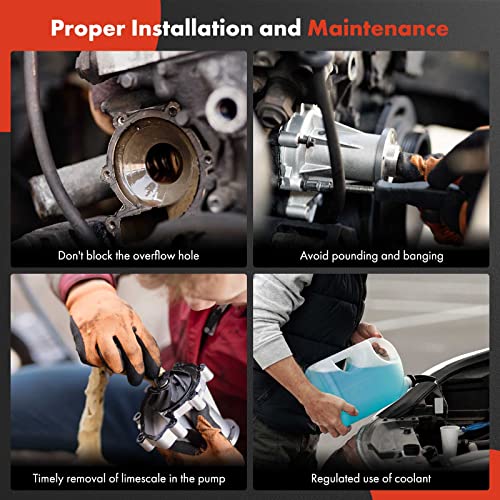
Allow the engine to cool completely before opening the cooling system. Drain the coolant into an appropriate container, remove the existing pump, and clean the mounting surfaces without damaging the engine block.
Install the new pump with the correct gaskets and sealant specified by the manufacturer. Tighten the fasteners evenly using the recommended torque sequence. After completing the wiring and hose connections, refill the system with the proper coolant mixture and bleed out trapped air.
Our cooling-system flushing guide explains how to remove contaminated coolant before installing new components. You can also use our guide on finding a coolant leak when checking the completed installation.
Inspect the pump, fittings, hose connections, and mounting surfaces for leaks after the first heat cycle.
Common Symptoms of a Failing Water Pump
A worn or damaged water pump may cause:
- Engine overheating
- Coolant leaking around the pump
- Grinding, squealing, or rattling noises
- Unstable coolant temperature
- Steam from the engine compartment
- Reduced heater performance
- Coolant circulation problems
A sticking thermostat can create similar symptoms. Read our comparison of a bad thermostat versus a bad water pump before ordering parts.
Frequently Asked Questions
What vehicles does the A-Premium HC8020C fit?
This is an engine-based performance part rather than a vehicle-specific OE replacement. It fits compatible Chevrolet Mark IV, Gen V, and Gen VI big-block engines using the standard water-pump mounting pattern. Vehicle fitment depends on the installed engine, accessory drive, radiator, hoses, and available clearance.
Does it fit a Chevy 396, 402, 427, or 454?
Yes, these engines generally use the compatible traditional big-block Chevrolet mounting pattern. Confirm the exact block generation and accessory configuration before purchasing.
Does HC8020C fit a Chevrolet 348 or 409?
No. The 348 and 409 are W-series engines and use a different water-pump design.
Does it fit a 496 or 8.1L Vortec?
Compatibility should not be assumed. The production 496/8.1L Vortec is a Gen VII engine with a different cooling-system and accessory-drive design.
Does this pump replace PCE194.1004?
PCE194.1004 may be used as a cross-shopping reference for a 35-GPM big-block Chevy electric pump. Compare the dimensions, mounting pattern, inlet, wiring, and supplied hardware because cross-reference numbers do not guarantee that two products are identical.
Can the pump run after the engine is shut off?
Yes, when the system is wired accordingly. This is useful for reducing heat soak after a pass or during staging-lane operation.
Does it include an electric fan?
No. The listing describes one electric water pump. A separate electric radiator fan may be required if the mechanical fan was previously driven by the water-pump pulley.
For additional product confirmation, compare the specifications with the Top Street Performance HC8020C listing and the JEGS HC8020C product reference.




There are no reviews yet.