
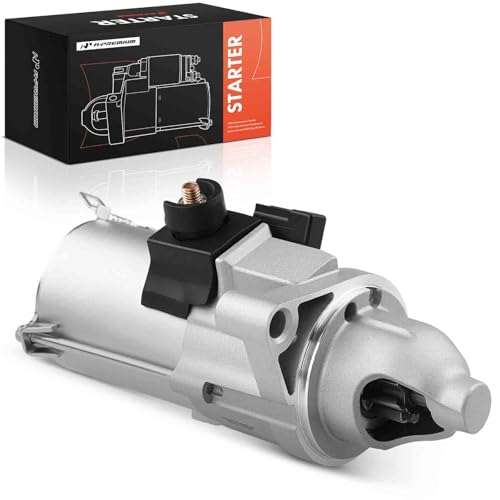

A-Premium 17960 Starter for Honda Accord, Civic, CR-V, Element and Acura TSX
The A-Premium 17960 is a new 12-volt replacement starter advertised for select Honda and Acura vehicles equipped with compatible K-series four-cylinder engines. It features a 1.6-kW motor, clockwise rotation and a nine-tooth pinion and replaces Honda number 31200-RAA-A61.
The supplied application data requires careful verification. It spans several K-series engine generations and contains an incorrect Acura CSX engine specification: the CSX used a 2.0-liter engine, not a 2.4-liter. CSX compatibility should therefore remain unconfirmed until the original starter number is matched.
Corrected Vehicle Fitment
Acura Applications
| Years | Model | Engine | Fitment status |
|---|---|---|---|
| 2006–2014 | TSX | 2.4L four-cylinder | Advertised; verify OE number and transmission |
| 2006–2008 | CSX | 2.0L four-cylinder | Requires verification; listing incorrectly says 2.4L |
Honda Applications
| Years | Model | Engine | Important notes |
|---|---|---|---|
| 2006–2012 | Accord | 2.4L four-cylinder | Verify generation, transmission and OE number |
| 2006–2011 | Civic Si | 2.0L four-cylinder | Standard Civic 2.0L application not offered in U.S.; verify manual-transmission fitment |
| 2007–2011 | CR-V | 2.4L four-cylinder | Verify original starter number |
| 2007–2011 | Element | 2.4L four-cylinder | Verify transmission and OE number |
$79.99
Acura CSX Fitment Error
The listing describes the 2006–2008 Acura CSX as having a 2.4-liter engine. That is incorrect.
The CSX was sold with:
- 2.0L K20Z2 four-cylinder
- 2.0L K20Z3 four-cylinder in the CSX Type-S
No factory 2.4L CSX application existed during those years. The Canadian-market CSX was produced from 2006 through 2011 and used 2.0L engines. Acura CSX specifications
Do not publish this starter as fitting a “2006–2008 CSX 2.4L.” Before listing any CSX application, confirm:
- Base CSX or Type-S
- K20Z2 or K20Z3 engine
- Automatic or manual transmission
- Original starter number
- Mounting and pinion configuration
Acura TSX Fitment
The starter is advertised for:
- 2006 Acura TSX 2.4L
- 2007 Acura TSX 2.4L
- 2008 Acura TSX 2.4L
- 2009 Acura TSX 2.4L
- 2010 Acura TSX 2.4L
- 2011 Acura TSX 2.4L
- 2012 Acura TSX 2.4L
- 2013 Acura TSX 2.4L
- 2014 Acura TSX 2.4L
This range spans two TSX generations and several 2.4L K-series engine variations. Exact interchange should be confirmed rather than assuming one starter fits the complete range.
Do not automatically list this starter for:
- TSX 3.5L V6
- TSX Sport Wagon without verification
- Manual-transmission applications not shown in the catalog
- Engine- or transmission-swapped vehicles
Honda Accord Fitment
The supplied fitment covers:
- 2006–2012 Honda Accord 2.4L four-cylinder
This range crosses the seventh- and eighth-generation Accord platforms. Confirm the original starter number because the engine and starter configuration can differ by generation and transmission.
Do not list it for:
- Accord 3.0L V6
- Accord 3.5L V6
- Accord Hybrid
- 2013-and-newer Accord
- 2005-and-older Accord
- International-market engines not shown in the catalog
Honda Civic Fitment
The listing identifies a 2006–2011 Honda Civic with a 2.0L engine. In the U.S. market, that generally points to the Civic Si, which used a 2.0L K-series engine and a six-speed manual transmission.
Potential advertised applications include:
- 2006–2011 Civic Si Coupe
- 2007–2011 Civic Si Sedan
Do not assume fitment for:
- Civic 1.8L
- Civic Hybrid
- Civic GX
- Civic Type R
- Standard Civic Sedan or Coupe
- Automatic-transmission Civic
- 2012-and-newer Civic Si
The Civic Si application requires particular scrutiny because Honda’s manual-transmission starter configuration may differ from automatic-transmission K24 applications.
Honda CR-V Fitment
The starter is advertised for:
- 2007–2011 Honda CR-V 2.4L
Potential coverage includes front-wheel-drive and all-wheel-drive vehicles, but drivetrain compatibility should be verified through the OE number.
Do not automatically extend fitment to:
- 2006-and-older CR-V
- 2012-and-newer CR-V
- International-market 2.0L models
- Diesel CR-V models
- Engine-swapped vehicles
Honda Element Fitment
The advertised application includes:
- 2007–2011 Honda Element 2.4L
Verify:
- Automatic or manual transmission
- Front-wheel drive or Real Time 4WD
- SC or standard model
- Original starter number
- Production date
The Honda Element ended U.S. production after the 2011 model year, so later applications do not exist despite what some compatibility dropdowns may eventually invent.
Starter Specifications
| Specification | Value |
|---|---|
| Voltage | 12 volts |
| Rated output | 1.6 kW |
| Pinion teeth | 9 |
| Rotation | Clockwise |
| Condition | New |
| Quantity | One starter |
| Warranty | One year, unlimited mileage |
Rotation should be interpreted using A-Premium’s specified viewing convention. Always compare the replacement with the original starter.
Replacement Part Numbers
This starter replaces or cross-references:
1796017960N410-54107RSMU0428LRS02351SM710-05244-699391-26-207331200-RAA-A6131200RAAA61
Honda number 31200-RAA-A61 is the most useful OE reference supplied.
Confirm Physical Compatibility
Before ordering, compare:
- Original starter number
- Engine code
- Automatic or manual transmission
- Mounting-flange design
- Bolt-hole spacing
- Starter nose length
- Nine-tooth pinion
- Pinion resting position
- Solenoid location
- Battery-terminal position
- Trigger-terminal design
- Clockwise rotation
- Intake-manifold clearance
A matching K-series engine family does not automatically establish starter interchangeability.
1.6-kW Motor
The starter carries a 1.6-kW power rating intended to provide reliable cranking for compatible Honda and Acura four-cylinder engines.
Actual starting performance also depends on:
- Battery state of charge
- Battery cold-cranking capacity
- Battery-cable condition
- Engine ground
- Ambient temperature
- Oil viscosity
- Engine compression
- Starter-circuit voltage drop
A stronger starter cannot compensate for a weak battery or badly corroded ground cable.
Nine-Tooth Pinion
The starter uses a nine-tooth drive pinion. It must engage the corresponding ring gear at the correct depth.
Incorrect engagement can cause:
- Grinding
- Starter spinning without cranking
- Delayed engagement
- Pinion damage
- Ring-gear damage
- Starter kickback
- Failure to disengage
Stop operating the starter if grinding occurs after installation.
Heavy-Duty Construction Claims
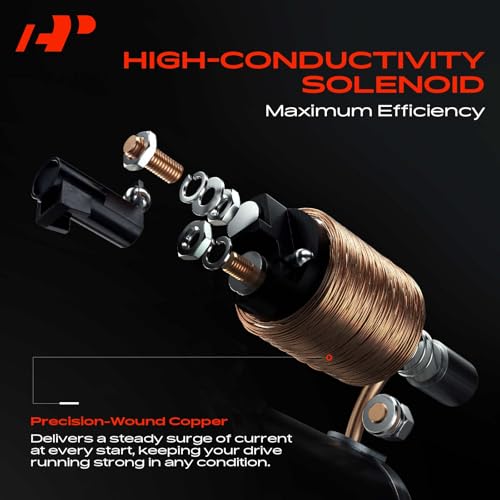
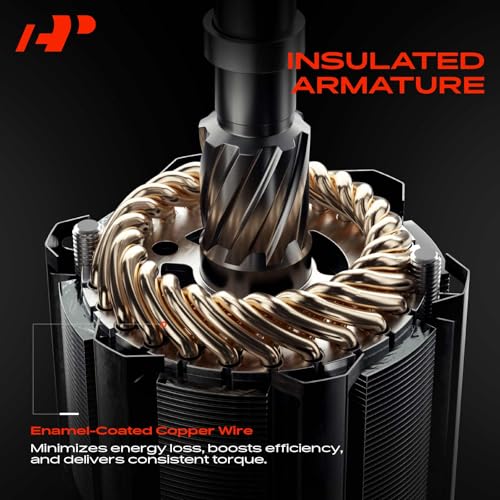
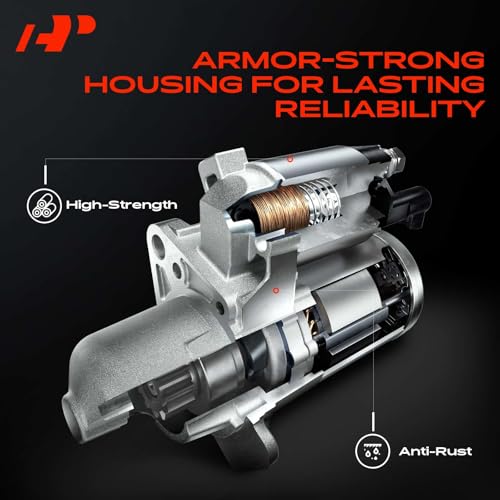
A-Premium states that the starter uses high-grade internal components and a reinforced structural design intended to provide:
- Consistent starting torque
- Quiet operation
- Efficient cranking
- High-temperature resistance
- Reliable everyday operation
These should be presented as manufacturer claims unless independent testing is available.
“Heavy duty” does not increase the vehicle’s electrical-system capacity or mean the starter is suitable for every modified high-compression engine.
Diagnosing Starter Failure
Common symptoms of a failing starter include:
- Single click without cranking
- Rapid clicking
- Intermittent no-crank
- Slow cranking
- Grinding
- Starter motor spinning without engaging
- Electrical burning odor
- Starting only after repeated attempts
Similar symptoms can be caused by:
- Discharged battery
- Corroded battery terminals
- Damaged battery cables
- Poor engine ground
- Faulty starter relay
- Ignition-switch problem
- Clutch-interlock fault
- Park/Neutral switch problem
- Immobilizer fault
- Damaged ring-gear teeth
- Internal engine damage
Test the starting circuit before replacing the starter. Parts swapping is technically a diagnostic method, just not a particularly dignified one.
Battery and Voltage-Drop Testing
Before installation, test:
- Battery open-circuit voltage
- Battery load capacity
- Positive-cable voltage drop
- Negative-cable voltage drop
- Starter-trigger voltage
- Engine-to-chassis ground
- Battery-terminal condition
- Starter relay
- Main fuses
High cable resistance can cause slow cranking even with a new starter and fully charged battery.
Installation Preparation
Before removing the original starter:
- Confirm the year, model and engine.
- Identify the transmission type.
- Record the original starter number.
- Disconnect the negative battery terminal.
- Photograph the electrical connections.
- Compare the mounting flange and terminals.
- Verify the nine-tooth pinion.
- Obtain the correct torque specifications.
- Confirm whether mounting hardware is included.
The supplied listing does not state that mounting bolts are included.
Installation Overview
A typical installation includes:
- Disconnecting the negative battery cable.
- Removing intake components that restrict access.
- Labeling the starter wires.
- Disconnecting the main battery cable and trigger terminal.
- Supporting the starter while removing its mounting bolts.
- Comparing the original and replacement units.
- Inspecting visible ring-gear teeth.
- Installing the A-Premium starter.
- Torquing the mounting bolts correctly.
- Reconnecting the electrical terminals.
- Securing wiring away from heat and moving components.
- Reinstalling the intake system.
- Reconnecting the battery.
- Testing starter engagement.
Starter access on many K-series vehicles requires working beneath the intake manifold. Allow the engine to cool and follow the appropriate vehicle-specific service procedure.
One-Year Unlimited-Mileage Warranty
A-Premium advertises a one-year, unlimited-mileage warranty.
Before purchasing, confirm:
- Warranty start date
- Proof-of-purchase requirements
- Labor reimbursement
- Return-shipping responsibility
- Diagnostic requirements
- Commercial-use exclusions
- Consequential-damage coverage
The warranty covers the product according to its written terms; it does not guarantee fitment when the application information is incorrect.
Frequently Asked Questions
What vehicles does this starter fit?
It is advertised for select 2006–2014 Acura TSX, 2006–2012 Honda Accord, 2006–2011 Civic Si, 2007–2011 CR-V and 2007–2011 Element models with compatible four-cylinder engines.
Does it fit a 2006–2008 Acura CSX 2.4L?
No factory 2.4L CSX existed. The listing contains an engine error. Any CSX fitment requires separate confirmation against the original starter.
Does it fit a standard 2006–2011 Honda Civic?
The supplied 2.0L application generally points to the Civic Si. It should not be listed for the standard 1.8L Civic.
Does it fit the Accord V6?
No. The supplied application is limited to the 2.4L four-cylinder.
Does it fit every 2006–2014 Acura TSX?
The advertised range covers 2.4L models, but the original starter number and transmission must be verified.
What is the primary Honda replacement number?
The primary OE number is 31200-RAA-A61.
What are the starter specifications?
It operates at 12 volts, is rated at 1.6 kW and uses a nine-tooth pinion with clockwise rotation.
Is it a new starter?
Yes. It is advertised as a new replacement starter.
What warranty is included?
A-Premium advertises a one-year, unlimited-mileage warranty.
Final Verdict
The A-Premium 17960 provides a potential replacement for several Honda and Acura K-series applications. Its 1.6-kW rating, nine-tooth pinion and 31200-RAA-A61 interchange provide the most useful identifiers.
The product’s broad fitment must be handled carefully. Correct the Civic description to a potential Civic Si application, remove the nonexistent 2.4L CSX claim and verify transmission compatibility across the Accord, TSX and Element ranges.
Visit My Pro Street for additional starter diagnostics, Honda repair information and automotive electrical guides.
Specification: A-Premium 17960 Starter for Honda Accord, Civic, CR-V, Element and Acura TSX
|
User Reviews
Be the first to review “A-Premium 17960 Starter for Honda Accord, Civic, CR-V, Element and Acura TSX”
You must be logged in to post a review.



There are no reviews yet.